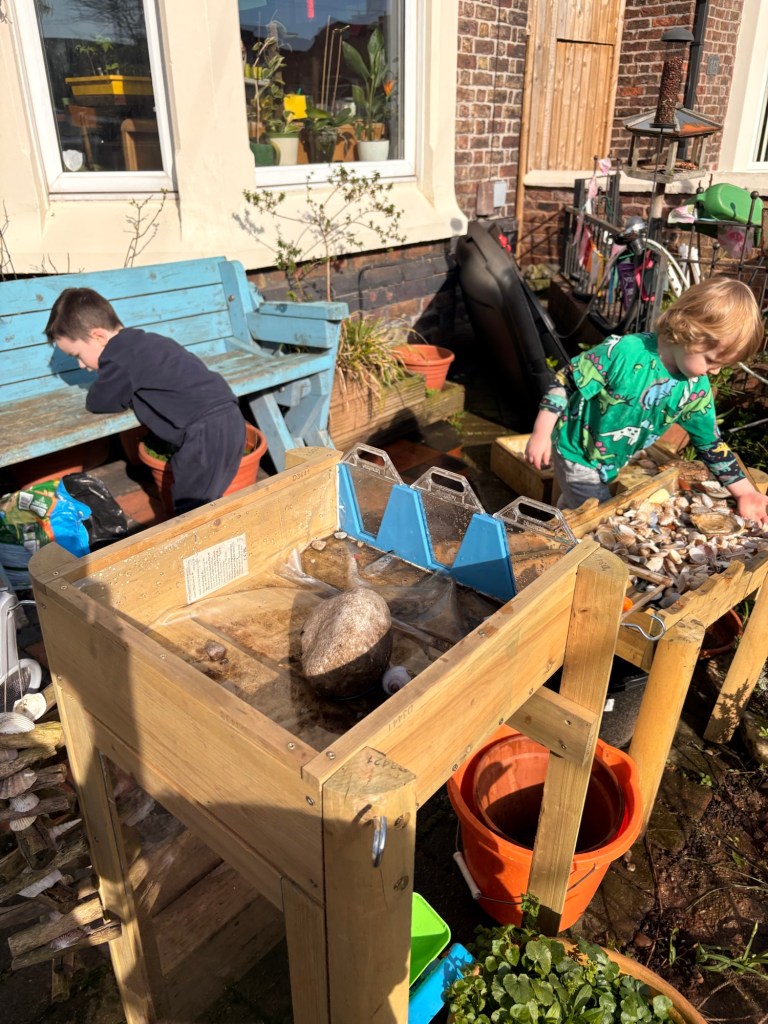
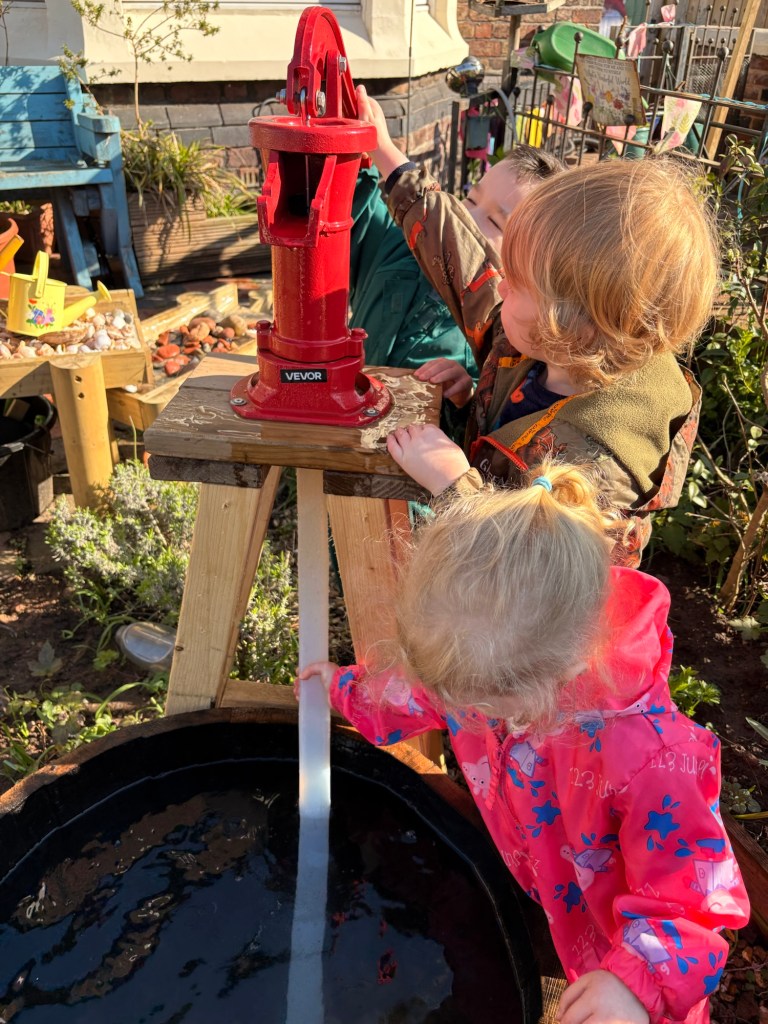
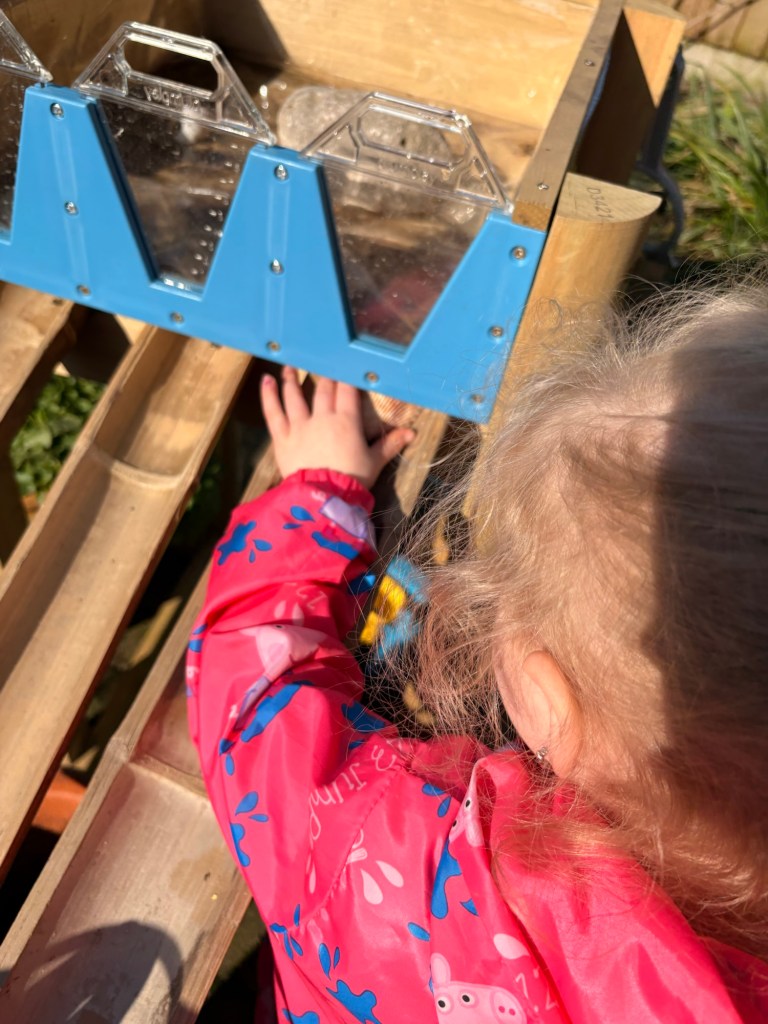
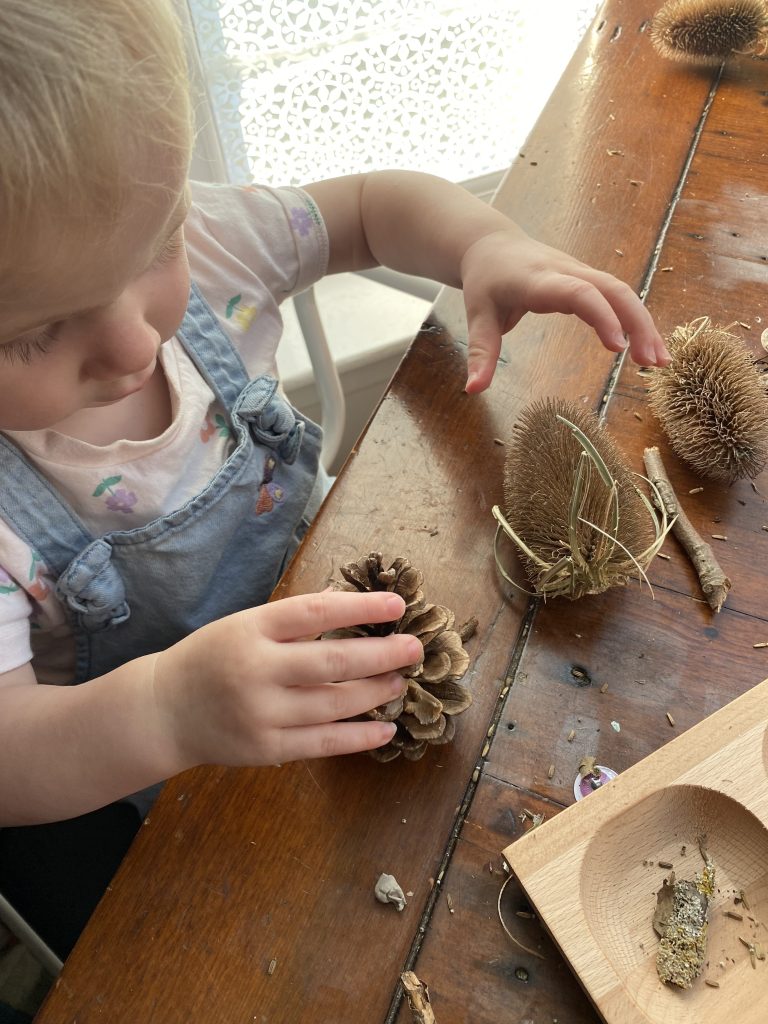
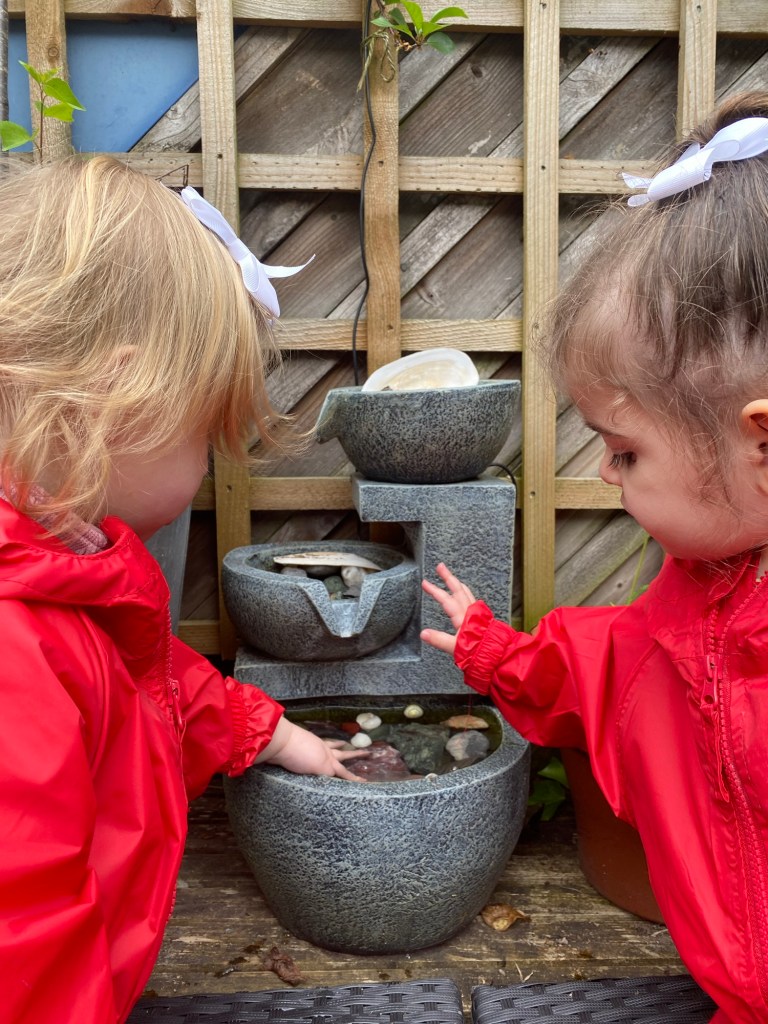
Combining natural elements like shells, pebbles, pinecones, and seaweed with a “discovery waterfall” creates a rich, sensory-driven learning environment for under fives. This type of open-ended play fosters curiosity about the natural world while developing critical fine motor skills through scooping and pouring.
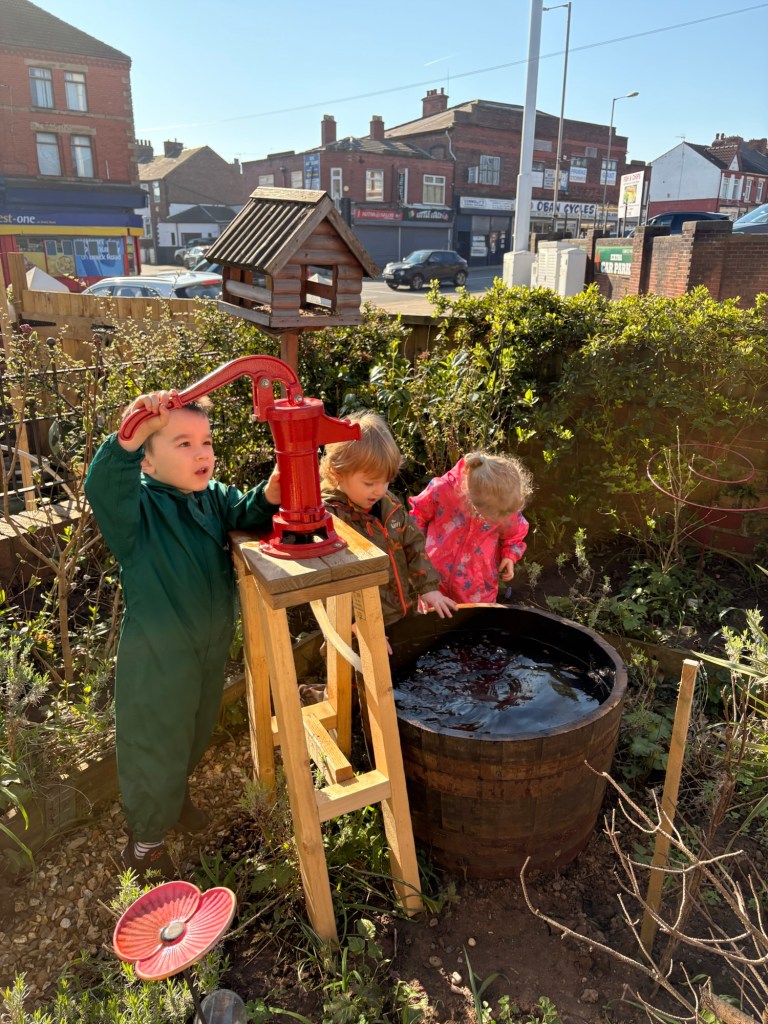
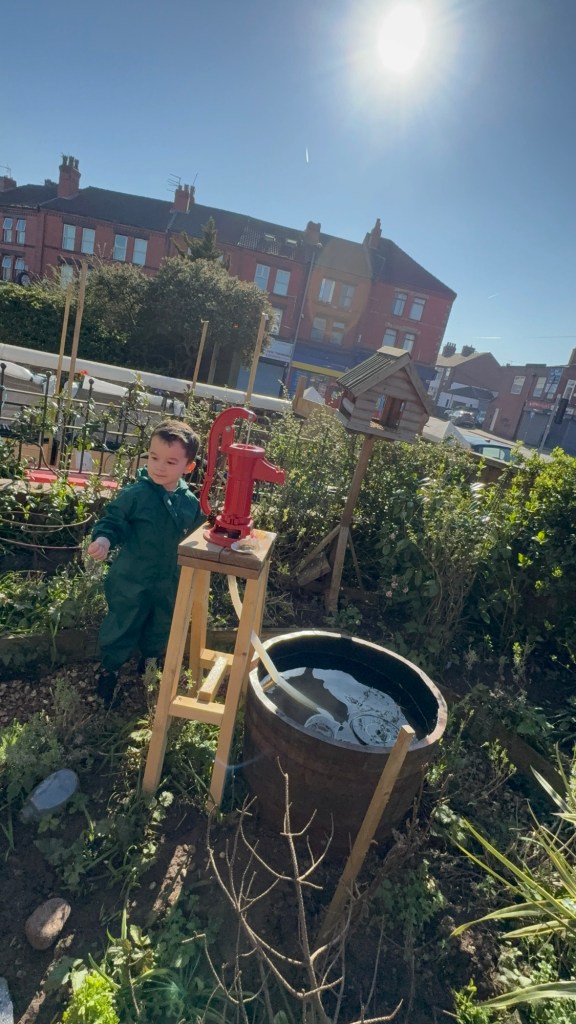
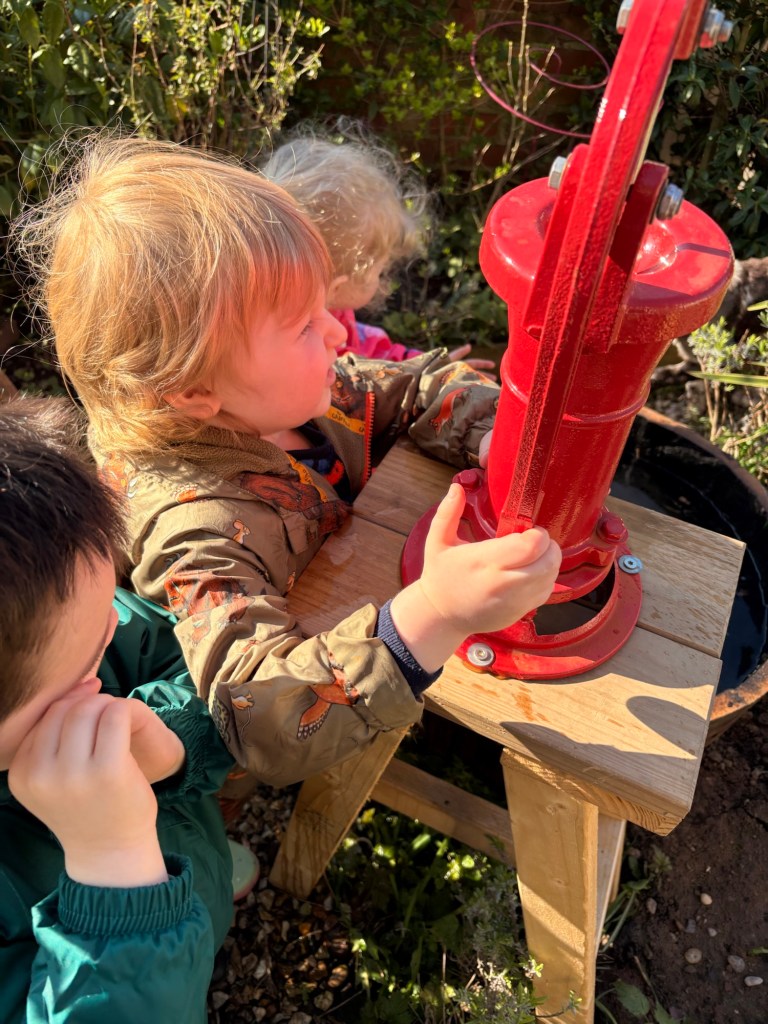
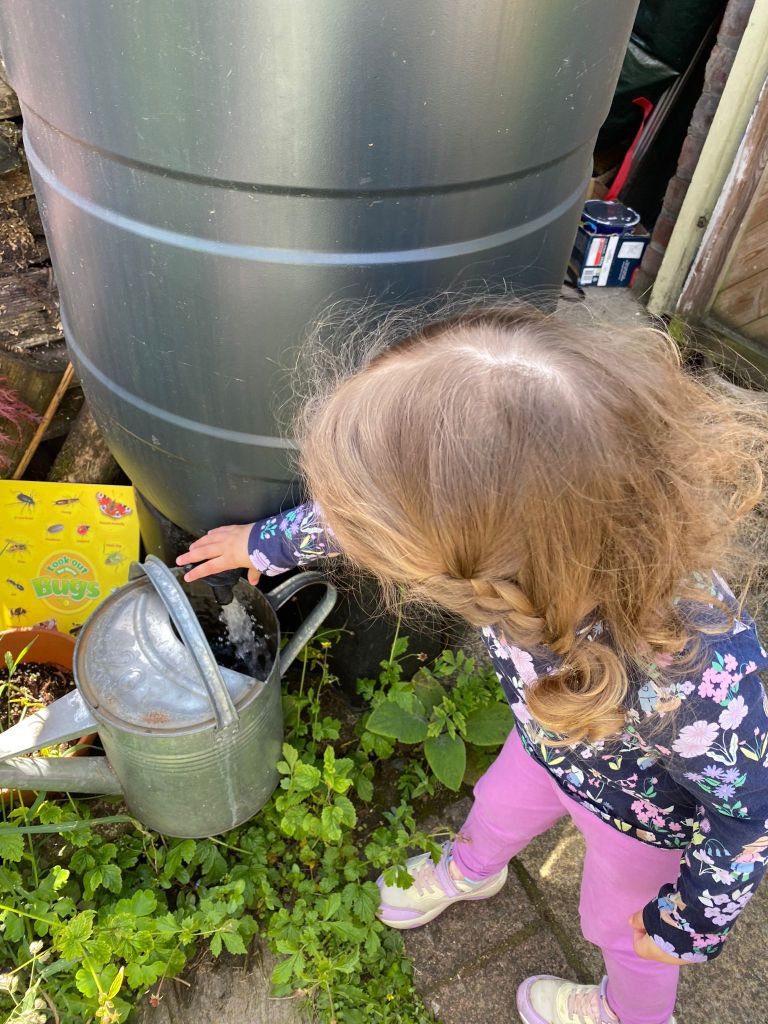
We created a water play station with a water pump and half barrel this is a fantastic way for us to introduce STEM concepts like cause-and-effect and fluid dynamics.
We decided to use a Manual Hand Pump, this was to provide an activity for the children to build on their gross motor skills.
We looked at different types of vessels to hold the water, im the end we decided to use a large reclaimed half barrel. This was chosen as it is extremely sturdy, has a wide base for the water to be pumped into and won’t tip over by the rough handling of the children.
Setting up the Water Play
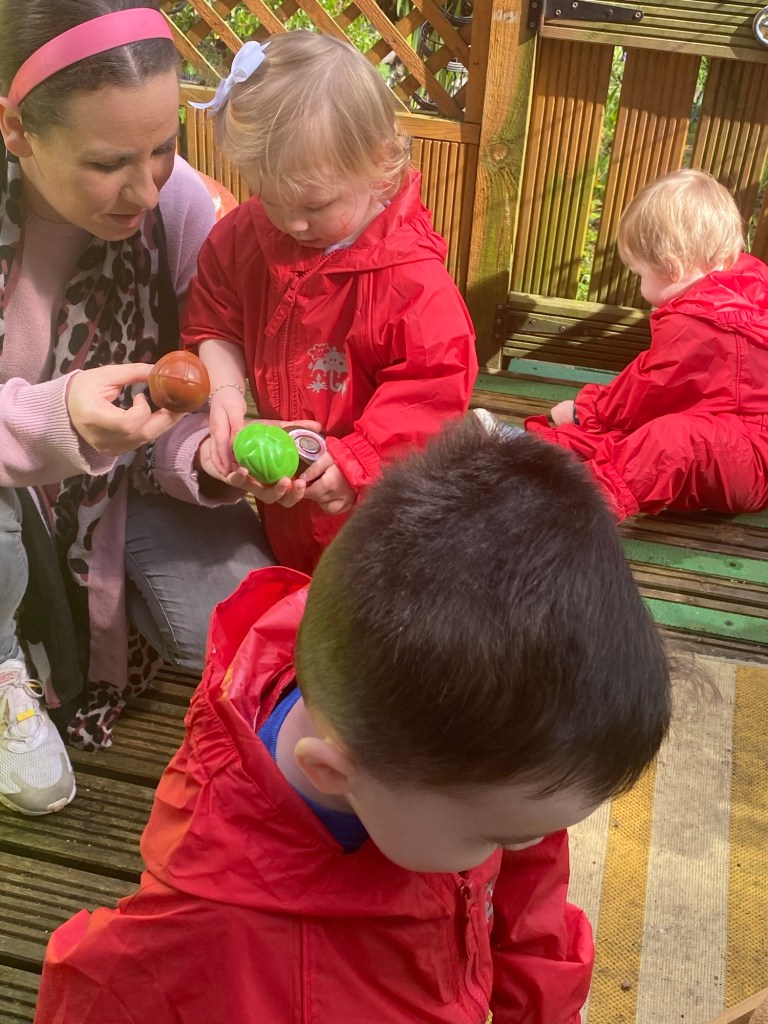
Tools to Include: we used items from around the house such as funnels, sieves, colanders, whisks, and empty plastic bottles of different sizes.
Enhancements: To keep things fresh, you can add food colouring to the water, or introduce new textures like ice cubes or shaving foam.
Safety: Always provide constant adult supervisionduring water play, even in shallow water
Activities:
Holly Hiding A Shell
Strategically placed pebbles and shells were put at the bottom of the waterfall trough’s to see how they change colour when wet.
Buoyancy Testing: the children drop pine cones andseaweed into the top of the waterfall and watch them move down the large bamboo runners. Pinecones typically float initially, while wet seaweed draped over the rocks and pebbles, demonstrating how different textures interact with moving water.
Sensory “Rock Pool”: the shallow tray at the base of the waterfall creates a miniature ecosystem with the pebbles and seaweed. We added toy sea creatures to encourage imaginative “underwater” role play.
Waterfall Sculpting: For a messier experience, we added sand to the base. The Children can use the falling water to wet the sand, then use shellsand pinecones as natural stamps or decorations for “sand mud pies”.
The activities and learning opportunities are endless and the children are totally thrilled with their newest play area.
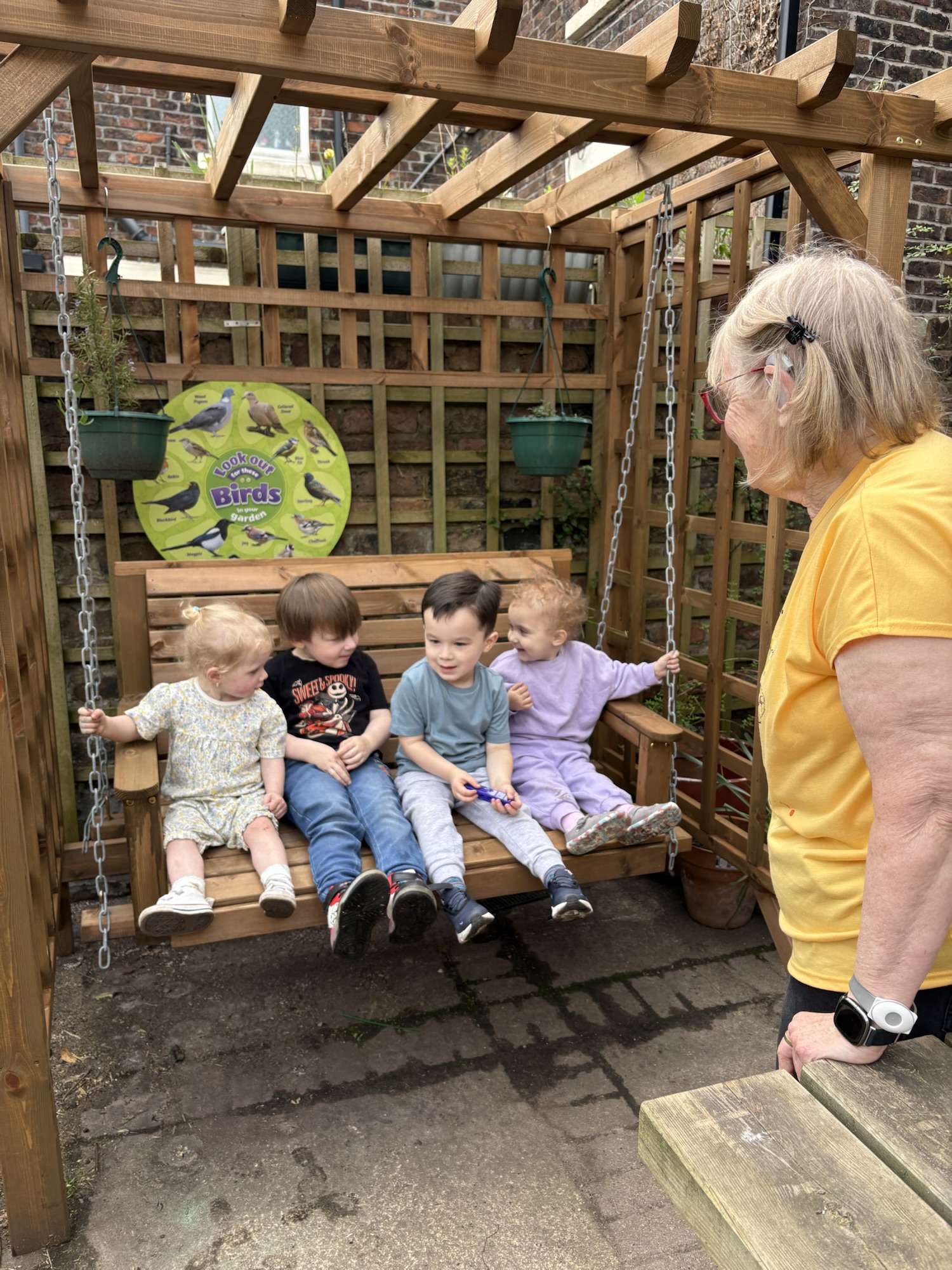
Helping children discover the joy of being kind to birds is like opening a window to a secret world. It’s one of the easiest ways to teach empathy because birds are everywhere—from city balconies to suburban gardens—and their needs are simple enough for even a toddler to understand.
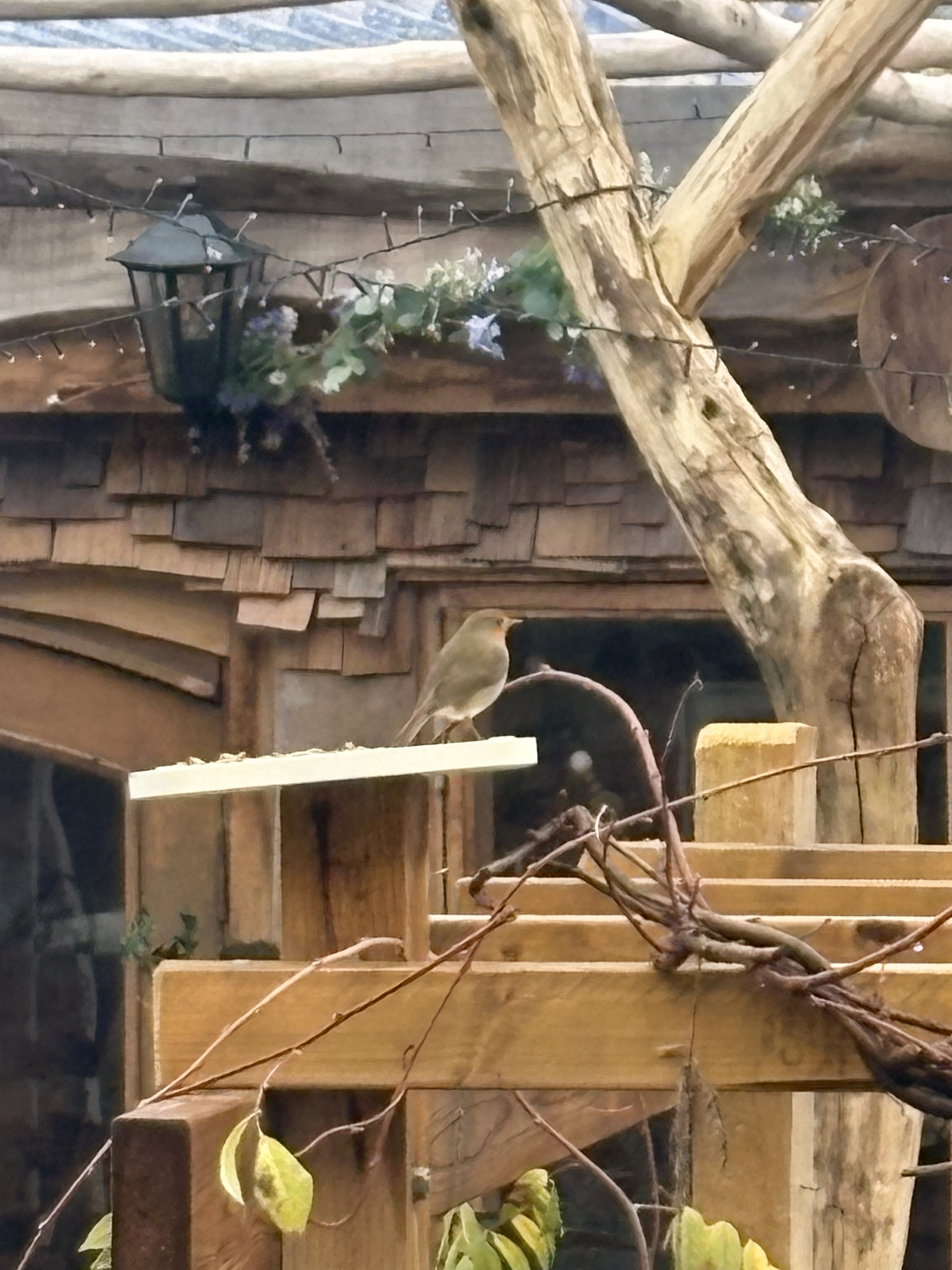
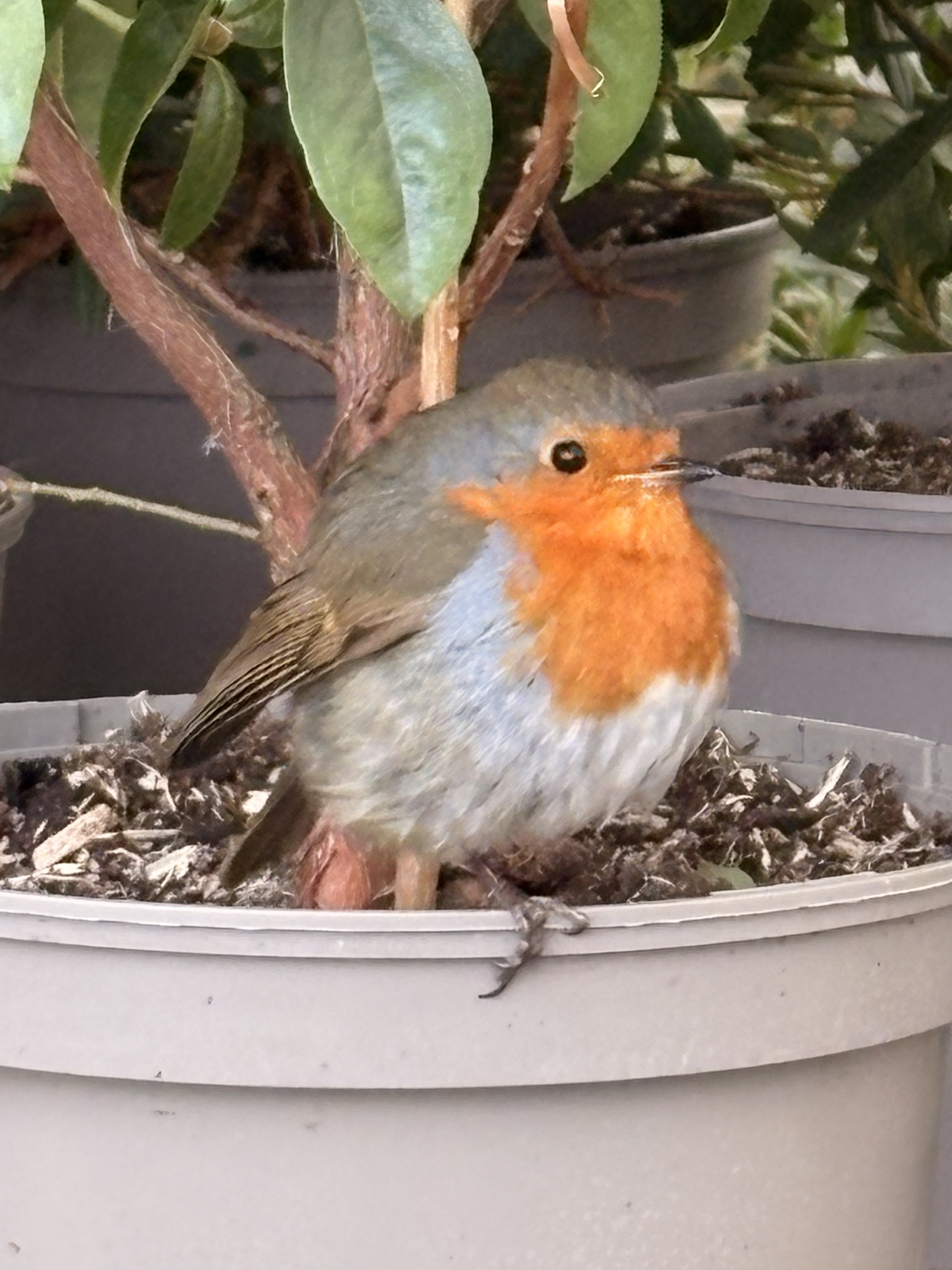
Teaching children to be kind to birds is more than just a nature lesson—it’s a masterclass in empathy. When a child learns to move quietly so they don’t startle a robin, or remembers to fill a feeder on a cold morning, they are practicing “perspective-taking.” They are learning that even the smallest creatures have needs, feelings, and a place in our world.
How to Foster Bird-Kindness at Home
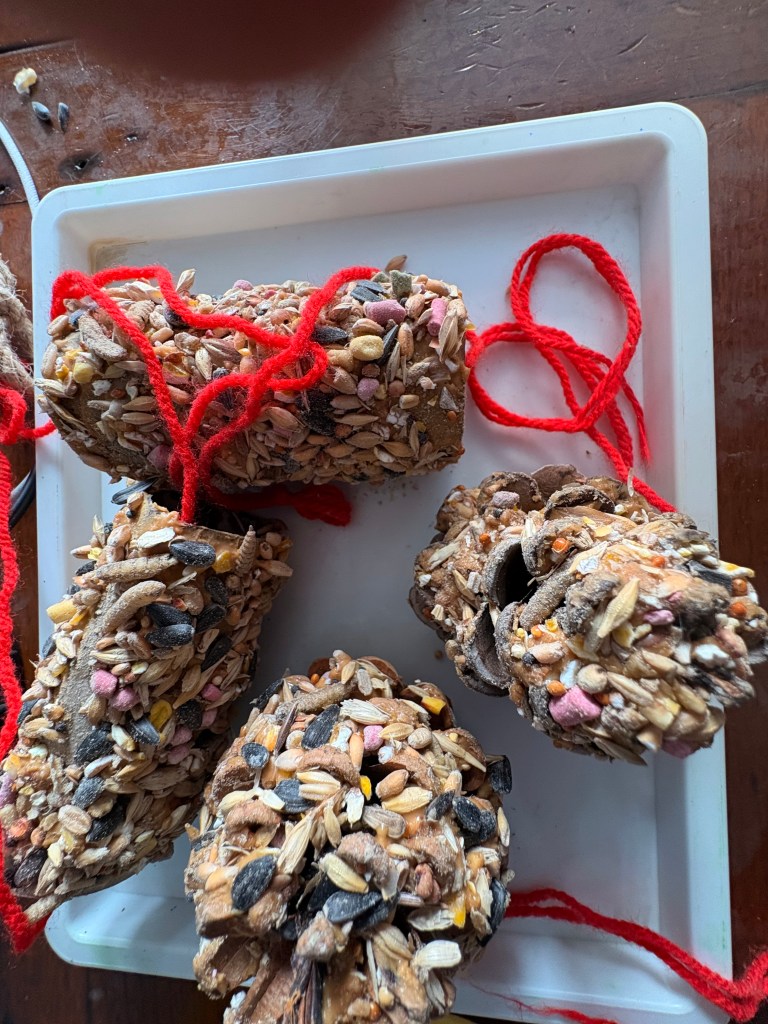
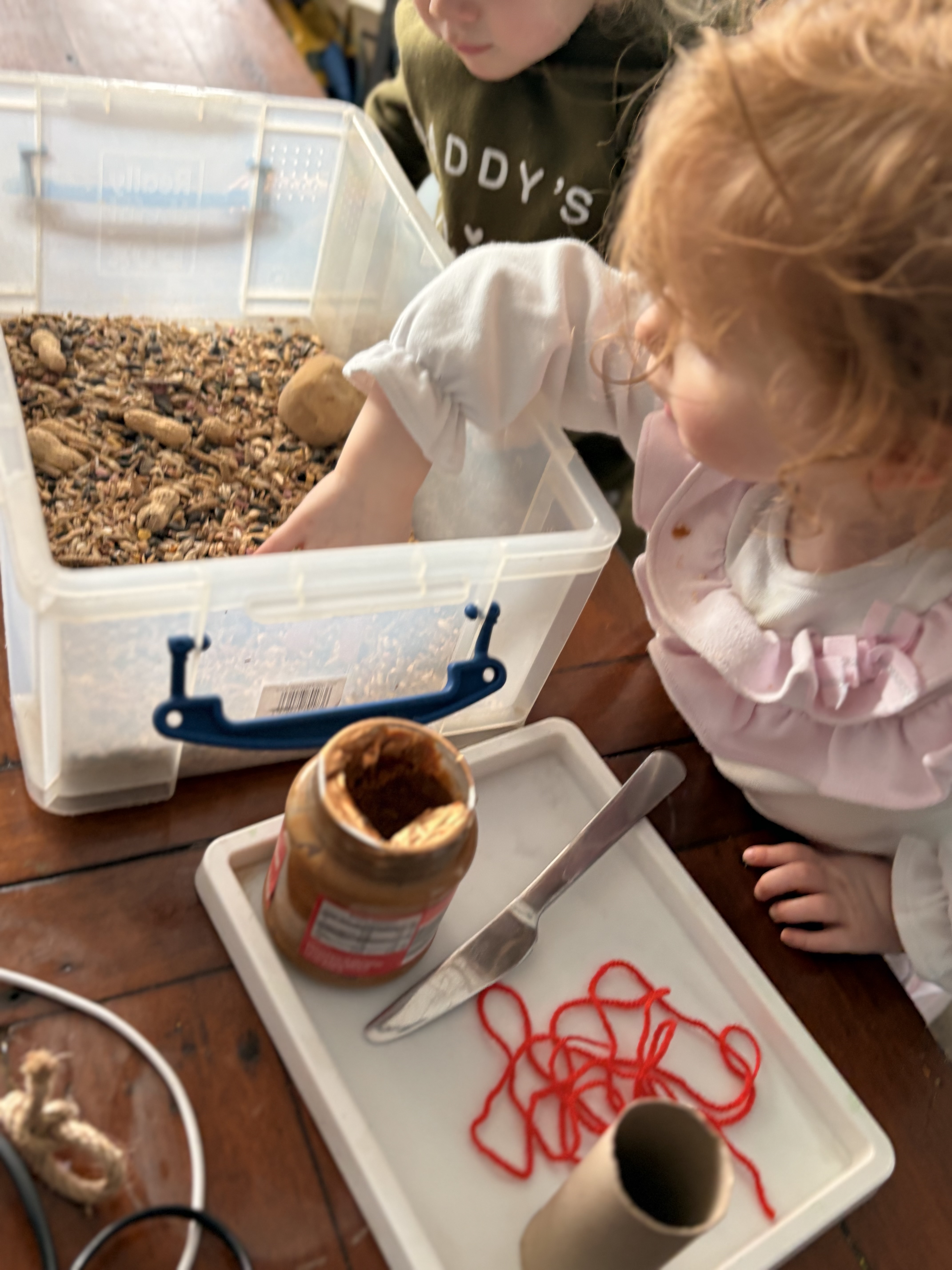
1. Create a “Refuelling Station” Birds expend massive amounts of energy just staying warm and finding food. Involve your children in making a feeder and picking out the right seeds. Letting them take “ownership” of the refill schedule teaches responsibility and shows them the direct impact of their care.
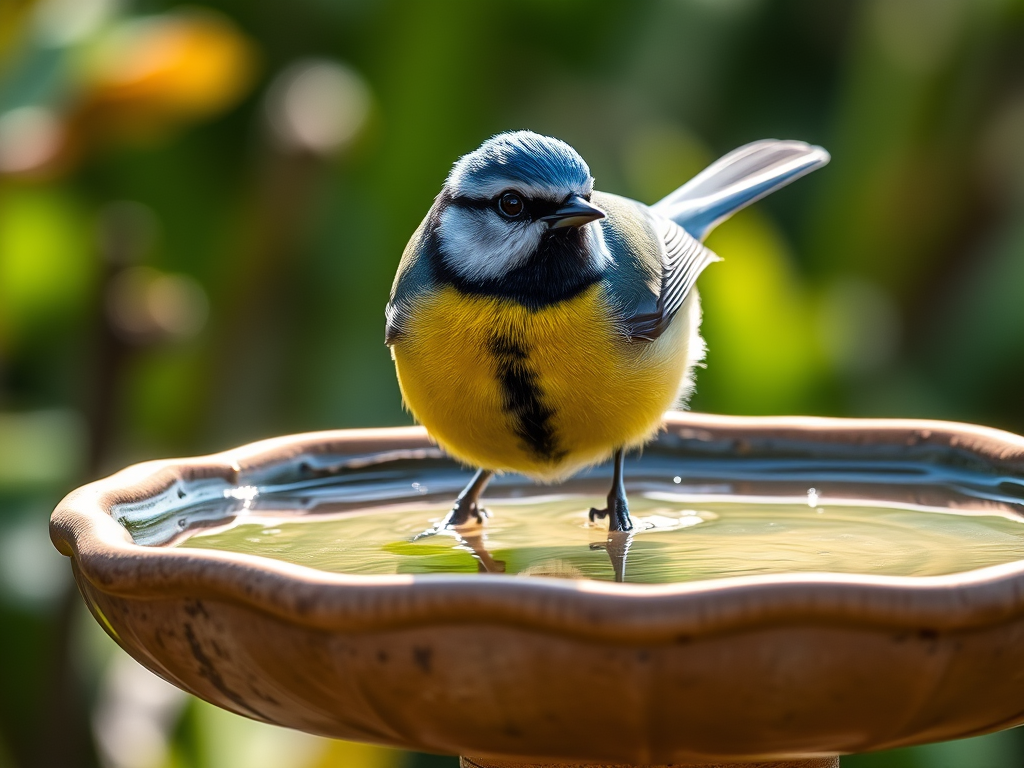
2.The Gift of Water A simple, shallow birdbath can be a lifesaver. Children can help keep it clean and filled with fresh water. Watching a bird splash around in a bath they provided is a high-reward moment for any child!
3. Become a Nature Detective Encourage your Children to observe rather than disturb. Can they find a nest? (Remind them to look with their eyes, not their hands!) Can they identify three different bird calls? This builds respect for the birds’ space and privacy.
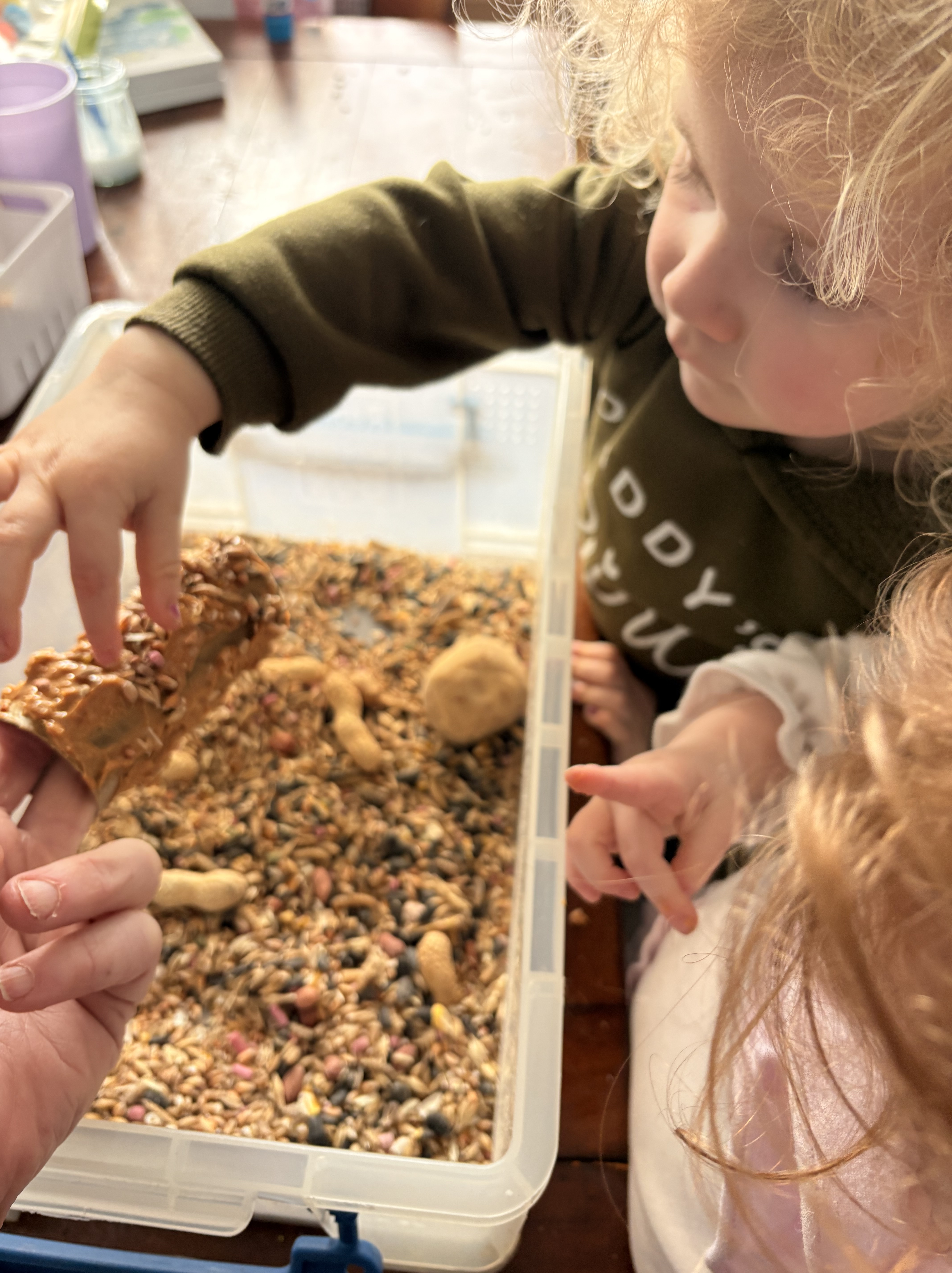
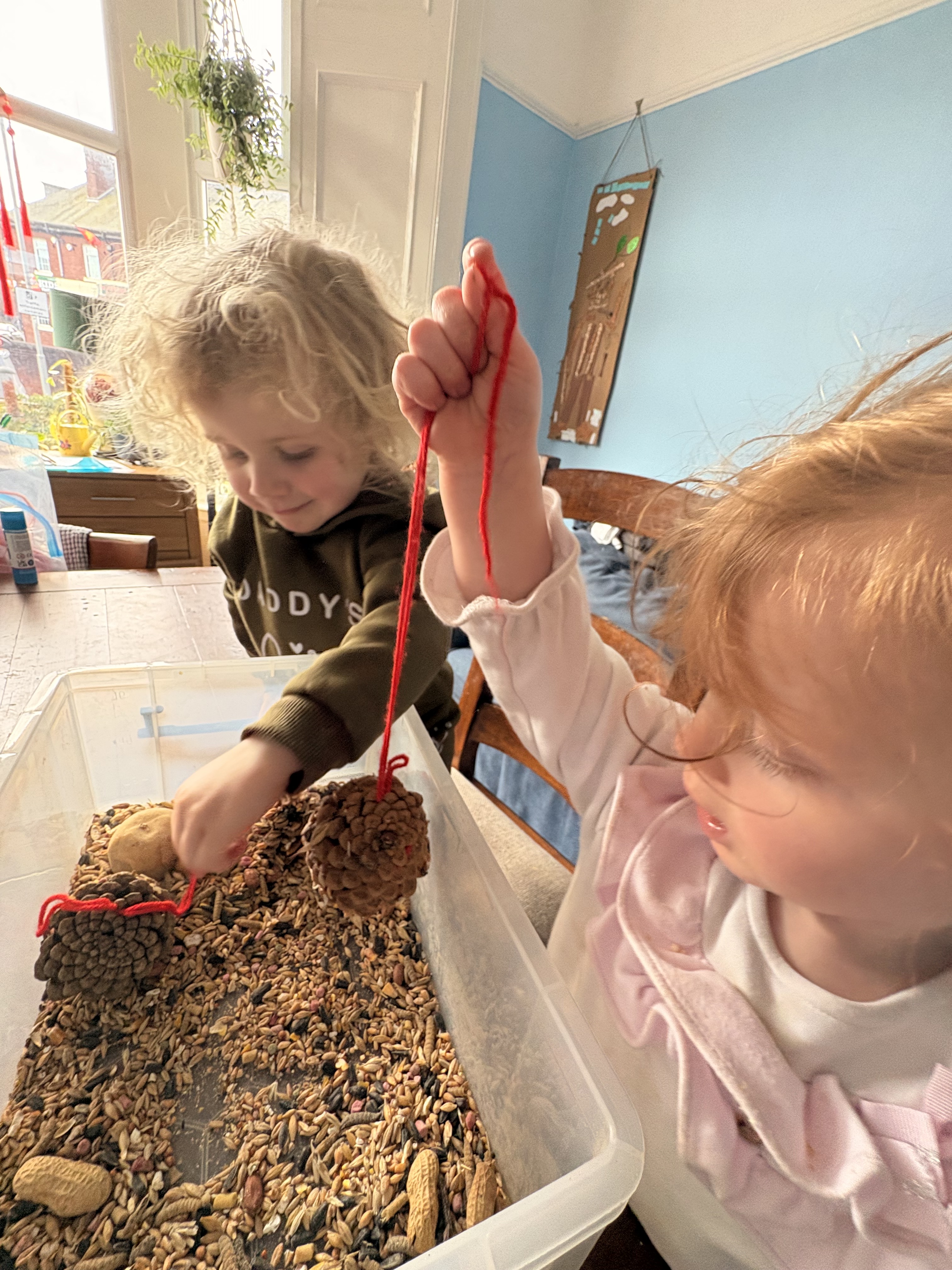
4. Build a “Bird Buffet” If you don’t have space for a permanent feeder, try a classic craft: pinecone feeders smeared with peanut butter (or sunflower butter) and rolled in birdseed. Hanging these in a local park or on a balcony gives kids a sense of contribution.
The Lesson That Lasts
When we teach a child to care for a bird, we are teaching them that their actions matter. We are showing them that they have the power to protect, to nourish, and to coexist. Today, it’s a handful of sunflower seeds; tomorrow, that same kindness will grow into a deep respect for the world around them.
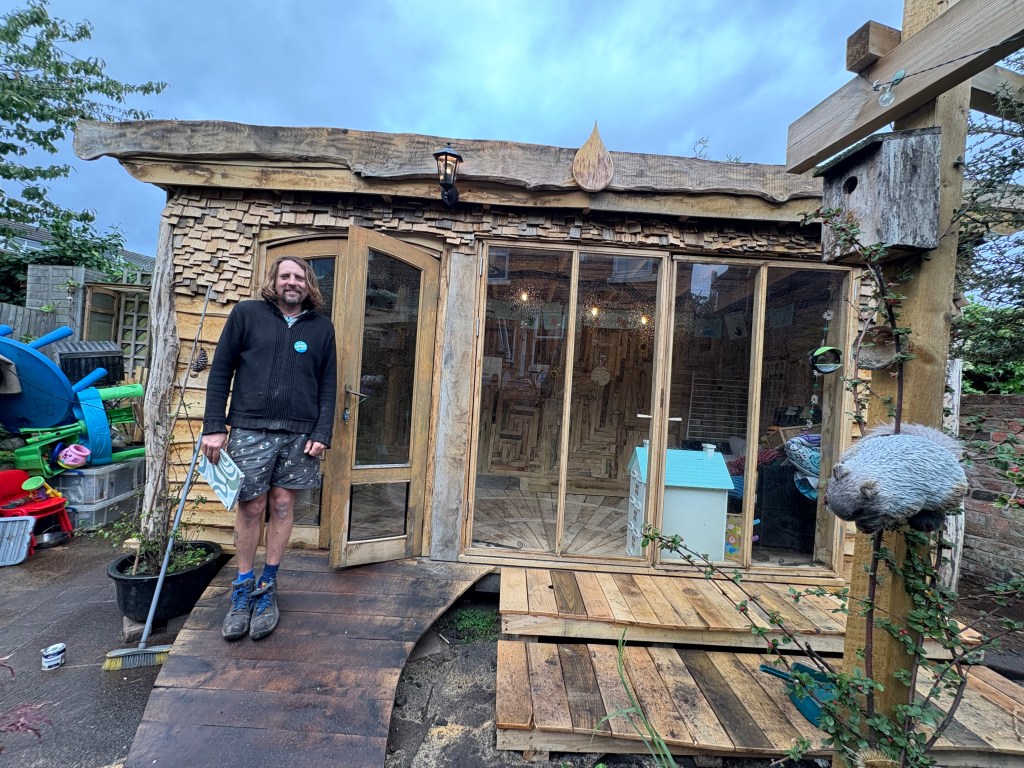
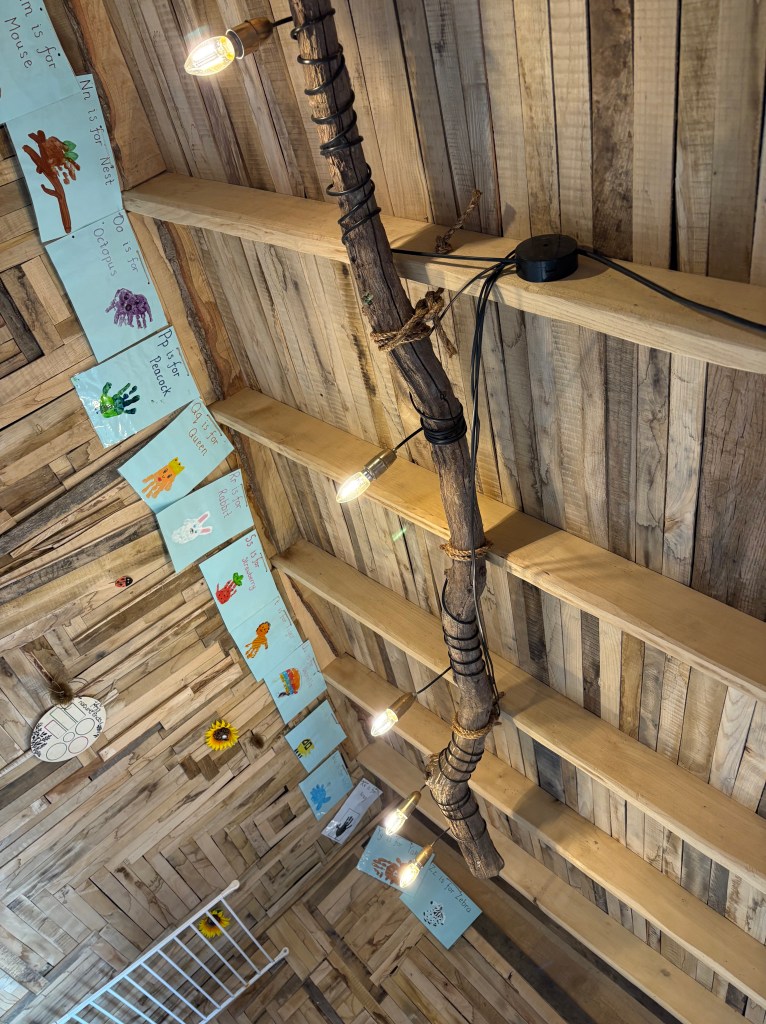
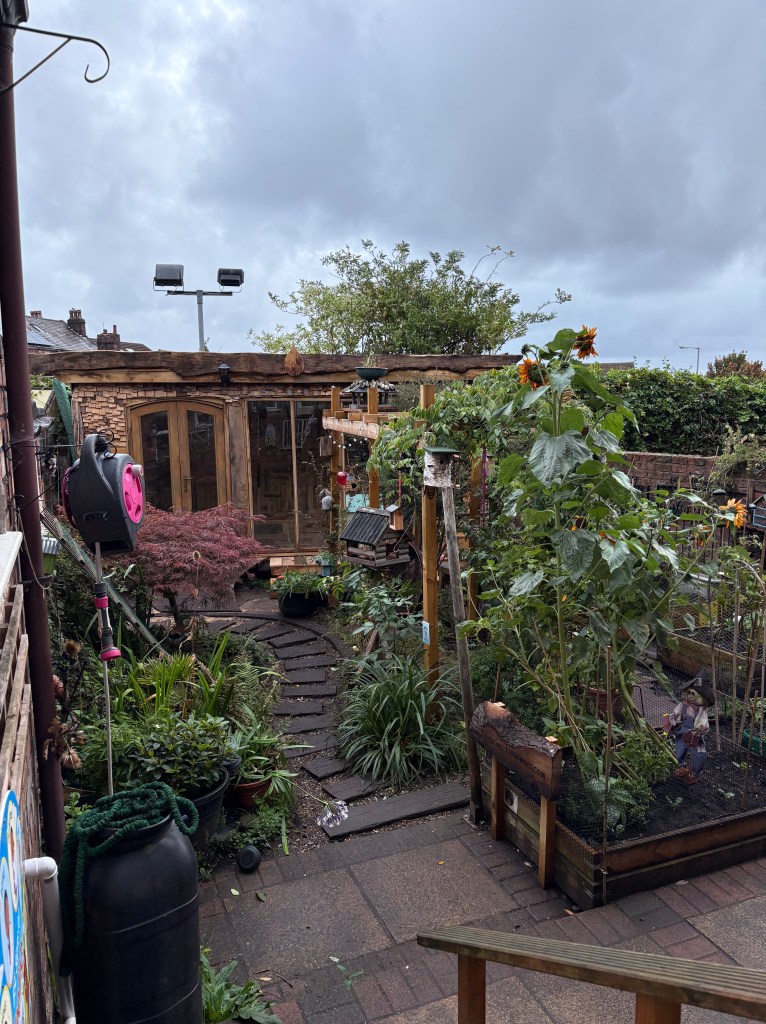
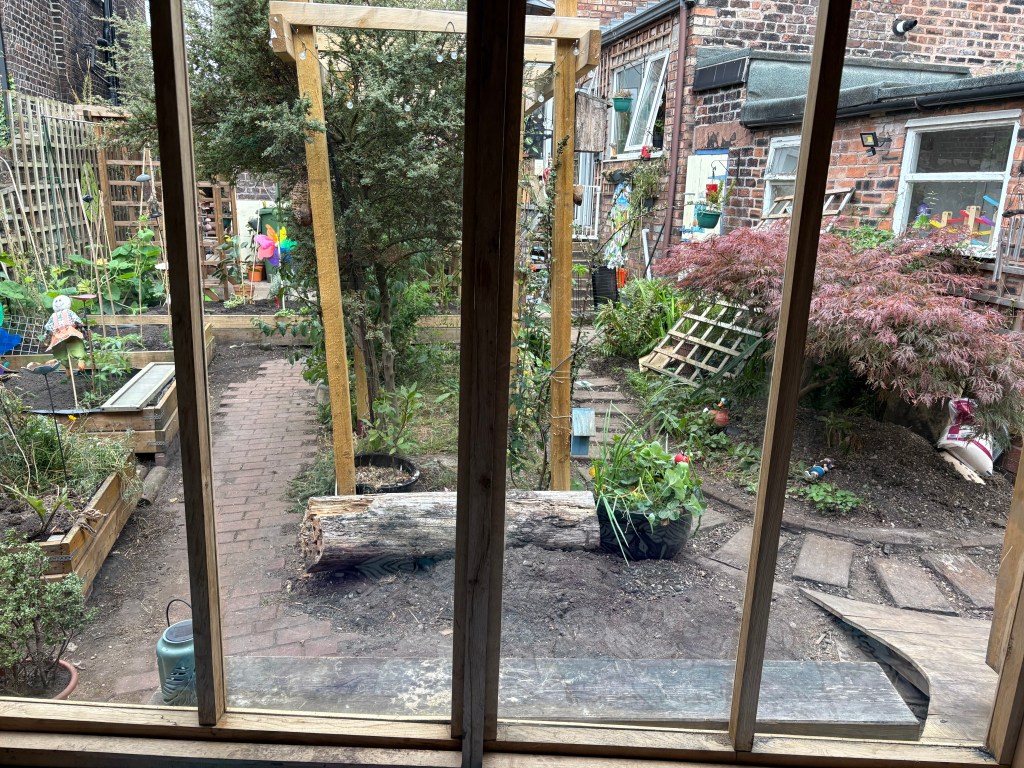
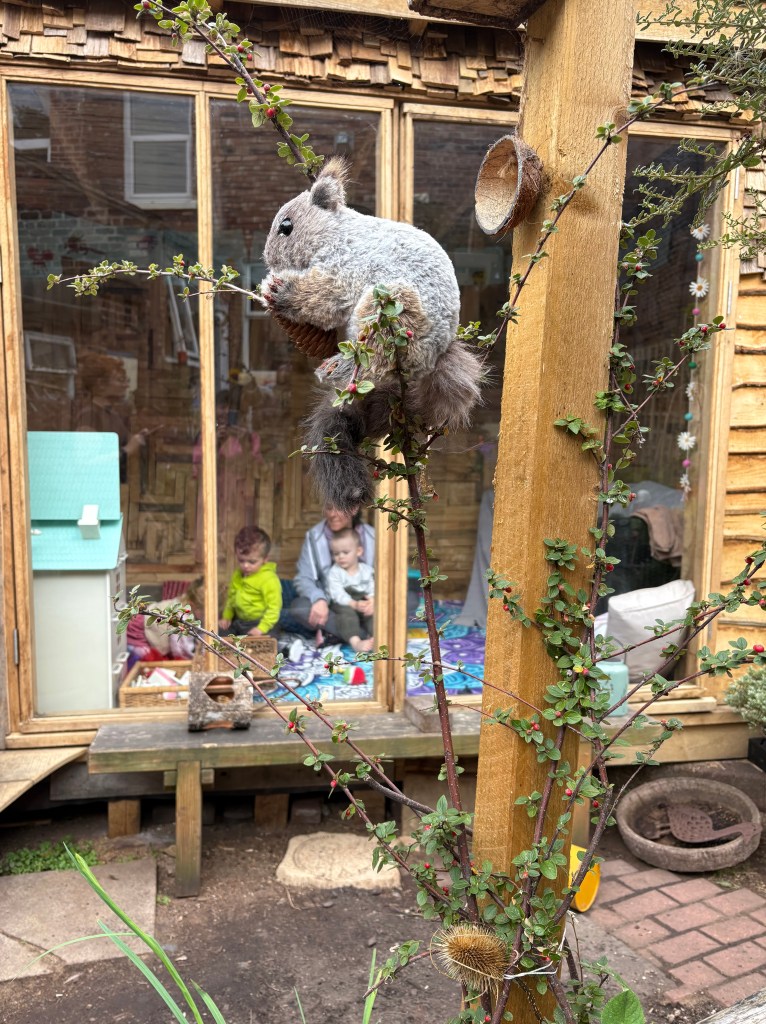
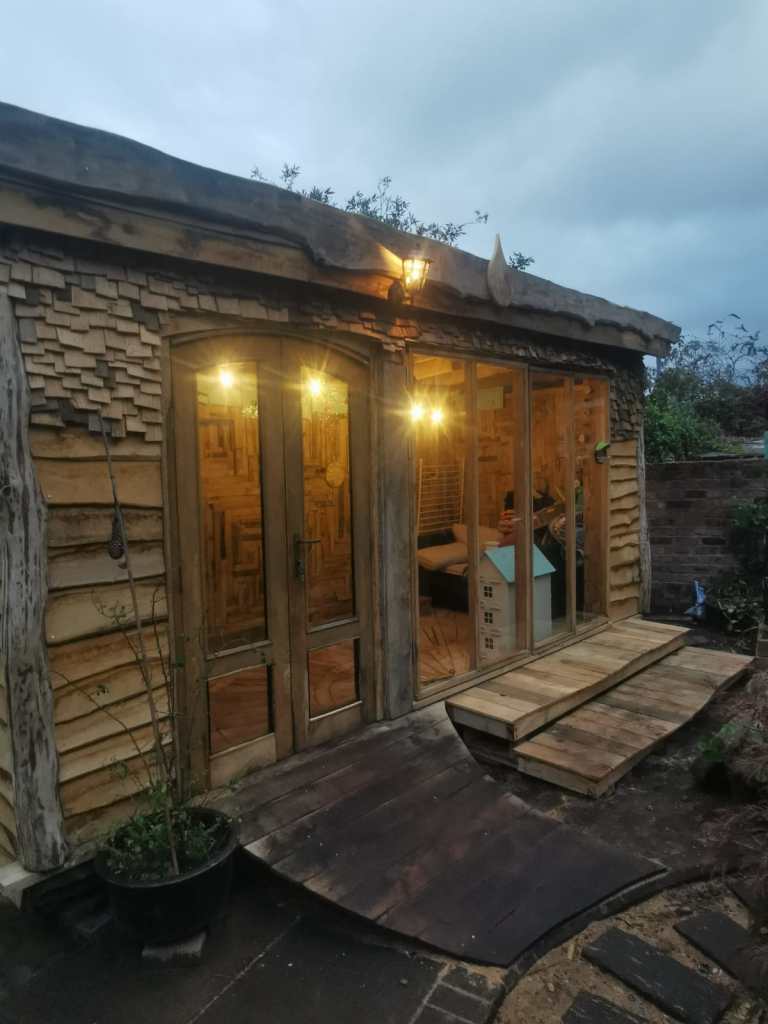
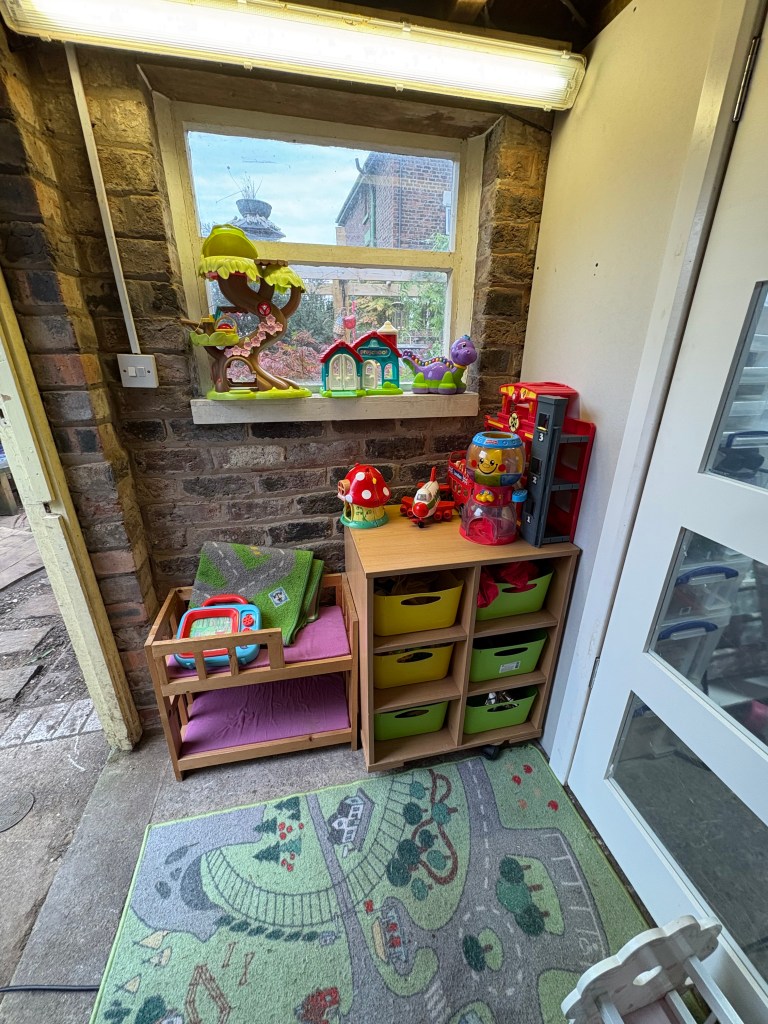
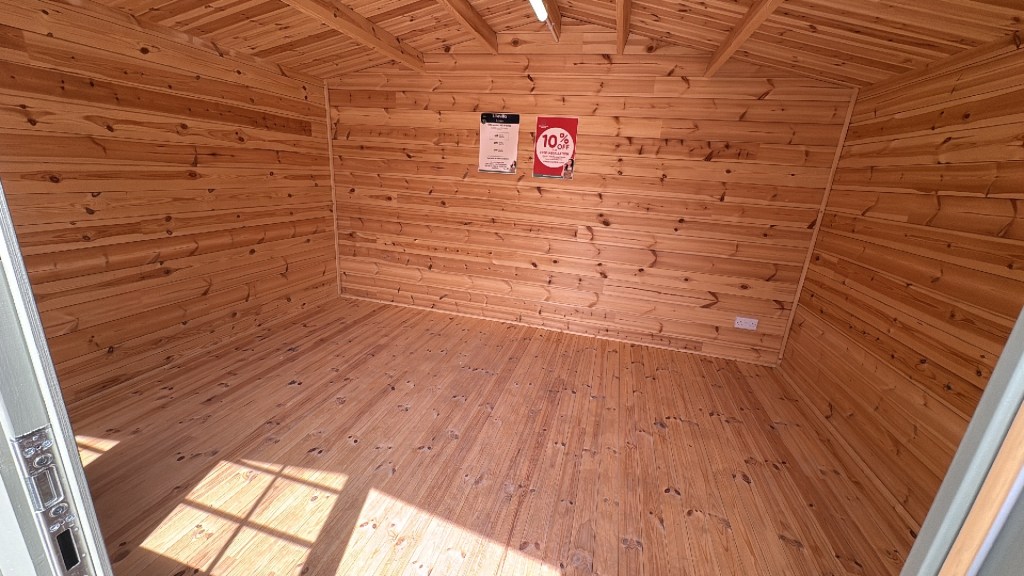
The most exciting day has finally arrived: the garden classroom is now completed! It is totally unique, crafted from 100 percent recycled resources, showcasing a commitment to sustainability and creativity. This space is designed not only to inspire imaginations but also to serve as an effective learning environment. Within the classroom, various learning objectives for children in the Early Years Foundation Stage (EYFS) have been carefully integrated, focusing on enabling environments that foster exploration, play, and discovery. From hands-on gardening activities to interactive nature-themed lessons, this classroom promises to enhance the educational experience for young learners, allowing them to connect with nature while developing essential skills in a playful and nurturing setting.
Children with sensory processing difficulties are truly enjoying their new space, where vibrant colors, engaging textures, and soothing sounds combine to create an environment that caters to their unique needs. This thoughtfully designed area not only provides a safe haven for exploration but also encourages them to express their creativity freely, fostering a sense of comfort and belonging as they interact with various sensory tools and activities.
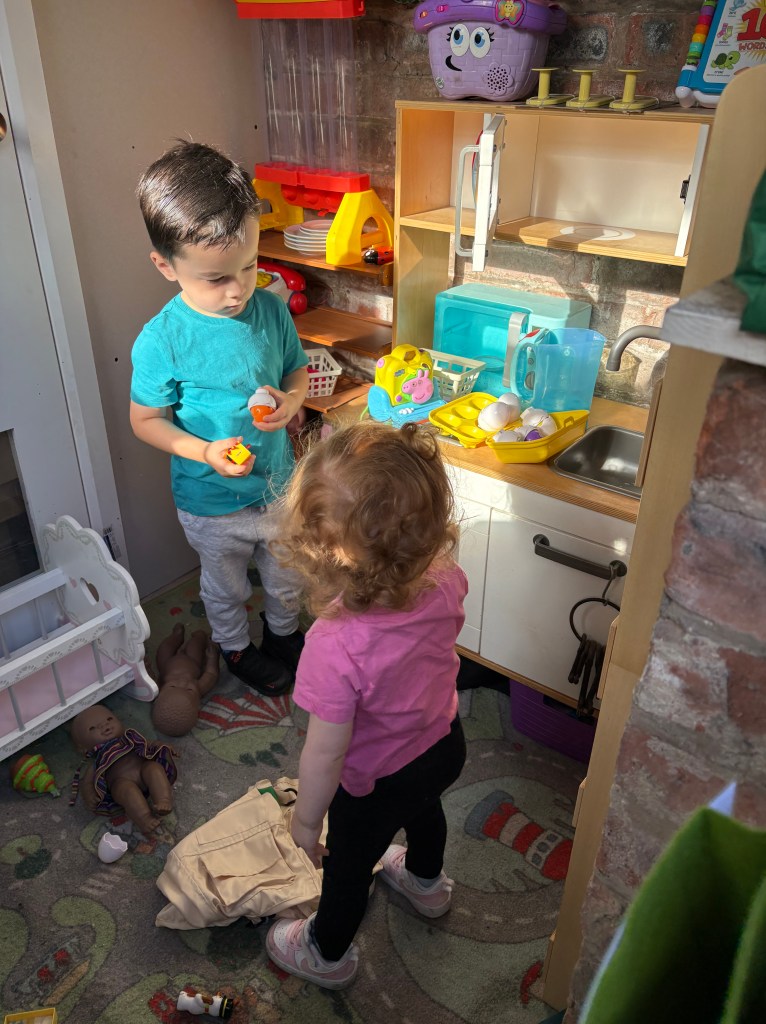
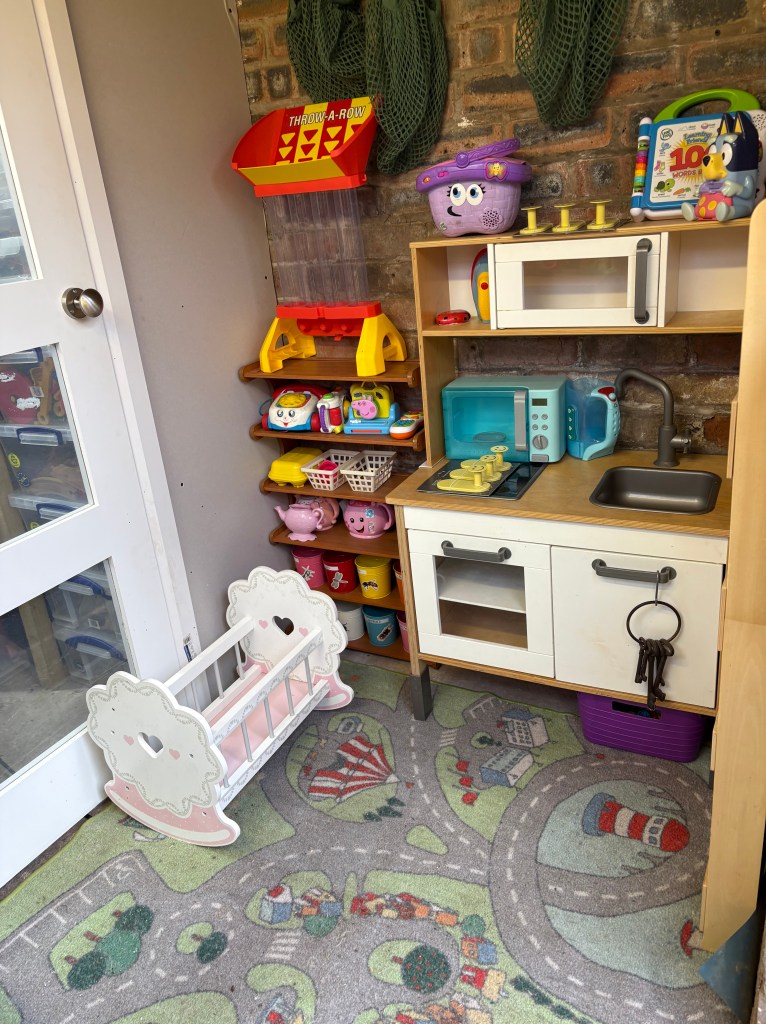
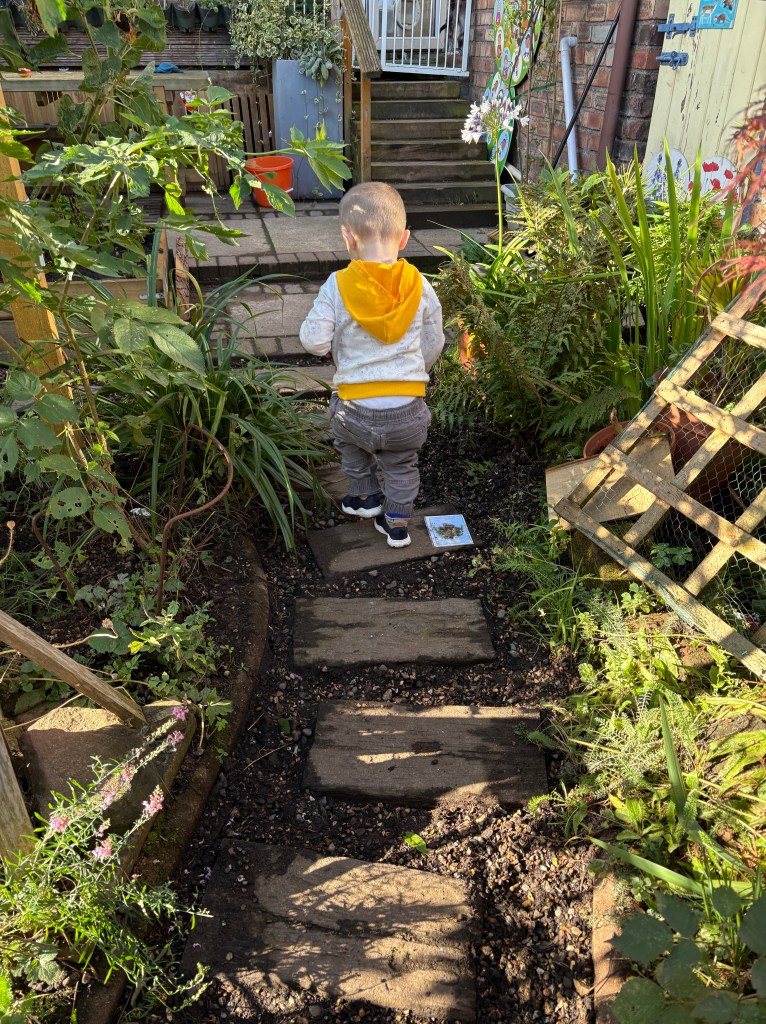
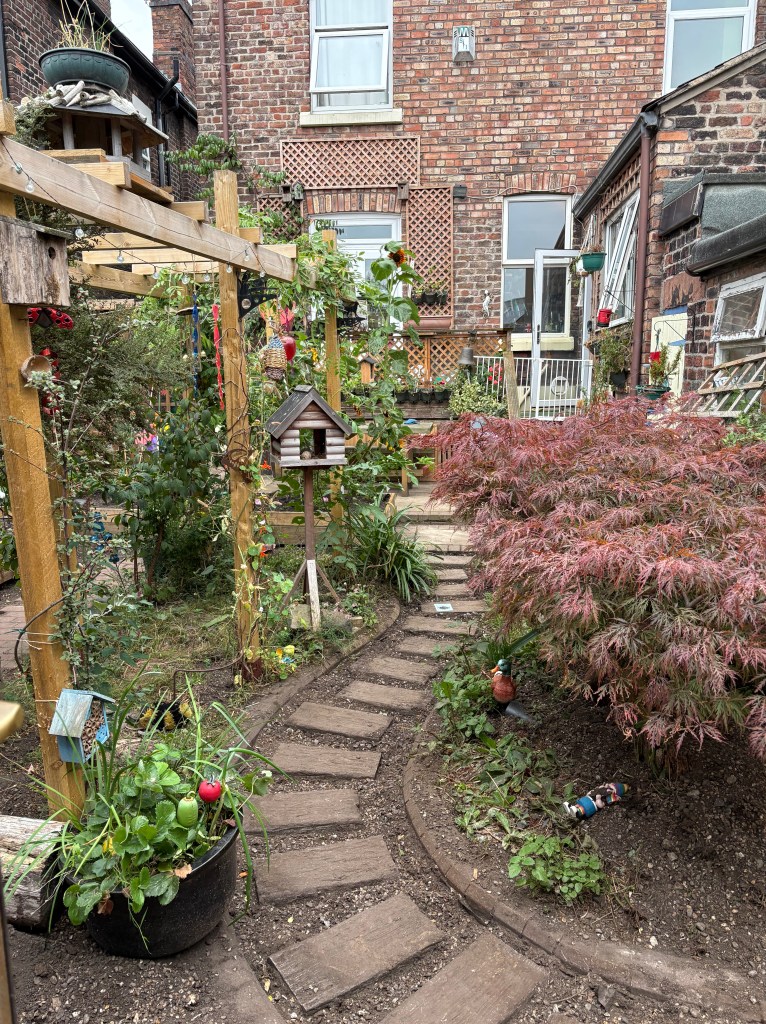
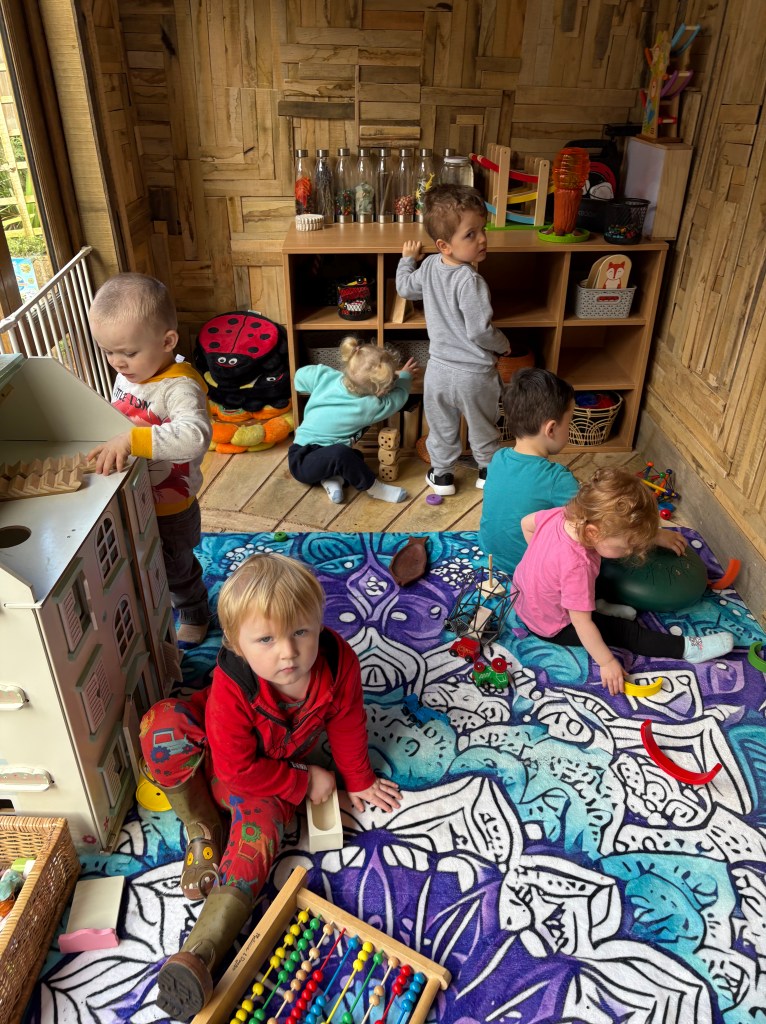
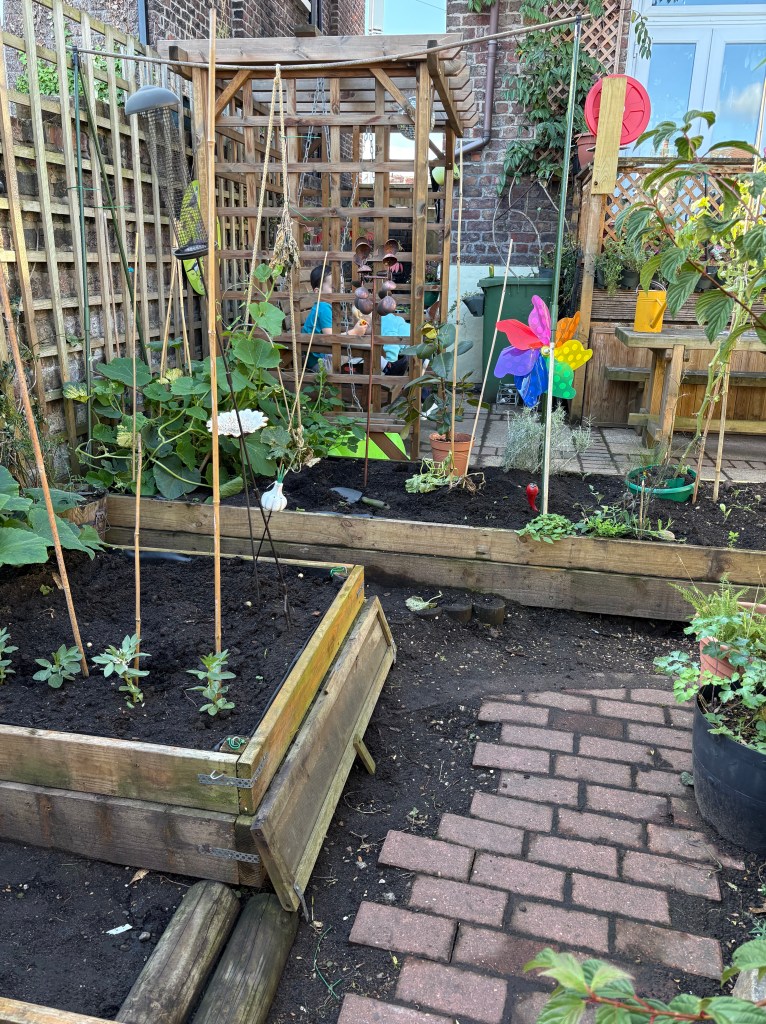
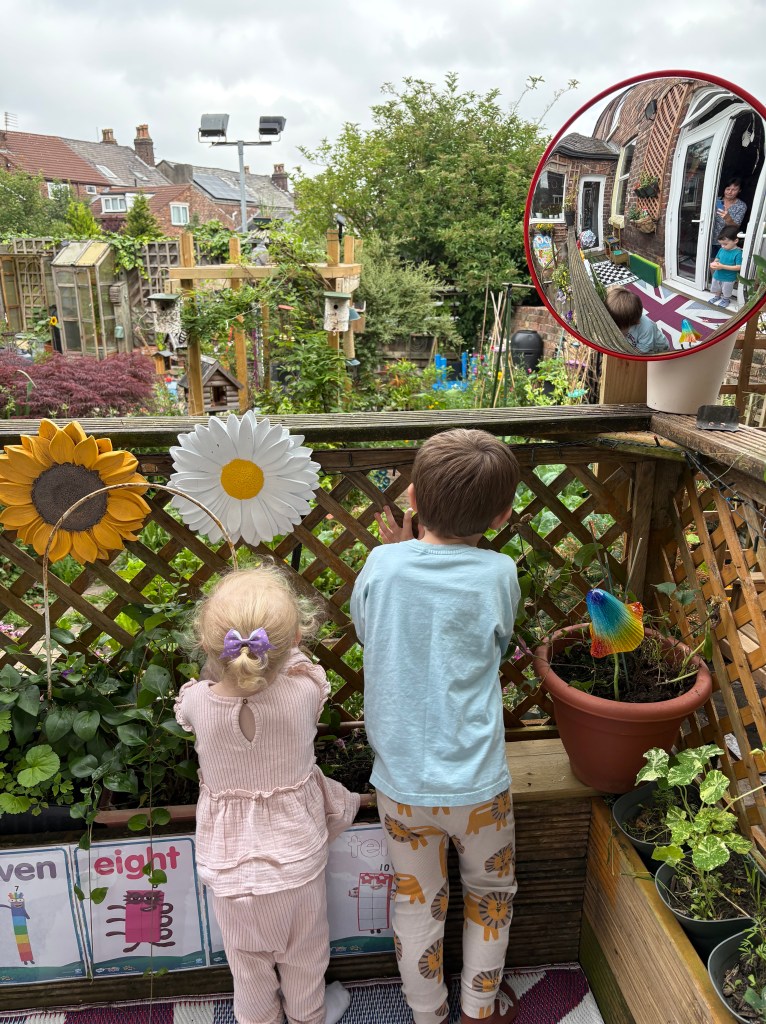
Elliott and Pennie engaged in imaginative play imaginative play The vibrant interior of the Kitchen Role Play area, filled with engaging toys and a colourful carpet, designed to foster creativity and social skills in young learners.A child exploring a lush garden classroom, designed for hands-on learning and discovery.A beautifully designed garden classroom filled with vibrant plants, pathways, and engaging elements for children to explore and learn.Children engaging in creative play fostering imagination and social skills.Children engaging in hands-on gardening activities in a unique, sustainable garden classroom designed for exploration and learning.
The Kitchen Role Play area is a vibrant and imaginative space that allows children to explore the various aspects of a kitchen area. In this engaging environment, young learners can don playful chef hats, wield safe utensils, and utilize miniature kitchen appliances to create their own culinary masterpieces. This area is designed not just for play but also to foster creativity, collaboration, and social skills as children work together to pretend they are hosting dinner parties or serving in a bustling café. Rich with interactive elements, the Kitchen Role Play area encourages children to use their imaginations while also familiarizing themselves with the concepts of food preparation, healthy eating, and even basic mathematics through measuring and counting ingredients. It serves as an essential component of early childhood development, blending fun with education in a way that sparks curiosity and joy in cooking.
Role play in early childhood education promotes creativity, social skills, and collaboration among peers. It aligns with the Early Years Foundation Stage (EYFS) objectives by enhancing language and communication through negotiation and idea-sharing. Additionally, it builds emotional intelligence as children empathize with others and reinforces cognitive skills by presenting problem-solving opportunities. Ultimately, role play is a valuable and enjoyable tool for intertwining learning objectives.
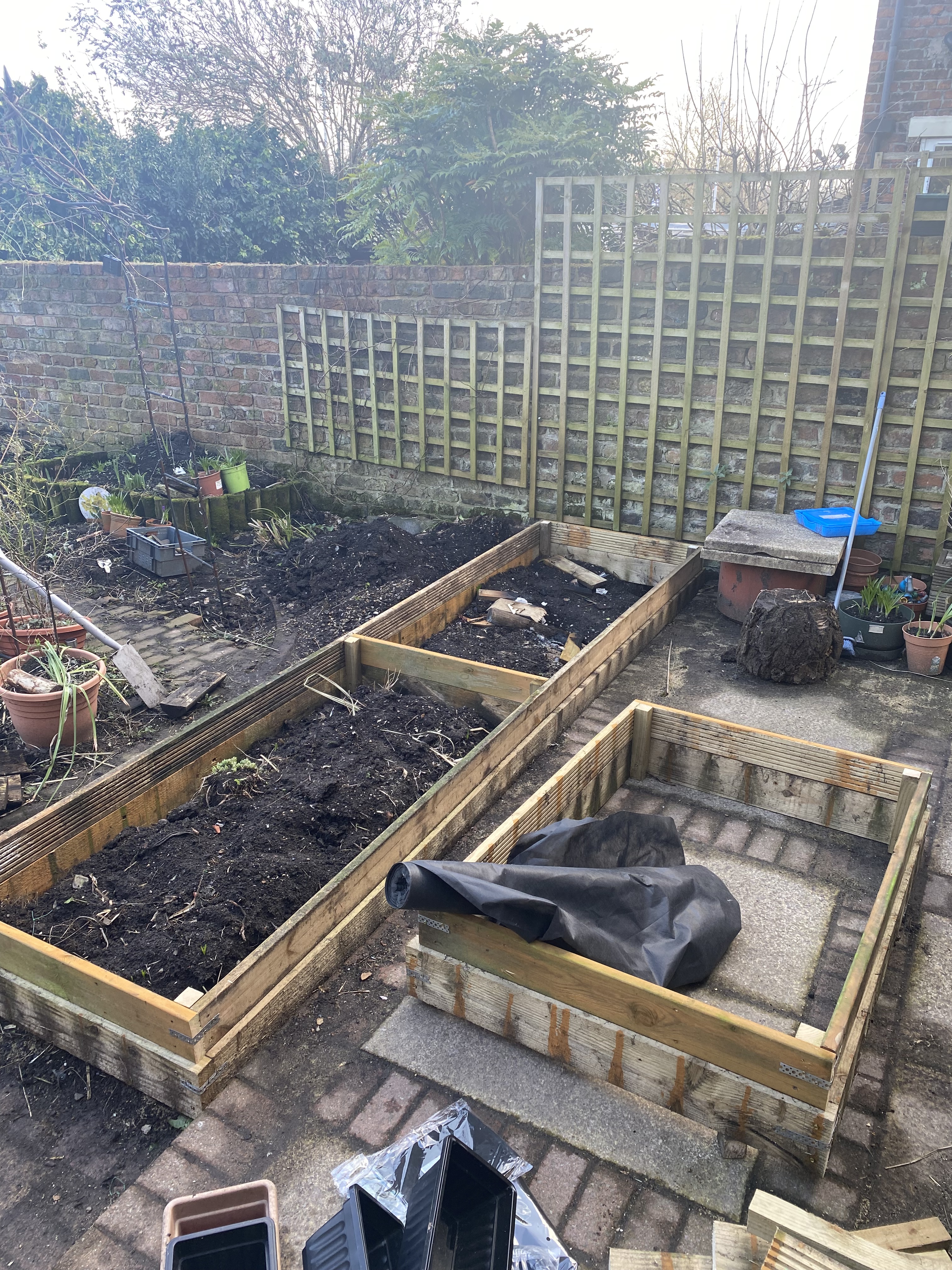
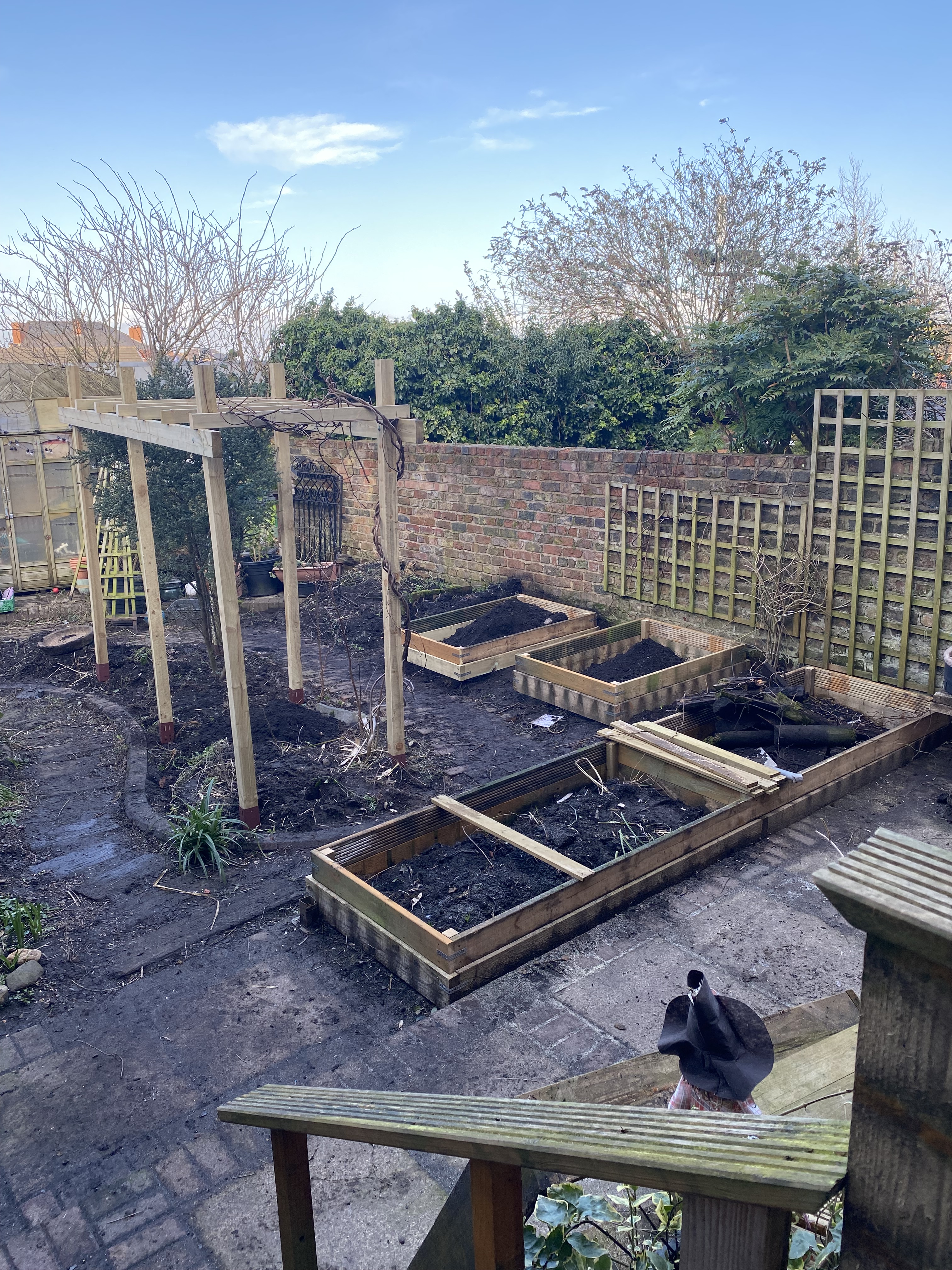
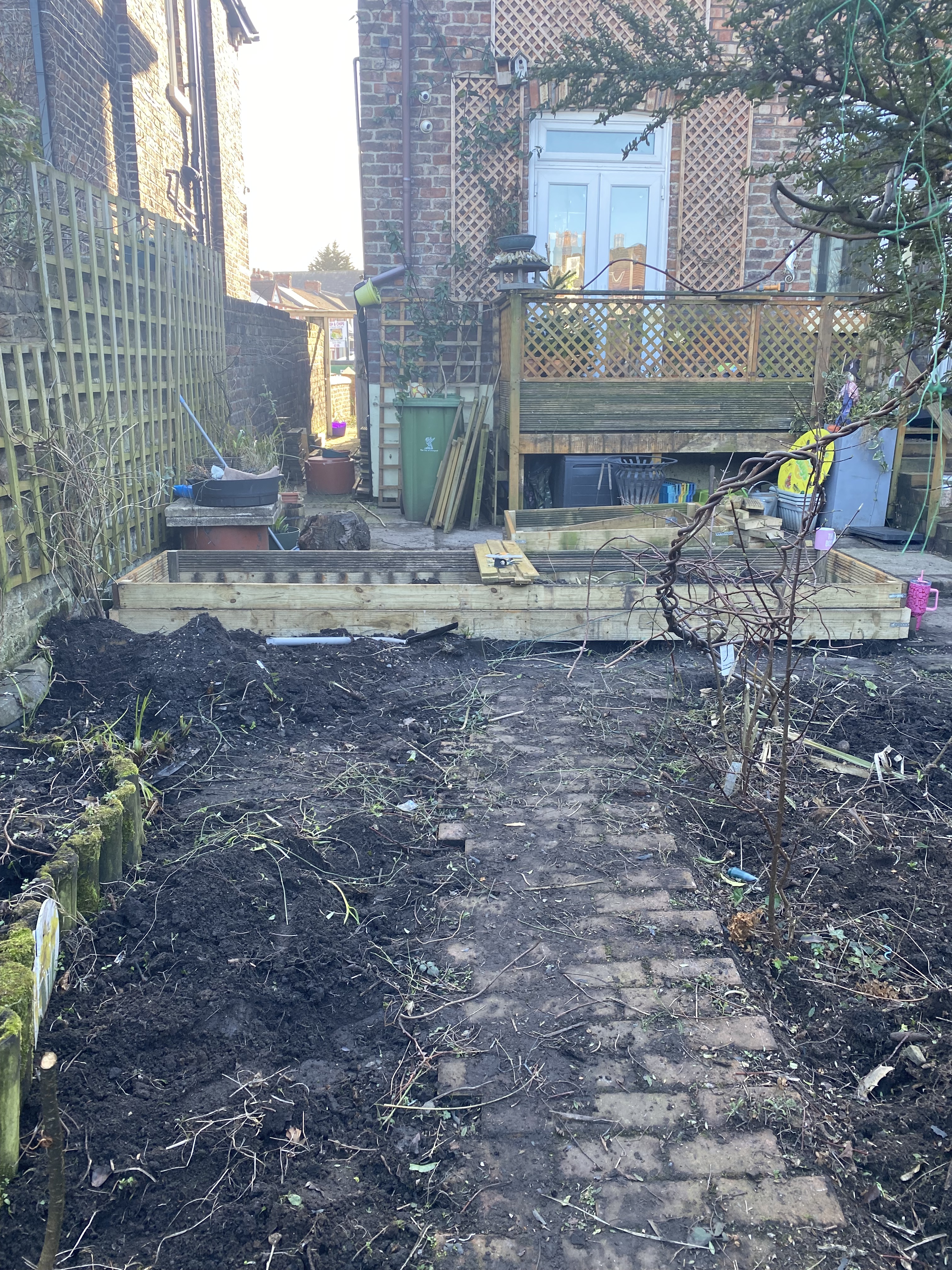
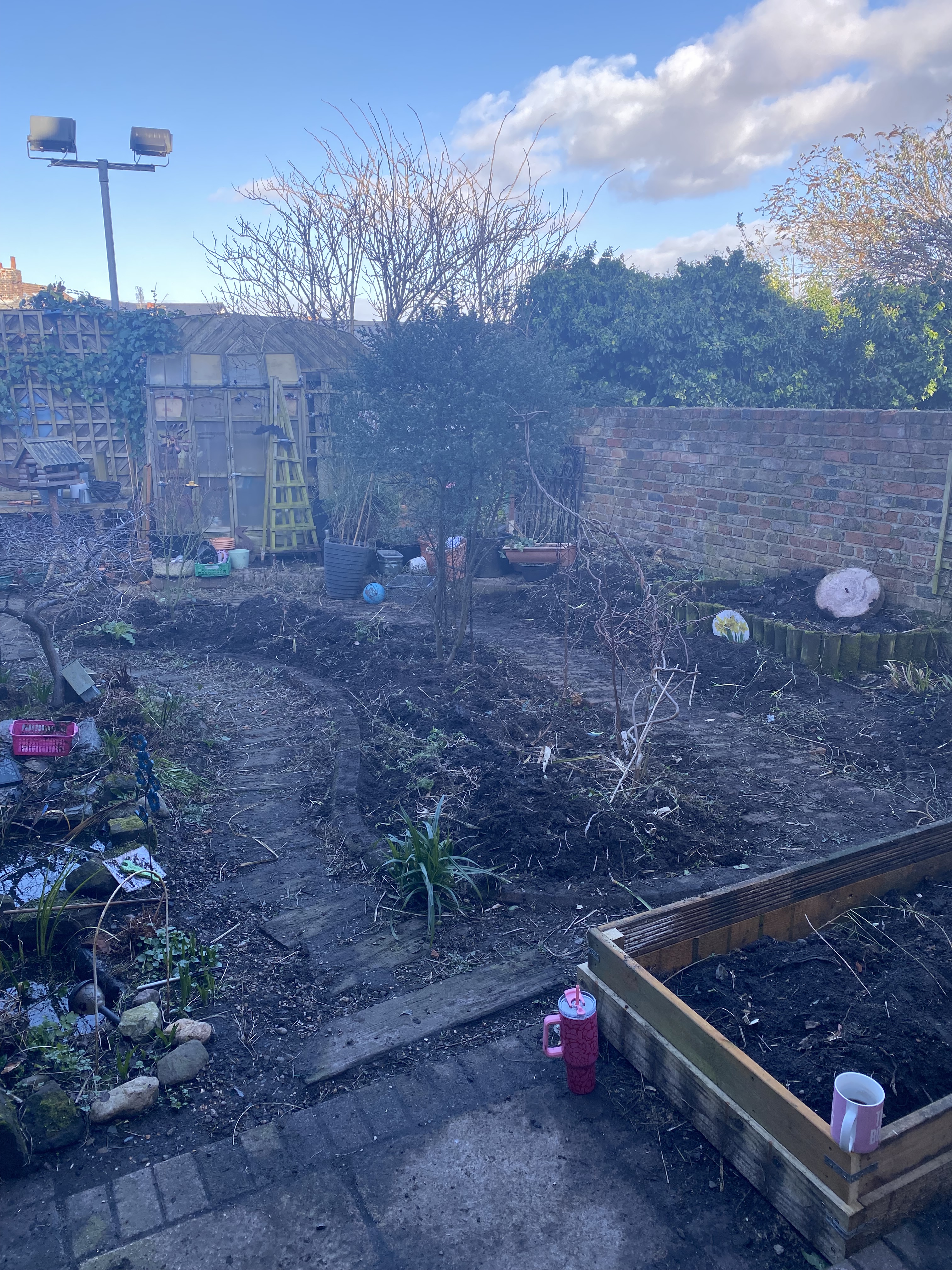
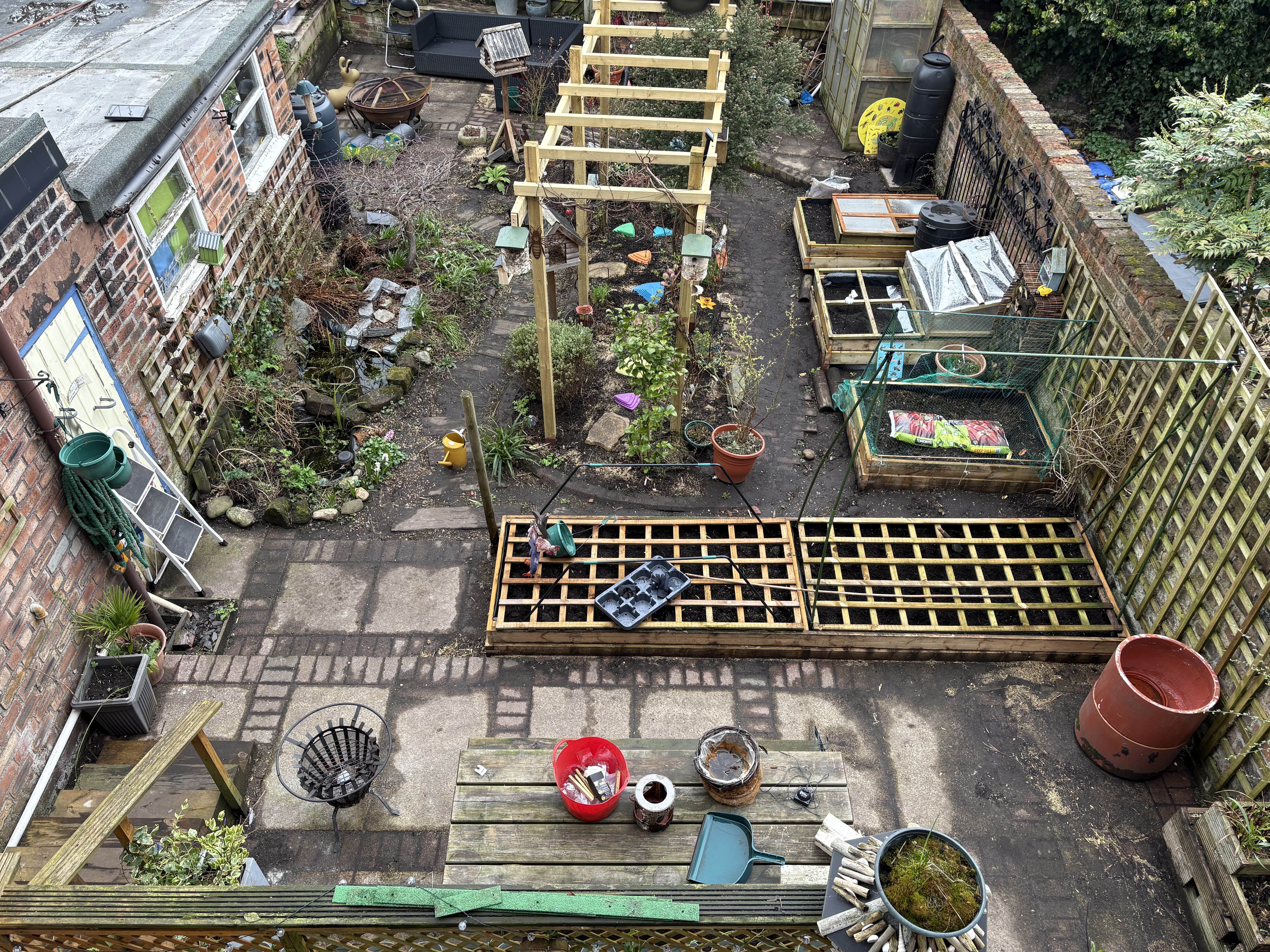
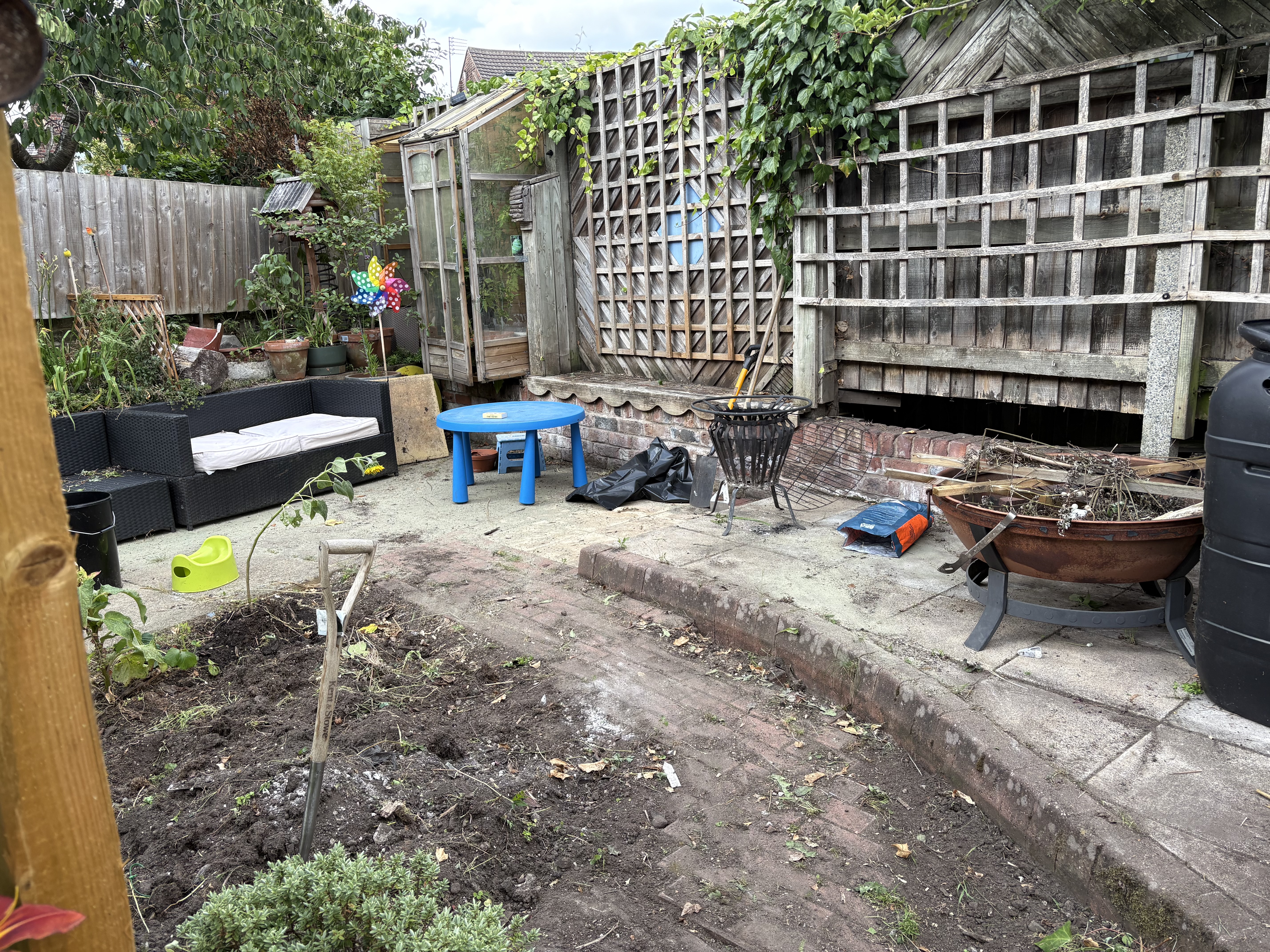
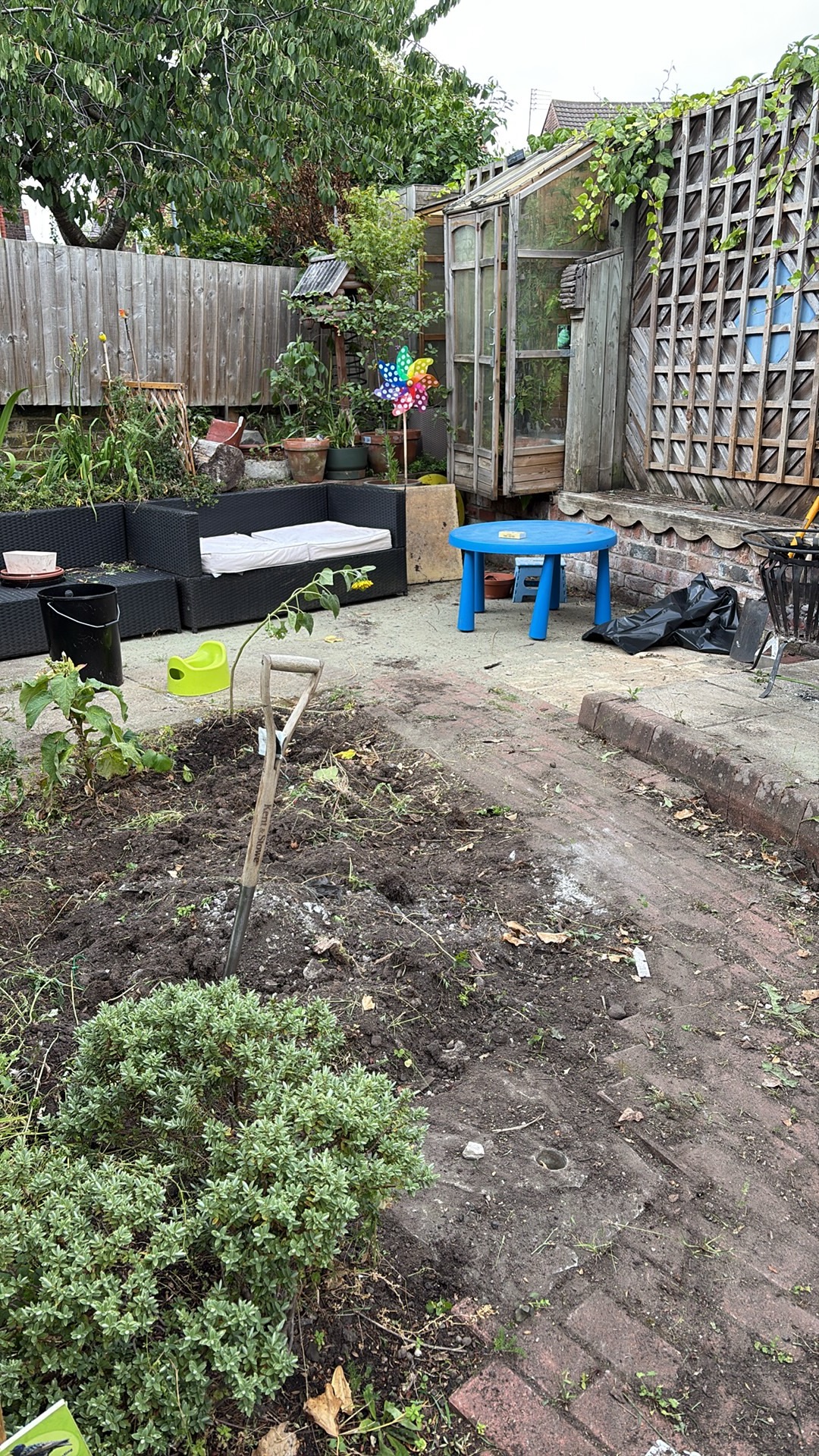
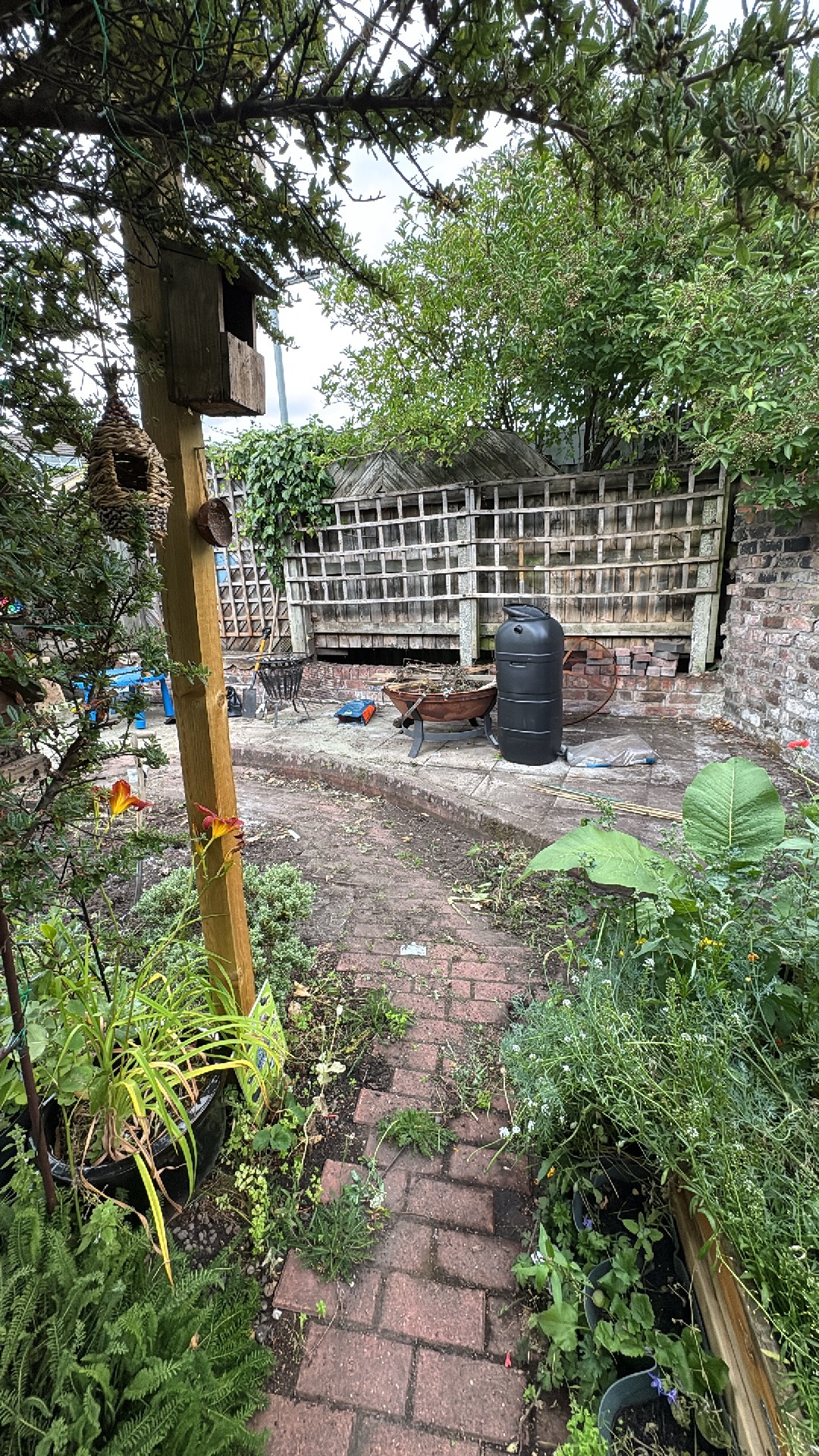
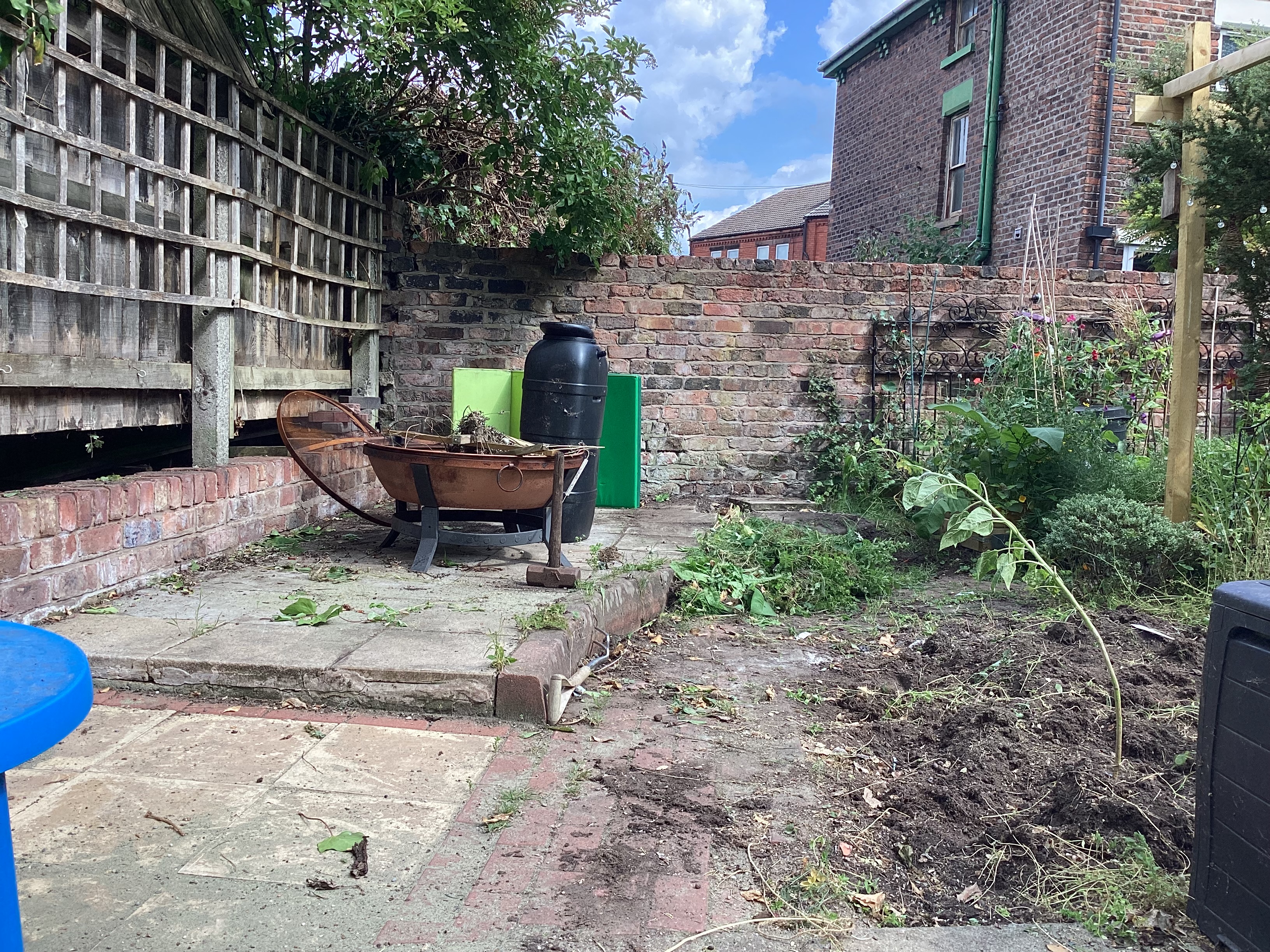
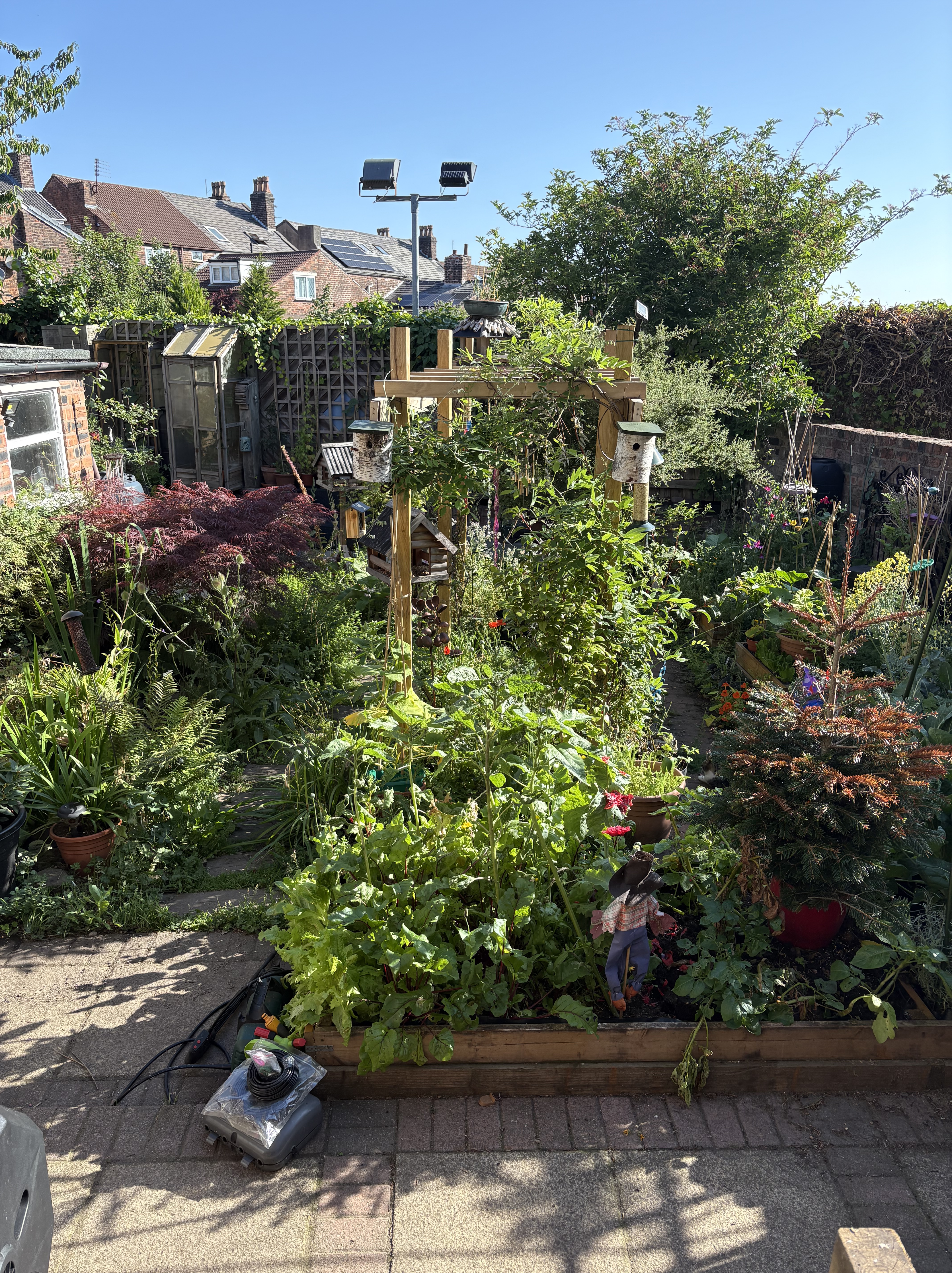
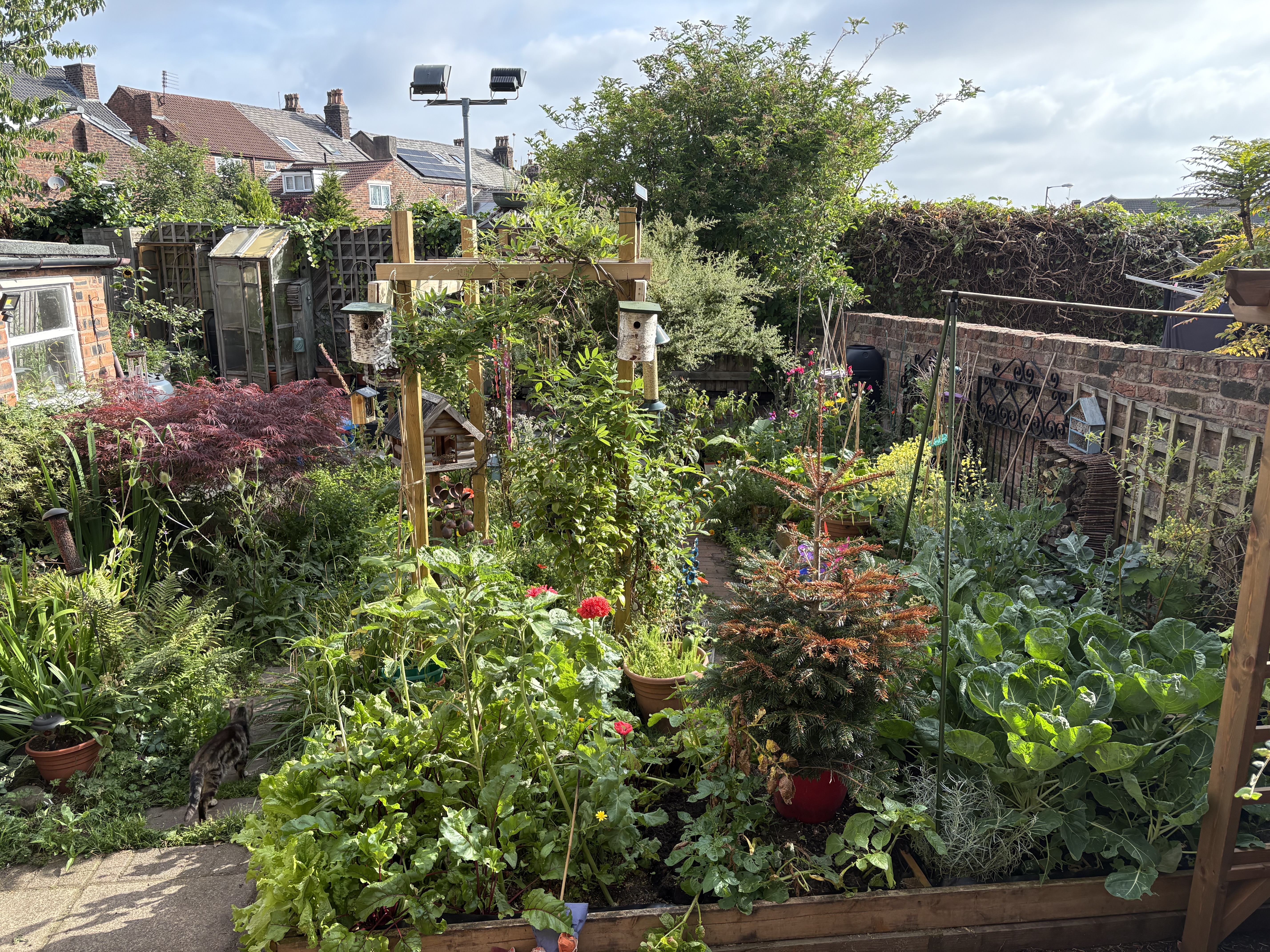
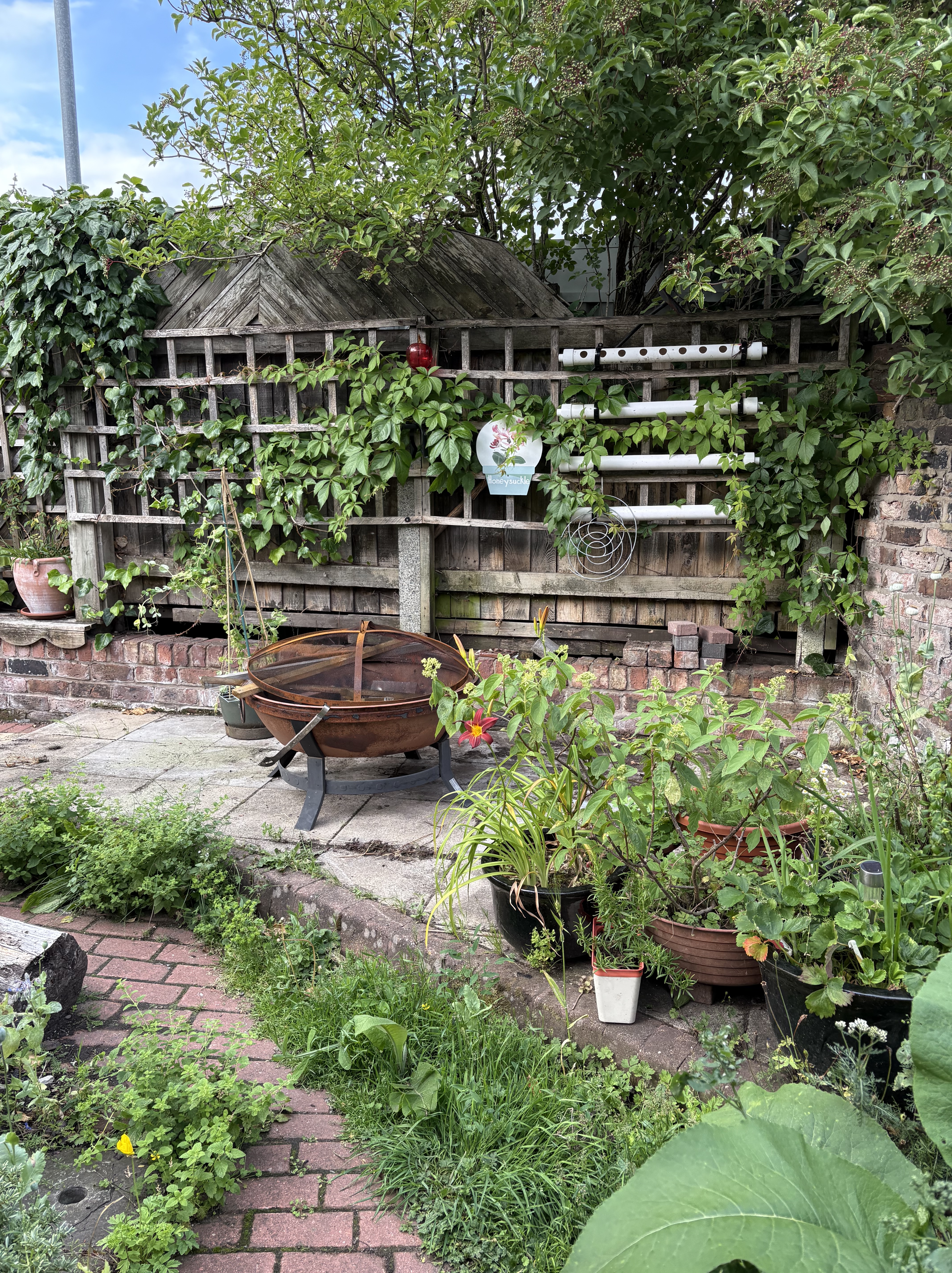
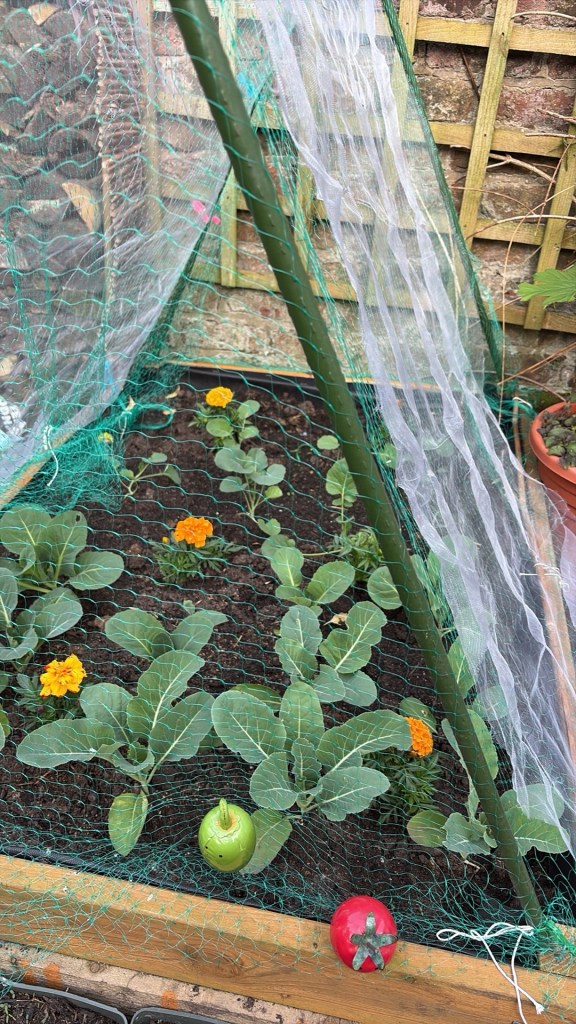
Today marks an exciting milestone as our project progresses. We eagerly awaited the crew to start building the new classroom and took the time to reflect on our hard work over the past few months. We designed and constructed vegetable raised beds and carefully relocated our various wildlife habitats. We discussed the effort we’ve put in, knowing it will be worthwhile when the new building is complete.
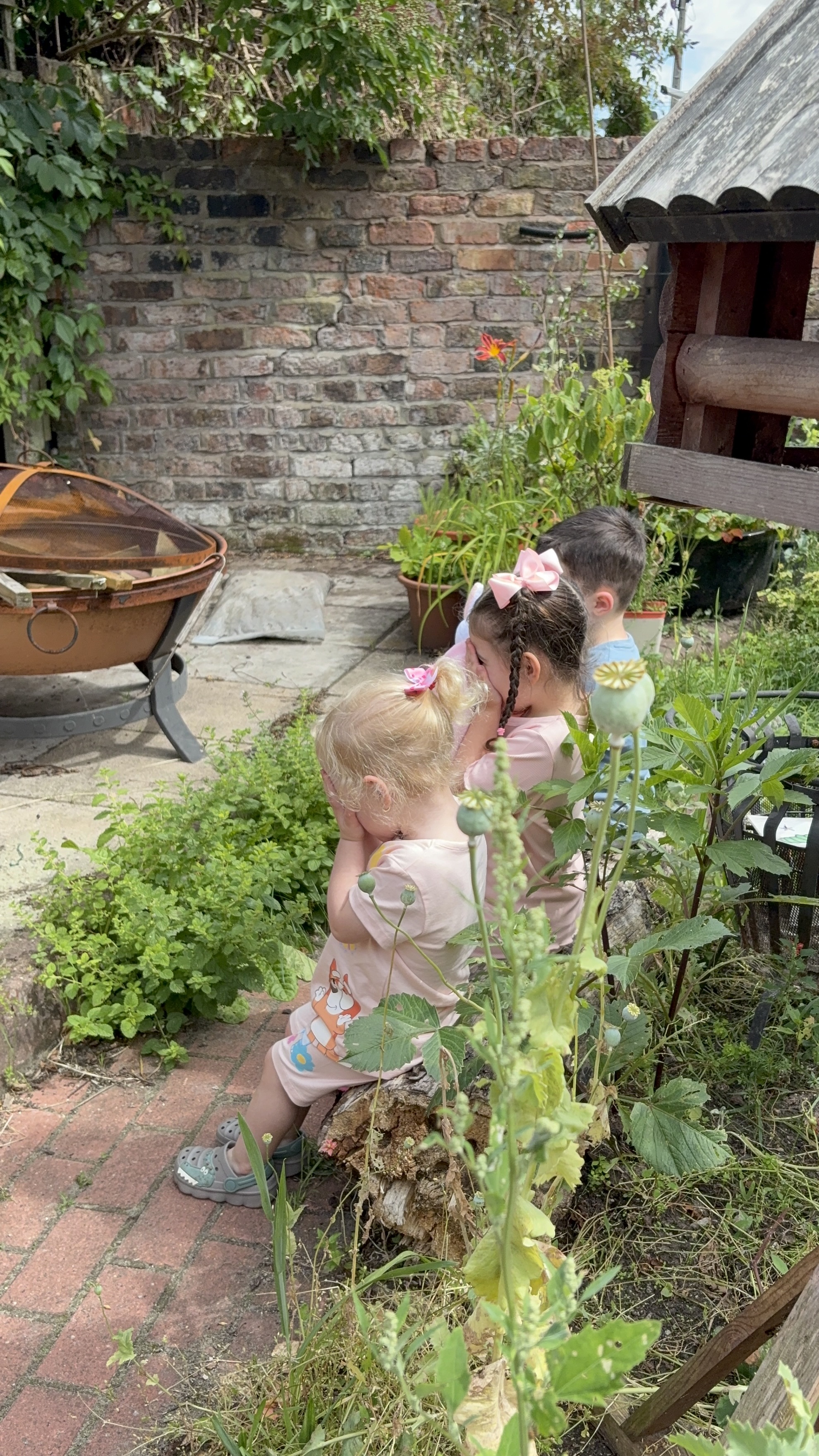
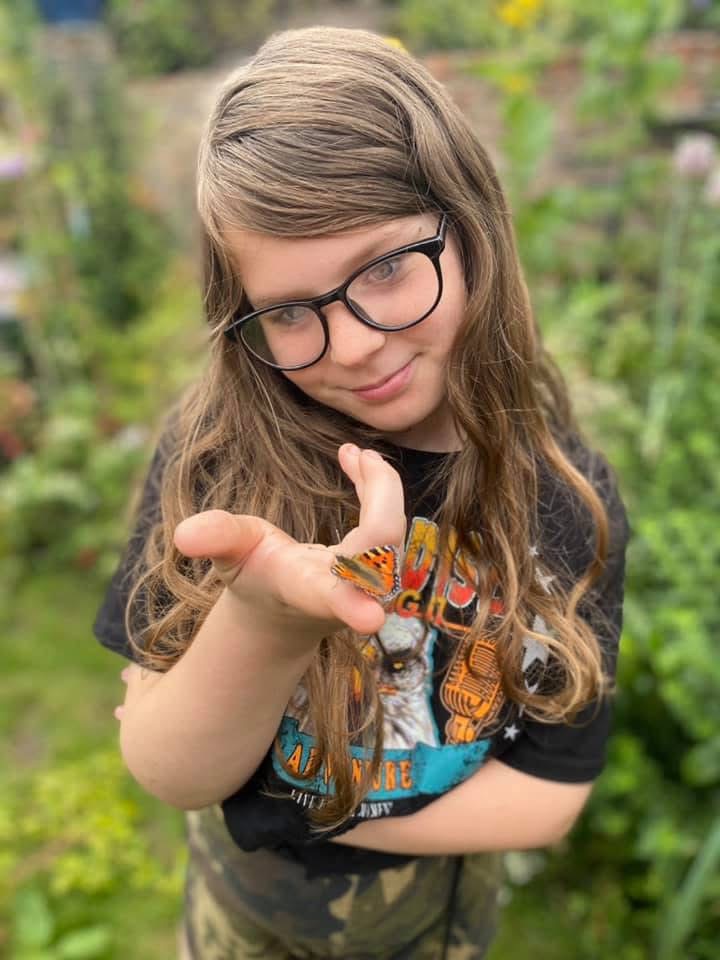
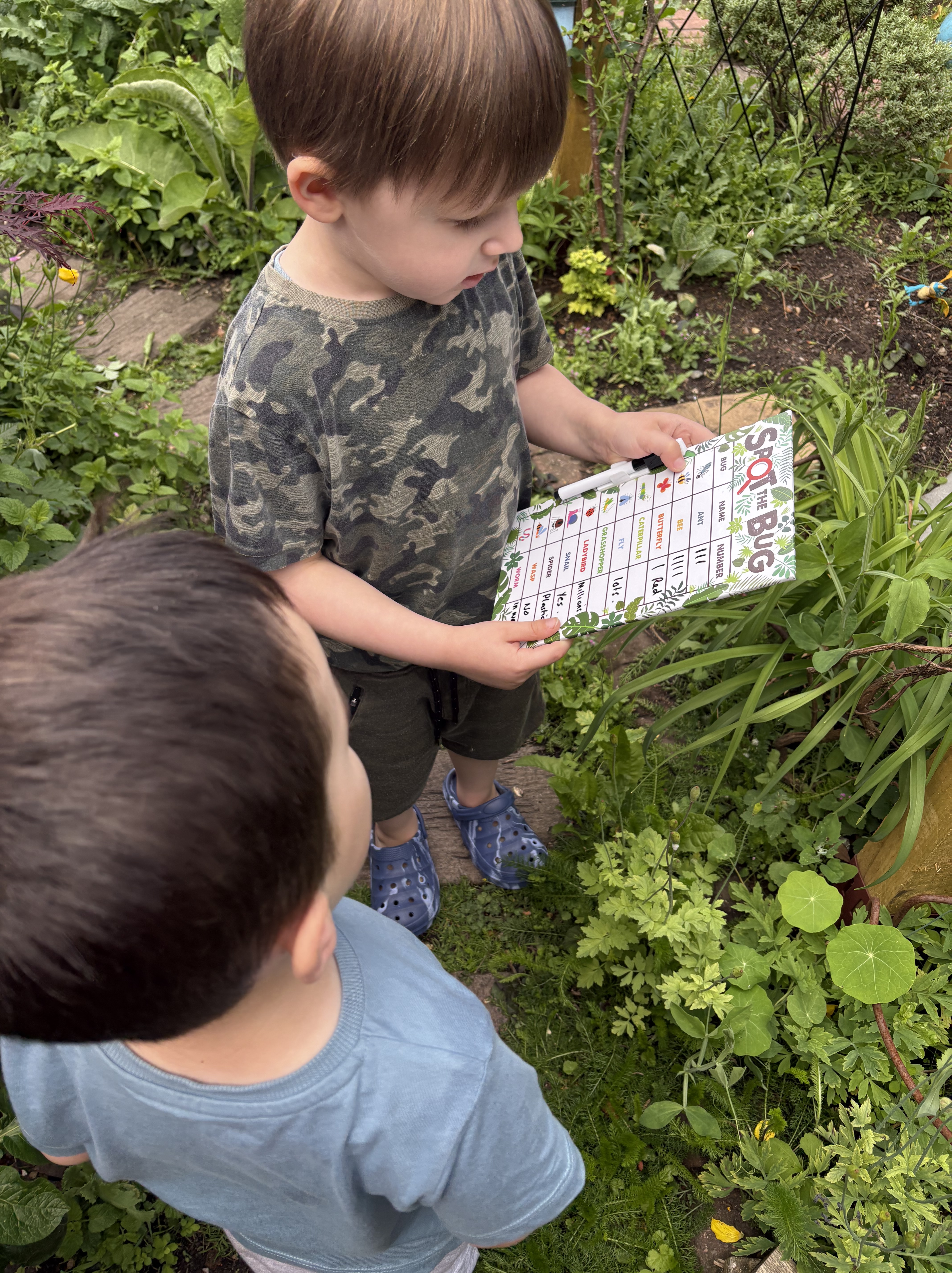
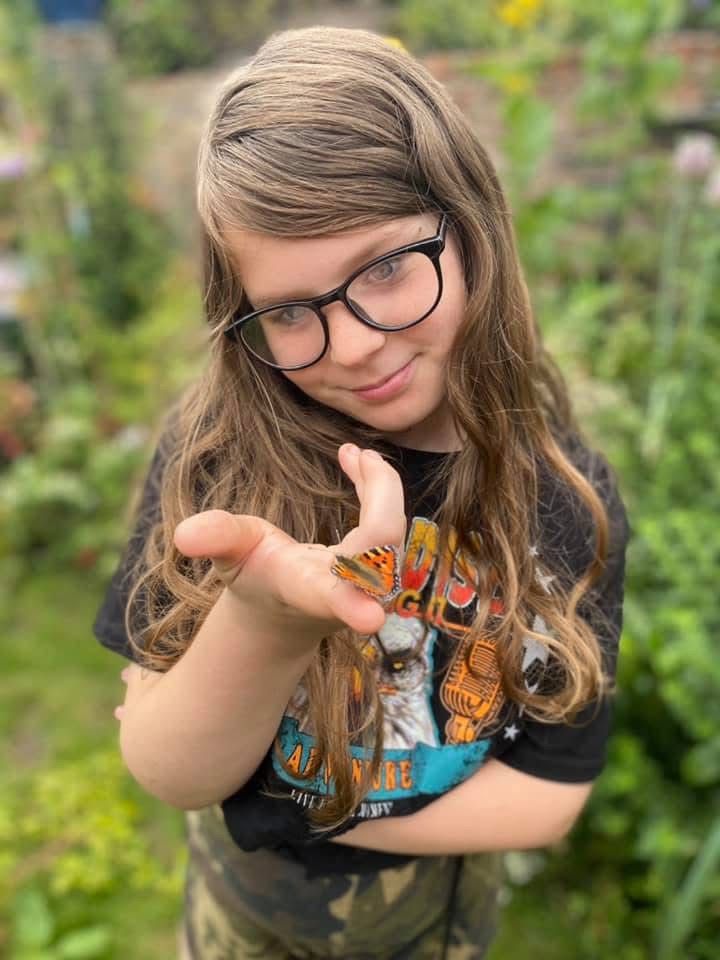
Jack and Elliott talked about all the different bugs we found while moving everything, sharing their discoveries with excitement and curiosity. Lottie chimed in, mentioning that there had been too many big spiders lurking in the corners, which made her a bit uneasy, but she gazed at the butterflies flitting gracefully around the flowers with pure delight, admiring their vibrant colors and delicate patterns. The trio spent hours discussing their favorite insects, and while some found creepy crawlies repulsive, they all agreed that nature’s beauty was unique and captivating, especially when it came to the fluttering wings of those enchanting butterflies.
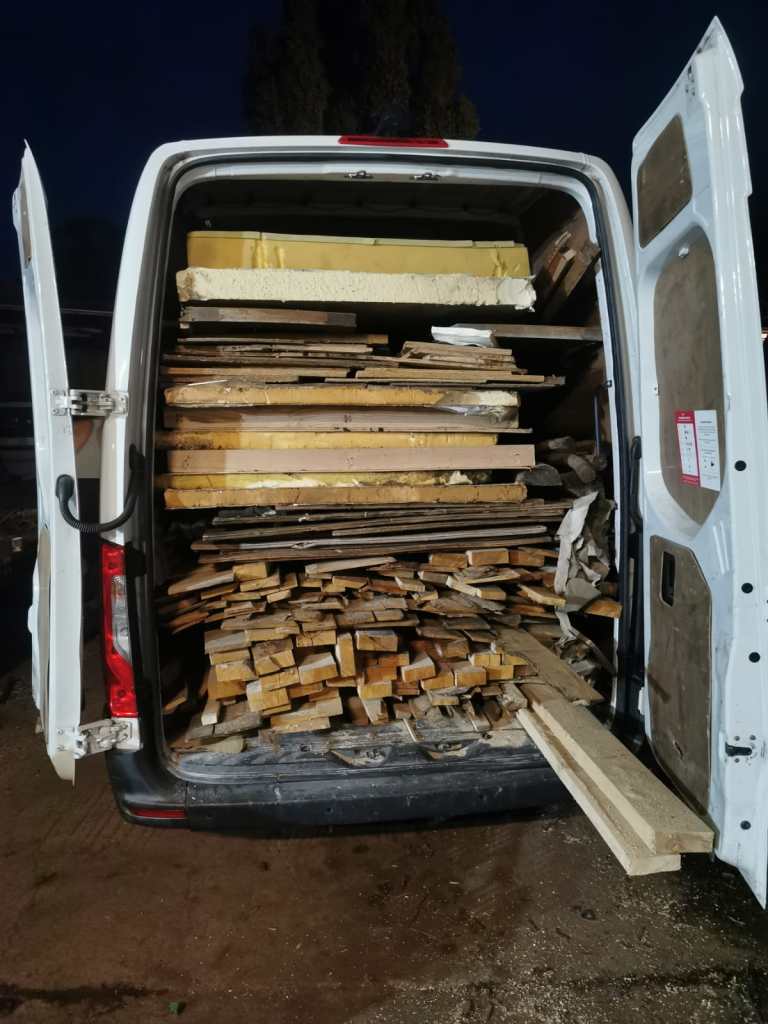
This is the area where the classroom will be built, its dimensions measuring 17 feet by 8 feet. The design emphasizes sustainability, as it will be constructed entirely out of wood, carefully selected for its quality and durability. Furthermore, everything in the classroom, from the walls to the fixtures, will be made using recycled materials, ensuring minimal environmental impact. This includes the doors and windows, which will not only add character to the space but also promote eco-friendliness. The project aims to create an inspiring learning environment that highlights the importance of recycling and sustainability for future generations.
The van packed with wooden materials, ready for the construction of a sustainable classroom.
Holly and Jack stood quietly, gazing at the garden as it is for the last time, remembering countless hours spent planting flowers, nurturing the soil, and watching their hard work bloom into vibrant colors.
My childminding practice has always been a ‘Garden Classroom’ curriculum and I strive to make the environment accessible and an engaging experience for all children.
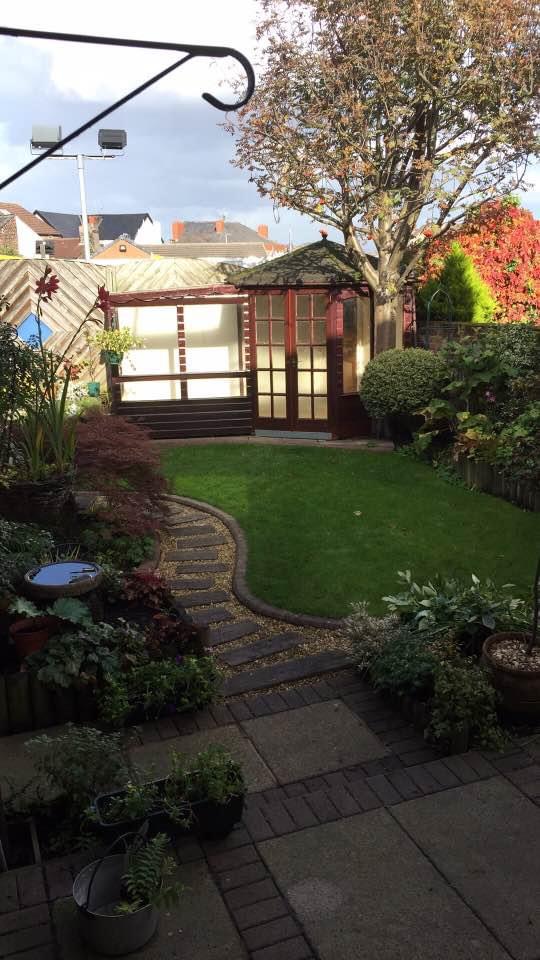
When I moved to my home, the main attraction was the garden and the garden summerhouse. Unfortunately not long after I moved in, it became obvious the summer house was not safe enough to use and we had to take it down.
Since taking down the summer house it has been my dream to build a stronger, bigger outdoor classroom. We have been planning since that day and 7 years later we have been given the opportunity to make our vision come true.
The opportunity to apply for a grant from the local council came up in May 2025. This grant was offered to settings in Liverpool to enable them to expand settings and provide new places for children under 5 years of age to access quality education.
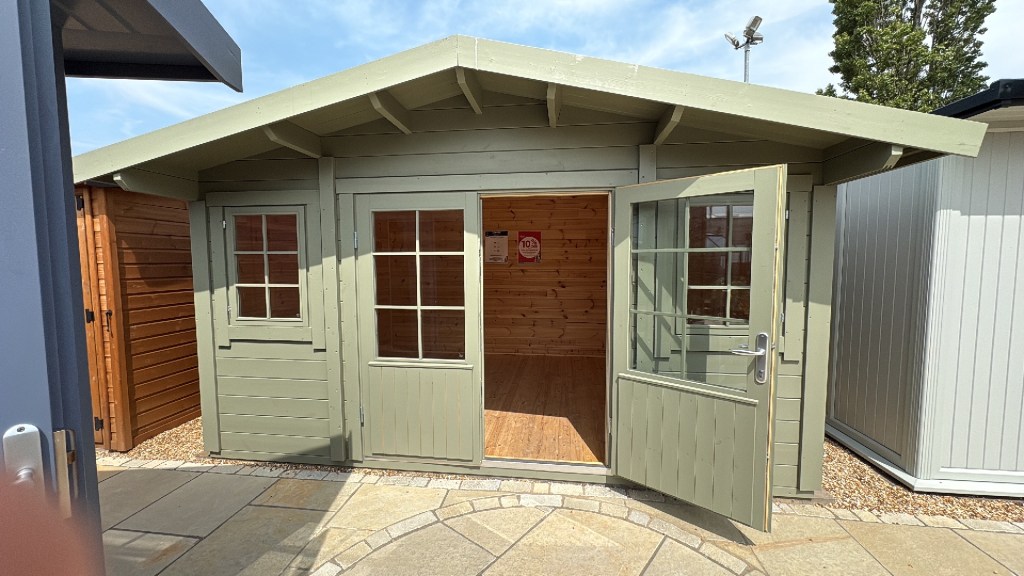
The children and I took a visit to the local Garden Center to look at various types of garden buildings. This gave us an idea of space, materials and what we would like the classroom to look like. This information all helped when putting the bid together.
We worked hard putting into place the documentation to provide evidence on how we attend to expand our setting. luckily as we had been on our planning Journey over the last few years this part of the plan was in place. It took us another three weeks and a visit from a council representative to put the policies, financial information information and evidence into place to submit to the decision board.
By the end of June we were given the amazing news that we had been successful with the main part of our bid. This was on the premise we can supply further information regarding the company we had chosen to work with and raise the extra funding needed to cover the entire project. We researched another two building companies to gain more information and chose to go with Eon from ‘All good in the wood’ https://www.allgoodinthewood.co.uk/
‘Who we are, Sustainability is at the heart of everything we do. We’re a vegan-owned business that keeps our community involved with our local trading system. We’re proud of our products being locally sourced, locally finished and installed by local tradespeople, keeping our community personally involved from start to finish! We know exactly where every tabletop, fence post or roof shingle came from and where the trees grew. Call it our sustainable family tree.’
“Ancient trees are precious. There is little else on Earth that plays host to such a rich community of life within a single living organism.” — Sir David Attenborough
Throughout my career as a Registered Childminder, I have incorporated holistic learning into my practices. Over the years this has evolved, and I refer to my way of teaching as ‘The Garden Classroom’ which you can read about on my blog. Although this way of learning is primarily outdoors, the learning is year-long and therefore I have created ways of learning no matter the season. The Garden Classroom practices always incorporate the three prime areas of the Early Years Foundation Stage (EYFS) and the Characteristics of Effective Teaching and Learning. Read on to learn how I weave these key components into outdoor play.
OUTDOOR LEARNING
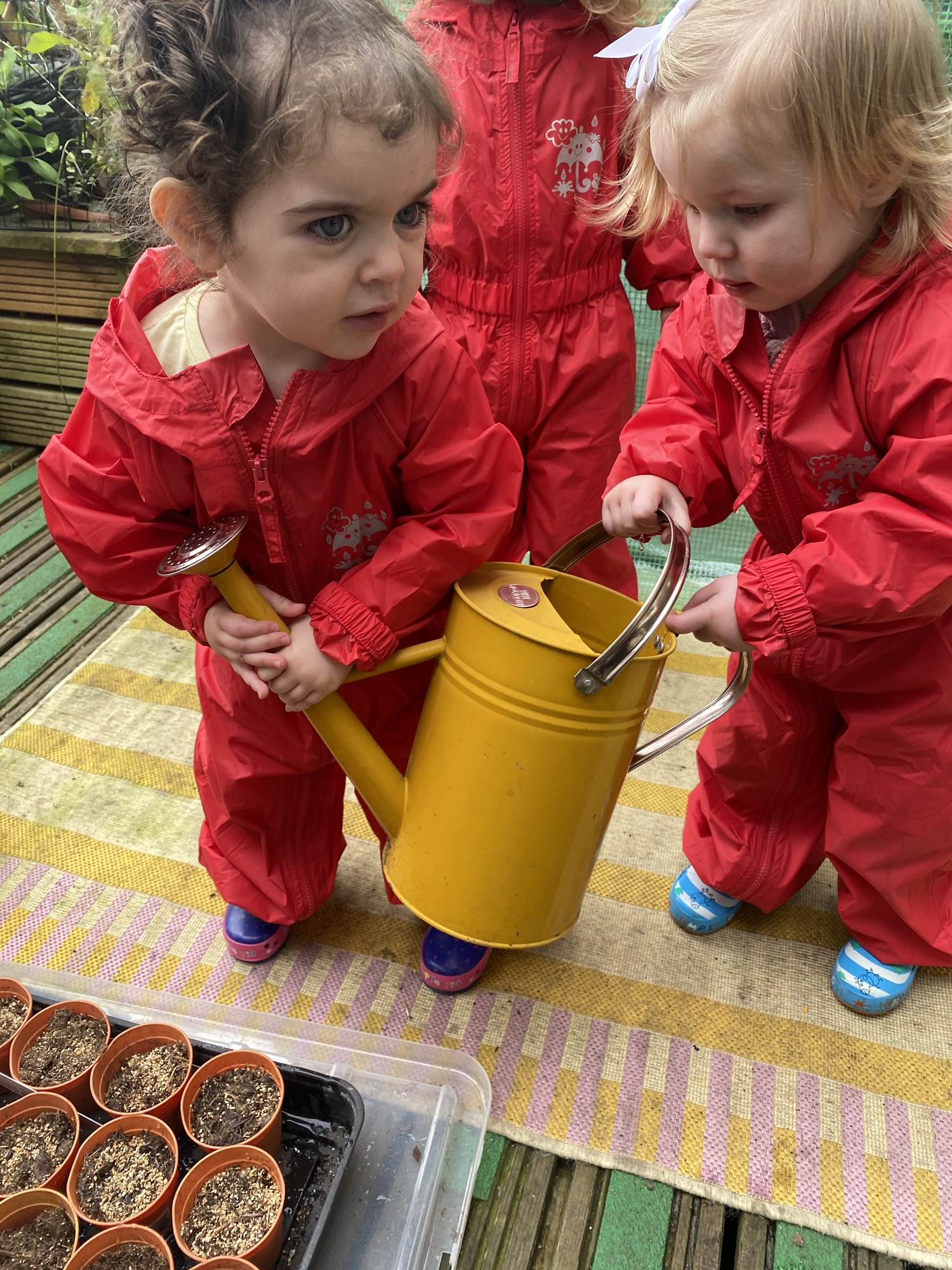
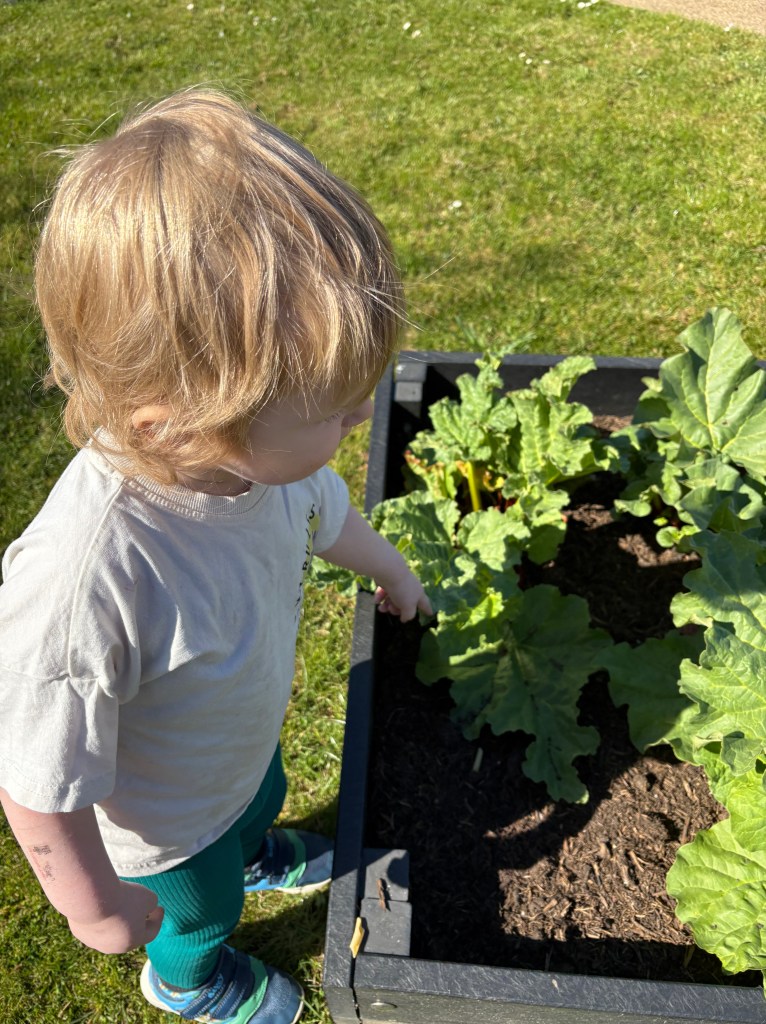
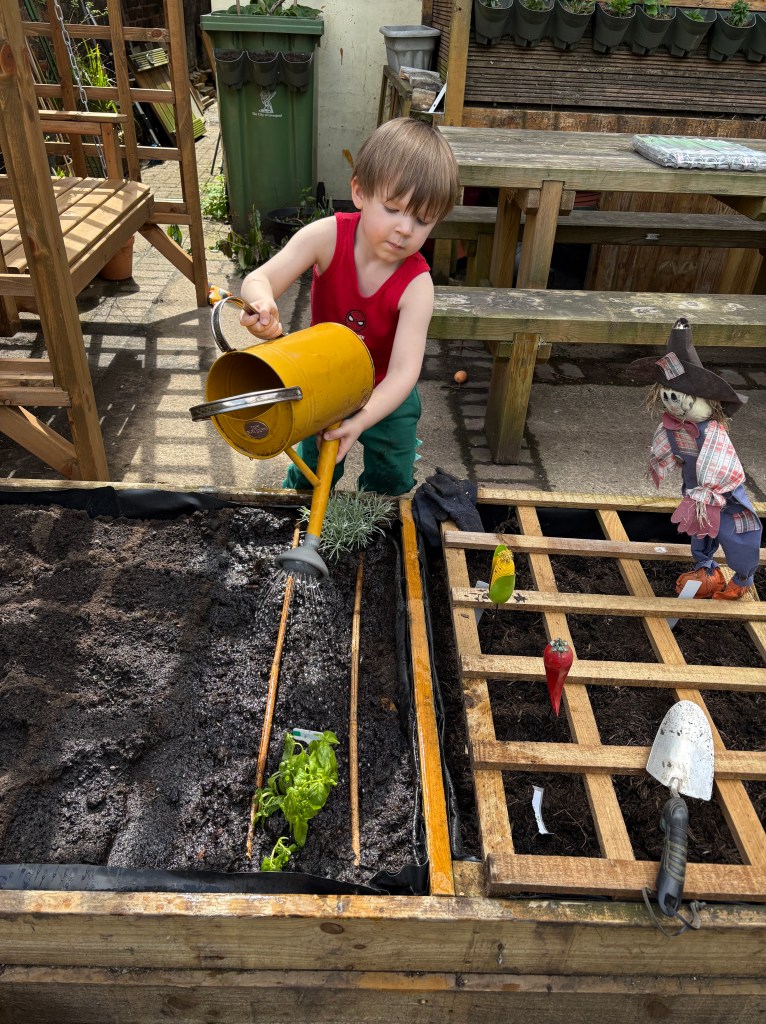
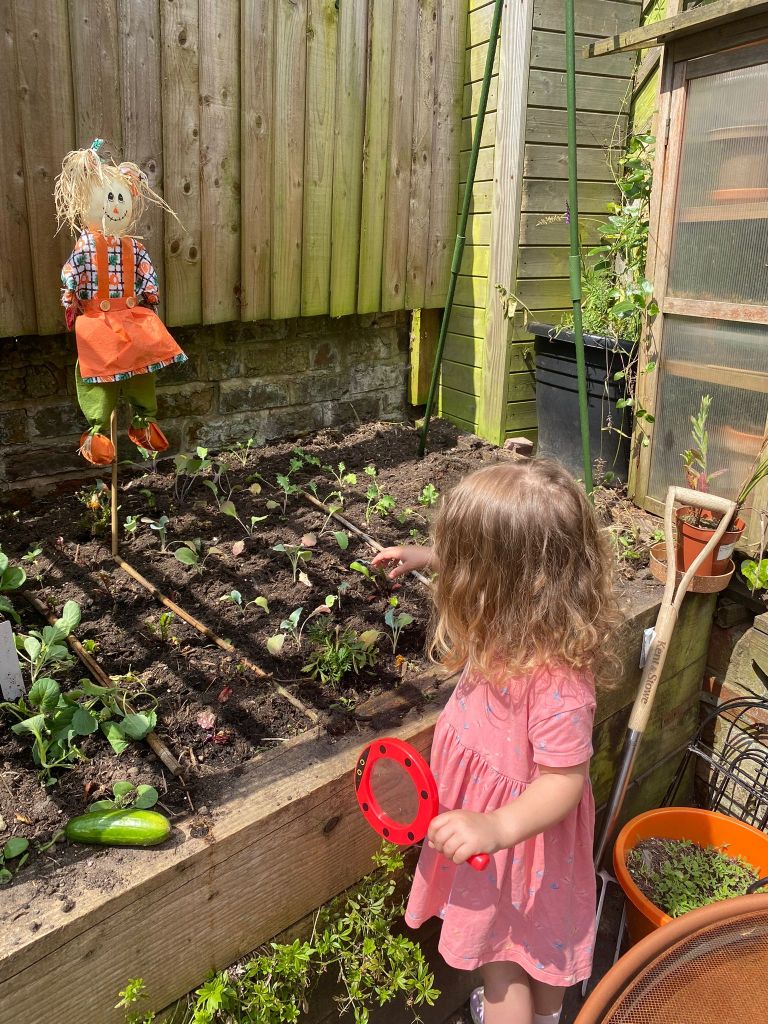
The Garden Classroom is a space where children can learn and grow, connecting to nature and the world around them. Outdoor exploration not only connects toddlers and babies with the seasons and everchanging weather, but also promotes physical activity, a sense of wonder, and an appreciation for the natural environment. Providing gardening activities for my children has proven to be great way to engage them with hands-on learning, including growing food from seed to plate,
food sensory education, pond-dipping and lifecycles, and practicing sustainability through composting and recycling.
The children learn vital skills such as adaptability and resilience by witnessing their environment going through the cycles. This helps them understand the concept of change and builds resilience in the face of transitions. In one area of our garden, we have a pet cemetery. Here, we have buried our family pets and other creatures who have come and gone.
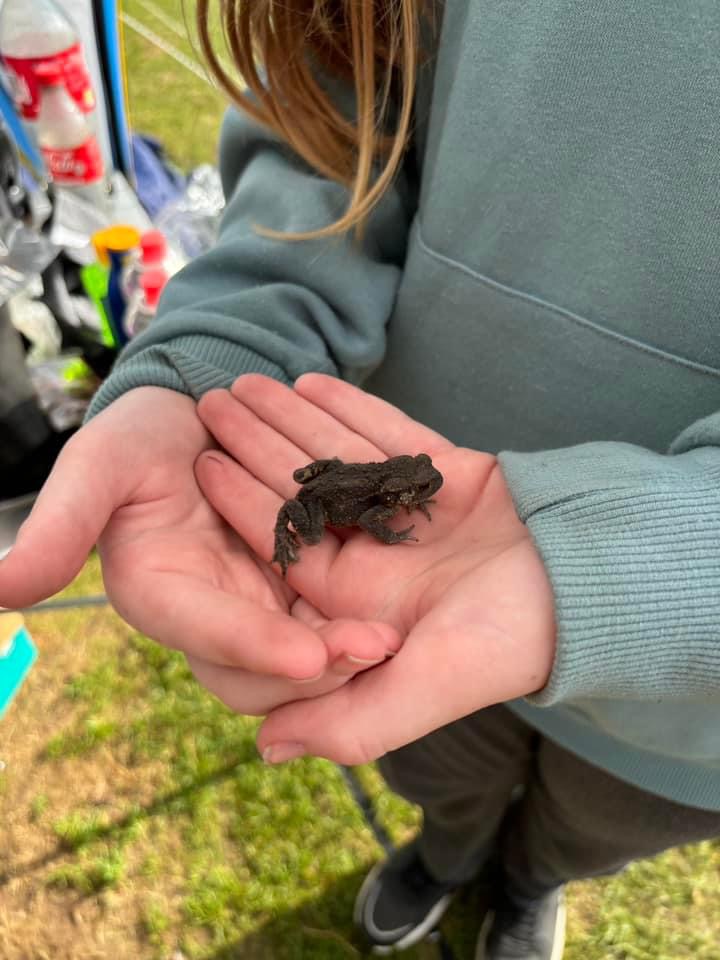
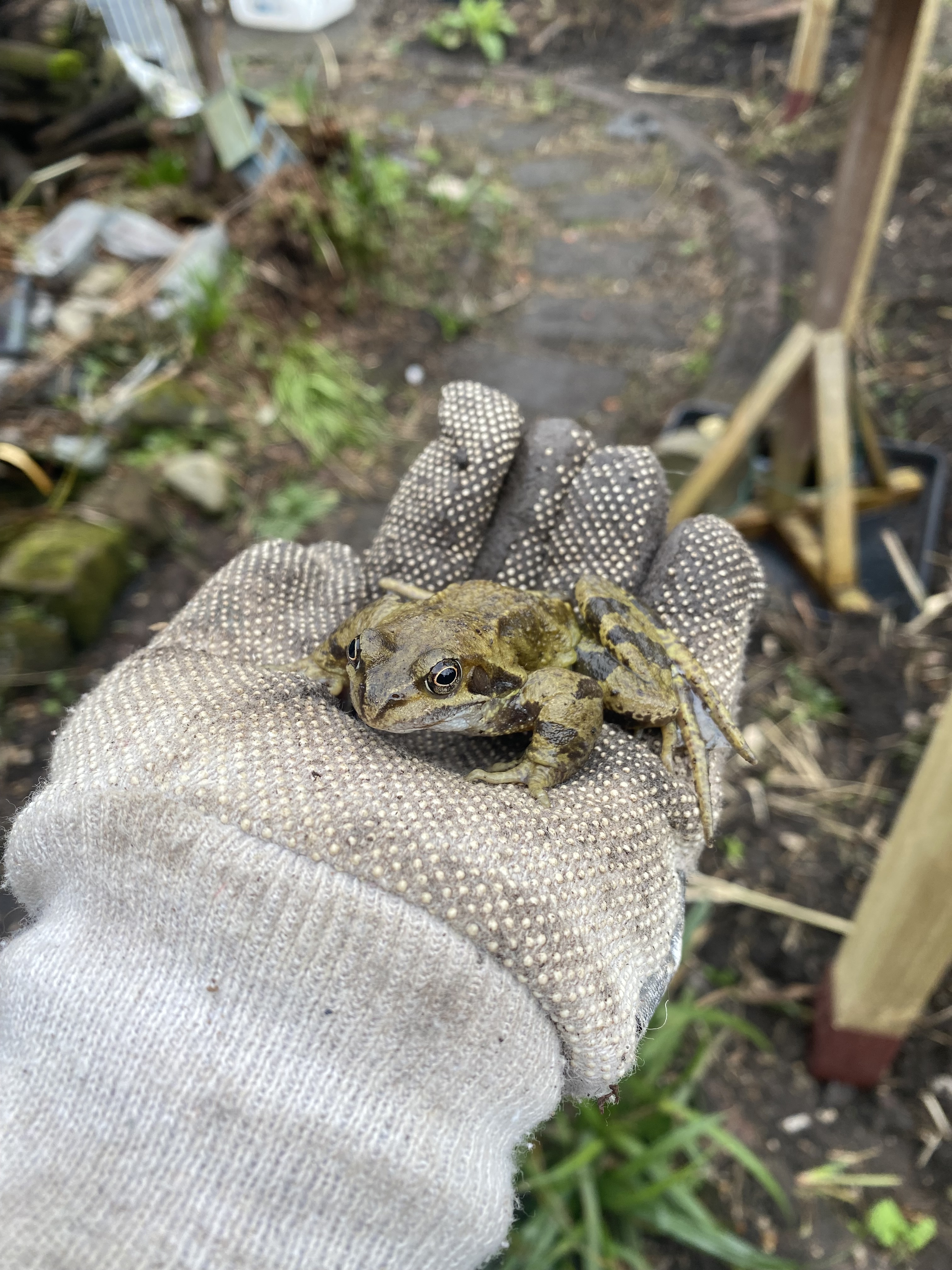
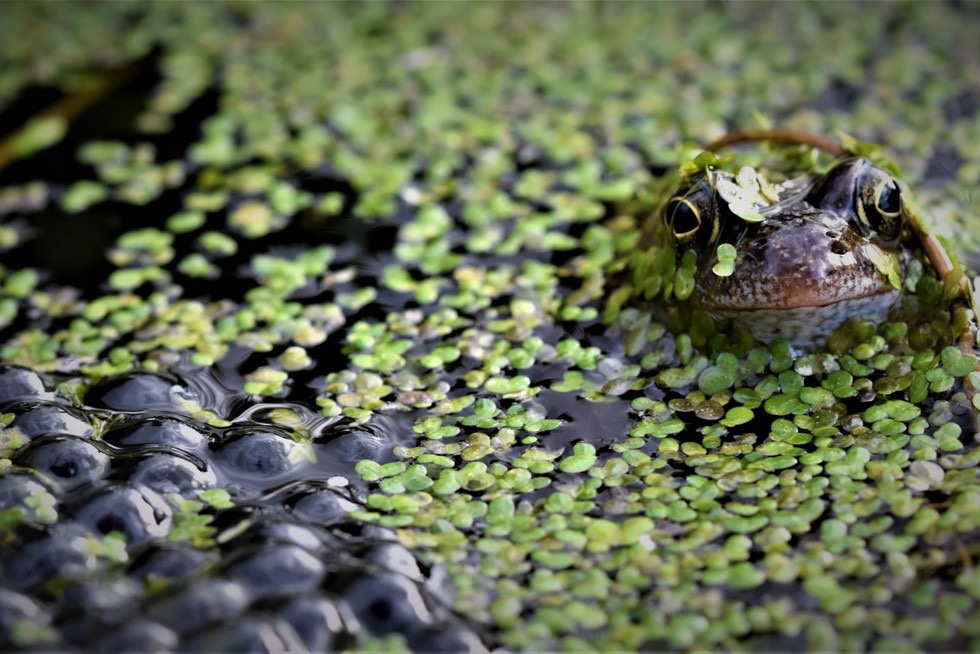
This space allows us to teach the children about the life-death cycle and accept change. Similarly, every year we experience frogspawn, giving us the opportunity to learn about birth and growth as we watch their little tails shrink and their legs grow.
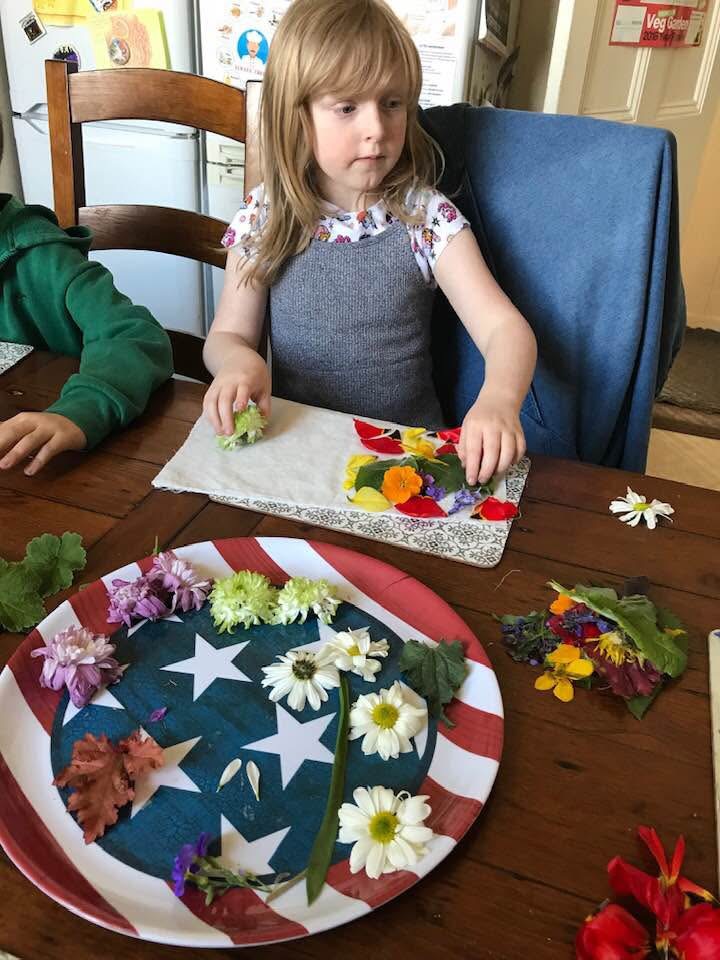
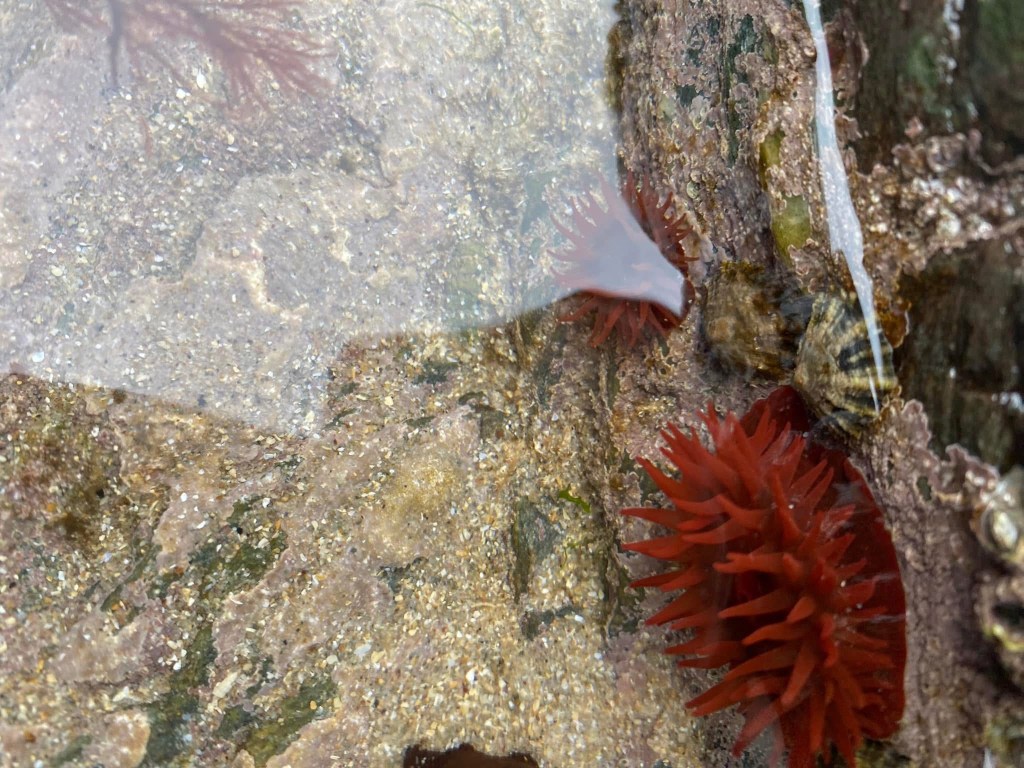
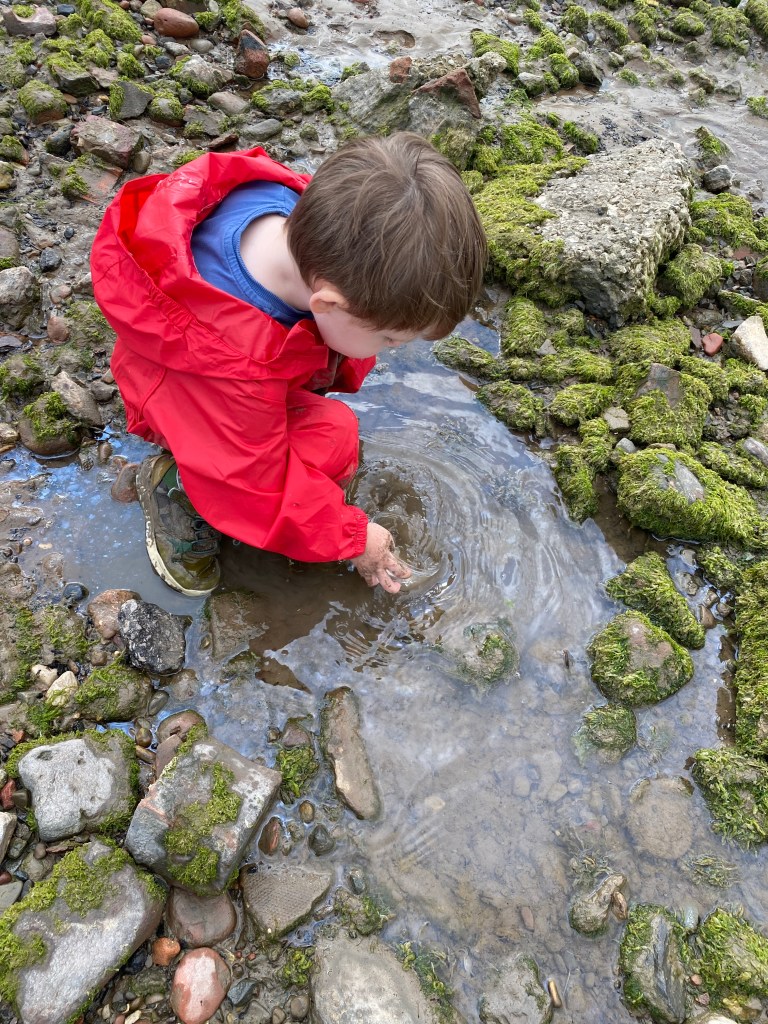
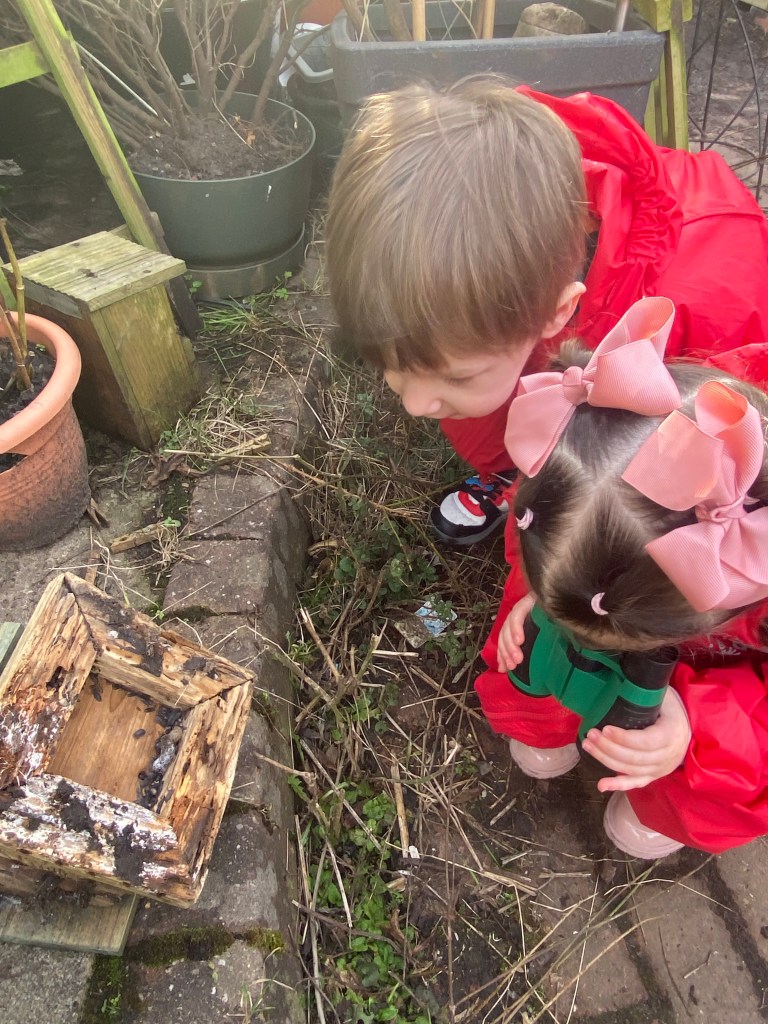
To support the children’s cognitive skills, we provide activities to observe and understand nature through investigation. The children’s favourite activities at the moment are pond dipping and growing and harvesting flowers, fruit, and vegetables. Some of the learning objectives within these activities are linked to lifecycles, categorising, comparison and pattern recognition in nature.
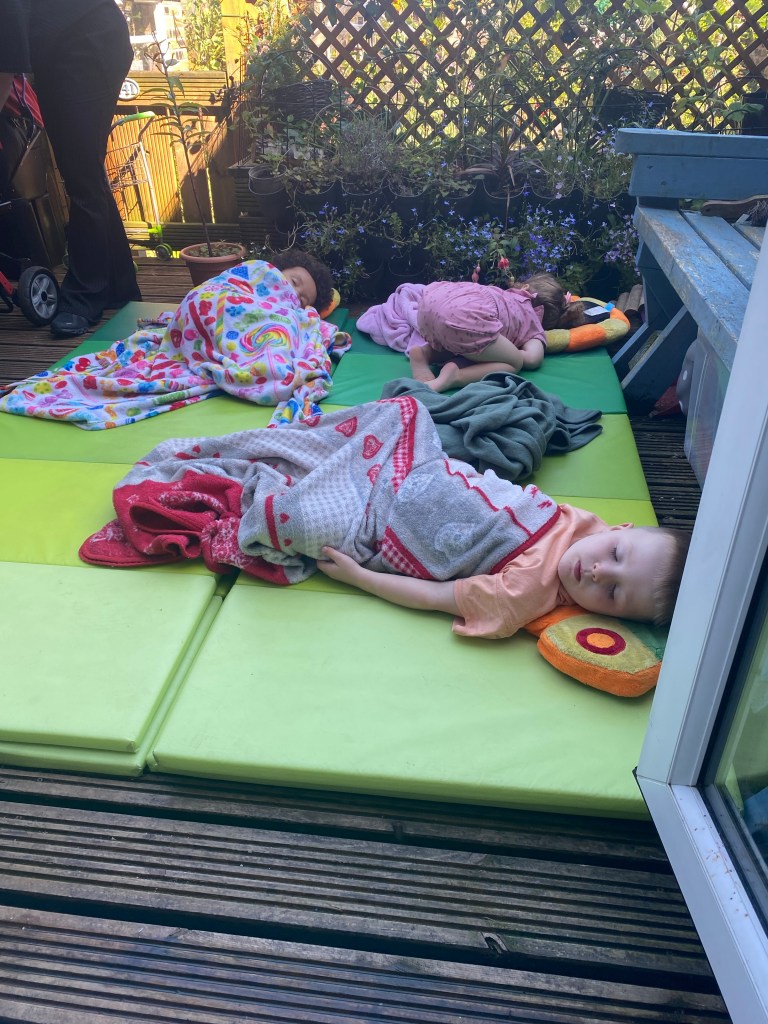
Supporting the children to experience the wonders of changing seasons has a positive effect on their emotional well-being, mine, and Debbie’s too! The children take naps outside and participate in meditation while the birds are singing away. These activities provide opportunities for relaxation and promote a sense of calm and happiness. It is proven that spending time in nature has mental health benefits as well as emotional and physical benefits.
SEASONAL LEARNING
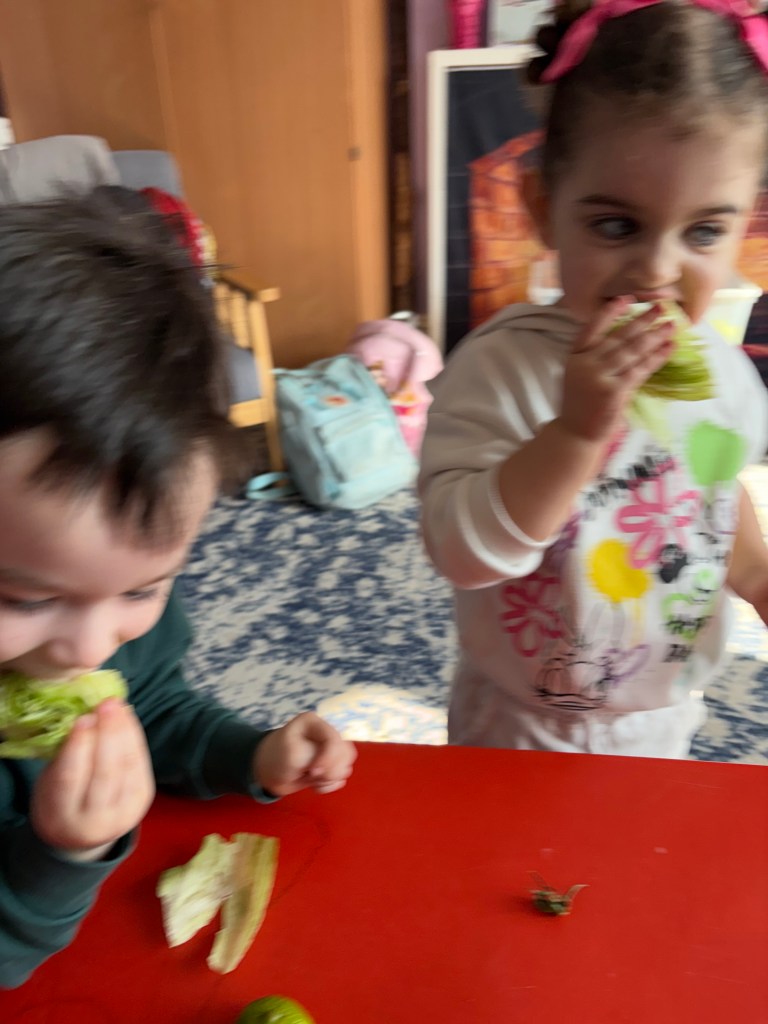
Every season and even every different day outdoors, brings a new set of sensory stimulation by exploring the sights, textures, aromas, even the noises of the natural world. The experiences are endless. The children love finding the strawberries and munching away, and there is no better taste than a sun-ripened cherry tomato, if they leave me any!
Unfolding the characteristics of seasonal vocabulary during our activities also contributes to early language and provides children with the skills to articulate their observations and experiences. Whether its playing in the muddy puddles, counting the frogs or learning to sow seeds, the language opportunities are endless.
The seasons are also a lovely way to promote cultural celebrations and traditions. We love the harvest festival where we like to gather our produce and share with our families, or Diwali where we cover the garden with lights and have a magical Diwali feast. There are many ways to weave cultural traditions into your very own Garden Classroom.
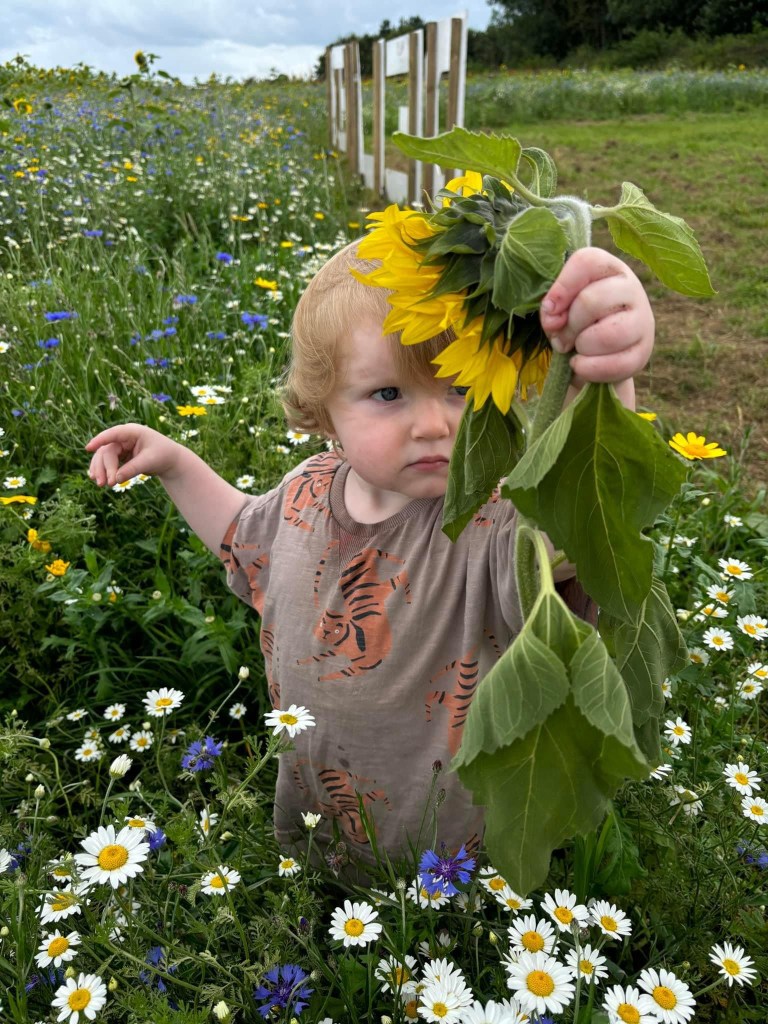
“Lovely to watch her be so interested in how it grows. How she cares for it, and that she’s happy with the end result, we’ve even started growing our own strawberries and sunflowers at home” – Elsie’s Mum.
By incorporating a Garden Classroom into your setting, your children can foster environmental awareness, develop a sense of responsibility and appreciation of the natural world, which in turn lays the groundwork for their future environmental consciousness. Seasonal changes spark natural curiosity and wonder within the children, giving them the opportunity for questioning and exploration, cultivating a mindset of inquiry and lifelong learning.
The Education Endowment Foundation (EEF) The Early Years Toolkit brings together the best available evidence on key areas of learning and development. It can support all childminders when making decisions on how to improve learning outcomes.
Can we do one wild thing everyday for the month of June! A whole 30 days? We are involving Our Childminding Family to join us in the challenge! Why don’t you join us too? Have a go be Wild for June with us and the Wild Life Trust.
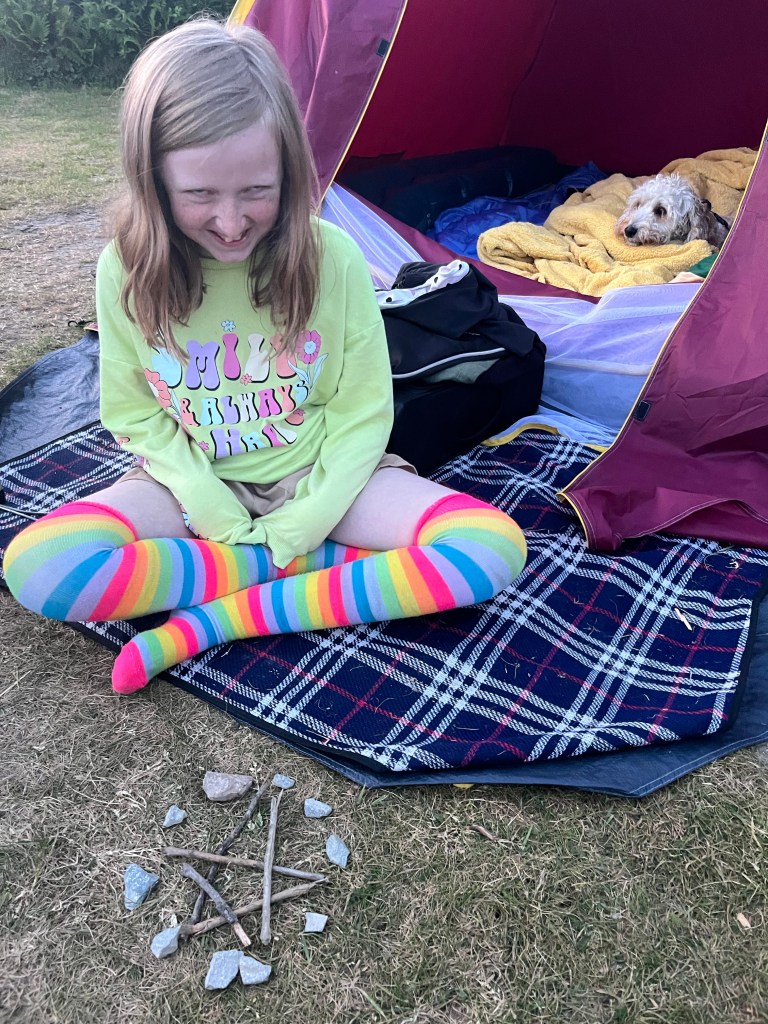
Day one: Chloe Camping and making a wild 3D picture with sticks and stones.
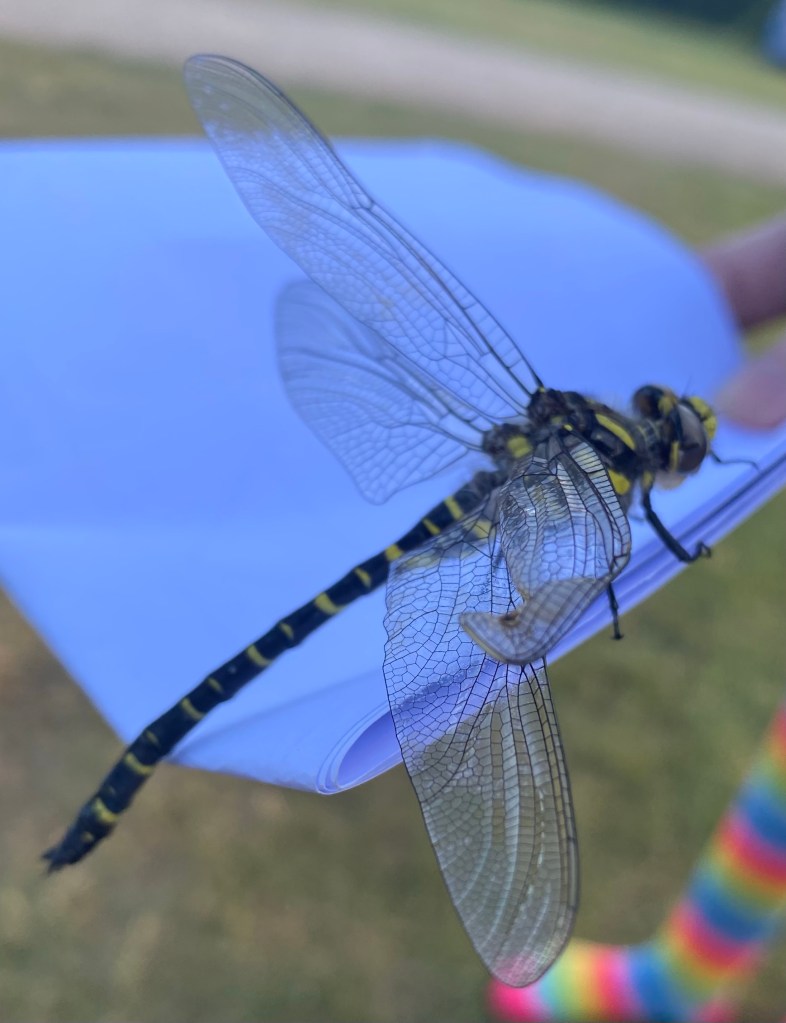
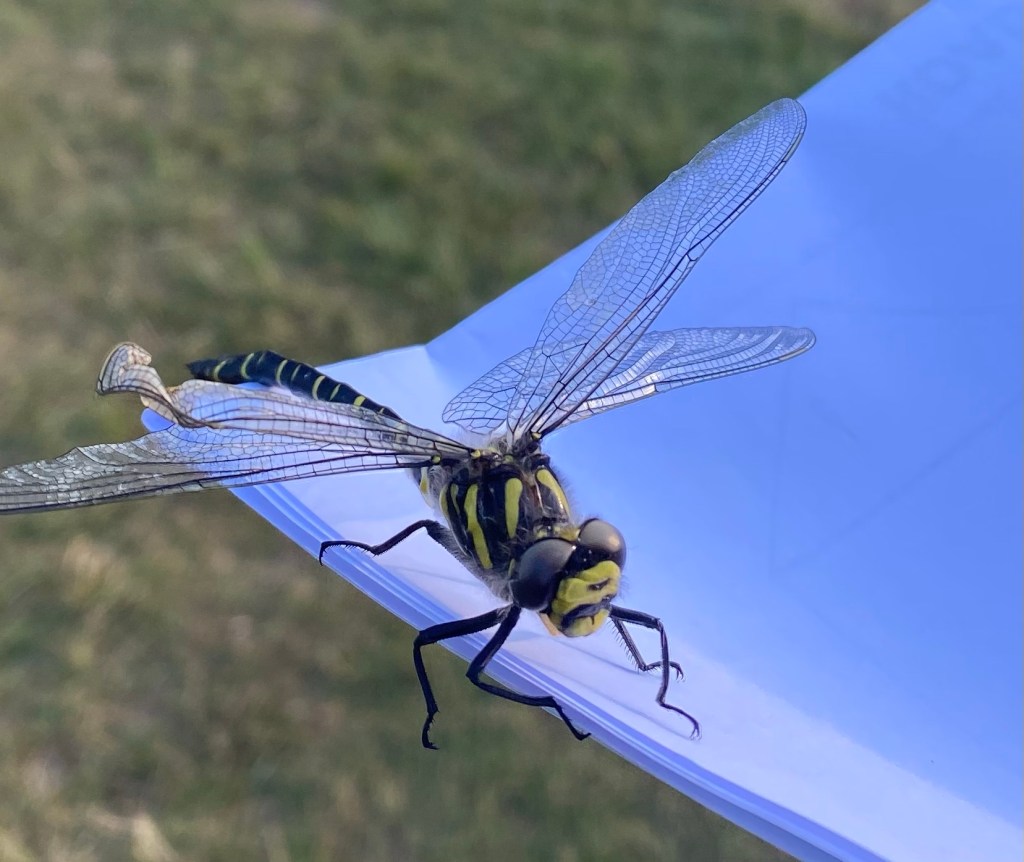
Day 2: While out on a walk Chloe found and rescued a dragon fly
Helping A Dragon Fly
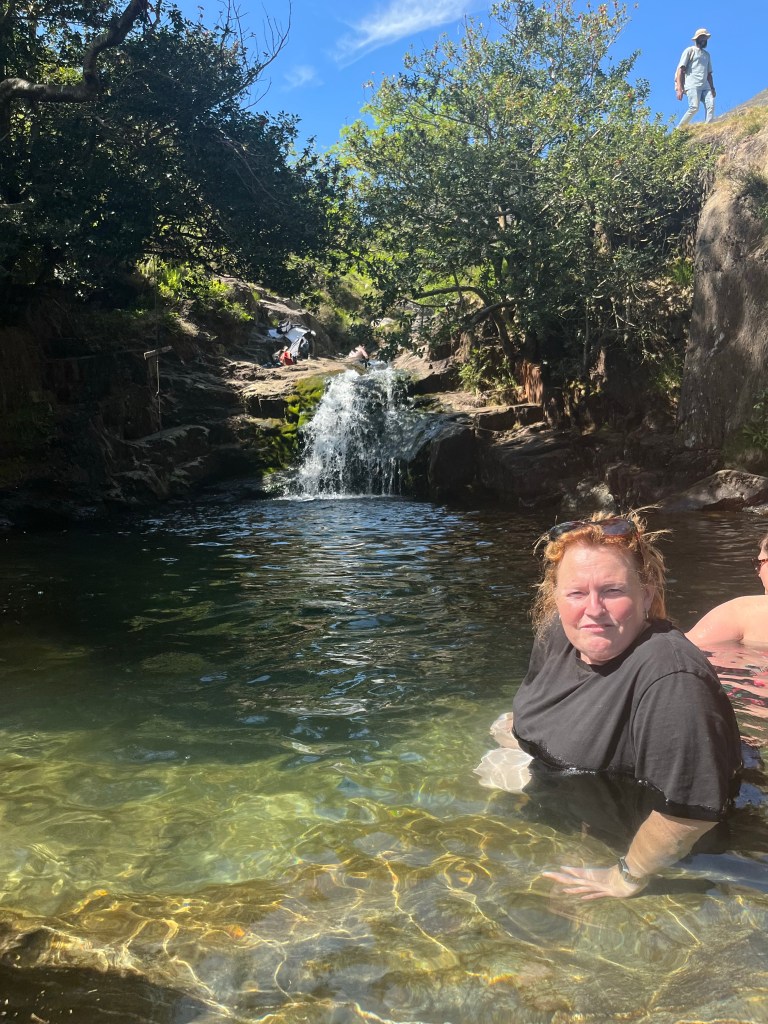
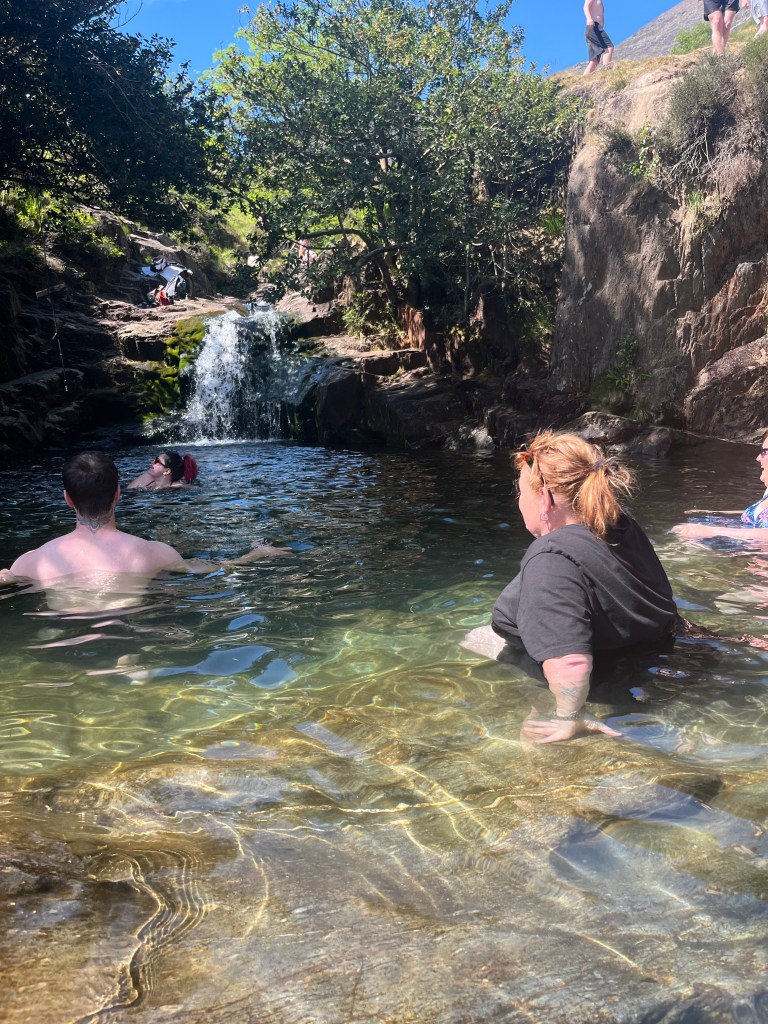
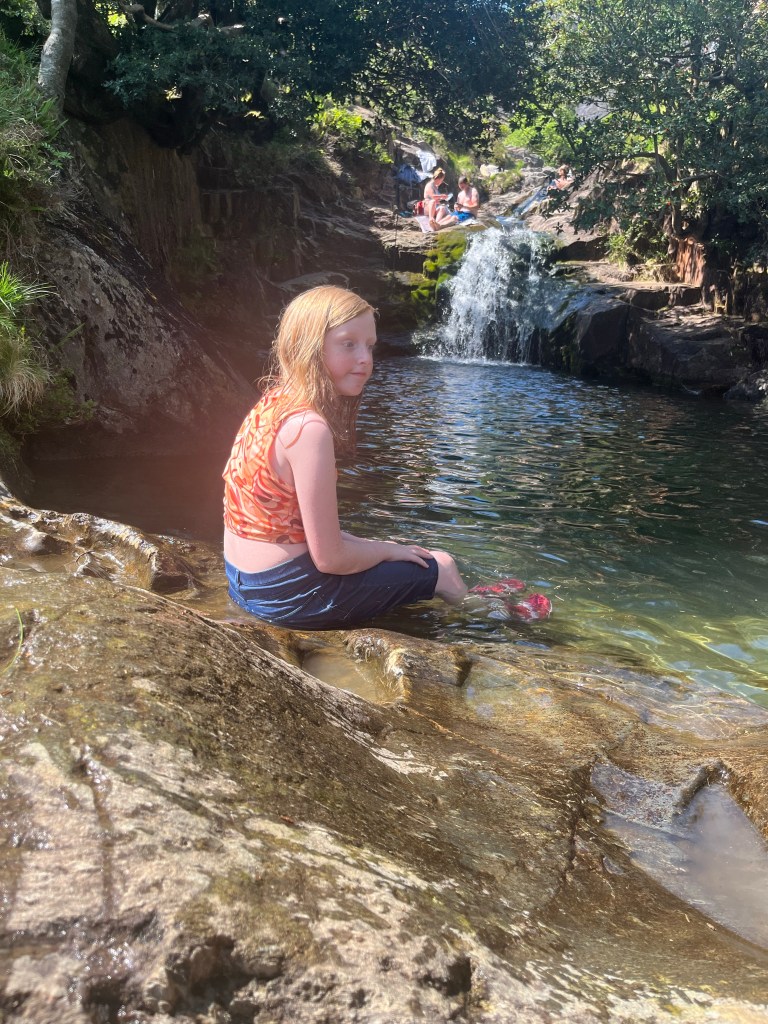
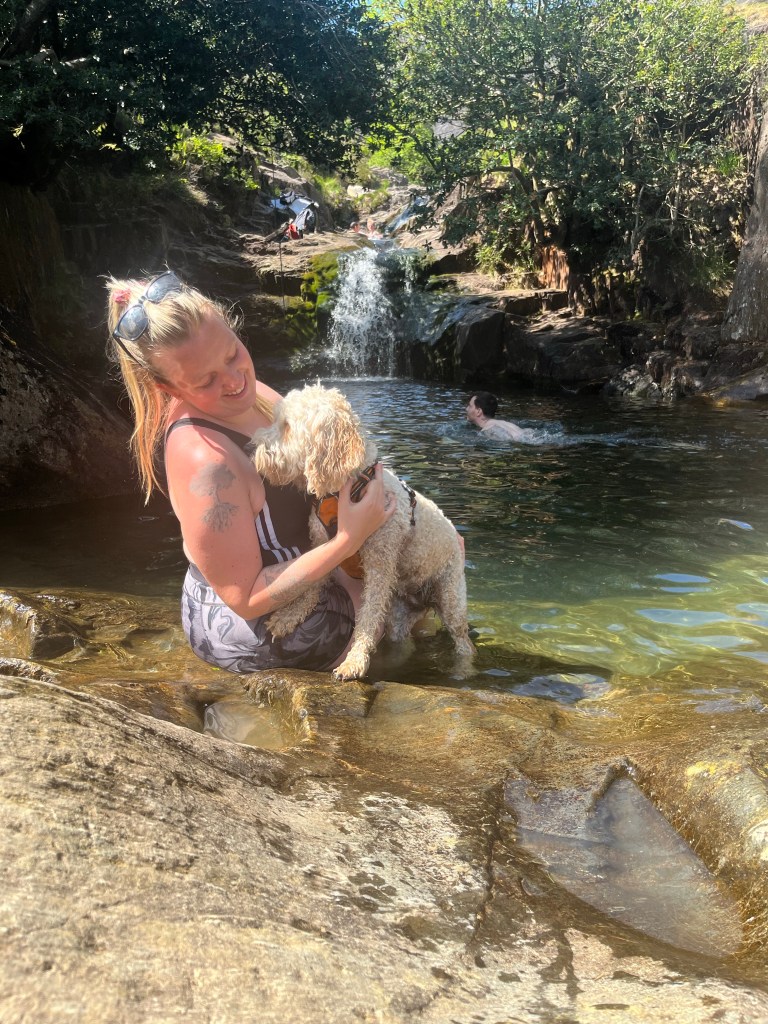
Day 3: Tracie, Chelsea, Chloe and Ruby went for an amazing walk in Snowdonia and came across a Waterfall and went Swimming.
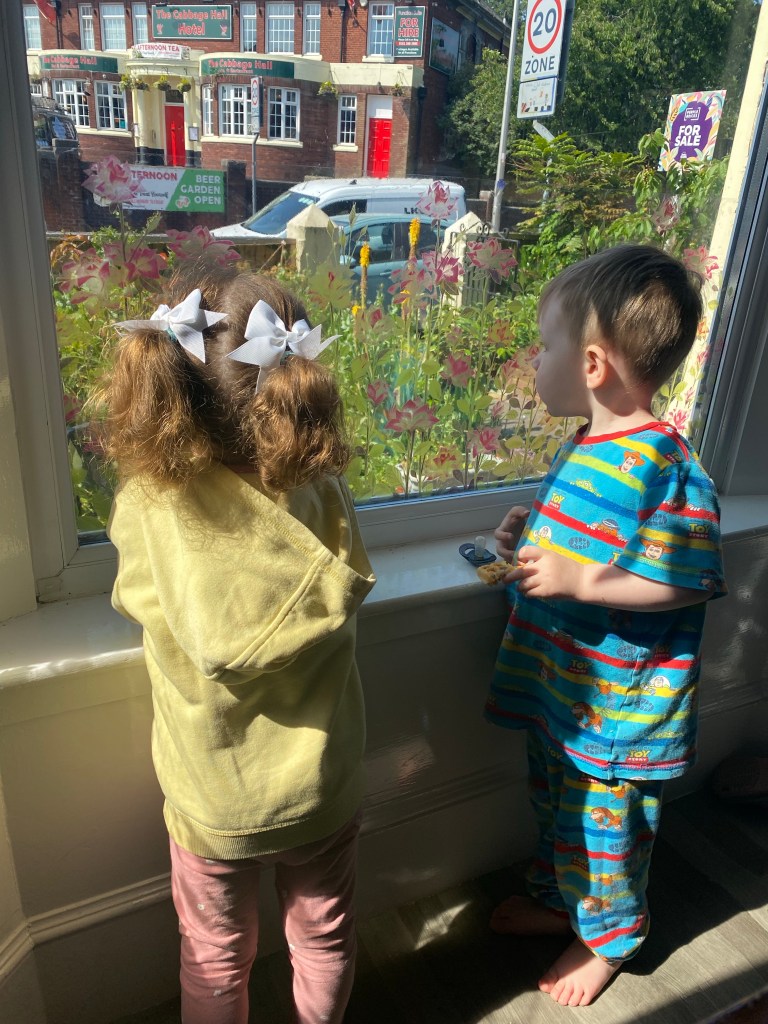
Day 4: Elsie And Jack was looking for wildlife outside of the front window.
They saw flowers, Butterfly’s, Poppies and Incy Wincy Spider.
Going up into the tree’s
Day 5: Chloe went Tree Hopping at Zip World, she was high up in the trees and saw Birds, Rabbits, Bees, Dragon Flys and squirrels
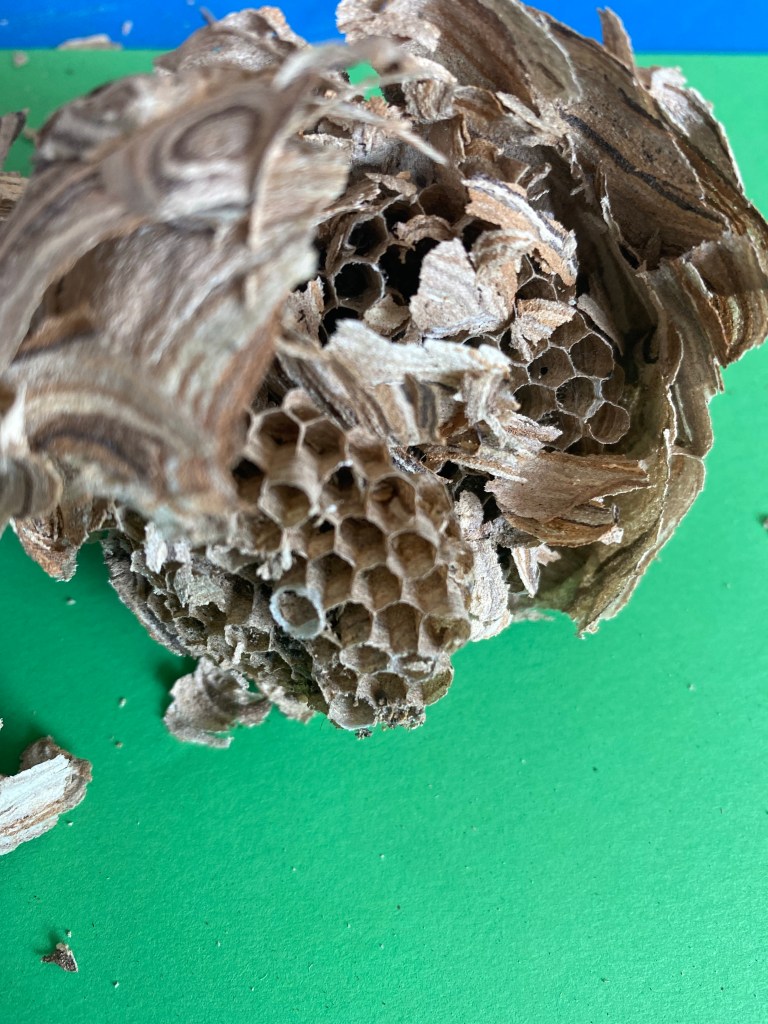
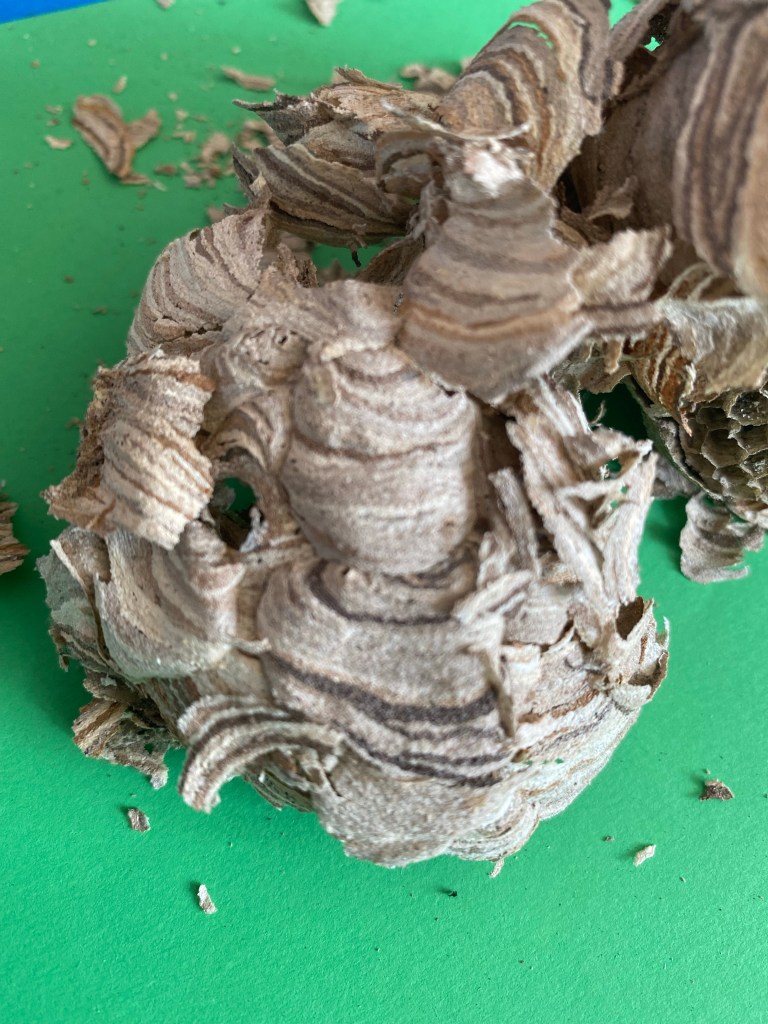
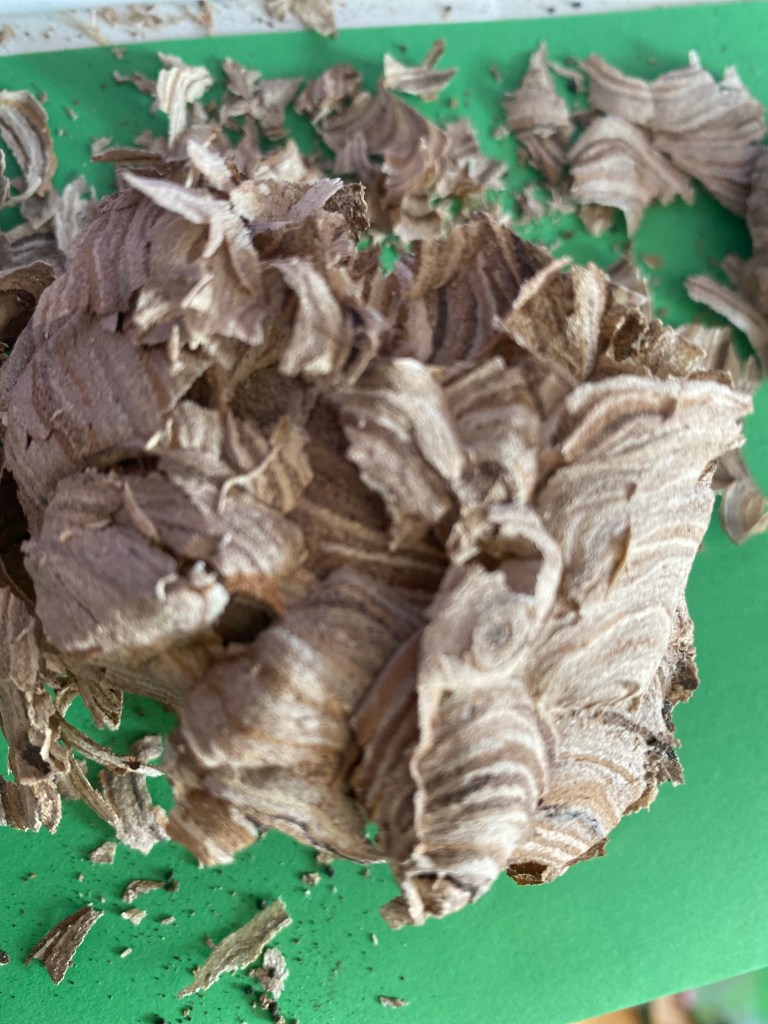
Day 6: We found A Wasps Nest!
The nest consists of around 8,000-10,000 hexagonal (six sided) cells arranged in 8-10 tiers of about 20cm in diameter. The building material is paper-like and made of “chewed” rotting wood mixed with the wasp’s saliva. Construction is begun by a queen wasp but completed by workers (sterile females)
Six Sided CellsAmazing TextureOutside CrustCells For Laying Eggs
Day 7: watching the swifts going in and out of the barn and listening to their song was amazing.
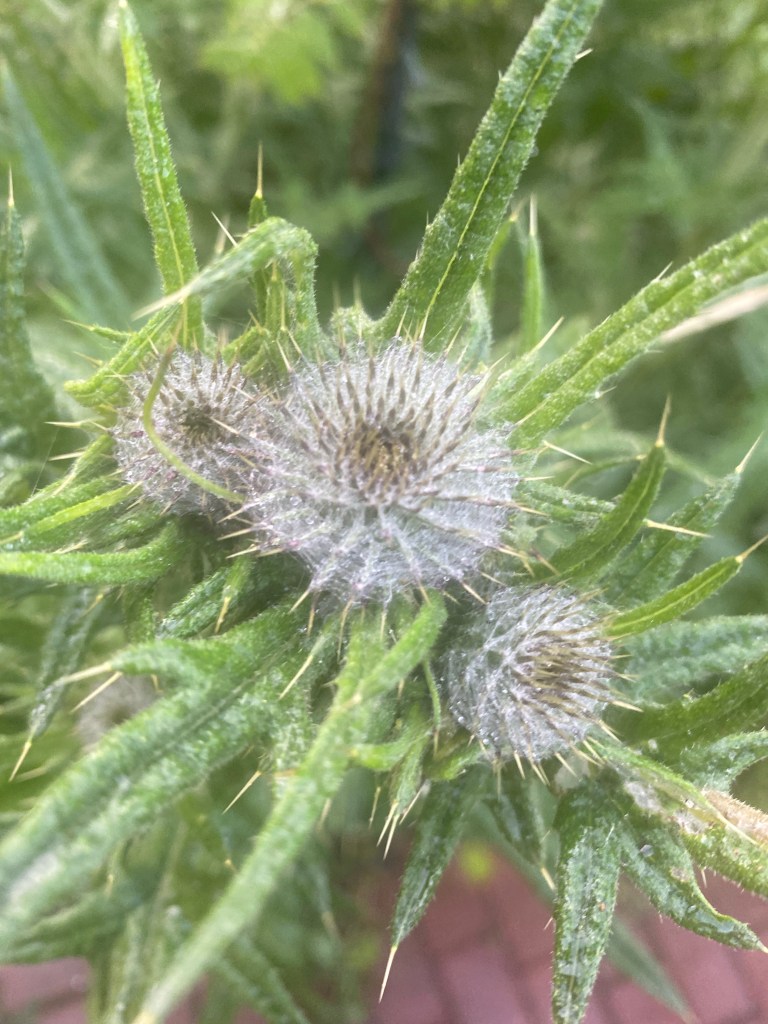
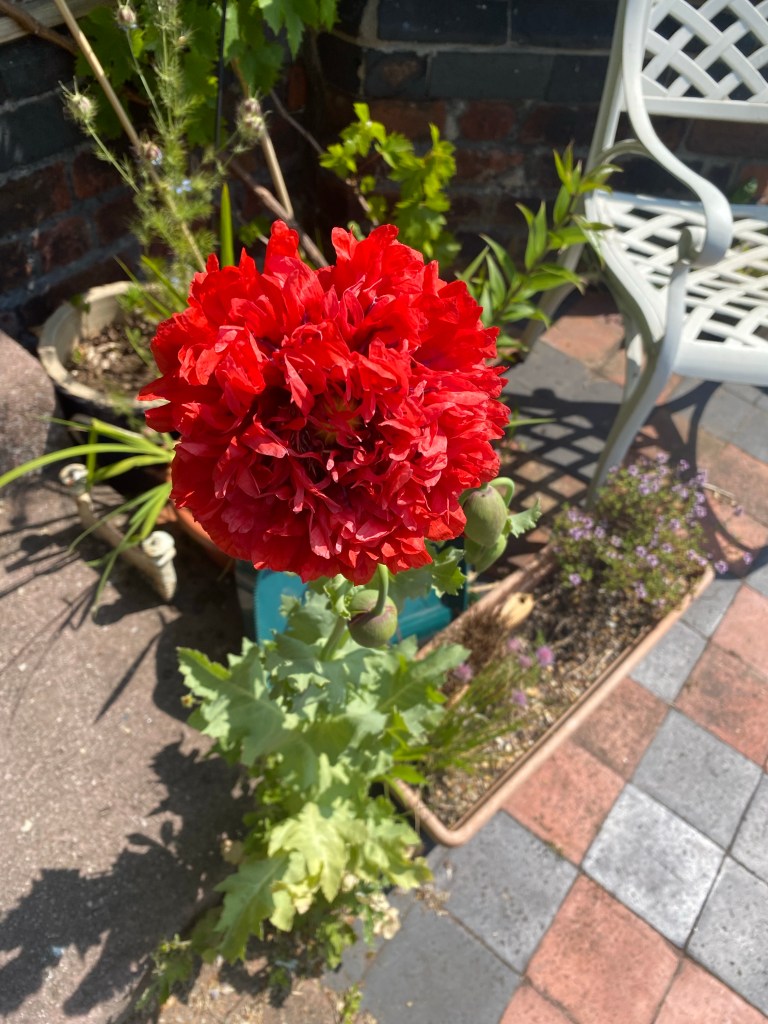
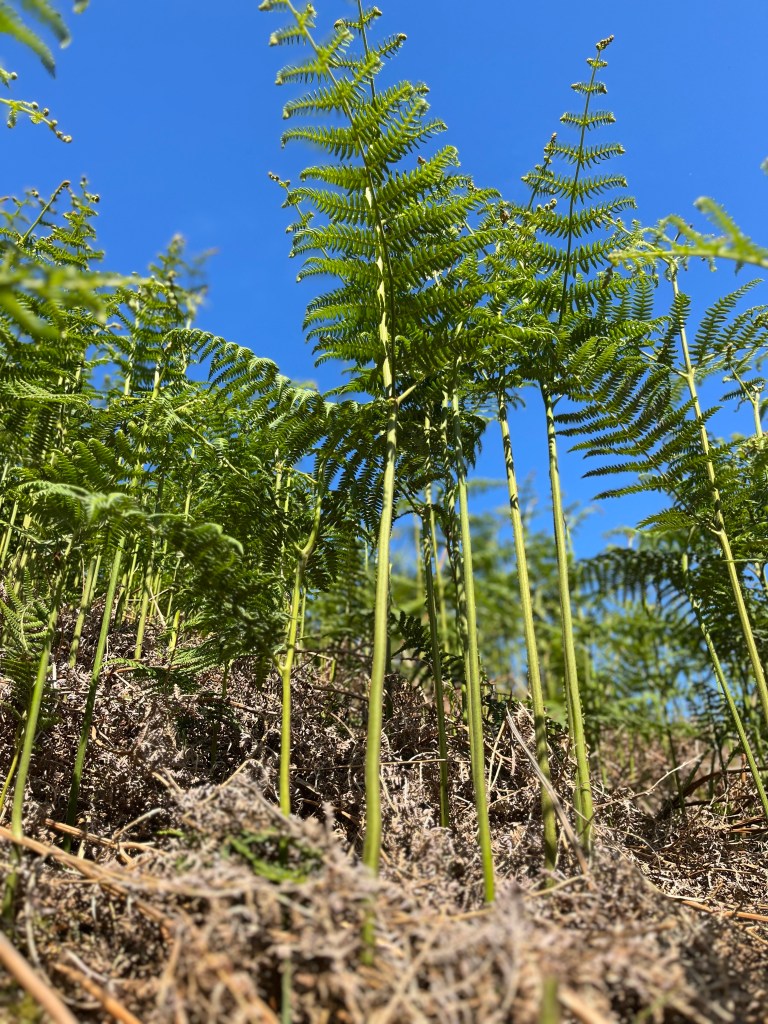
Day 8: Identifying wild plants around our garden and looking in the barrel pool.
Fox GloveThistle PoppyFern
Day 9: Elsie planted some wildflowers in her plant pot at home. She sent me a picture to add to our blog.
Day 10: we put some crushed up crisps on the bench at the park. We sat still for a while and a Robbin and Black Bird came to have a feed.