Hope you enjoyed our little film keep visiting our site to see how we transform our amazing Garden classroom.
Thank you for watching

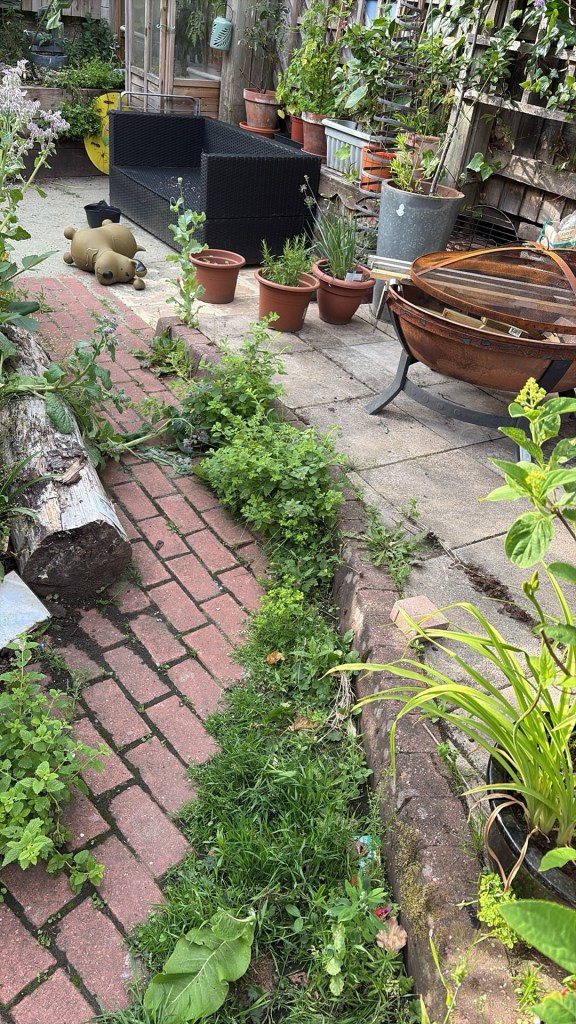
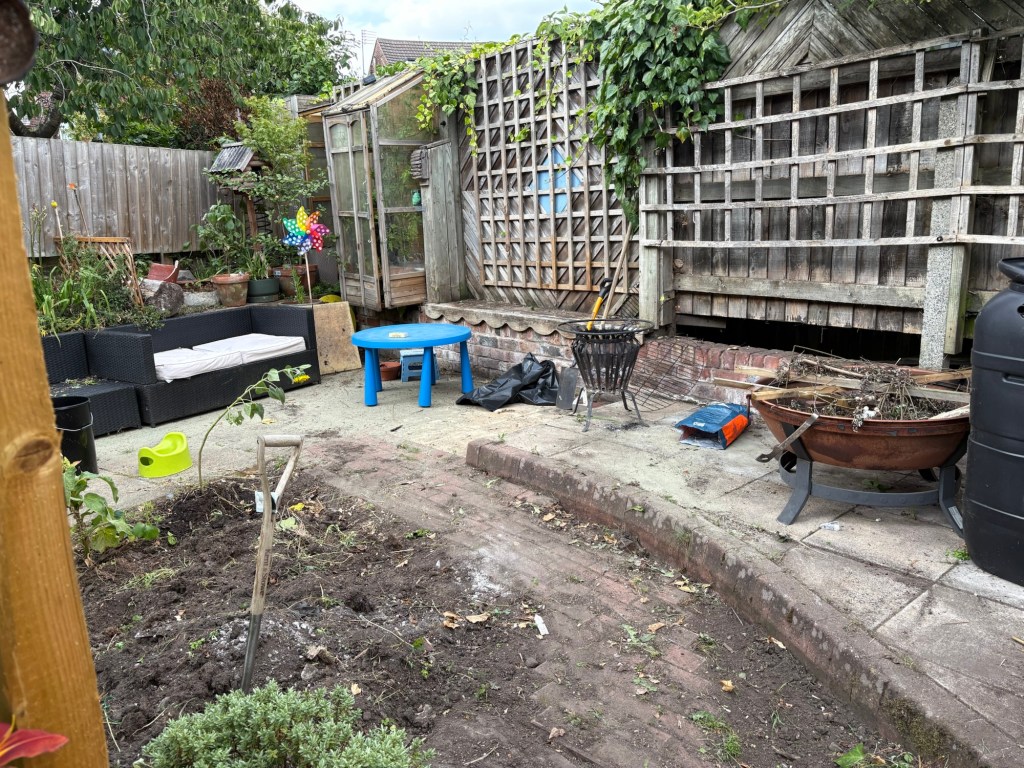
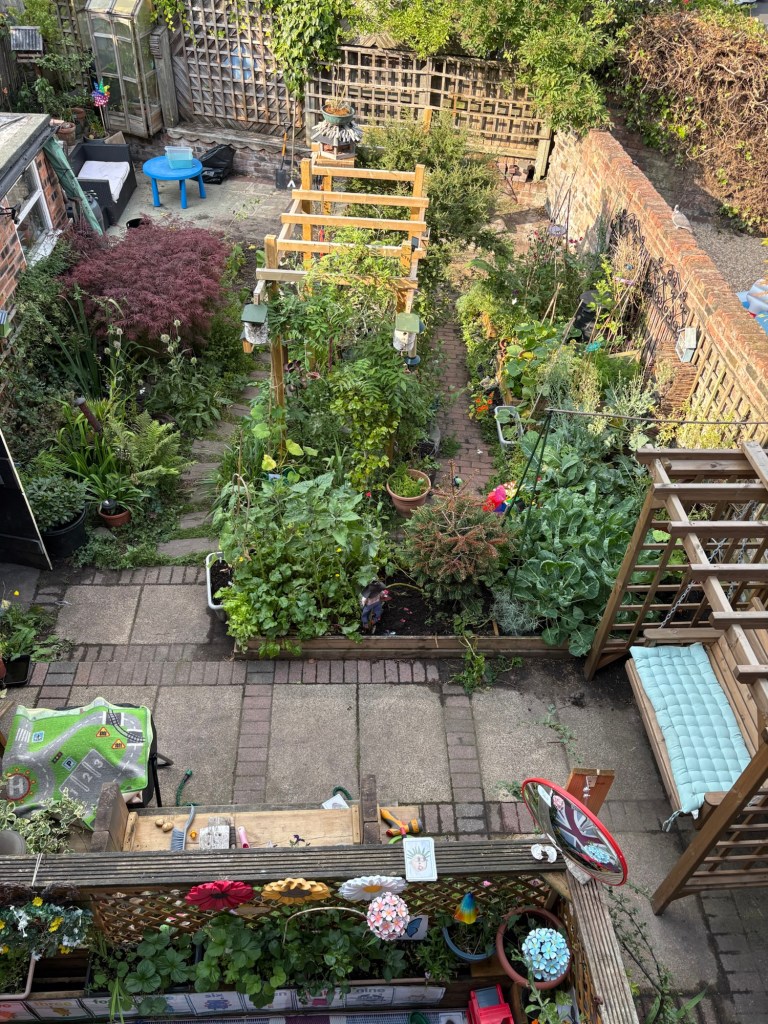
Our before pictures
Hope you enjoyed our little film keep visiting our site to see how we transform our amazing Garden classroom.
Thank you for watching
Our before pictures
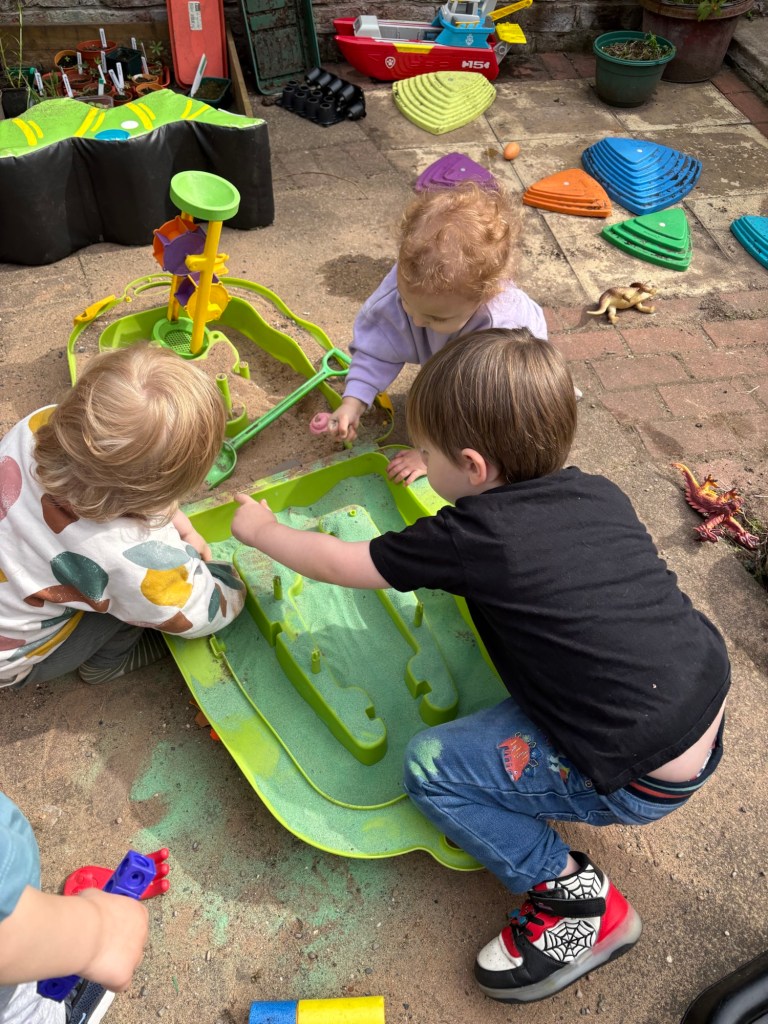
We had one last fun day at the end of the garden before getting the area ready for the work to start. The children played with the sand and water, bubbles and enjoyed hide and seek games. We then packed everything up to store till the work was done.
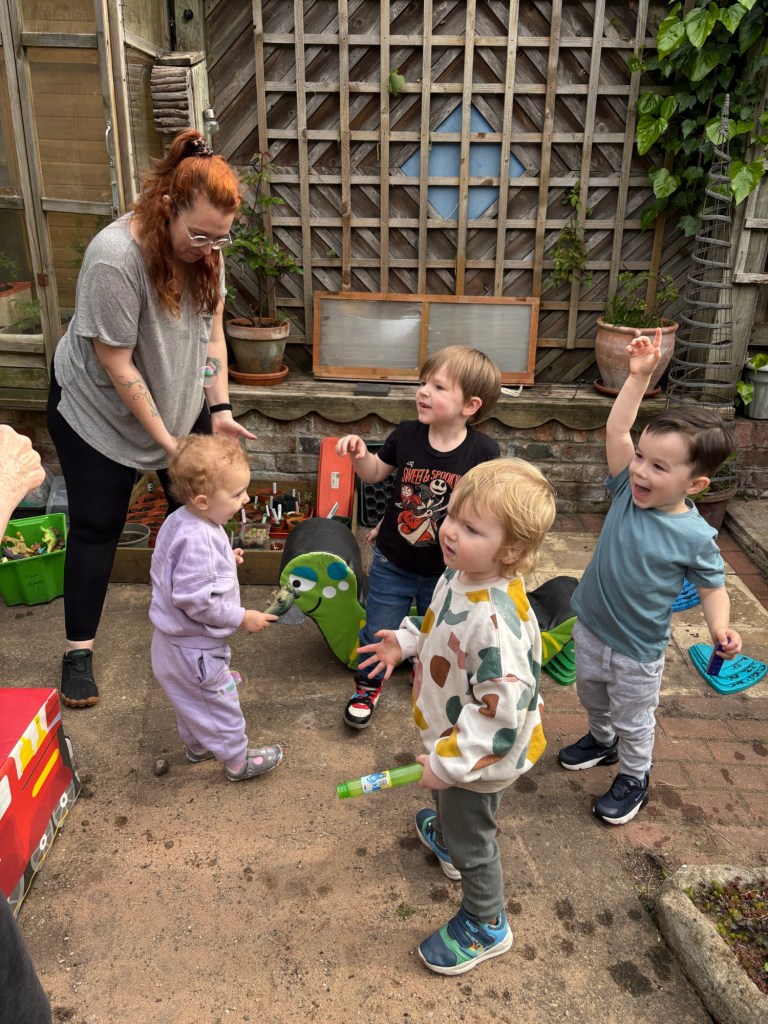
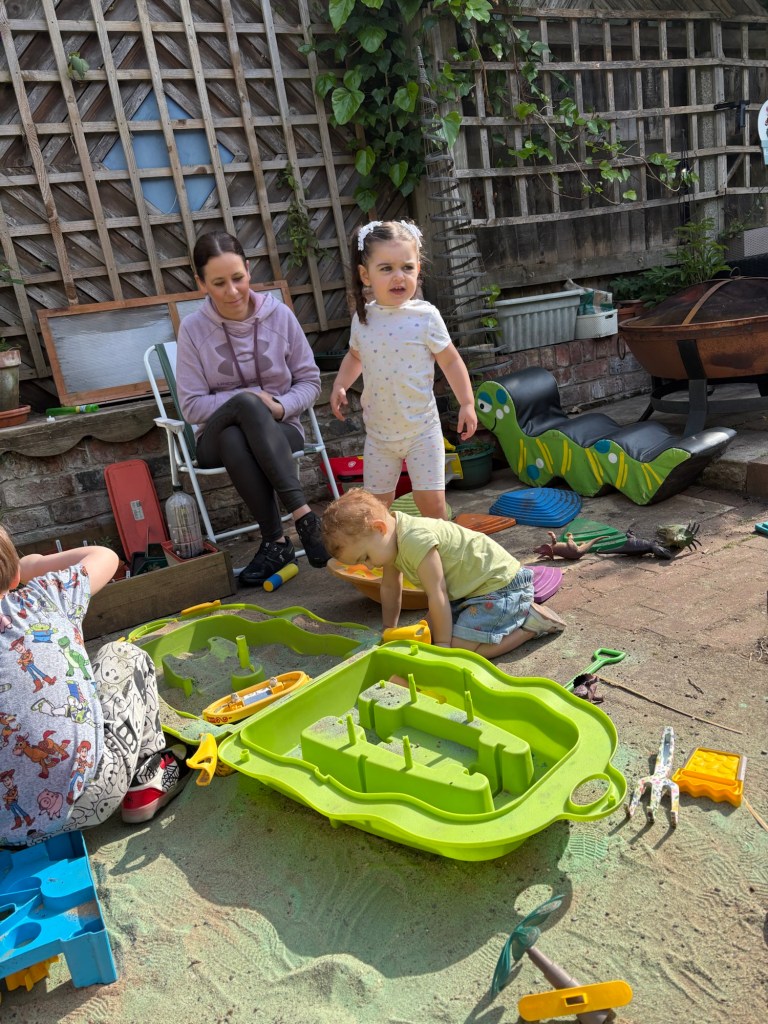
We all worked together to move the plants to a safe space, until we are ready to replant them in a new position. This was to protect them while the building work was happening. Some of the flowers like the poppies, hot poker and foxgloves have gone to seed, so we carefully collected the teeny tiny seeds and saved them in paper bags, ready to sow for next year.
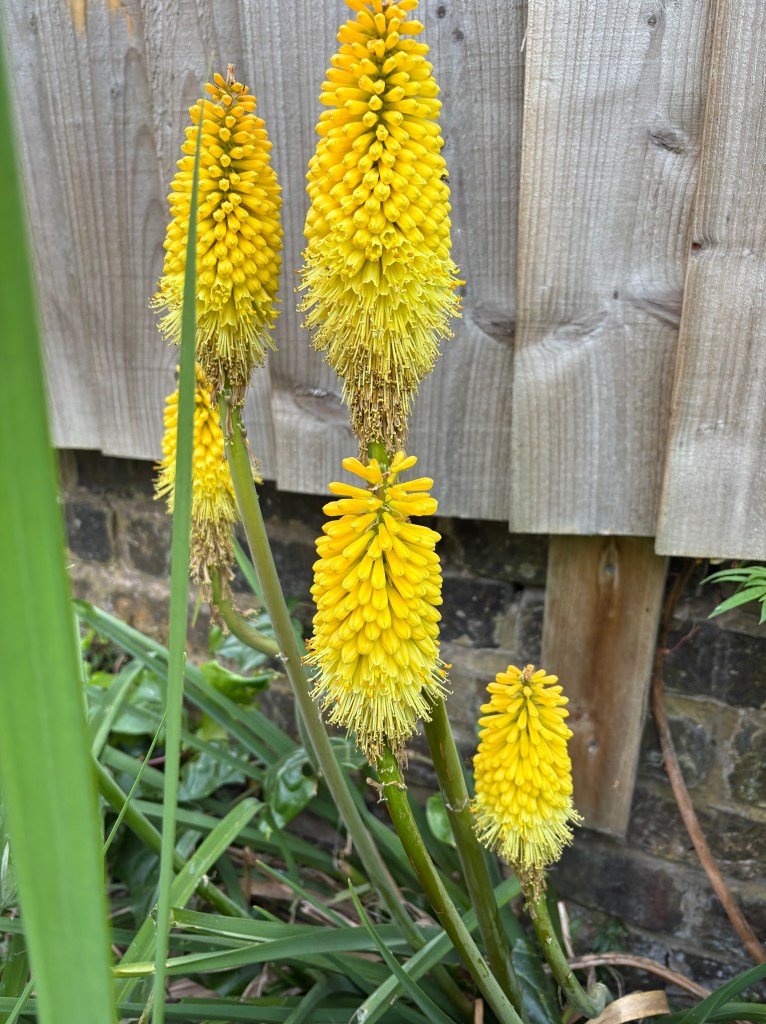


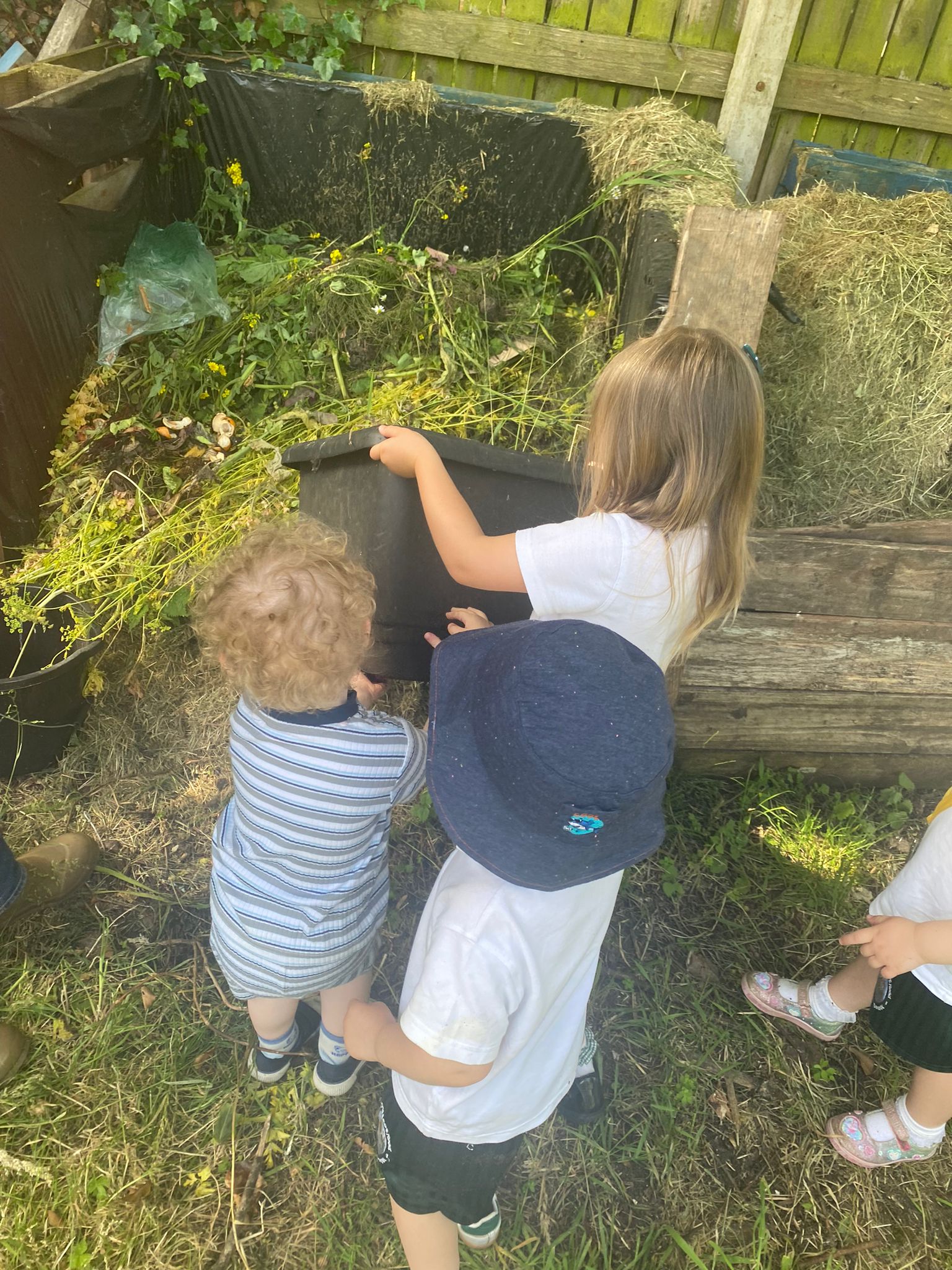
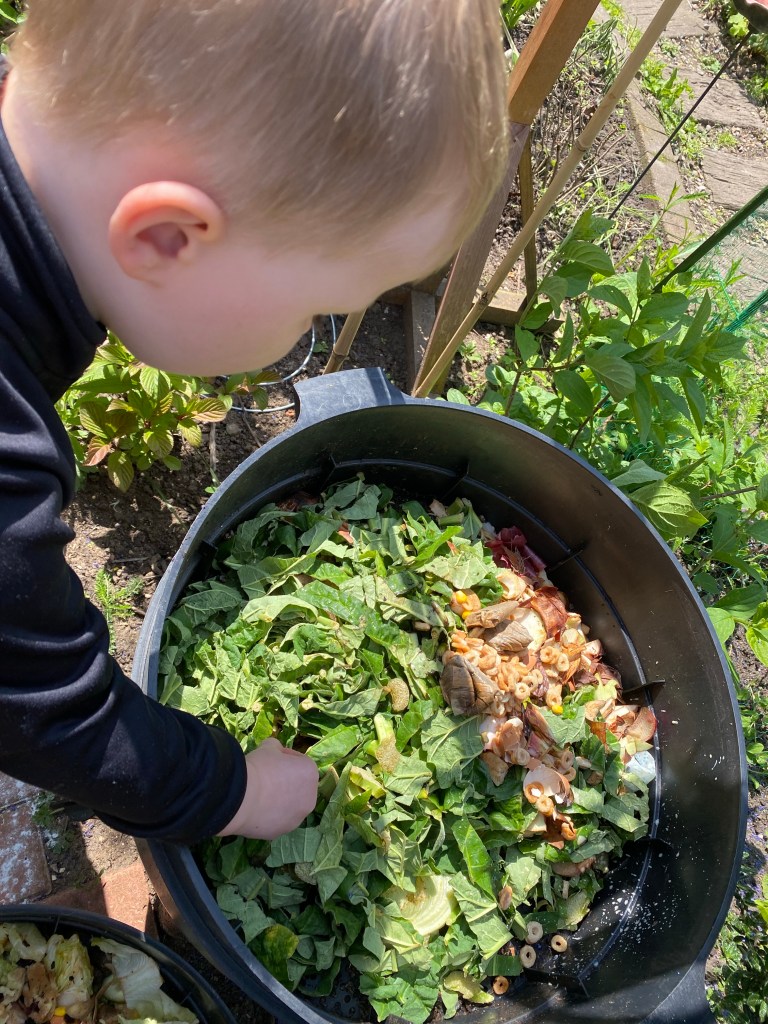
Once the area was all clear we put away the toys, cleared the rubbish and put the rest of the weeds in the composter ready for the work to commence.
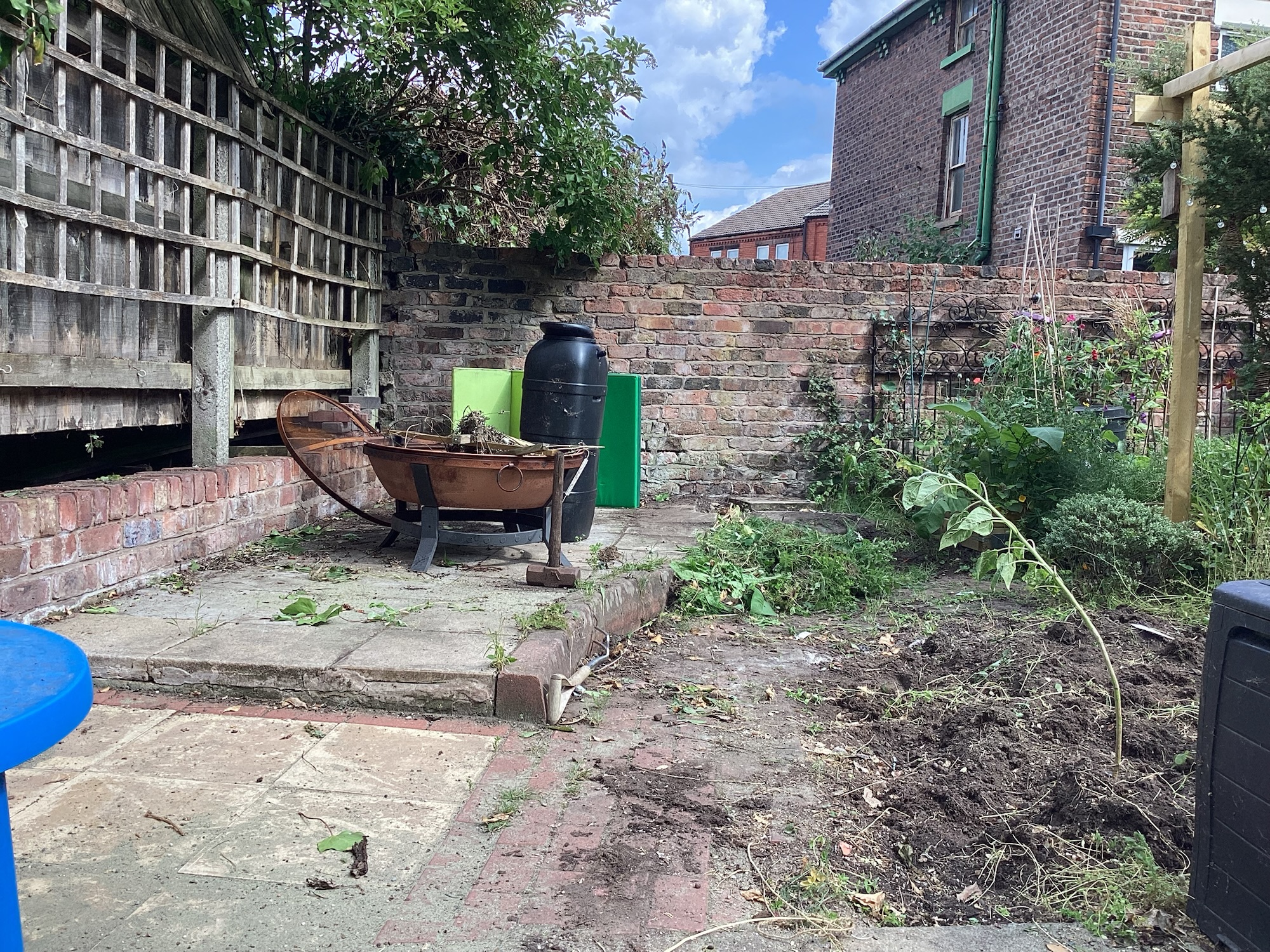
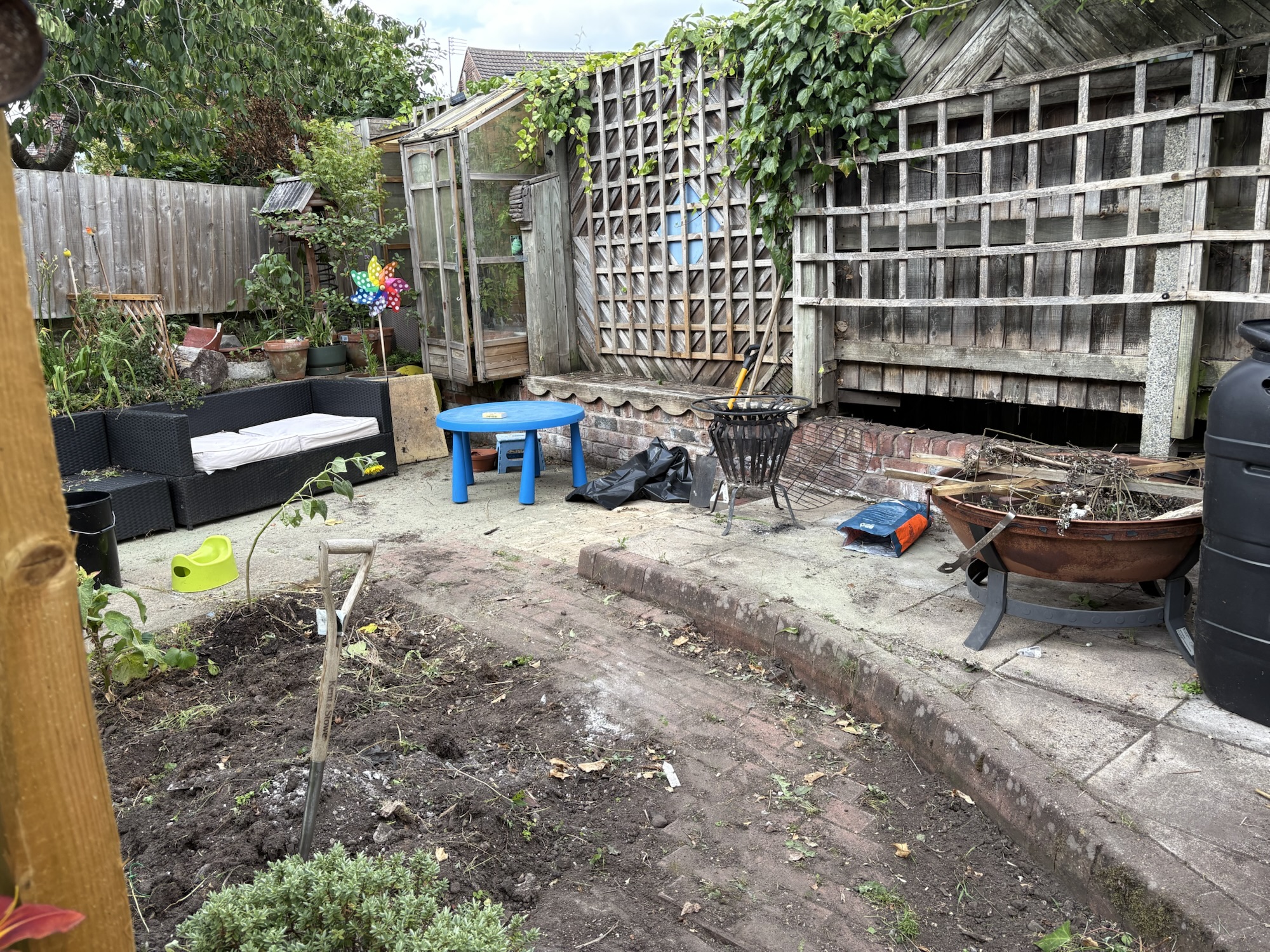
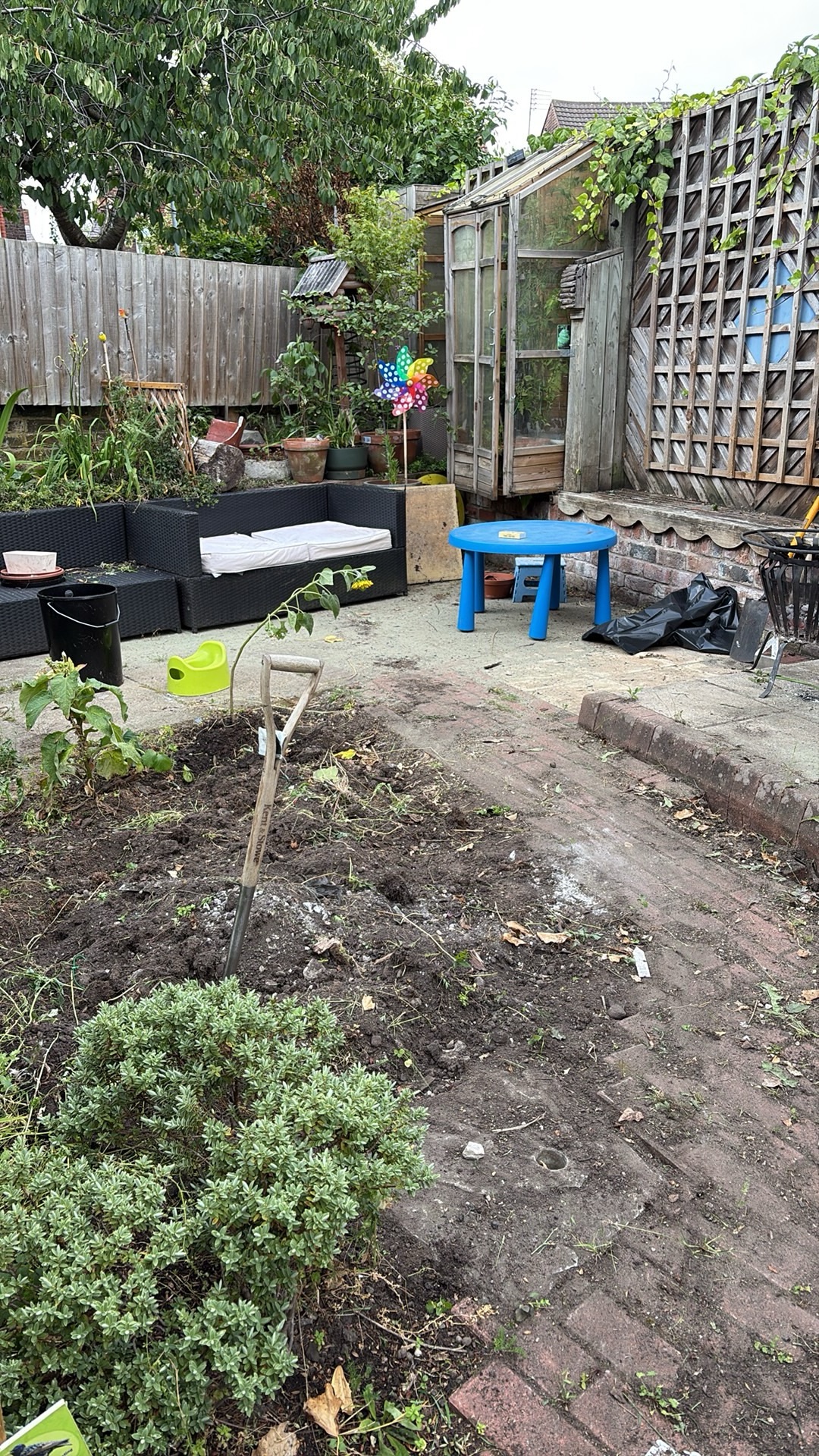
We started our project by having lots of different discussions around our hopes and dreams of our Classroom I involved my family, staff and the children. I am making sure every one within the setting will be involved in the project.
We used various types of planning discussions, this included active discussions, where we discussed what the main outcome will be and how we are going to get there. We used critical thinking discussions to include challenges that may come up, (moving the bug house) and how we are going to source the materials. Active learning discussions to include why, where and what we are doing and included continuous feedback with all who is involved. (Family, Staff and children)
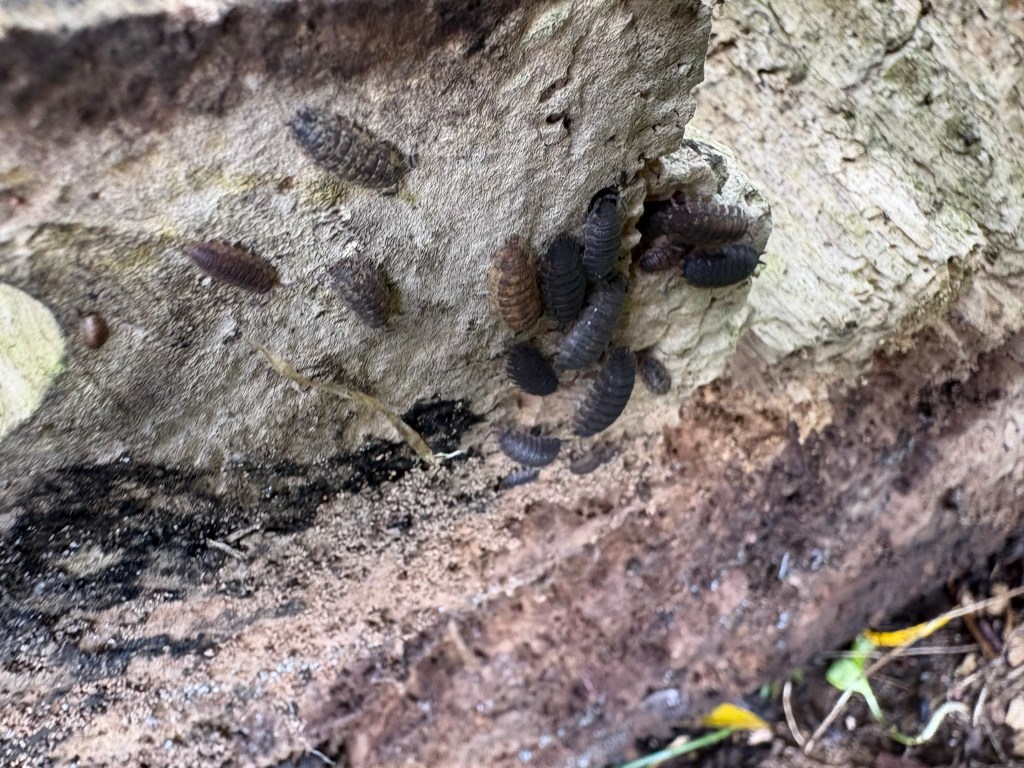


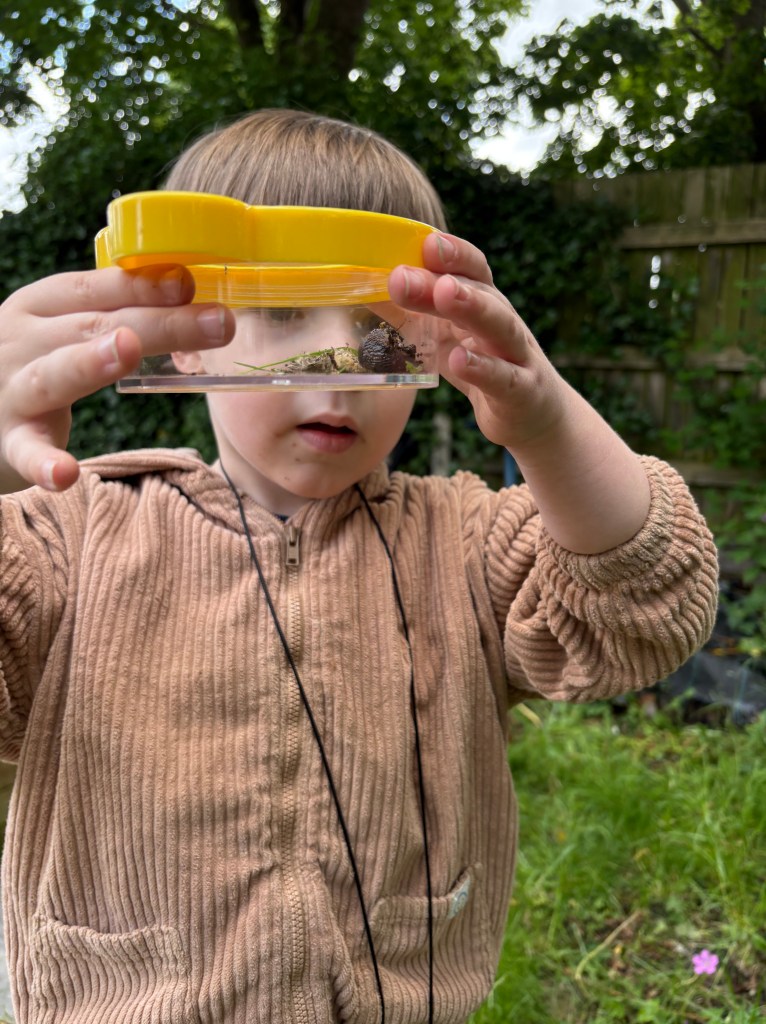
We all got emerged and excited participating in lots of different fun learning activities. We designing our own treehouses, had a Bug log moving day, Storytime in the garden about the bad tempered ladybird (we made up our own reasons why she would be bad tempered if she knew we were moving her home) , we completed a Wildlife audit so we could make sure all our mini beasts are protected and have a temporary home until we can place them into a permanent position.
Everything about the project we were mindful to include the 17 sustainability goals https://sdgs.un.org/goals we did this through constant discussions within the planning process by deciding about how we are going to be energy efficient, collecting and using recycled materials, location and construction, waste reduction and water conservation.
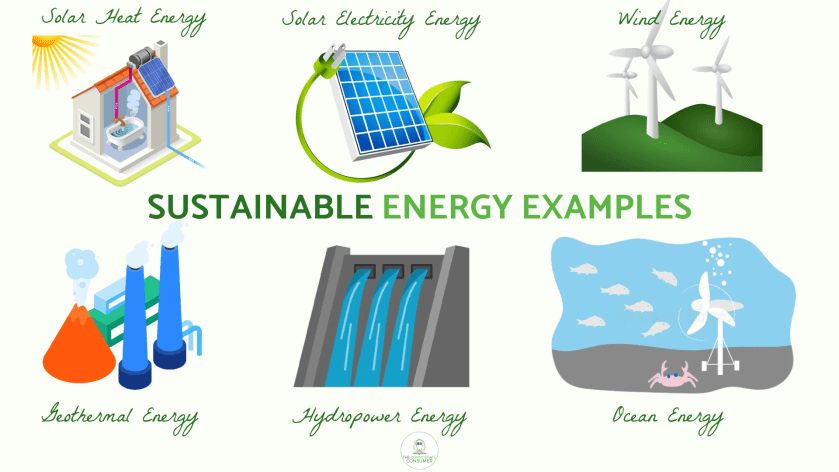
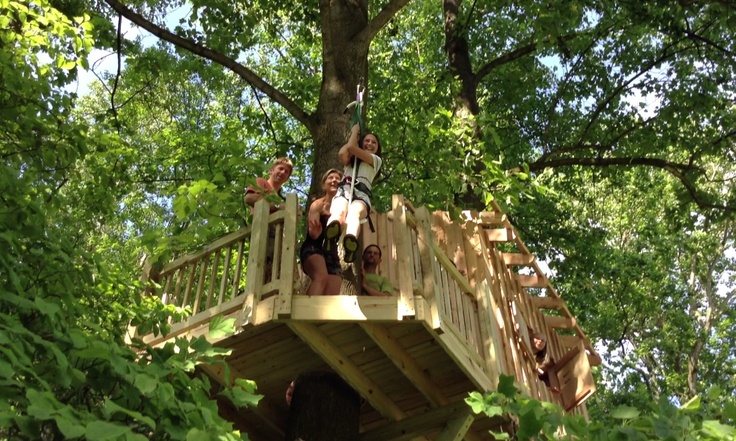
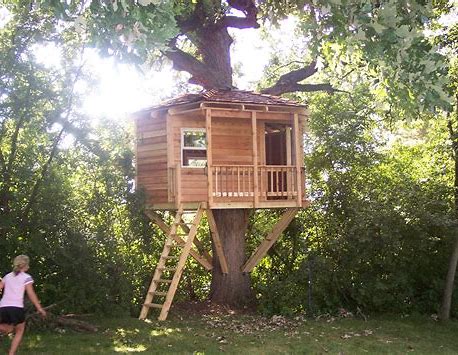
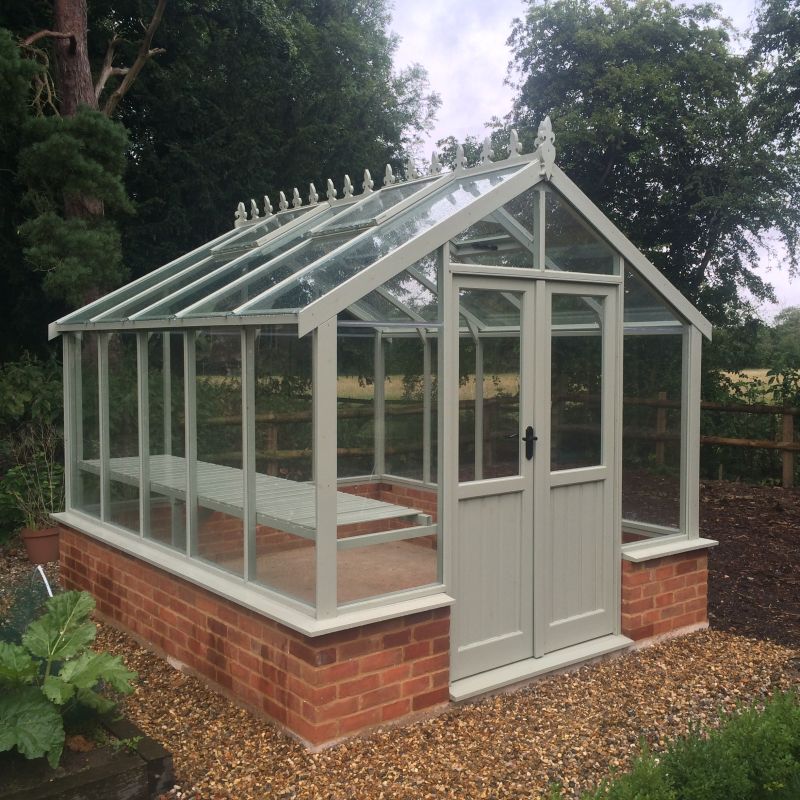
We had fun talking about our perfect dream treehouse, Jack wanted a tall building so he could use a Zip wire to travel from the tree top to the house. This made us use problem solving skills as I explained you can’t use a zip wire to get back up! Jack said ‘ thats what the door is for!” how silly of me not to think of that! Lottie wanted a big funfair, this caused a discussion on power and we came to the conclusion it would not be easy using solar with all the power it would take up. Lottie decided to have a Unicorn play area instead. (much more manageable!) Elliott wants a slide which I thought would be fun. Jack reminded us we can use the door to go into the classroom to get to the slide and the zip wire. Gemma had an idea to make the classroom out of a greenhouse, unfortunately we all thought it would be too hot to play in, in the summertime.

The amazing dream everyone had was to make sure we still had areas in the garden for bugs, birds, vegetables, fruit and flower growing. This reinforced to me that we are all on the same wavelength and all the activities we provide are being absorbed by the children.
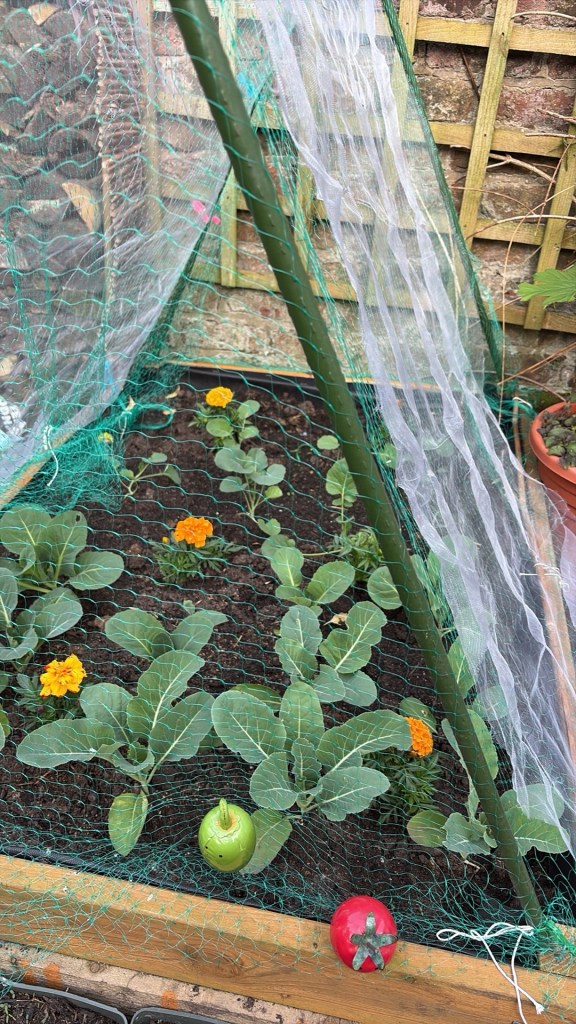
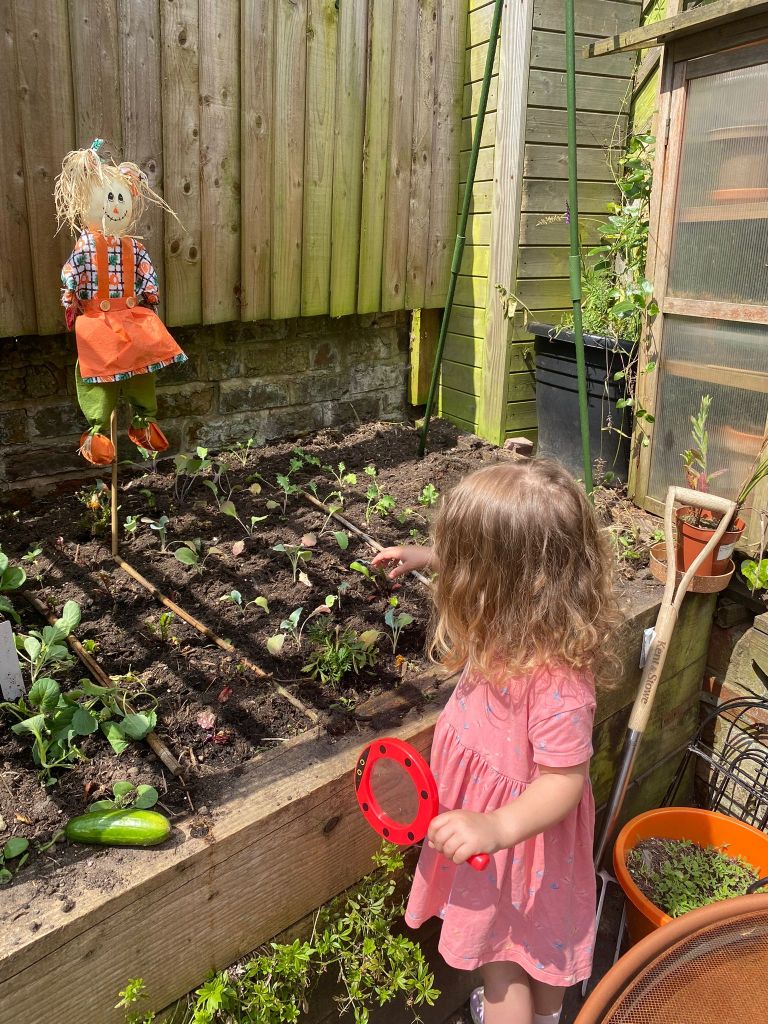


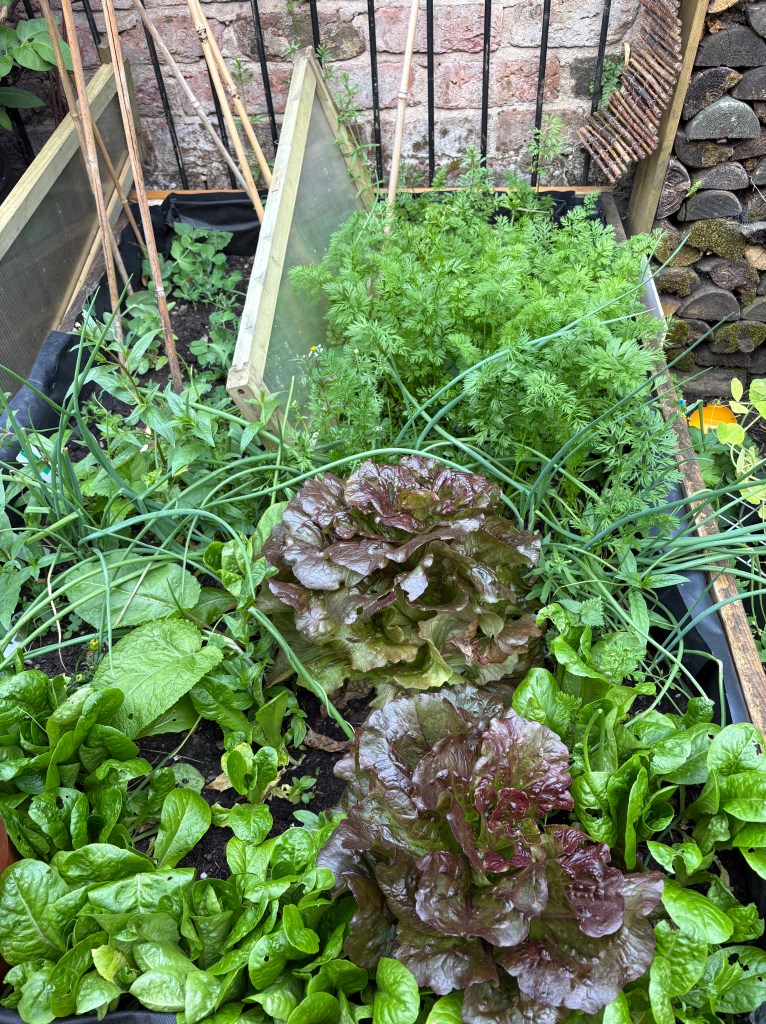

Gardening has many benefits for children and adults alike. While their has great health and social implications, it also provides amazing hands on experiences for learning and can incorporate every aspect of the EYFS https://www.gov.uk/government/publications/early-years-foundation-stage-framework–2
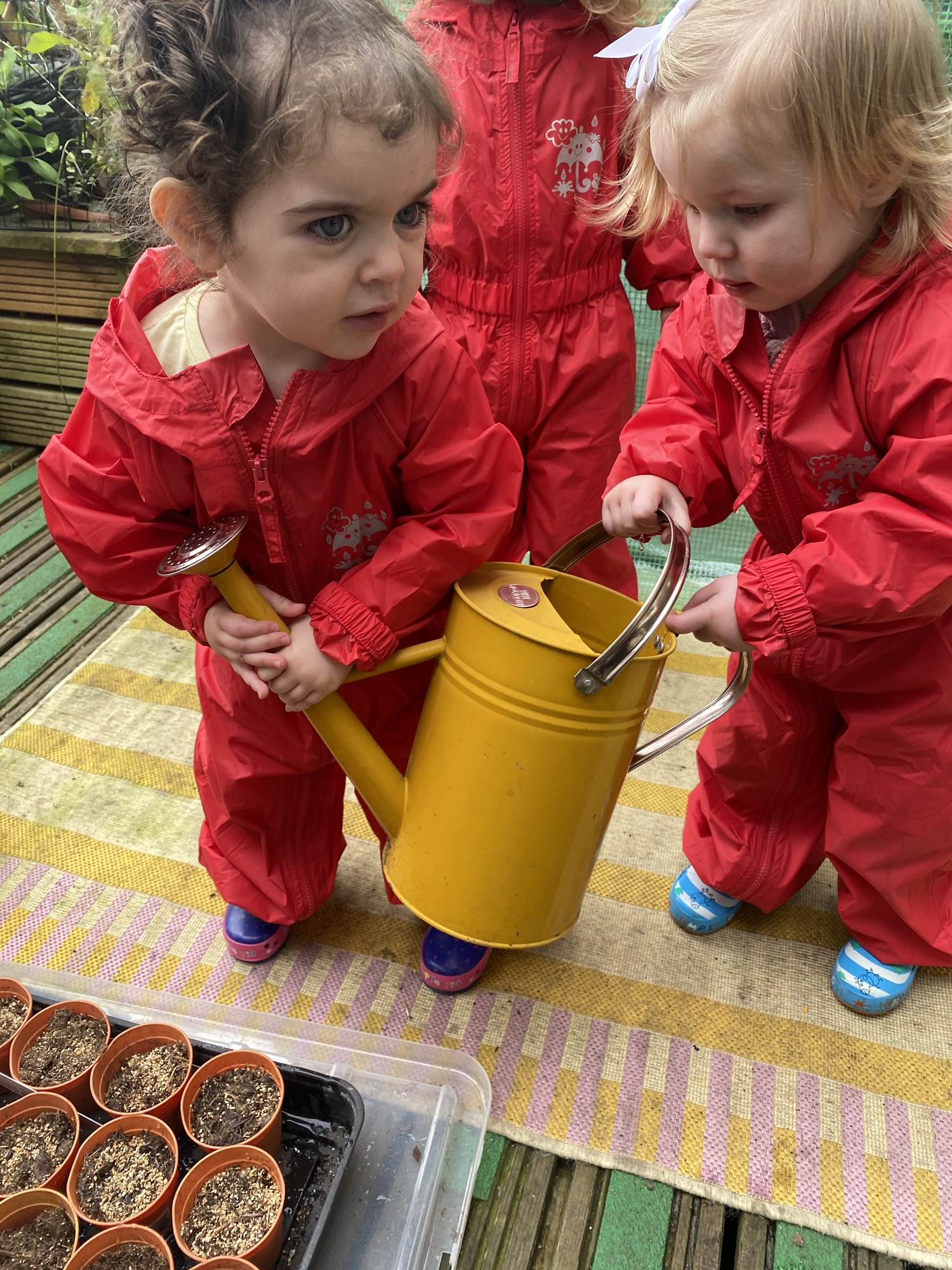
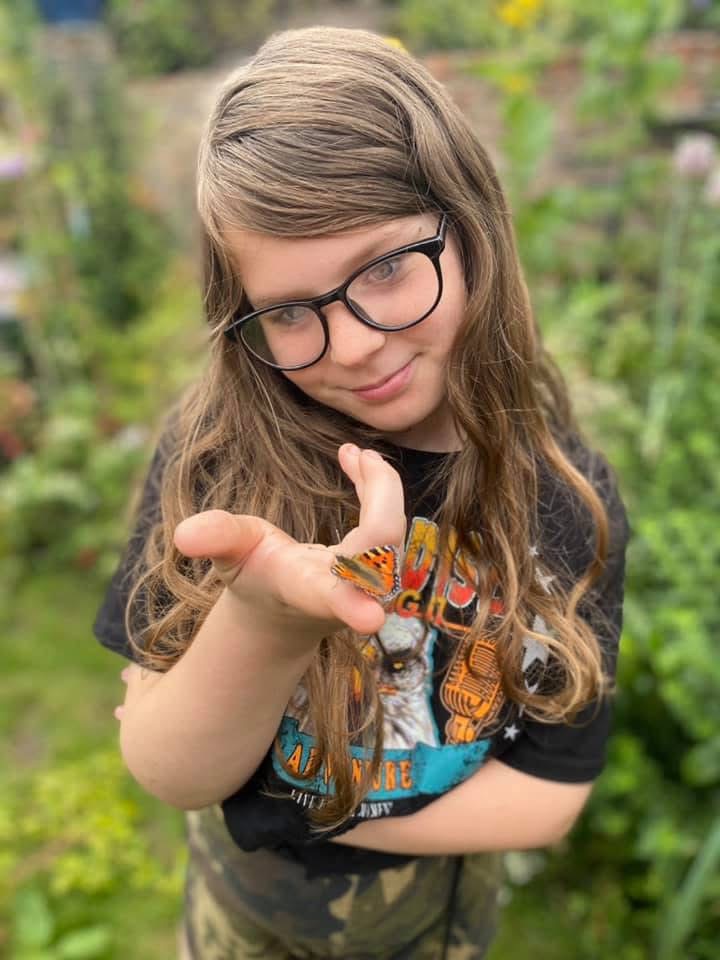
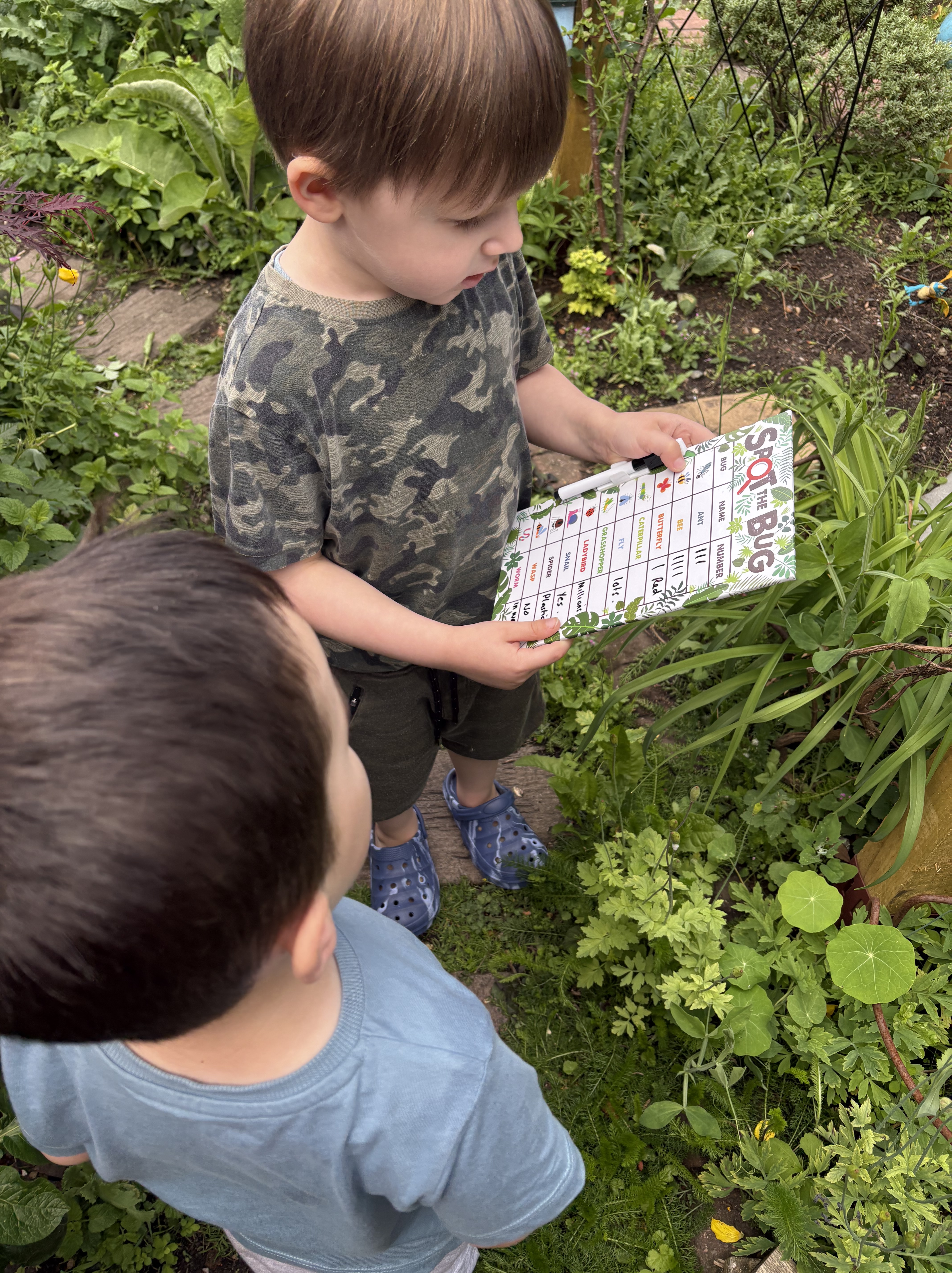
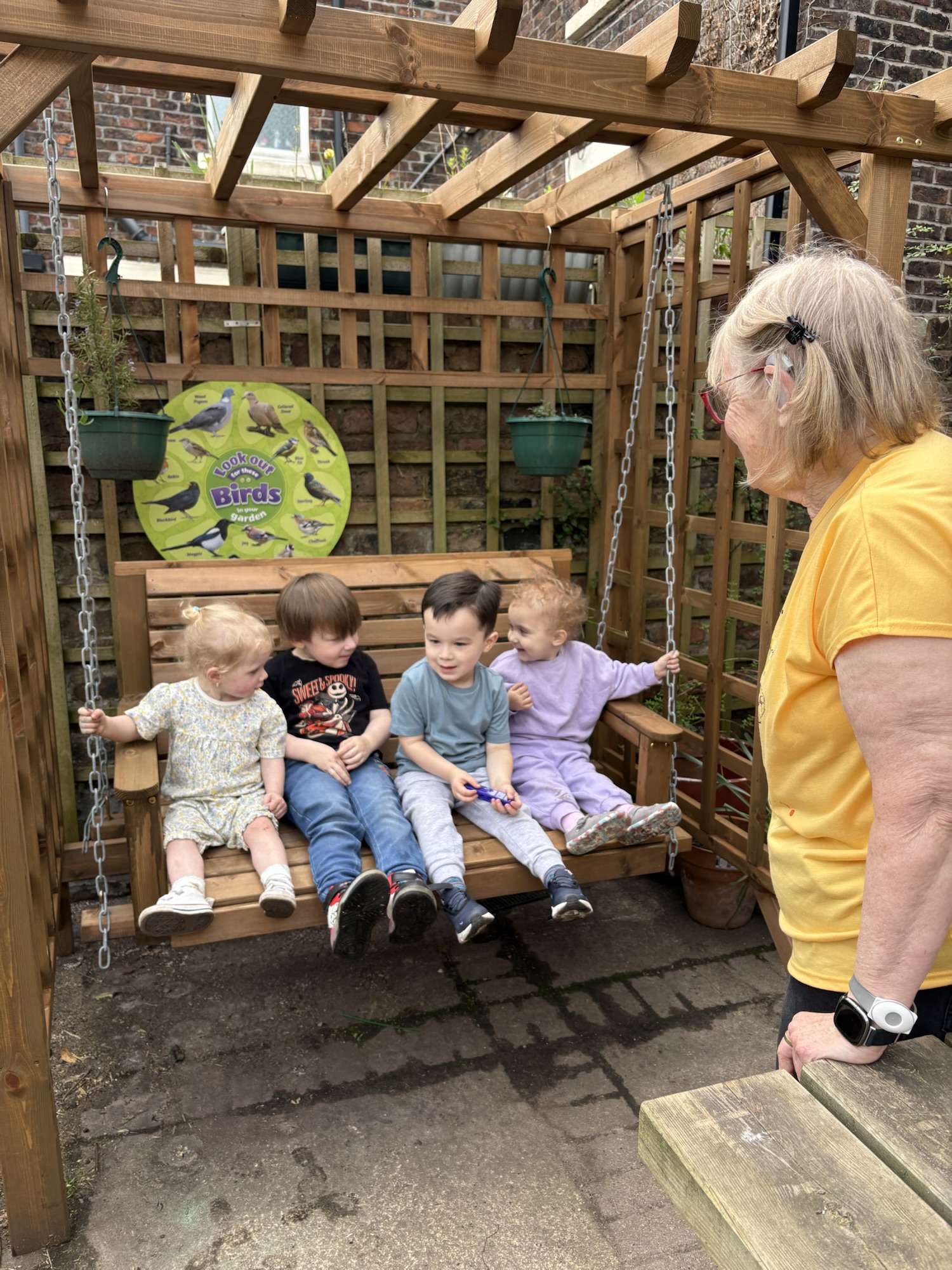
My childminding practice has always been a ‘Garden Classroom’ curriculum and I strive to make the environment accessible and an engaging experience for all children.
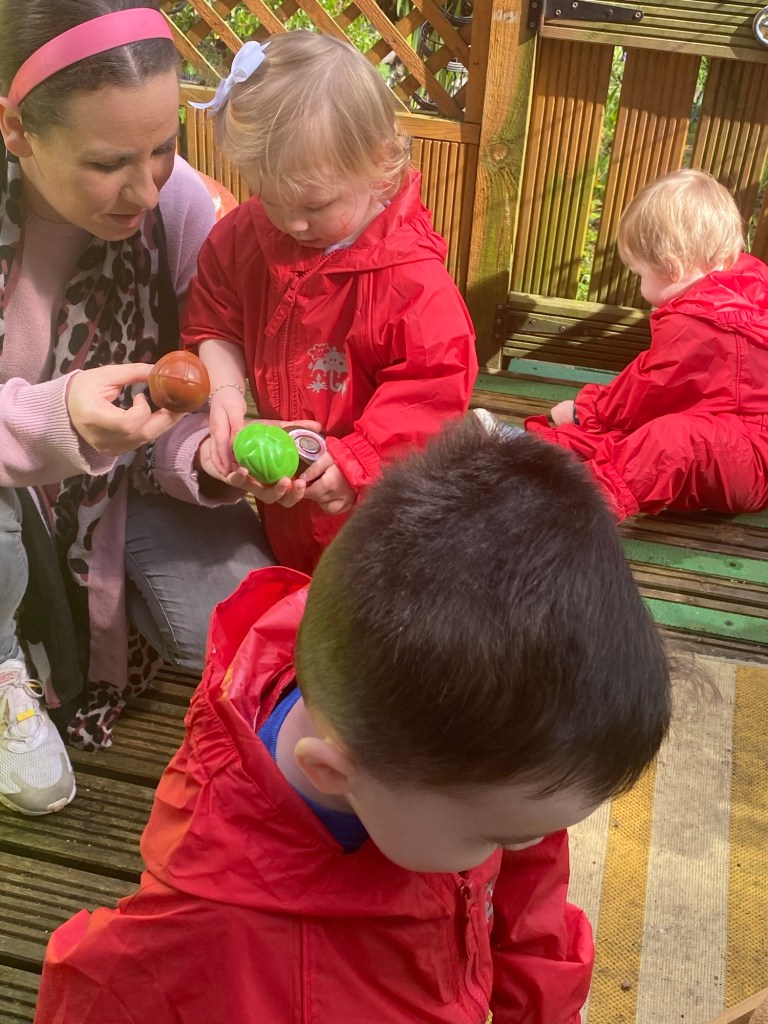
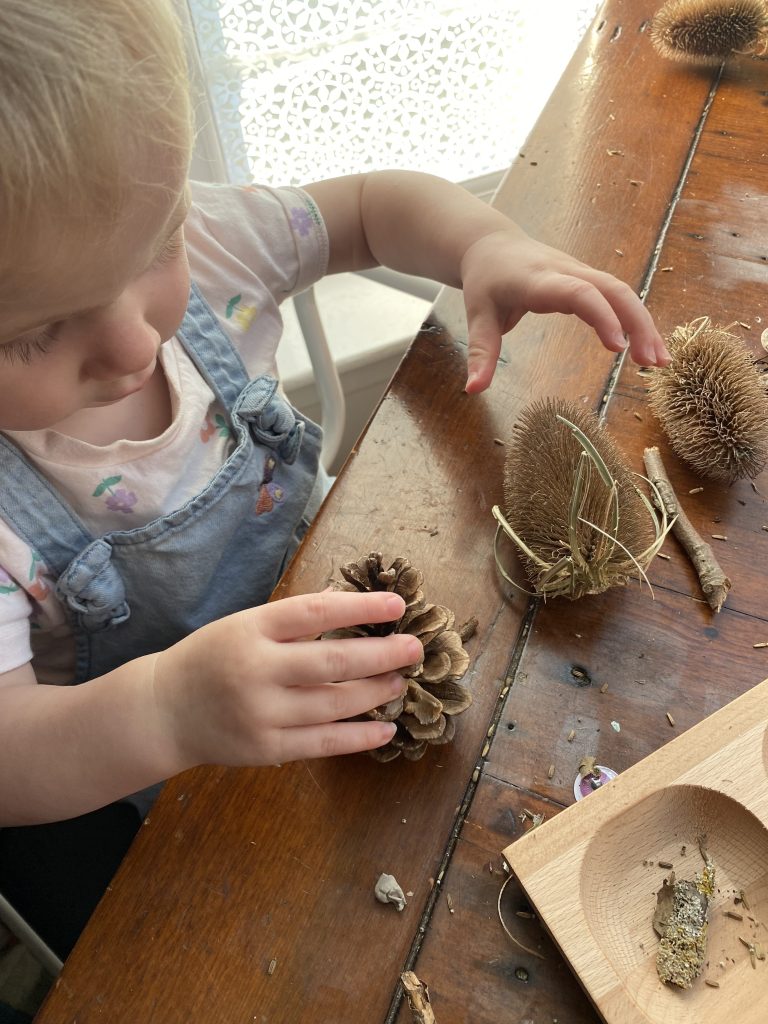
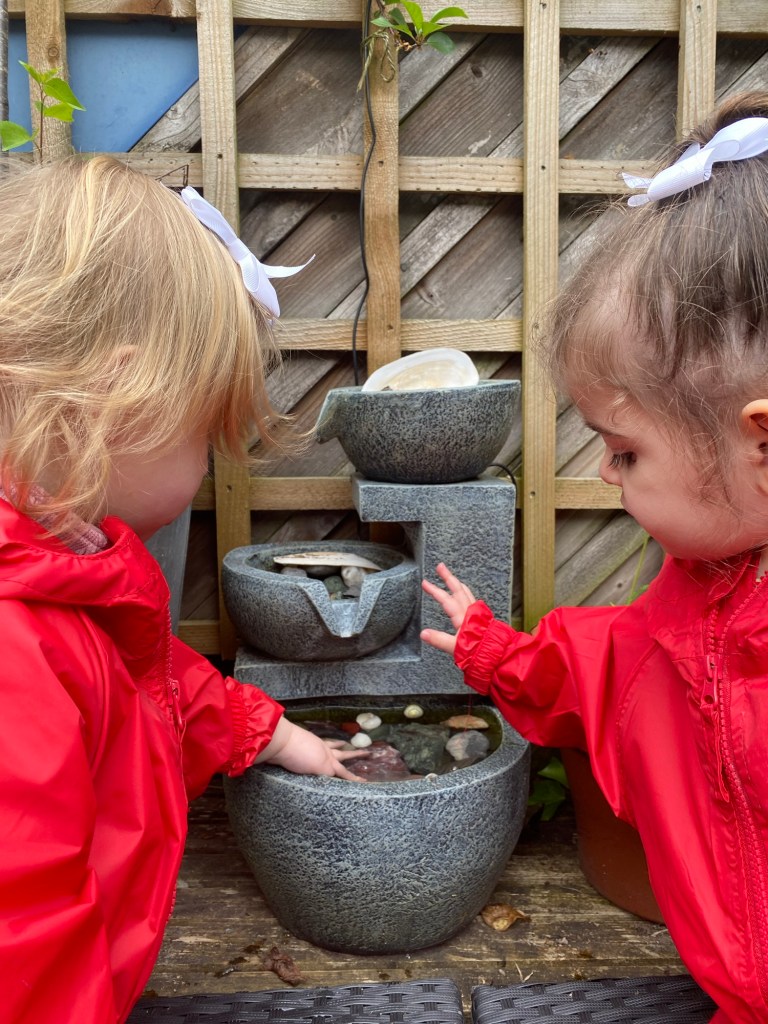
When I moved to my home, the main attraction was the garden and the garden summerhouse. Unfortunately not long after I moved in, it became obvious the summer house was not safe enough to use and we had to take it down.
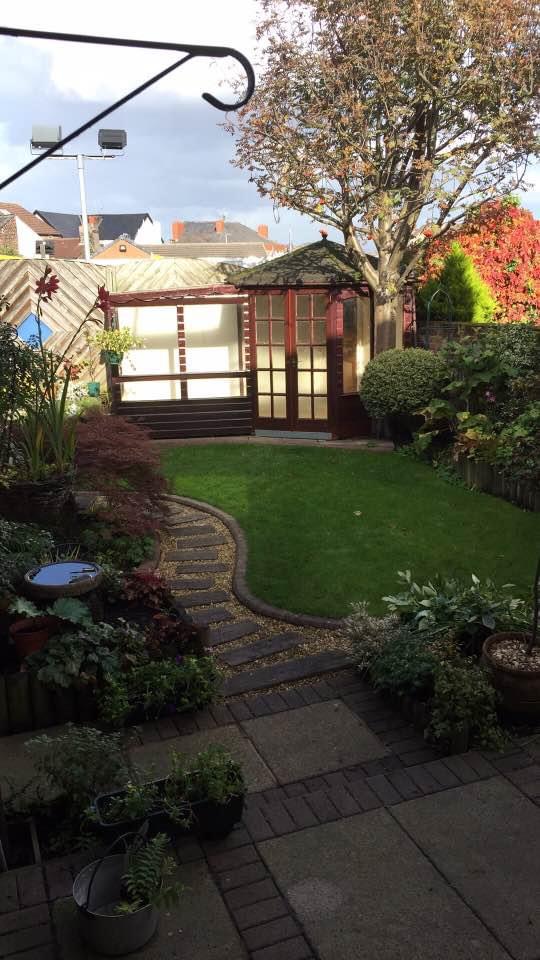
Since taking down the summer house it has been my dream to build a stronger, bigger outdoor classroom. We have been planning since that day and 7 years later we have been given the opportunity to make our vision come true.
The opportunity to apply for a grant from the local council came up in May 2025. This grant was offered to settings in Liverpool to enable them to expand settings and provide new places for children under 5 years of age to access quality education.
The children and I took a visit to the local Garden Center to look at various types of garden buildings. This gave us an idea of space, materials and what we would like the classroom to look like. This information all helped when putting the bid together.

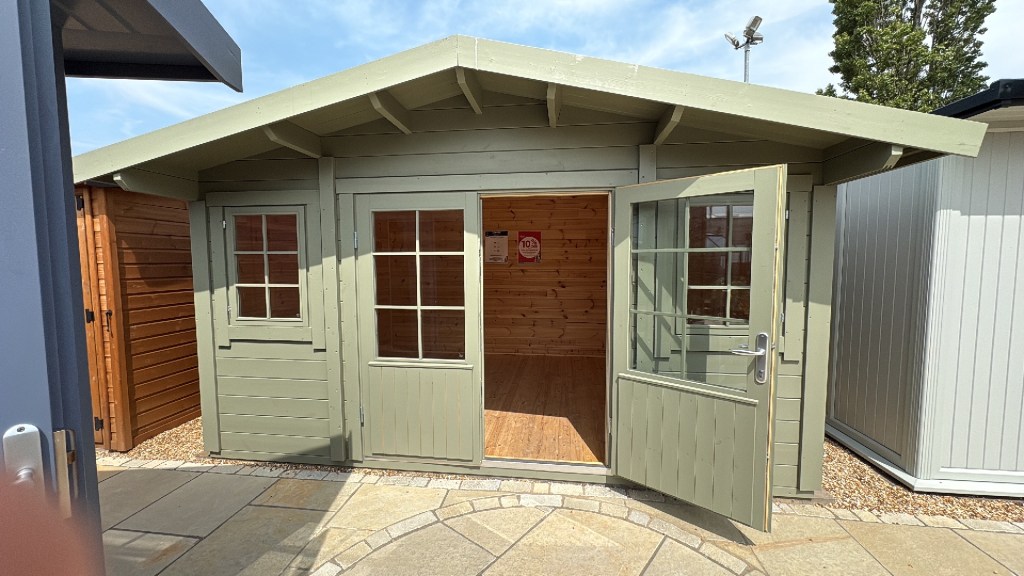
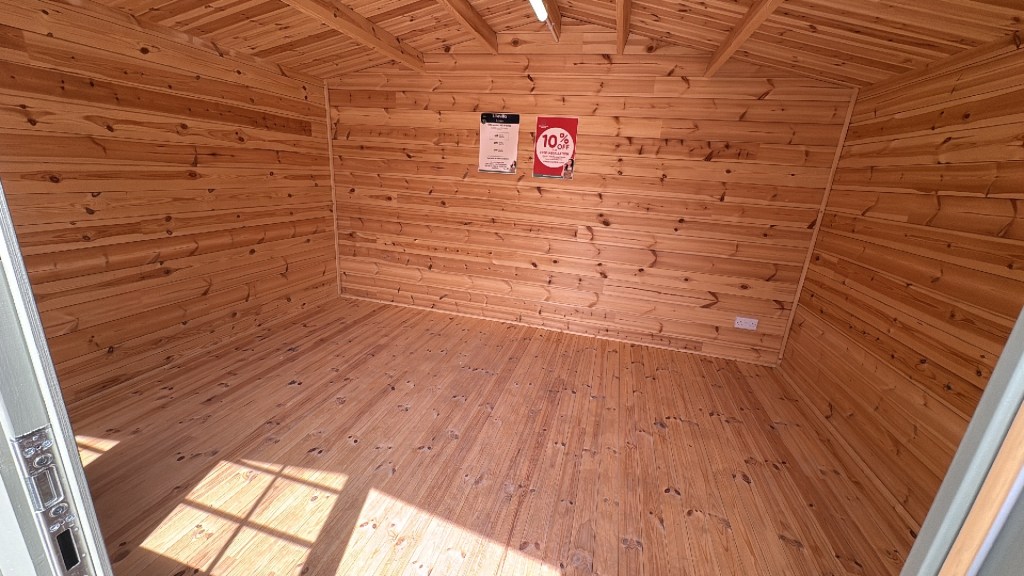
We worked hard putting into place the documentation to provide evidence on how we attend to expand our setting. luckily as we had been on our planning Journey over the last few years this part of the plan was in place. It took us another three weeks and a visit from a council representative to put the policies, financial information information and evidence into place to submit to the decision board.
By the end of June we were given the amazing news that we had been successful with the main part of our bid. This was on the premise we can supply further information regarding the company we had chosen to work with and raise the extra funding needed to cover the entire project. We researched another two building companies to gain more information and chose to go with Eon from ‘All good in the wood’ https://www.allgoodinthewood.co.uk/
‘Who we are, Sustainability is at the heart of everything we do. We’re a vegan-owned business that keeps our community involved with our local trading system. We’re proud of our products being locally sourced, locally finished and installed by local tradespeople, keeping our community personally involved from start to finish! We know exactly where every tabletop, fence post or roof shingle came from and where the trees grew. Call it our sustainable family tree.’
“Ancient trees are precious. There is little else on Earth that plays host to such a rich community of life within a single living organism.” — Sir David Attenborough
By Tracie Dowling
Throughout my career as a Registered Childminder, I have incorporated holistic learning into my practices. Over the years this has evolved, and I refer to my way of teaching as ‘The Garden Classroom’ which you can read about on my blog. Although this way of learning is primarily outdoors, the learning is year-long and therefore I have created ways of learning no matter the season. The Garden Classroom practices always incorporate the three prime areas of the Early Years Foundation Stage (EYFS) and the Characteristics of Effective Teaching and Learning. Read on to learn how I weave these key components into outdoor play.
OUTDOOR LEARNING
The Garden Classroom is a space where children can learn and grow, connecting to nature and the world around them. Outdoor exploration not only connects toddlers and babies with the seasons and everchanging weather, but also promotes physical activity, a sense of wonder, and an appreciation for the natural environment. Providing gardening activities for my children has proven to be great way to engage them with hands-on learning, including growing food from seed to plate,
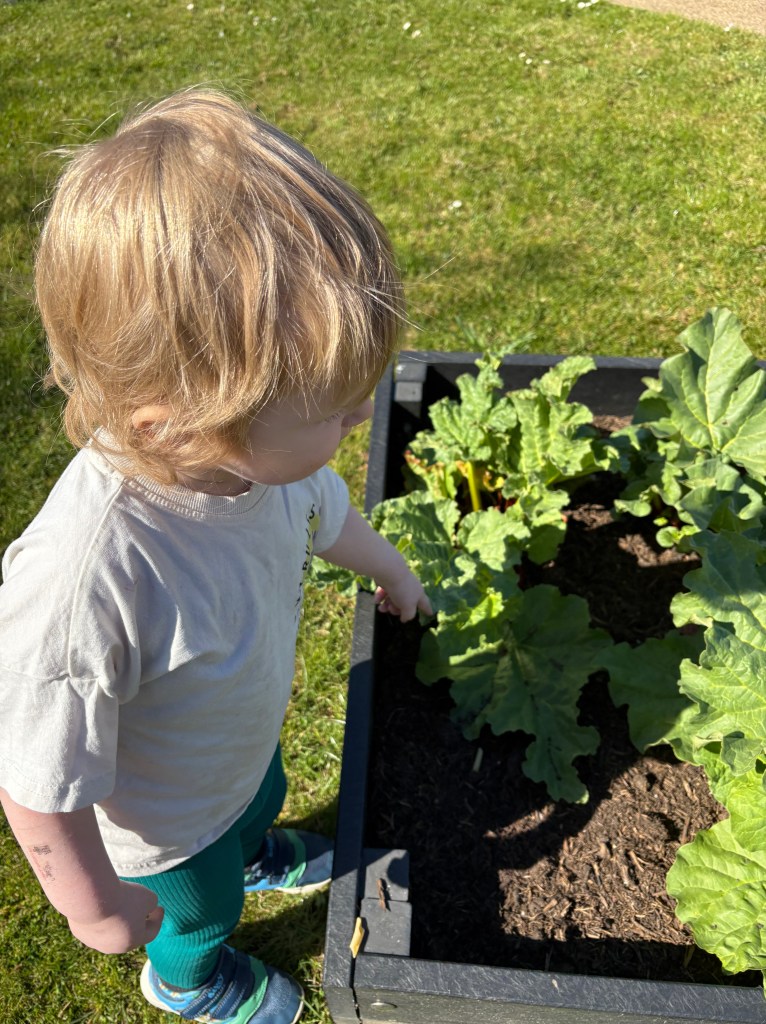
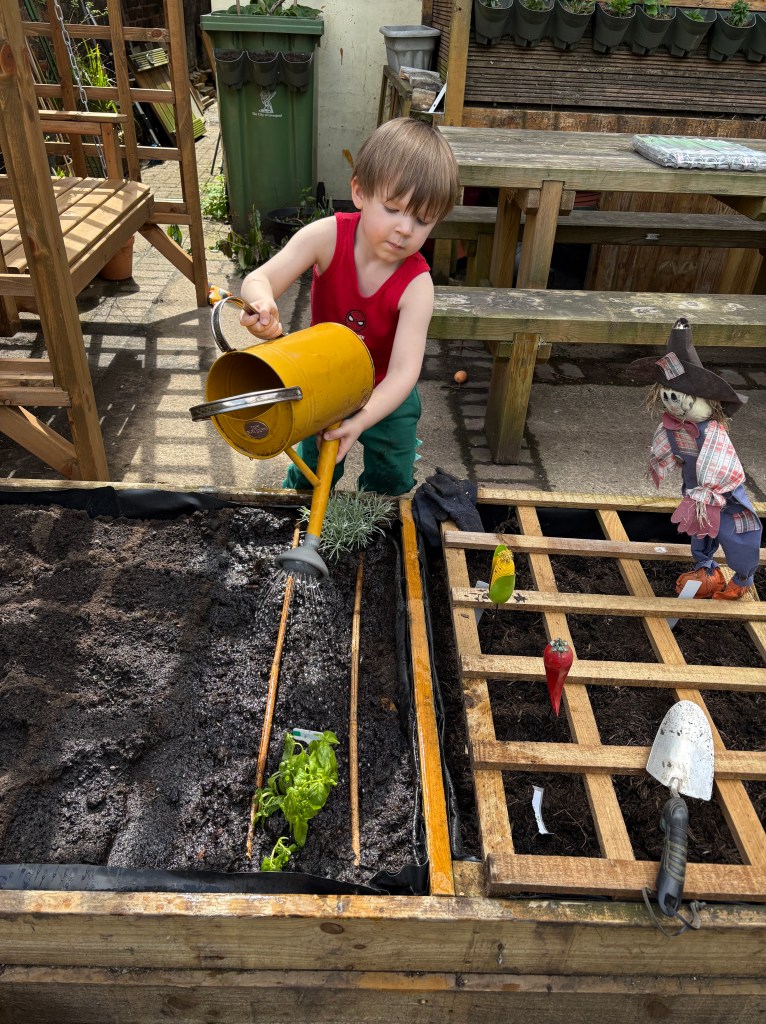

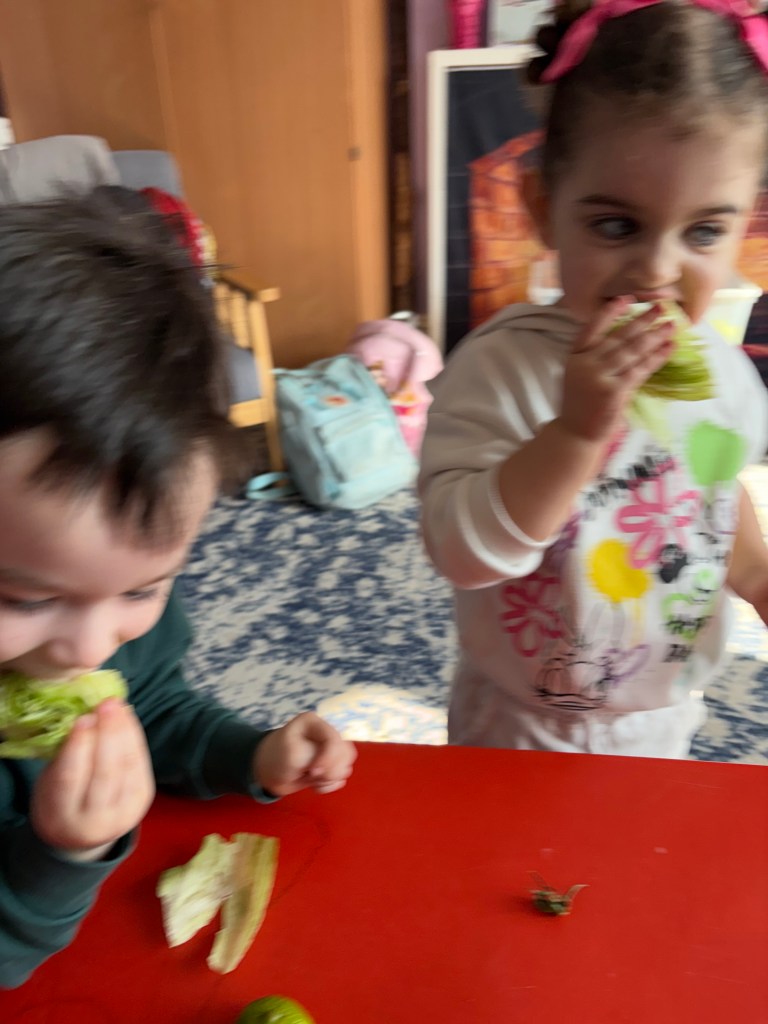

food sensory education, pond-dipping and lifecycles, and practicing sustainability through composting and recycling.
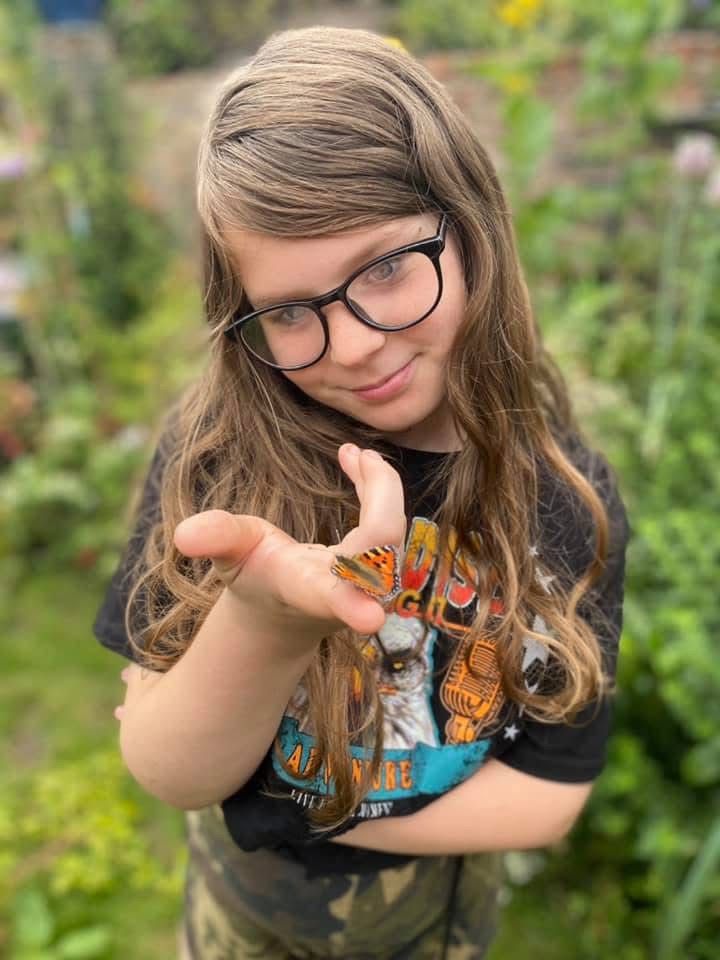
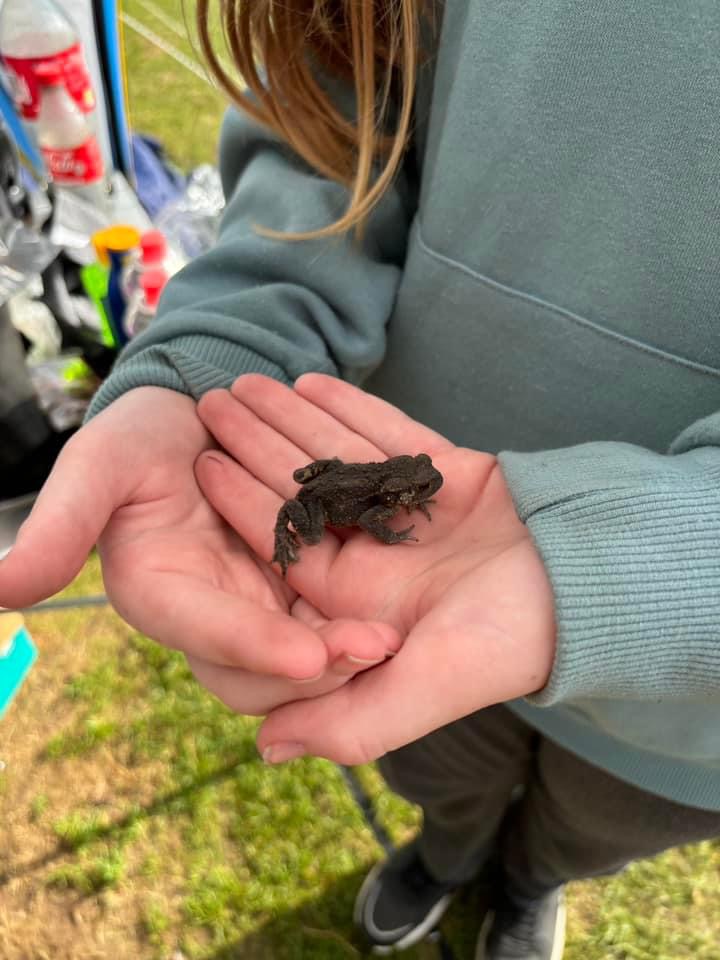
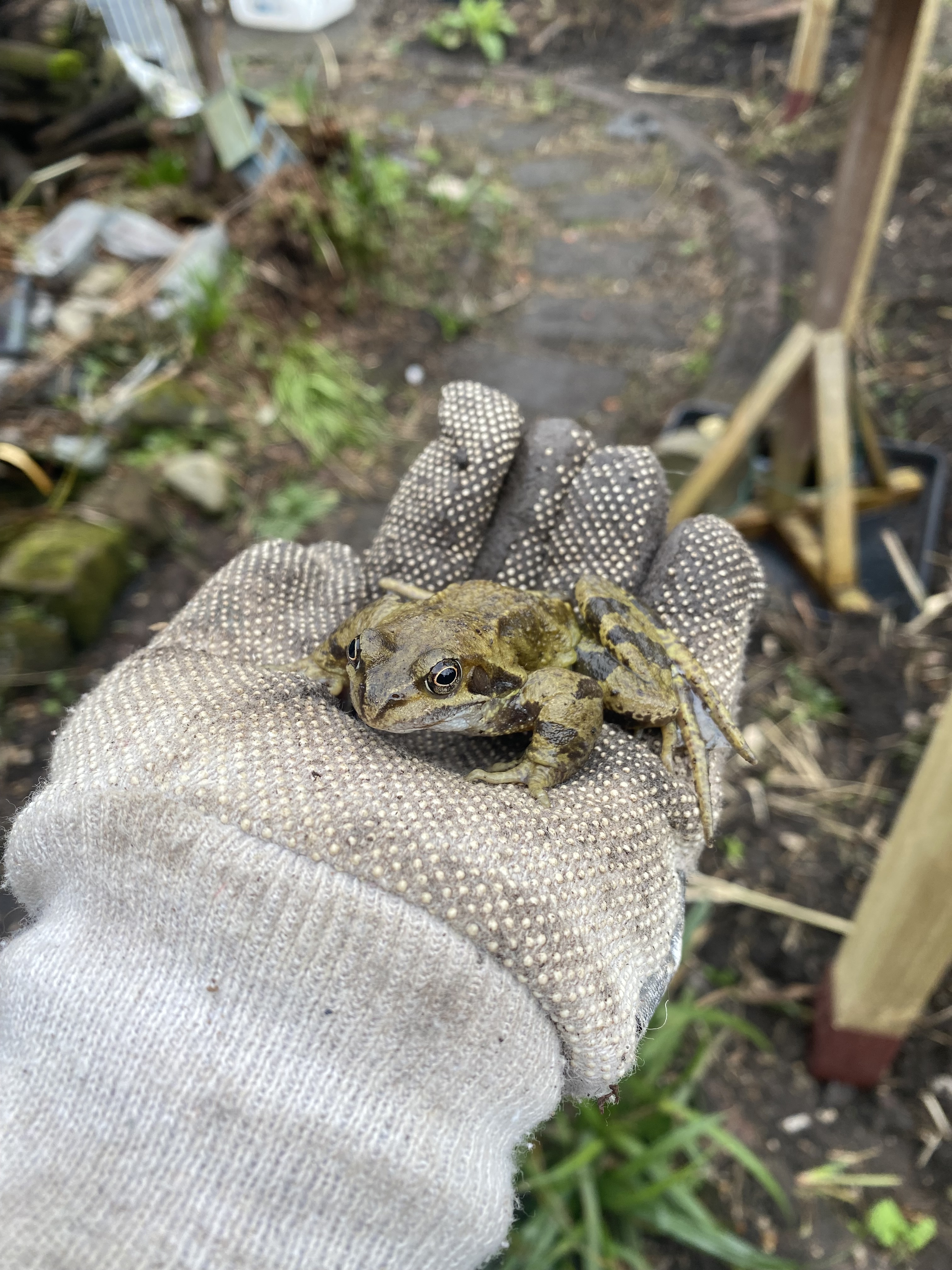
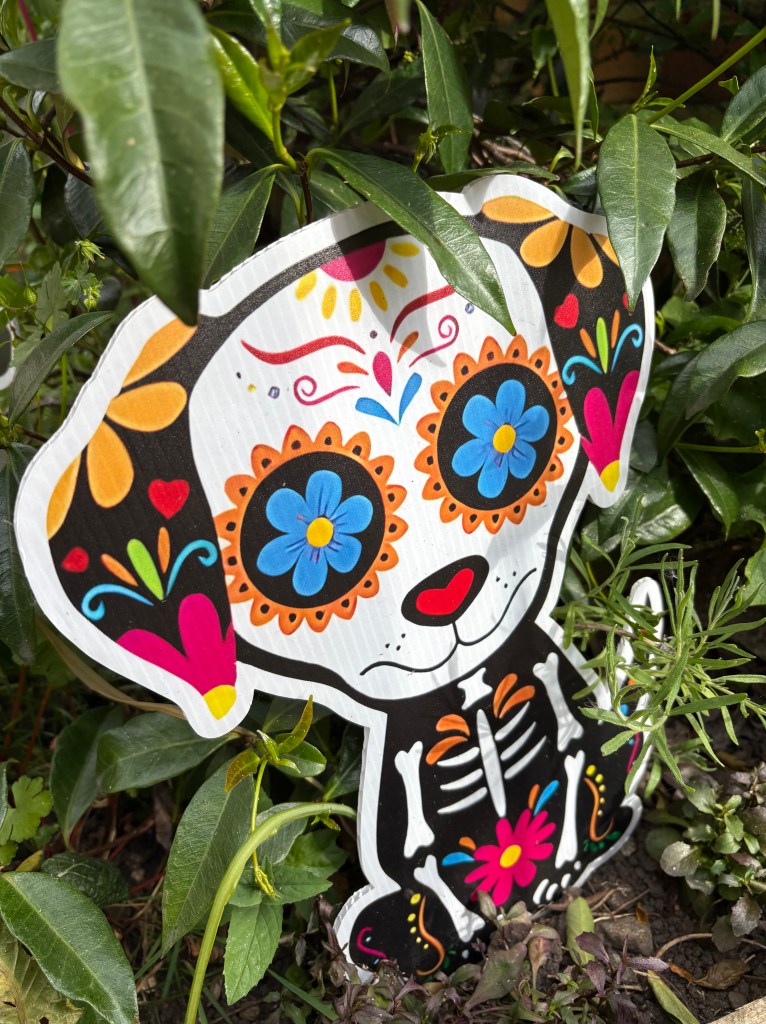
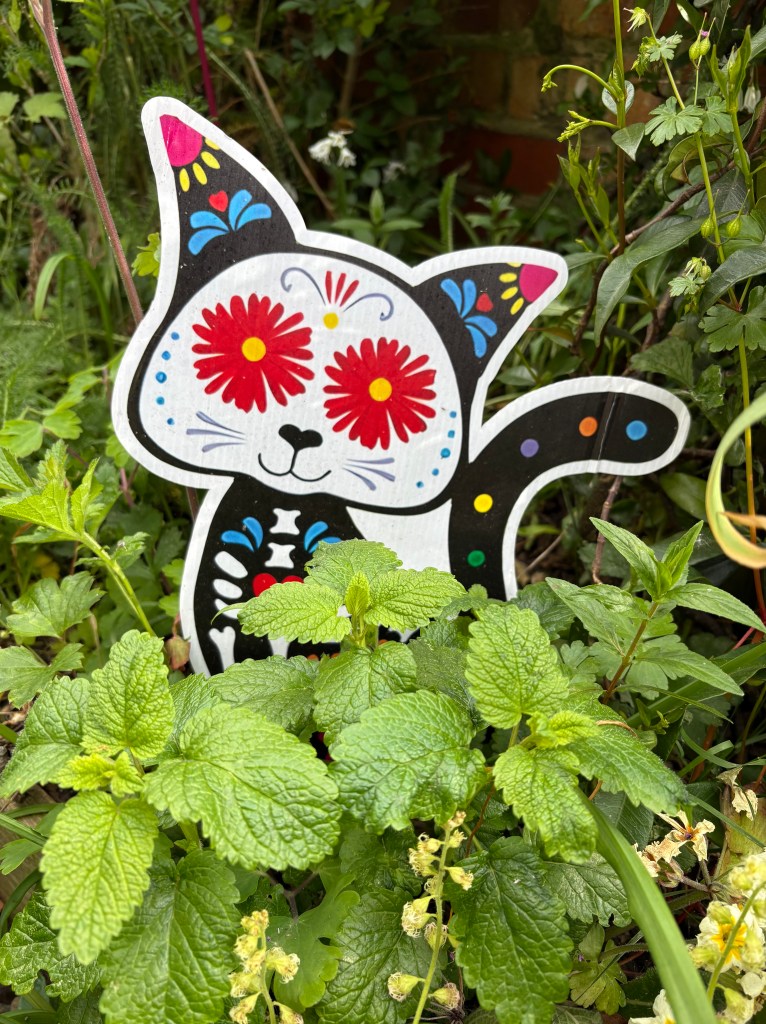
The children learn vital skills such as adaptability and resilience by witnessing their environment going through the cycles. This helps them understand the concept of change and builds resilience in the face of transitions. In one area of our garden, we have a pet cemetery. Here, we have buried our family pets and other creatures who have come and gone.
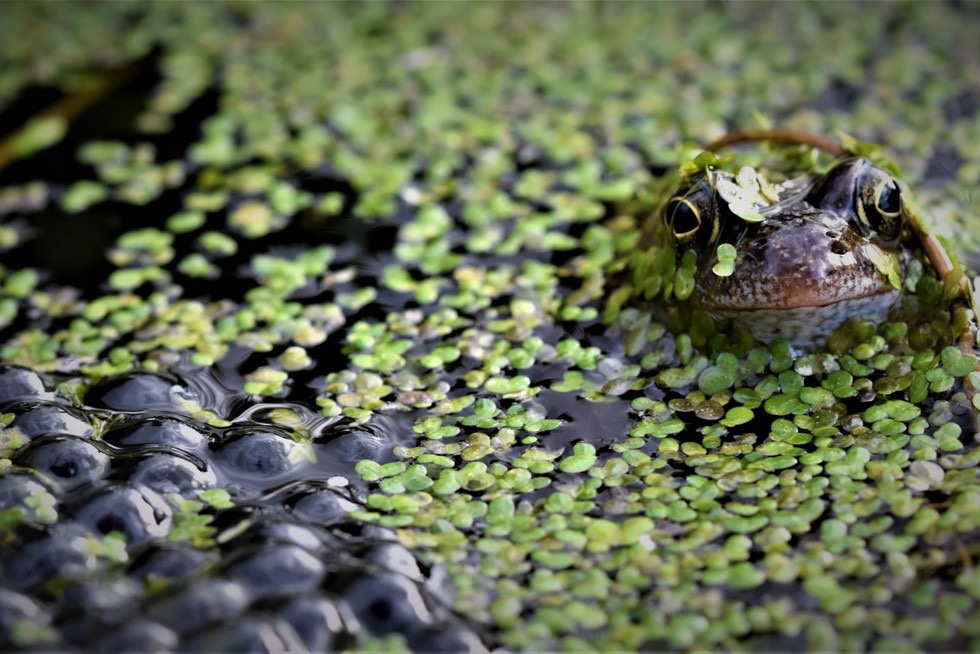
This space allows us to teach the children about the life-death cycle and accept change. Similarly, every year we experience frogspawn, giving us the opportunity to learn about birth and growth as we watch their little tails shrink and their legs grow.
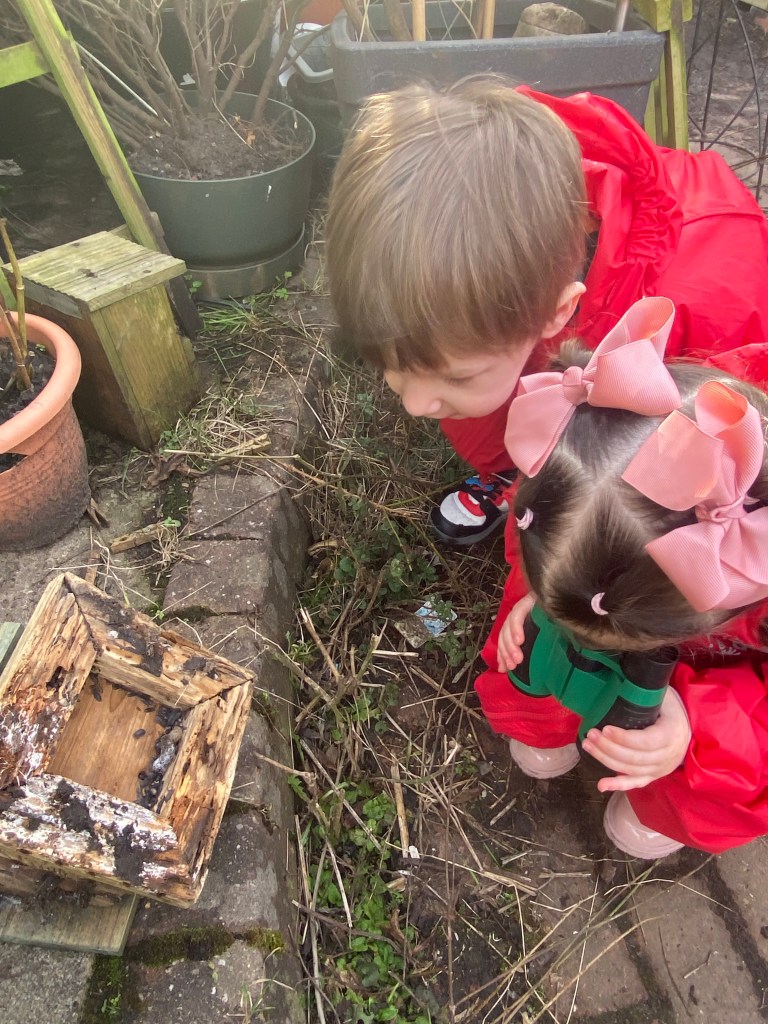
To support the children’s cognitive skills, we provide activities to observe and understand nature through investigation. The children’s favourite activities at the moment are pond dipping and growing and harvesting flowers, fruit, and vegetables. Some of the learning objectives within these activities are linked to lifecycles, categorising, comparison and pattern recognition in nature.

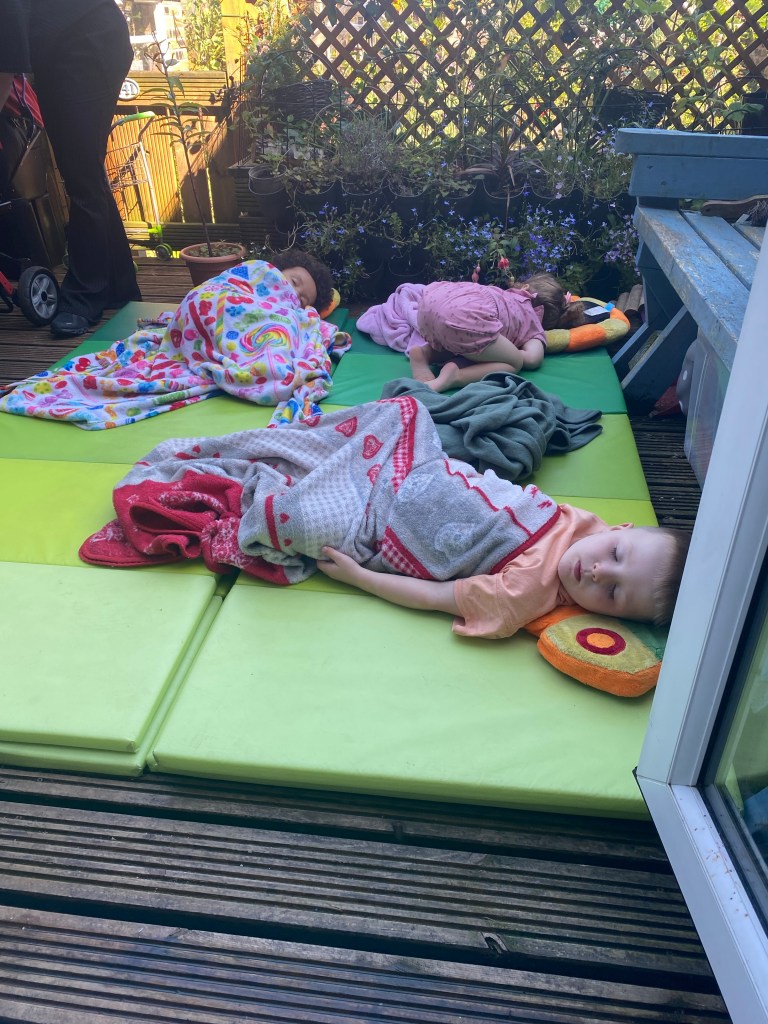
Supporting the children to experience the wonders of changing seasons has a positive effect on their emotional well-being, mine, and Debbie’s too! The children take naps outside and participate in meditation while the birds are singing away. These activities provide opportunities for relaxation and promote a sense of calm and happiness. It is proven that spending time in nature has mental health benefits as well as emotional and physical benefits.
SEASONAL LEARNING
Every season and even every different day outdoors, brings a new set of sensory stimulation by exploring the sights, textures, aromas, even the noises of the natural world. The experiences are endless. The children love finding the strawberries and munching away, and there is no better taste than a sun-ripened cherry tomato, if they leave me any!
Unfolding the characteristics of seasonal vocabulary during our activities also contributes to early language and provides children with the skills to articulate their observations and experiences. Whether its playing in the muddy puddles, counting the frogs or learning to sow seeds, the language opportunities are endless.


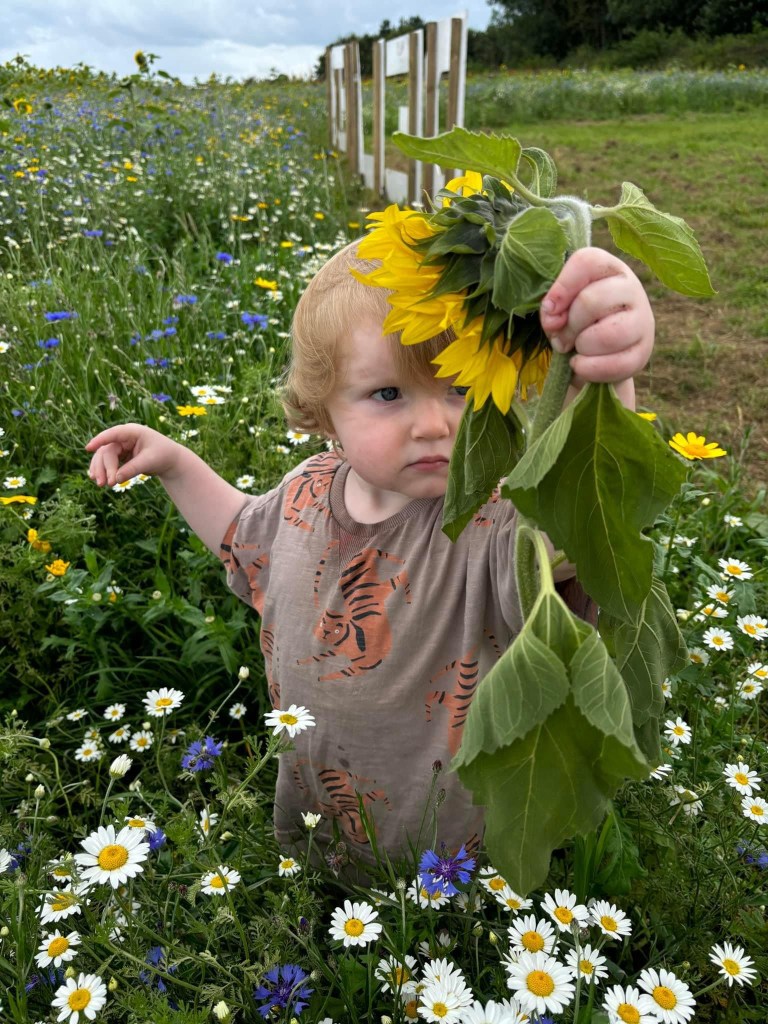
The seasons are also a lovely way to promote cultural celebrations and traditions. We love the harvest festival where we like to gather our produce and share with our families, or Diwali where we cover the garden with lights and have a magical Diwali feast. There are many ways to weave cultural traditions into your very own Garden Classroom.
“Lovely to watch her be so interested in how it grows. How she cares for it, and that she’s happy with the end result, we’ve even started growing our own strawberries and sunflowers at home” – Elsie’s Mum.
By incorporating a Garden Classroom into your setting, your children can foster environmental awareness, develop a sense of responsibility and appreciation of the natural world, which in turn lays the groundwork for their future environmental consciousness. Seasonal changes spark natural curiosity and wonder within the children, giving them the opportunity for questioning and exploration, cultivating a mindset of inquiry and lifelong learning.


The Education Endowment Foundation (EEF) The Early Years Toolkit brings together the best available evidence on key areas of learning and development. It can support all childminders when making decisions on how to improve learning outcomes.
Other research
Physical development approaches | EEF educationendowmentfoundation.org.uk)
Useful resource: Garden activities for September :: The Garden Classroom – NurtureStore
The Edible Garden – Alys Fowler (book and BBC Series 2010)
‘My greatest childhood memories are of playing outdoors. Running around, climbing trees, playing in my treehouse, making mud pies, using my mum’s roses to make perfume (not always fragrant!) and inventing new games that kept me, and my brother occupied for hours – these are all things that contribute to a happy, healthy upbringing’
Introduction
My name is Tracie Dowling, and I have been an OFSTED Registered Childminder for over 33 years and a Strategic Partner of Liverpool City Region and Beyond Early Years Stronger Practice Hub. One of my roles has been to support the Deysbrook Childminder Network at the Village Community Centre in West Derby, Liverpool.

https://www.evertonnurseryschoolandfamilycentre.org/childminders
Benefits of outdoor learning opportunities
Not all childminders are lucky enough to have a large outdoor space attached to their setting; however, this does not prevent them from ensuring the children access quality outdoor learning opportunities. The childminders at Deysbrook meet up once a week at the drop-in session and have access to a community garden where they can grow produce, exercise and access activities. They also regularly organise to meet up at the local allotment, parks, farm, forest, zoo and beaches.
‘The Early Years Foundation Stage states that ‘children benefit from spending as much time outside as possible. This makes a significant contribution to the progress they make particularly in their personal, emotional, social and physical development’
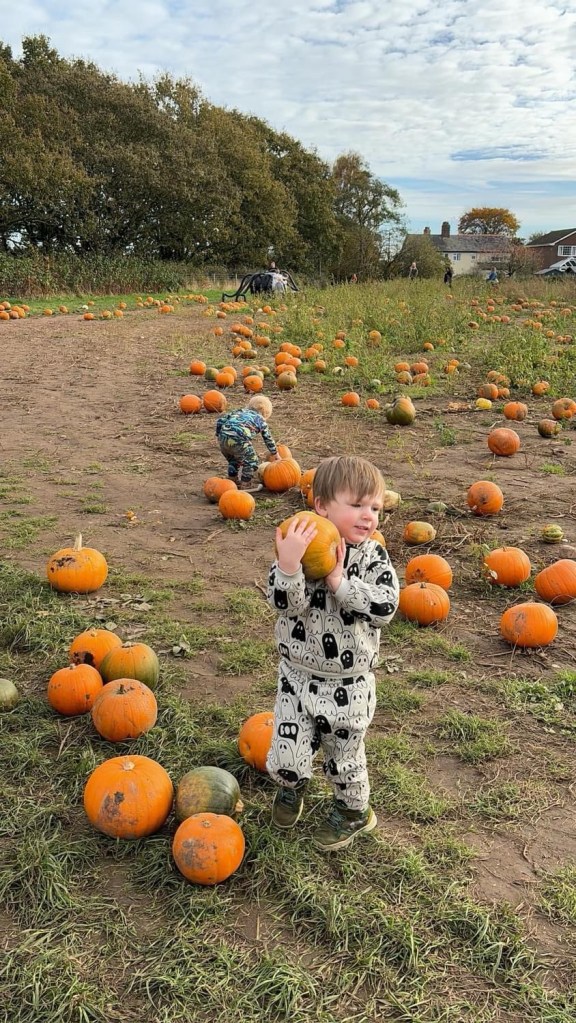
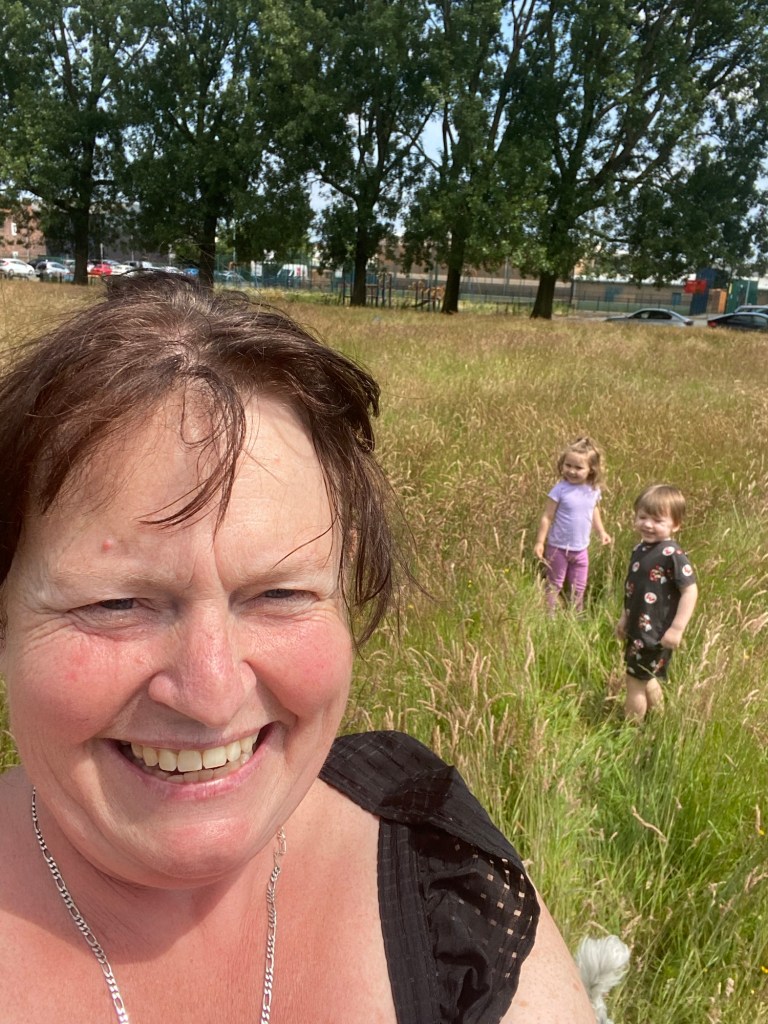
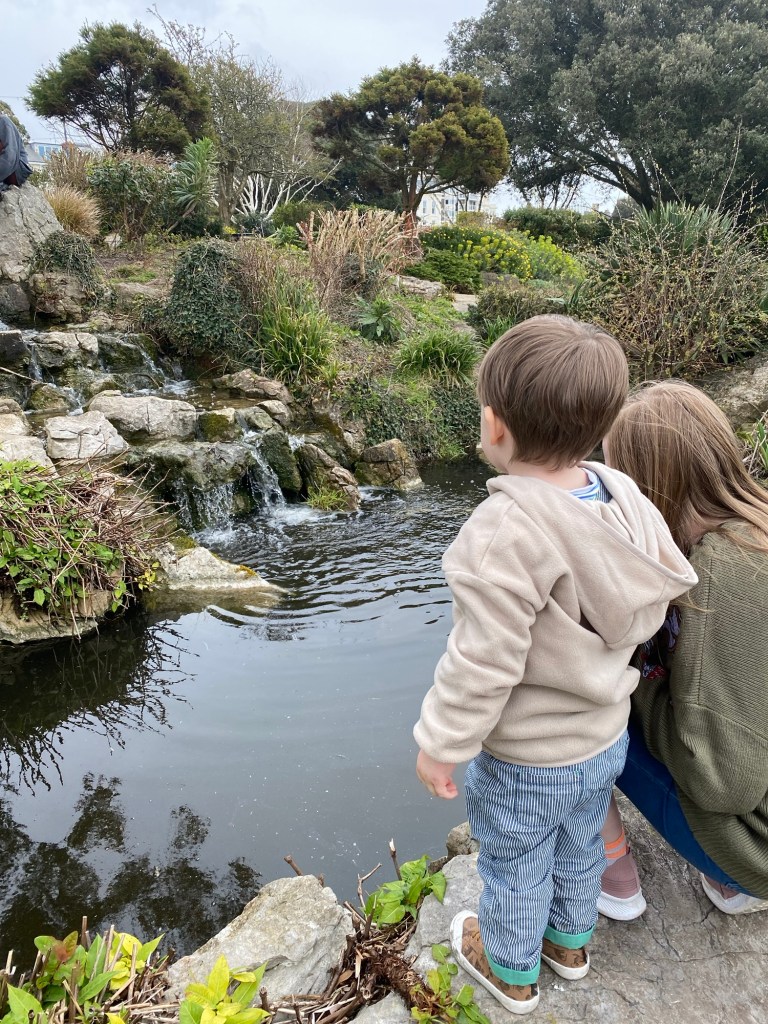
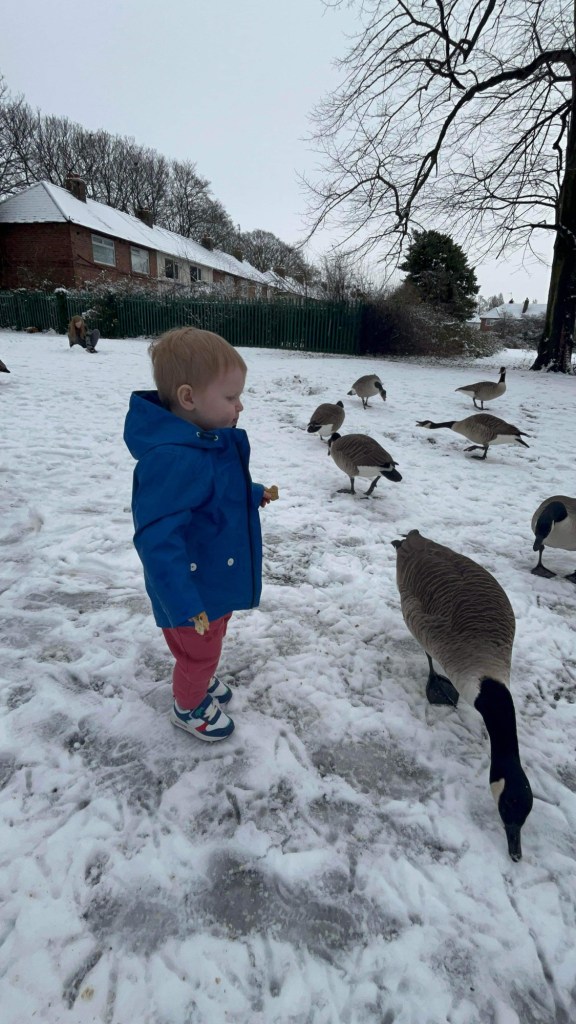
Having the opportunity to learn outdoors can be a holistic and essential approach to education, offering a multitude of benefits beyond the traditional educational setting. Here are some of the ways the childminders take advantages of outdoor learning opportunities:
Enhanced Physical Development:
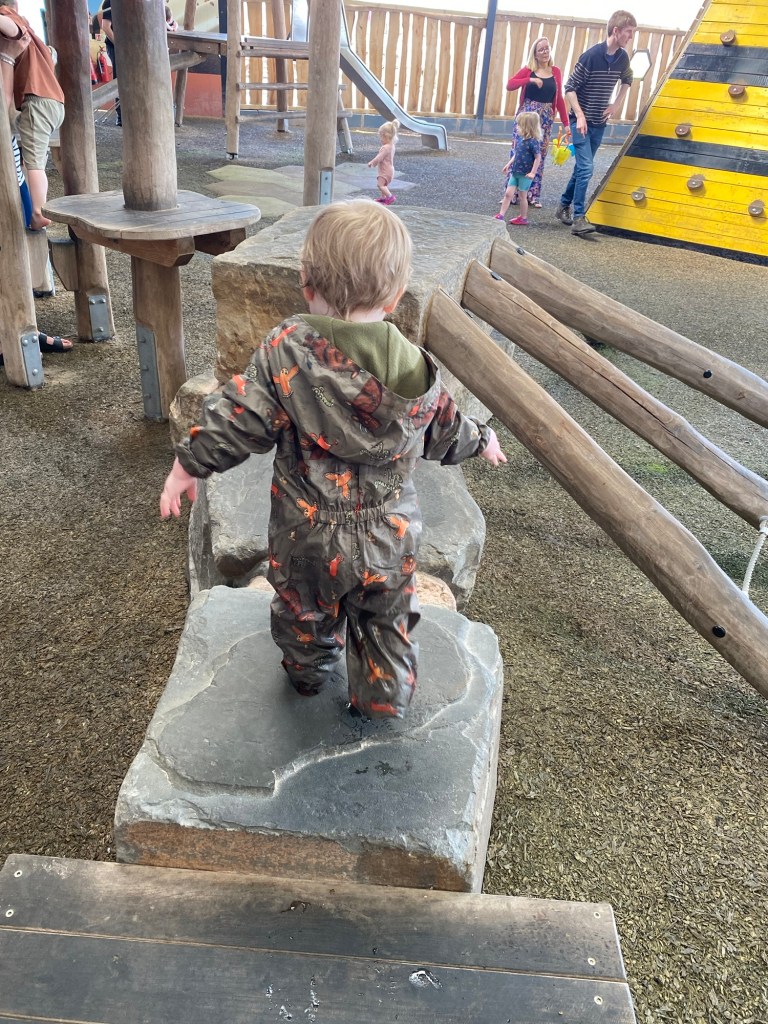
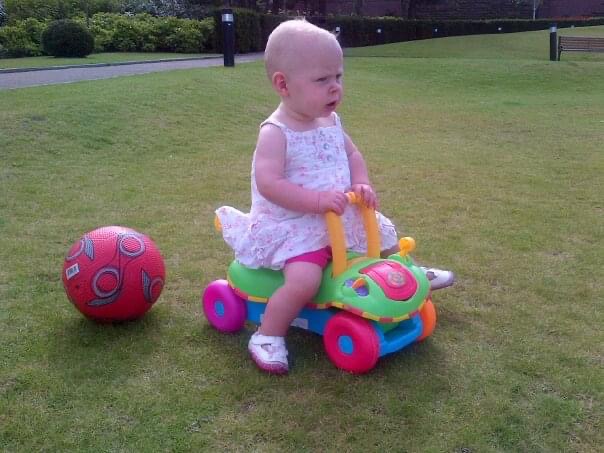
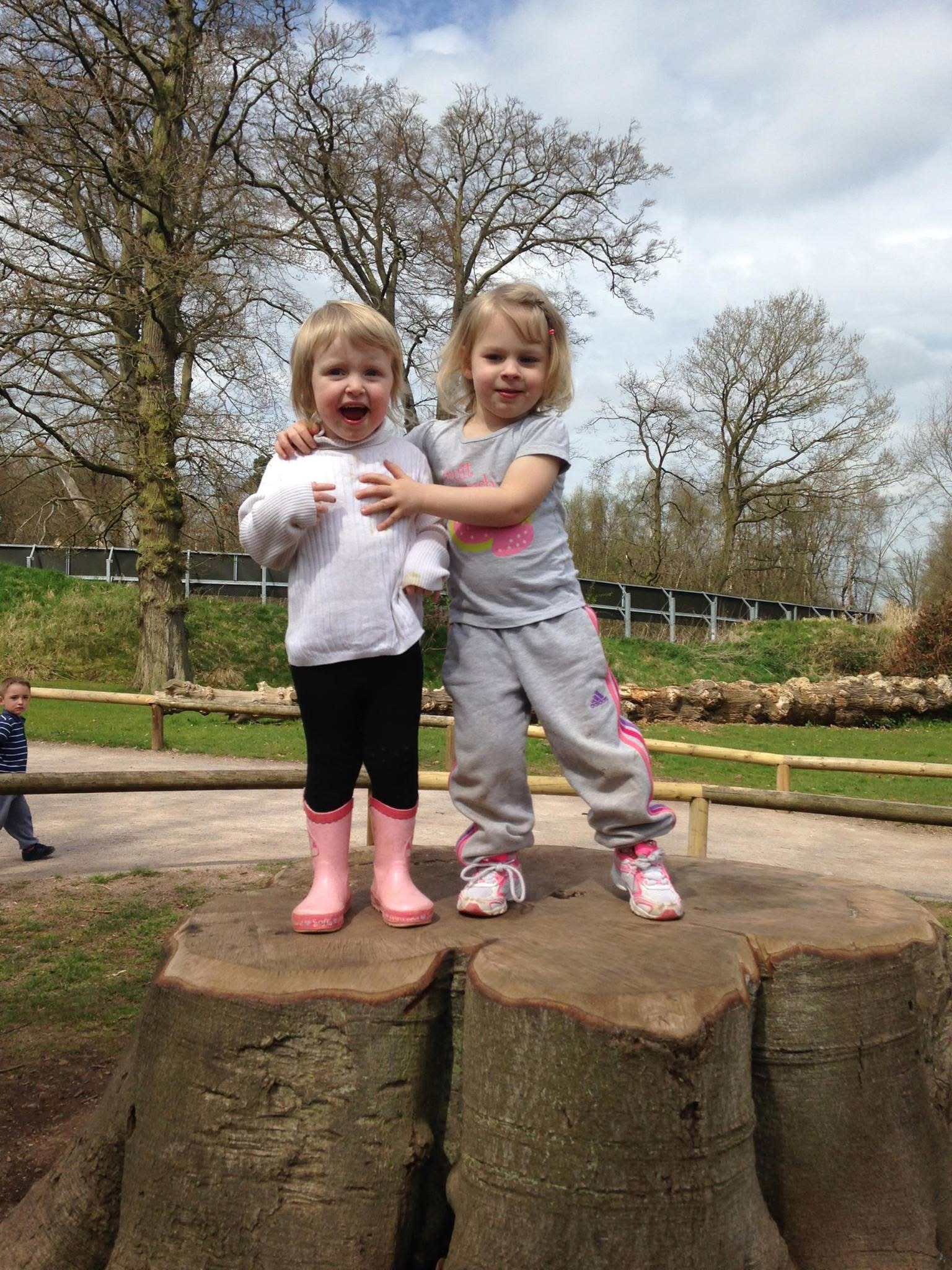
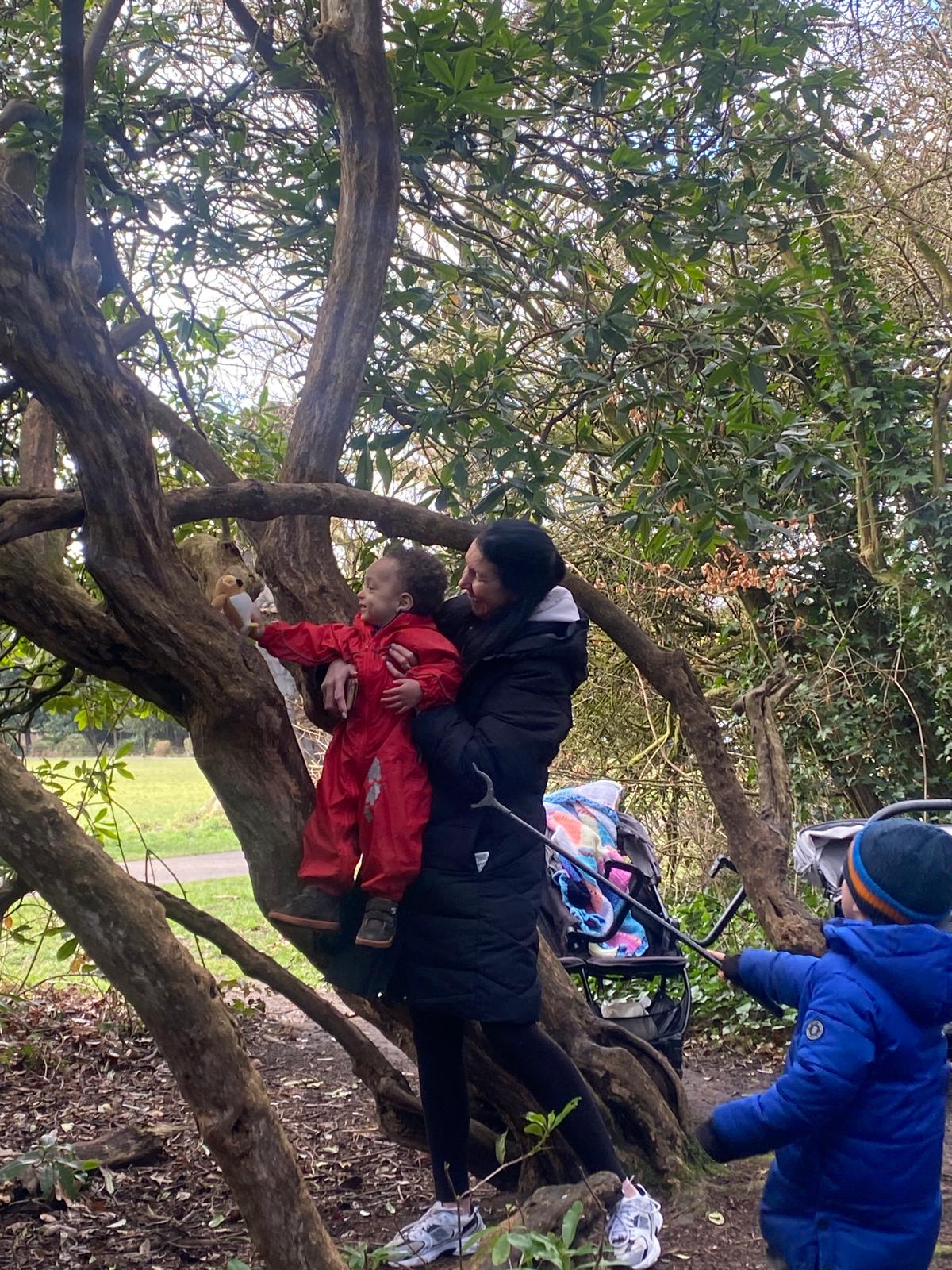
The childminders regularly take the children to the local forest to experience the natural outdoor spaces which are uneven and inconsistent (logs, trees, pathways) and therefore improve children’s balance, coordination, agility and encourage movement in ways that improve their muscles, bones and physical endurance.




Cognitive Development:
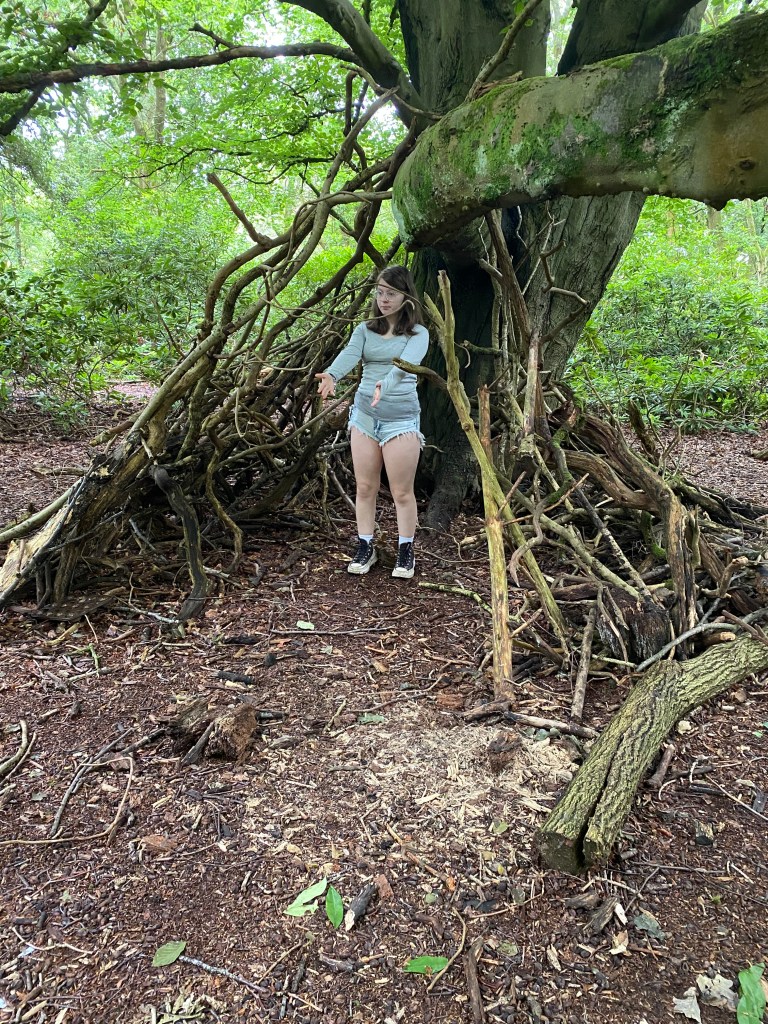
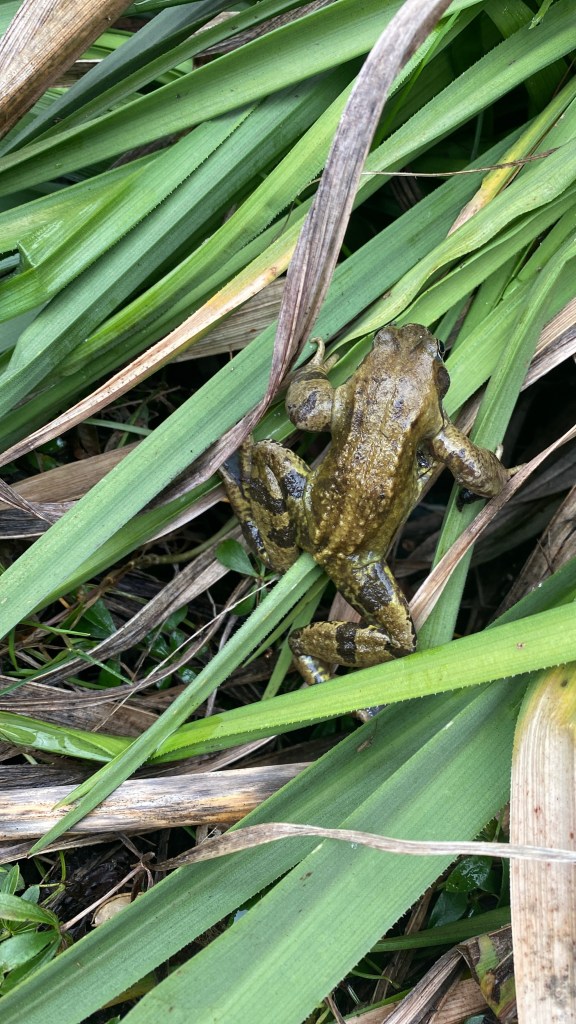
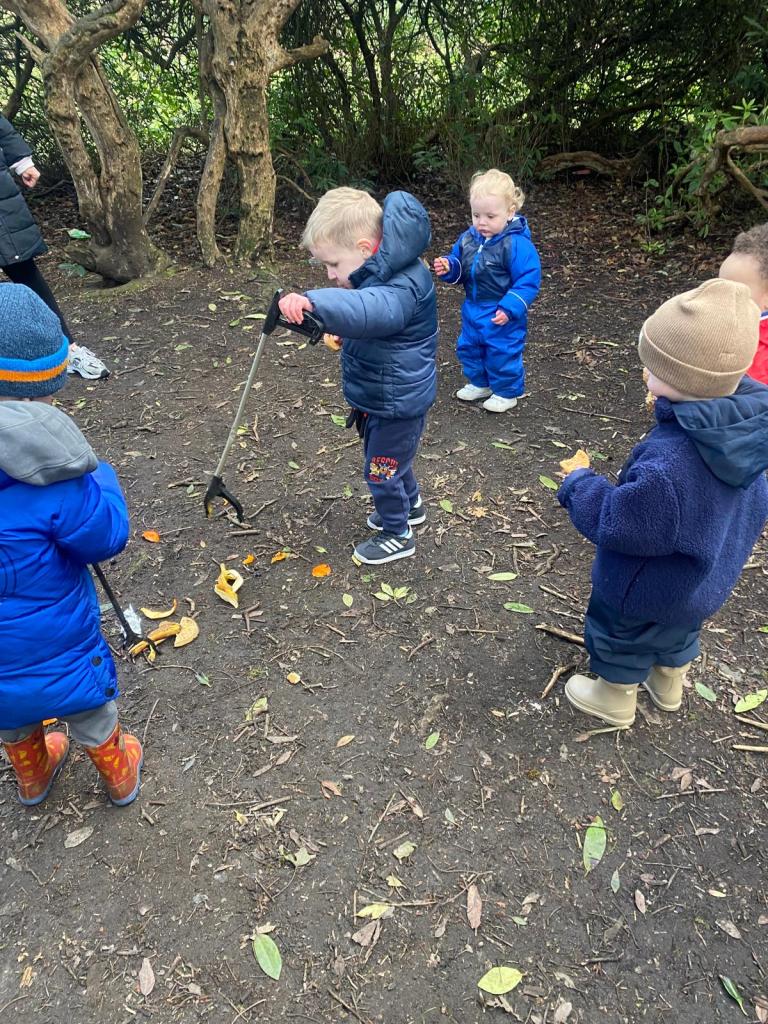
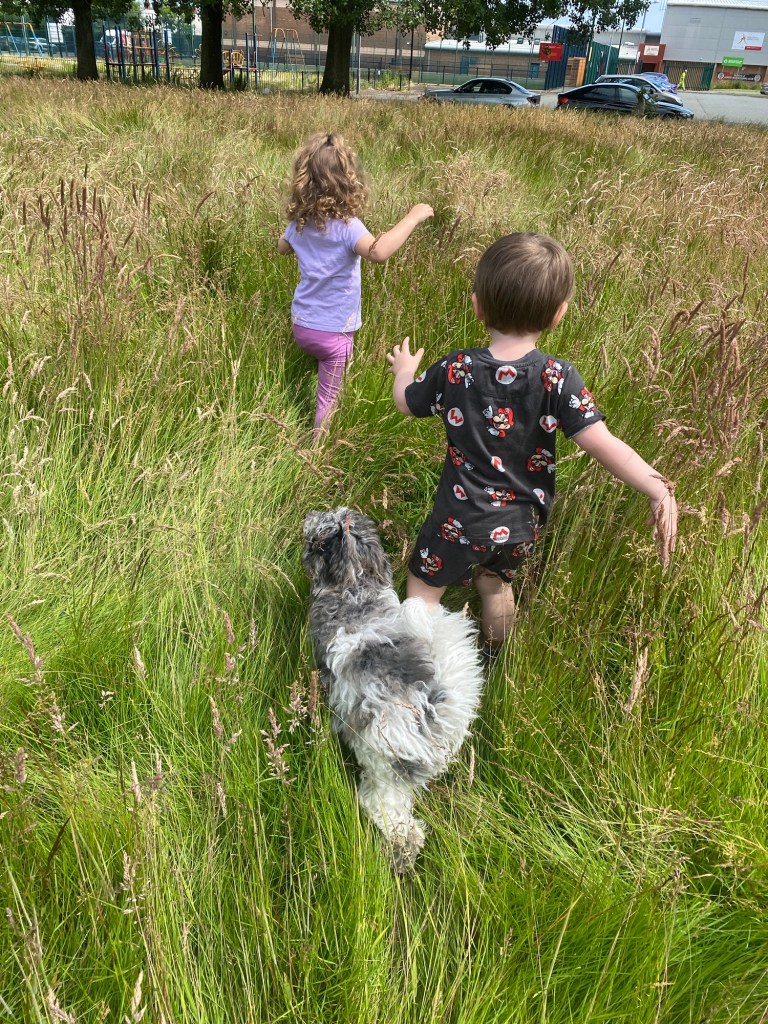
The openair environment of the local park provides opportunities for exploration (plants, wildlife, habitats) problem-solving (how to cross a big puddle?), critical thinking (how to make a den using found objects), decision-making and building essential skills like spatial awareness and adaptability. The children engage in activities such as den building, learning to look after the environment, and exploring nature.
Communication and Language Skills:
Collaboration between the childminders and peers significantly boosts communication and language development. This provides a natural, engaging environment to practice language, explore new vocabulary and develop social skills.
by providing the children with Imaginative play opportunities, exploring the natural world, and interaction with peers all contribute to language acquisition and communication skills which is evident by the children expressing thoughts, asking questions and listening to their childminder and peers.
While in the outdoor area the children listen to natural sounds and explore other sensory experiences (e.g., the rustling of leaves, the feel of mud and sand) this broadens and enhanced language development by using words such as squidgy, squelchy, scrunching.
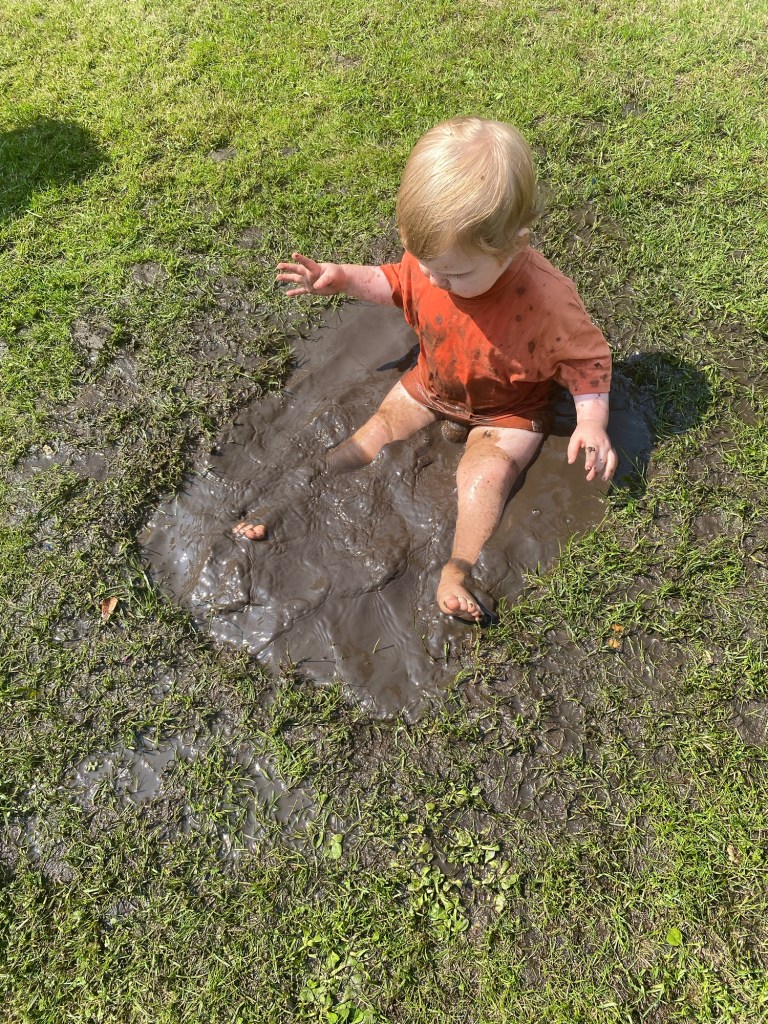
Personal, Social, and Emotional Development:
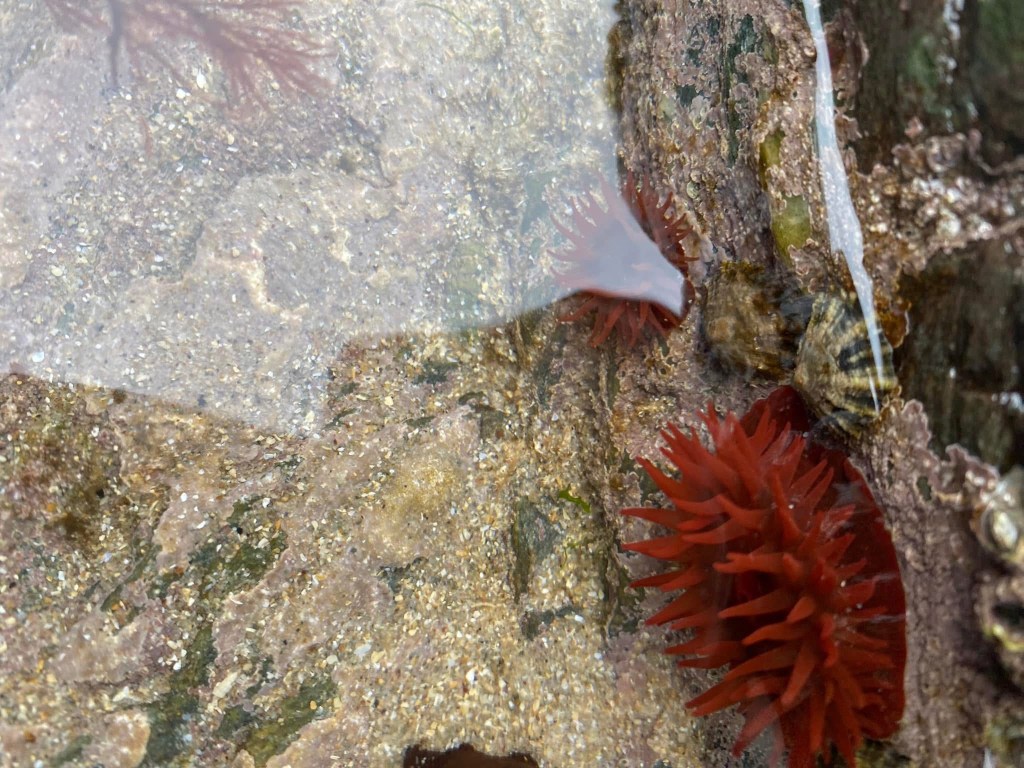
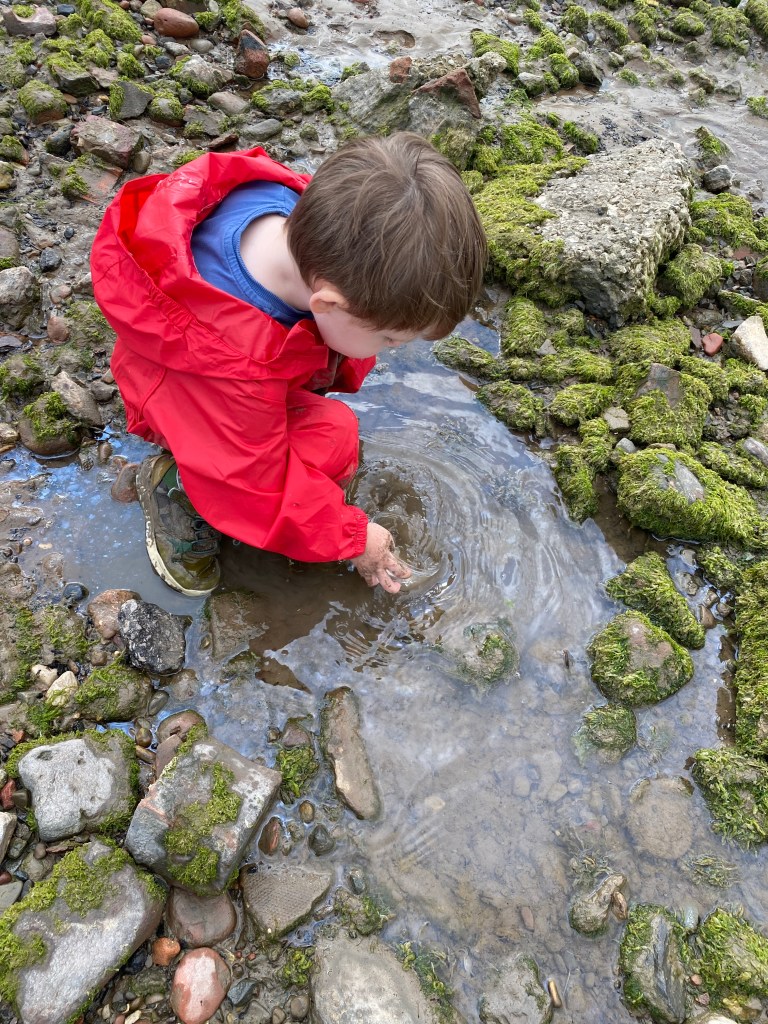
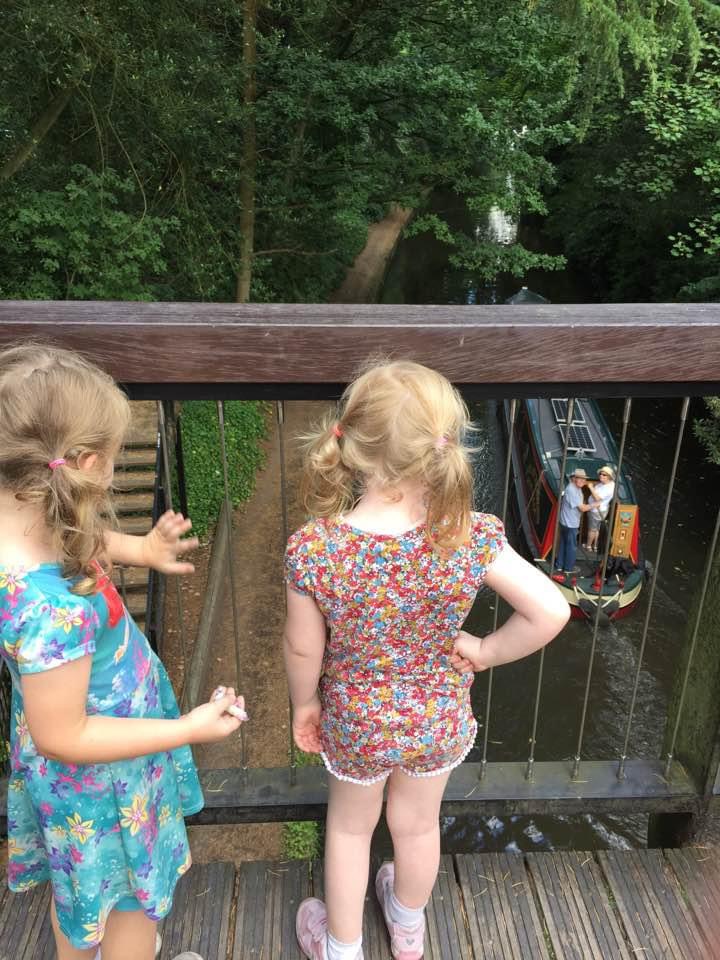
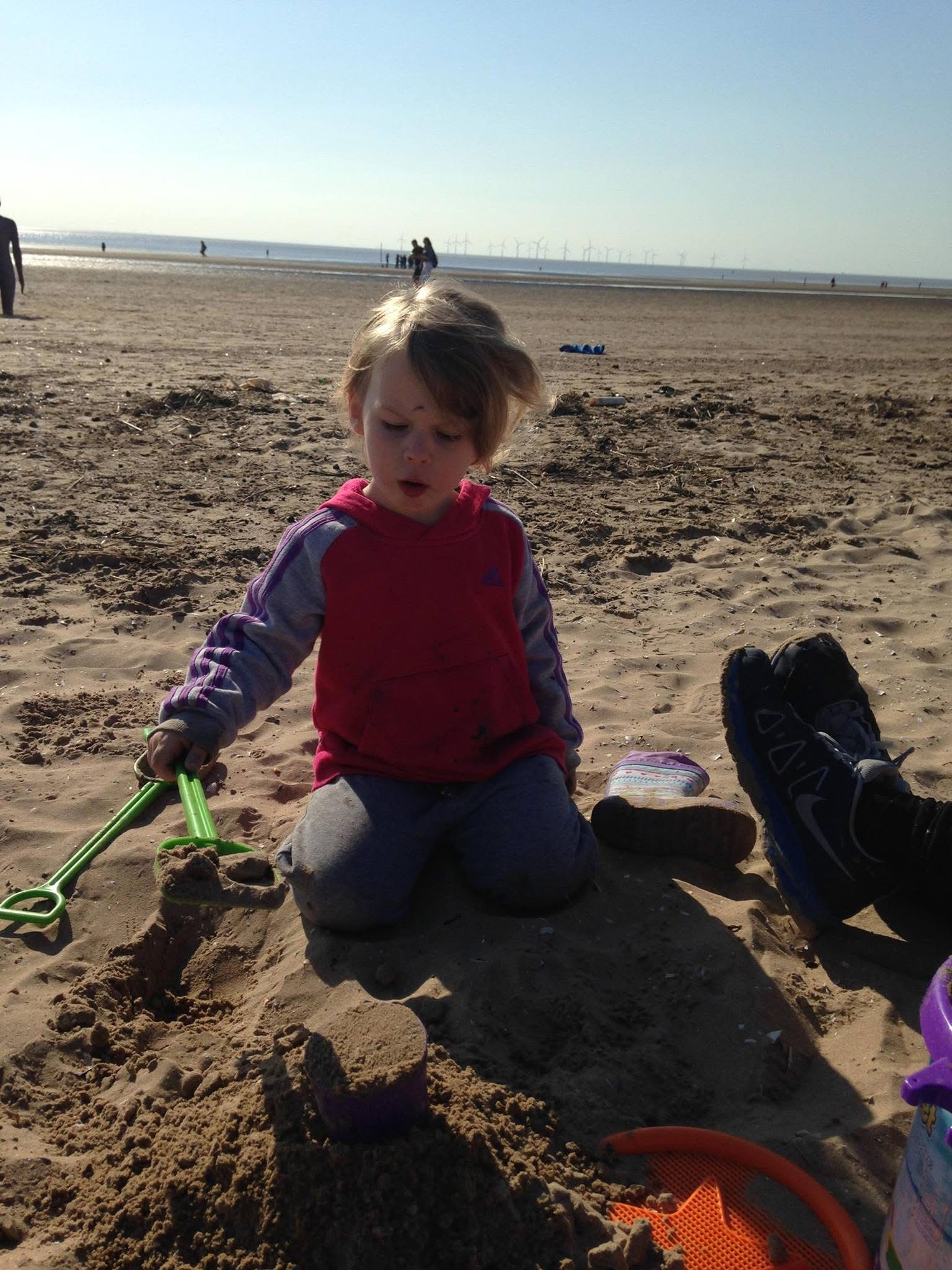
When the childminders take the children on visits for instance to the beach this provides abundant opportunities for personal growth and social development. The children learn to manage risks, (being close to water/climbing on slippery rocks/identifying and studying the jellyfish) develop self-confidence, and form positive relationships in the safety of their childminder and experiences with peers.
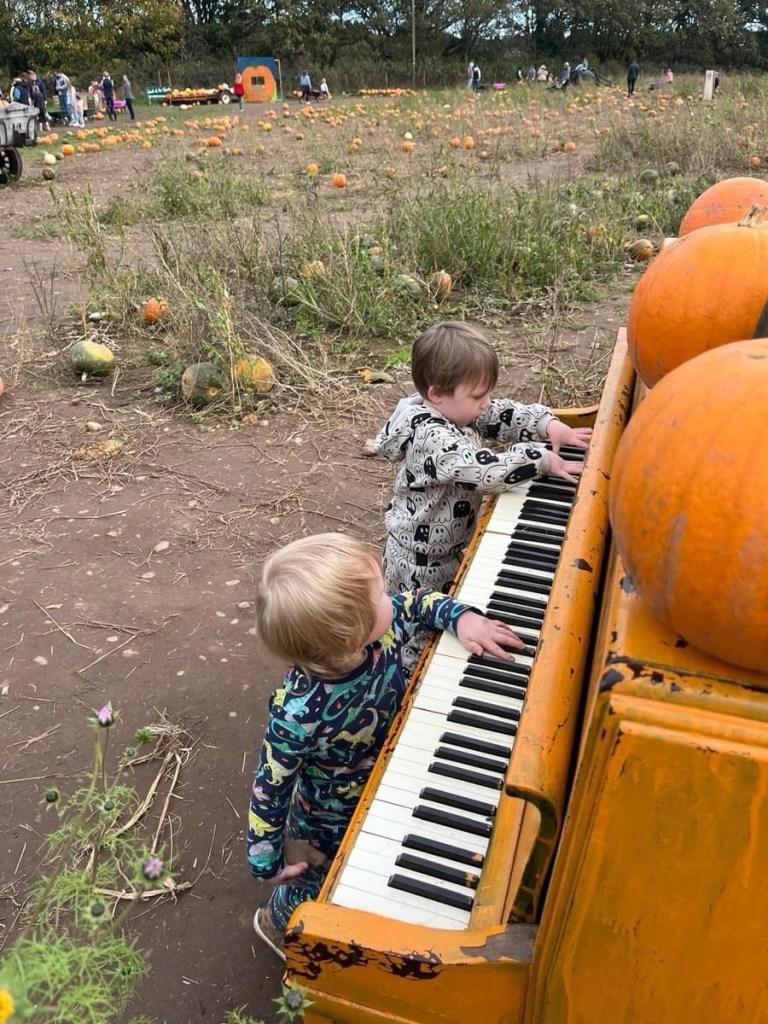
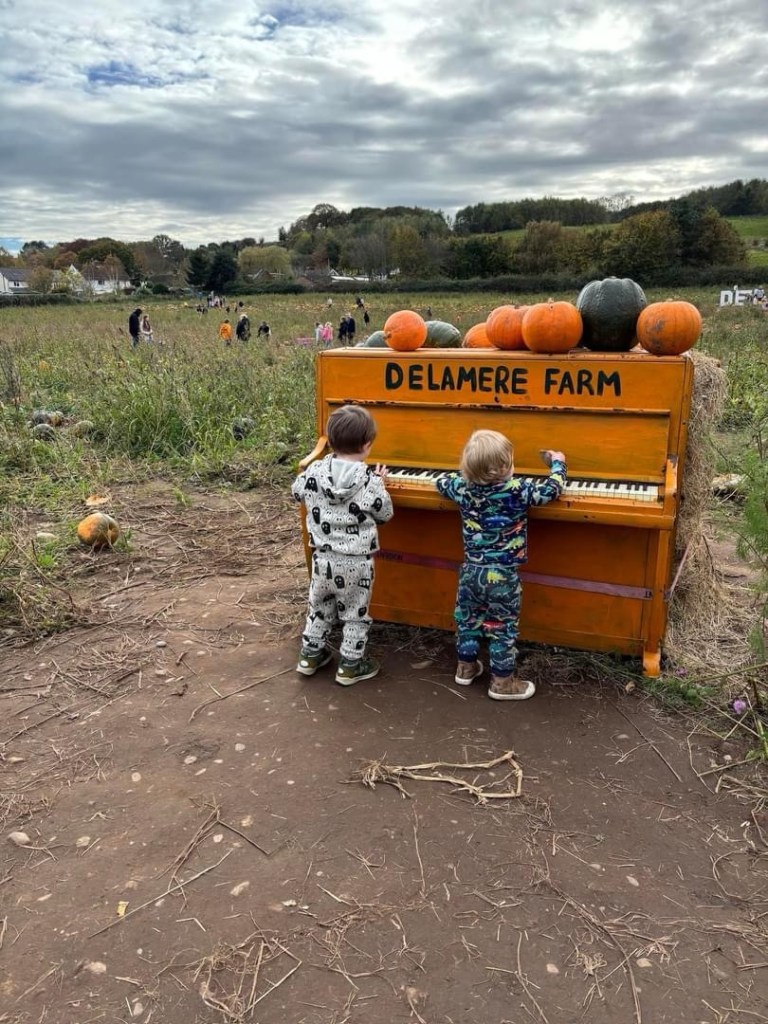
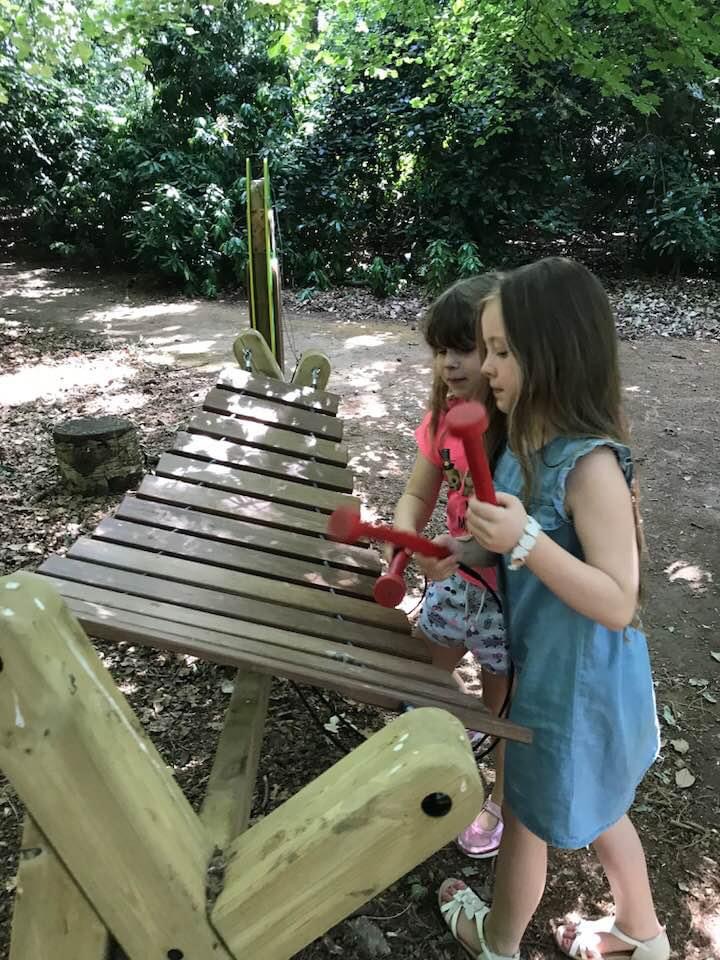
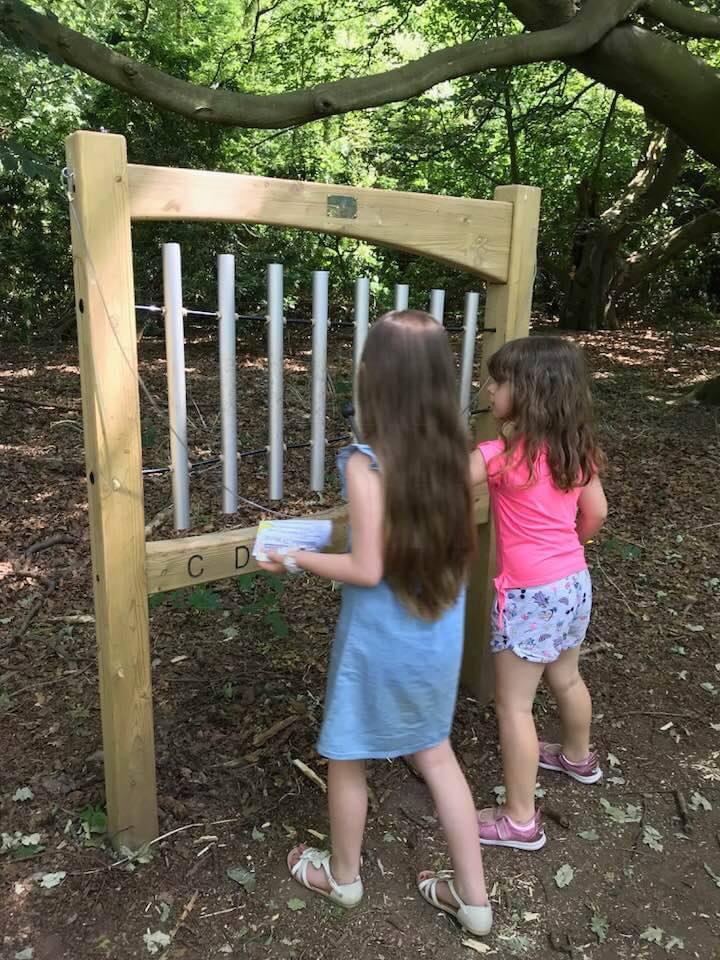
Knowledge and Understanding of the World:
Outdoor learning offers a direct relationship with nature, enabling children to explore and understand the natural world, encouraging an enduring interest in science, ecology, and caring for their environment.

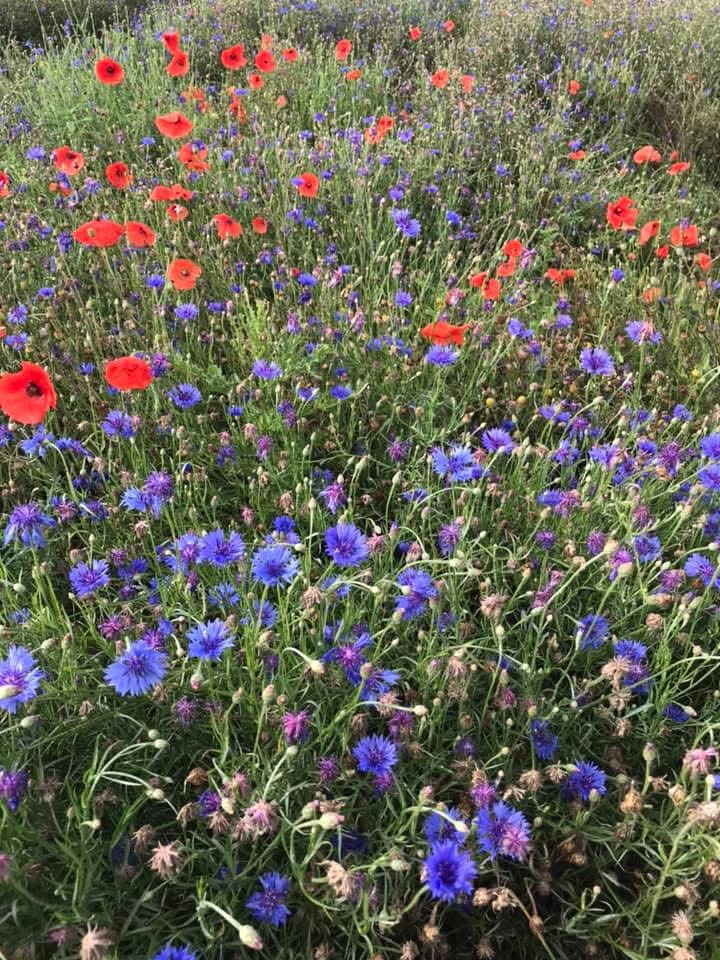

We welcome childminders and our community family to share our environment, where we exchange ideas’ share surplus produce and have a swap scheme for instance toys/plants/story sacks to promote positive relationships and encourage cost effective way of living.
Literacy and Mathematics:
Outside spaces can serve as an environment for literacy and numeracy activities. Children can count objects, (bugs, shells, sticks) write using natural materials (sand, soil, chalk, sticks) or engage in storytelling and creative writing inspired by the environment for instance using the ’anywhere farm’ story sack at the urban farm.
Expressive Arts and Design:
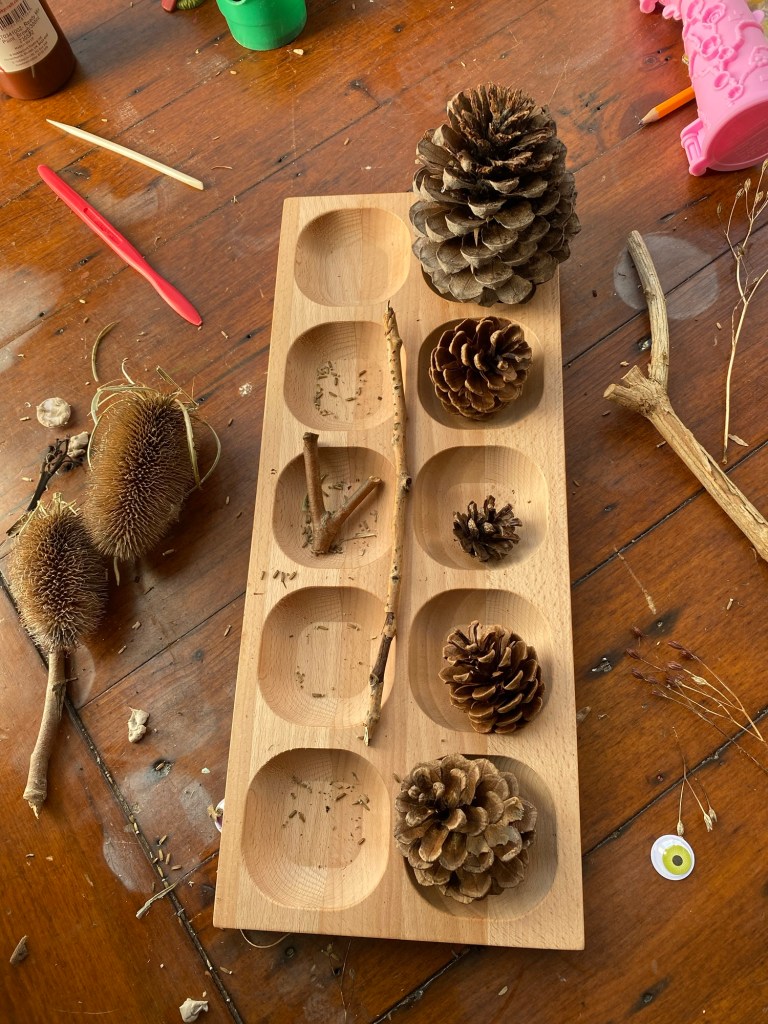
Open air environments encourage creativity and artistic expression. Children can be involved in activities such as drawing, painting, or sculpture using natural materials, (logs, sticks, shells, pinecones) furthering their artistic development.
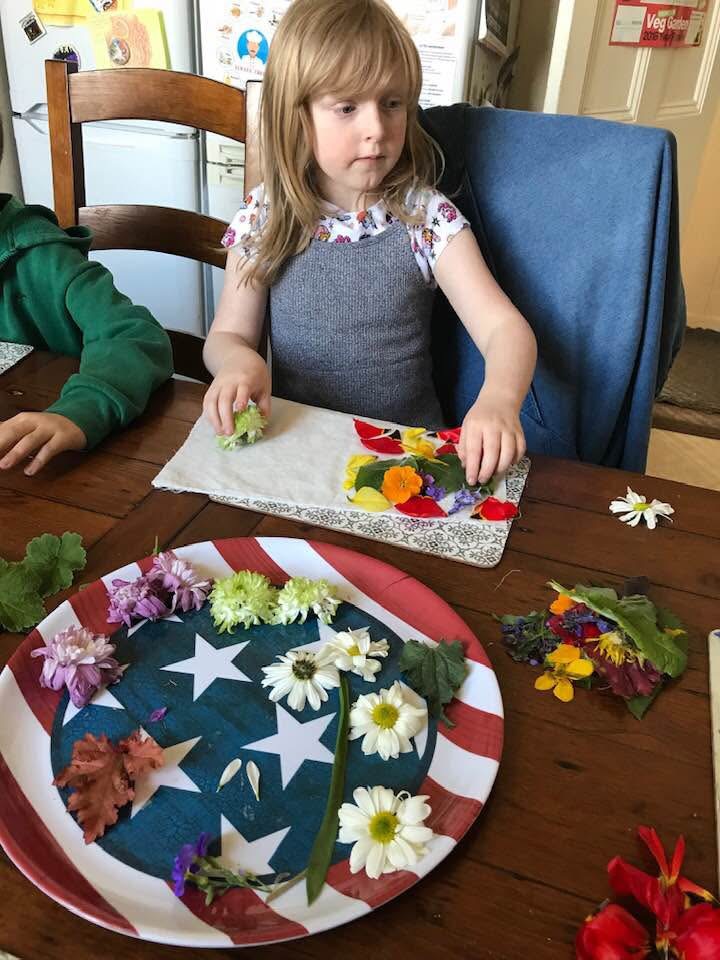
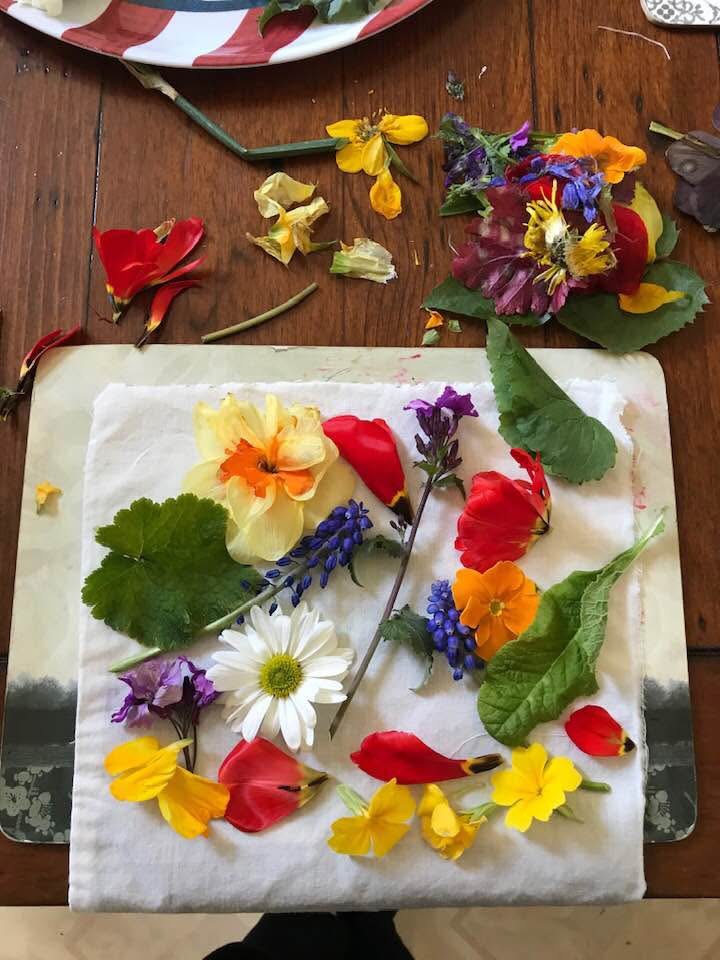
The children are very interested in using flowers and leaves to make natural prints pressing the flowers (from my garden) between two pieces of material to bring out the natural colourings.
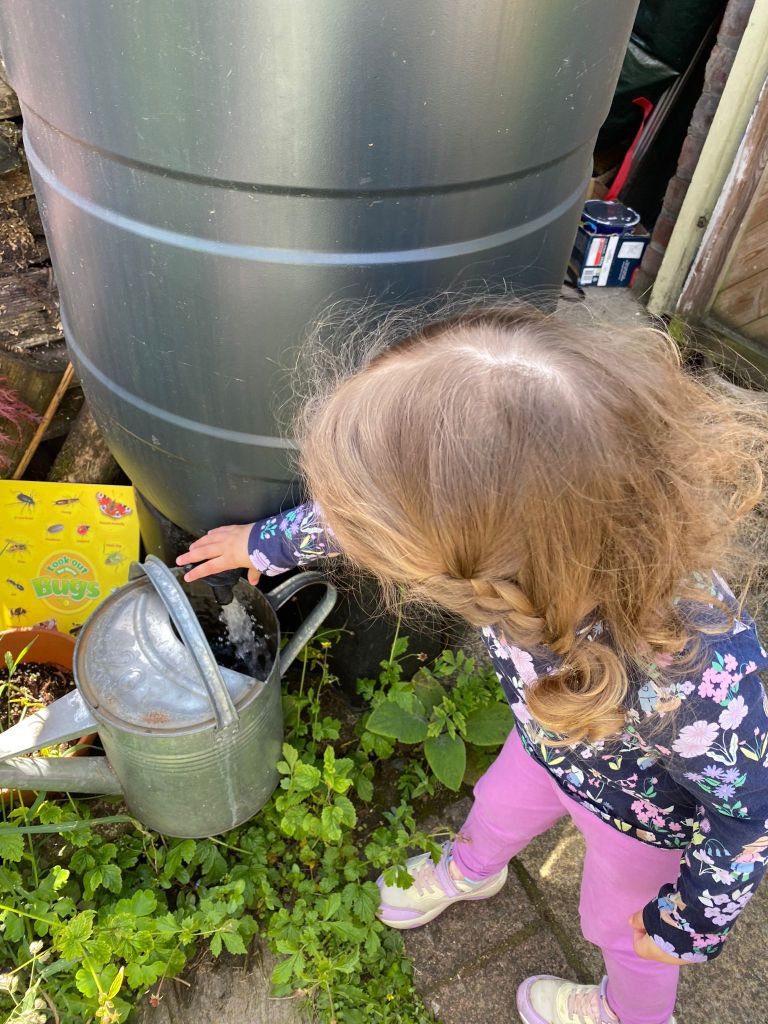
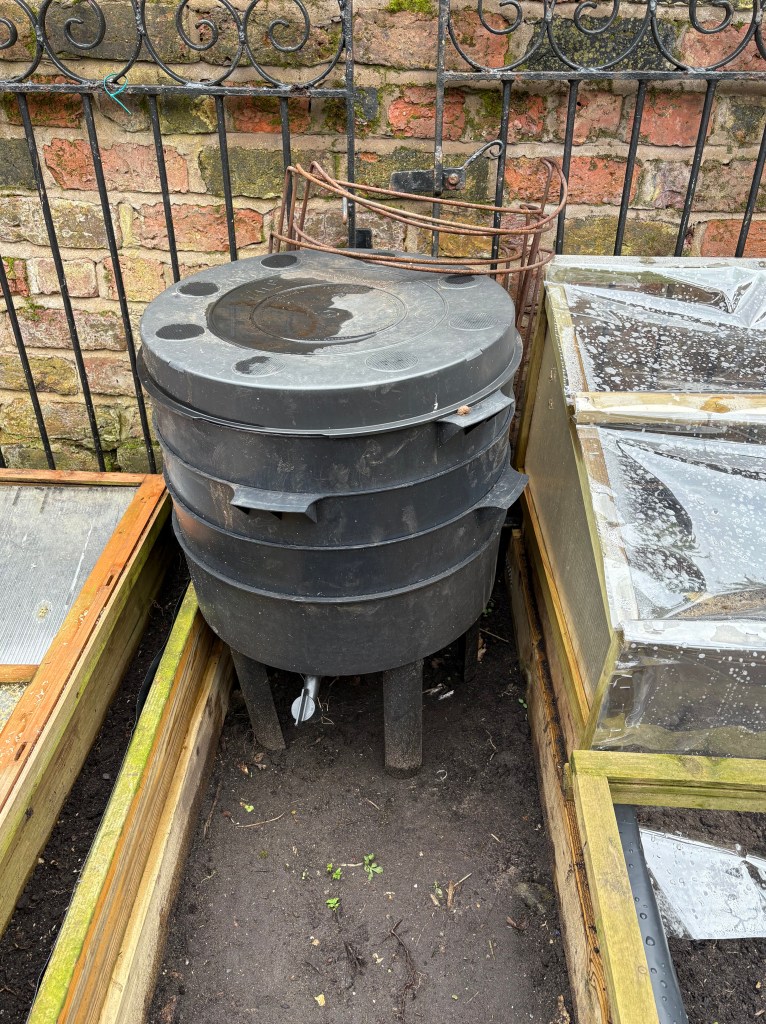
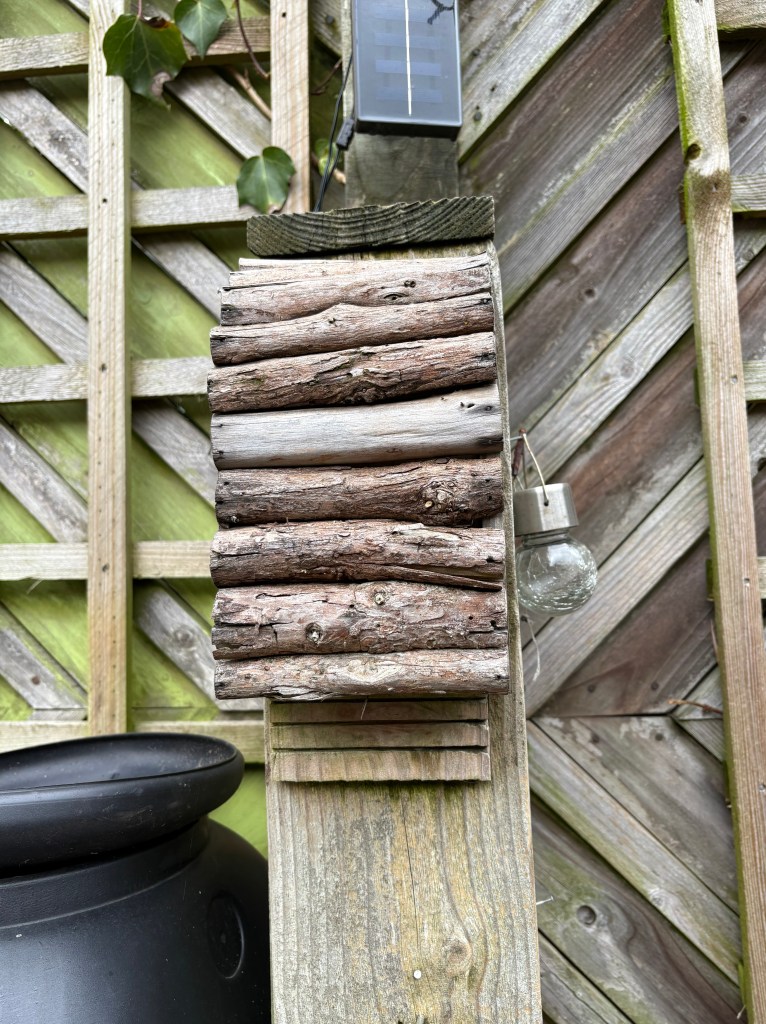
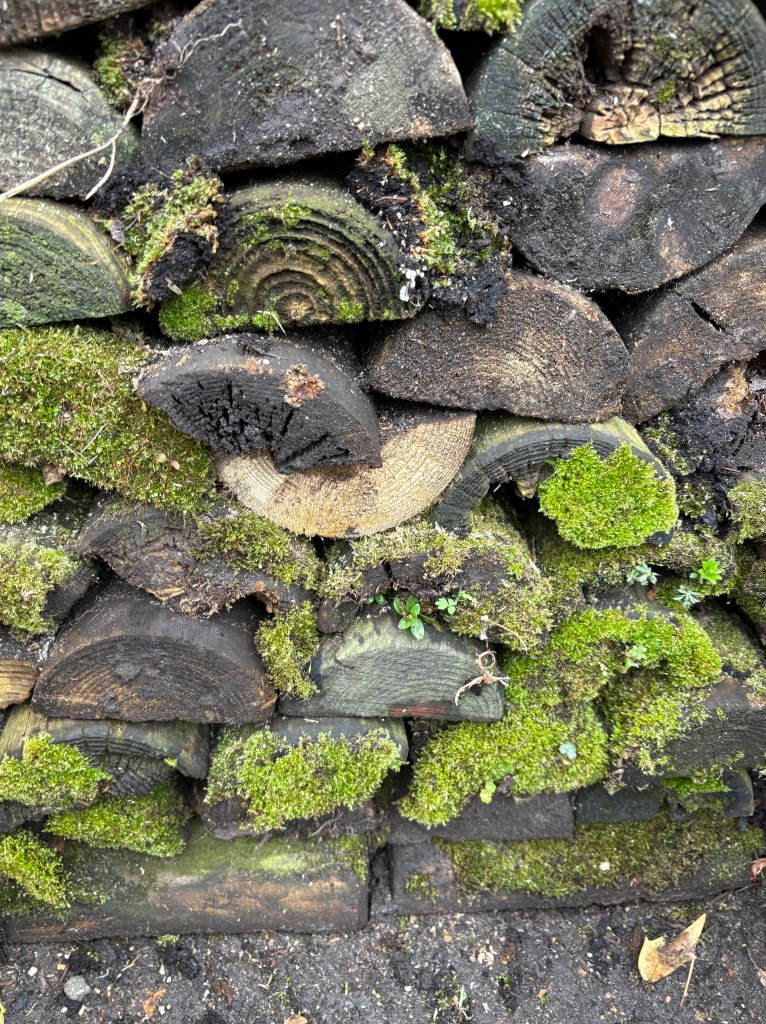
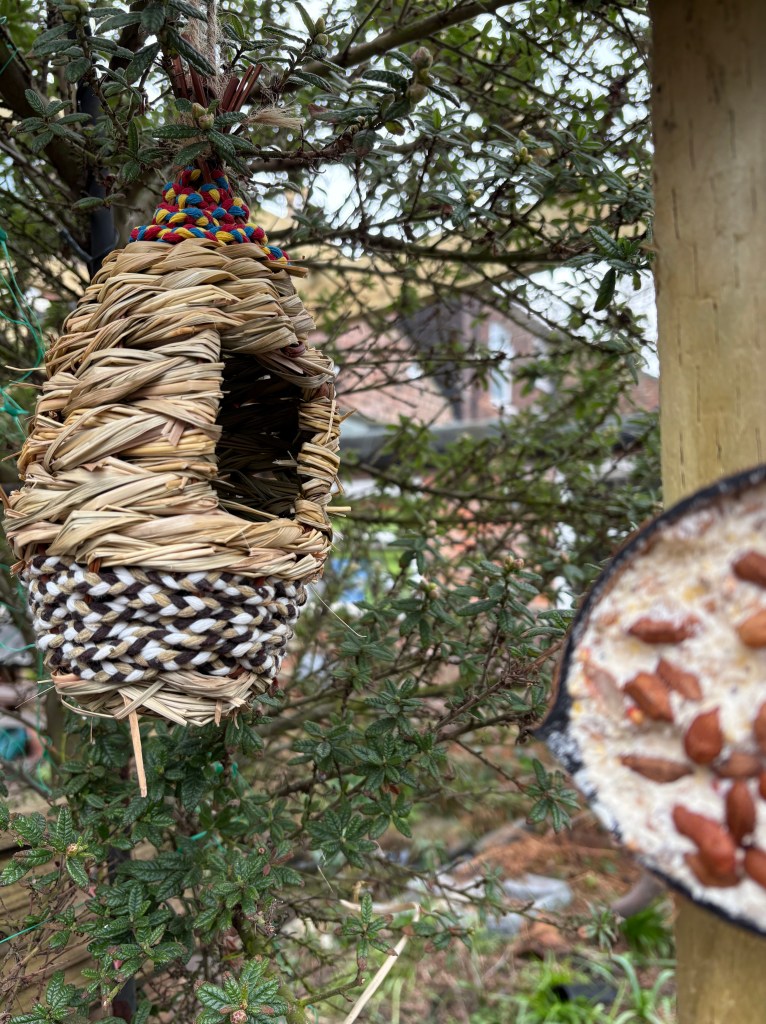
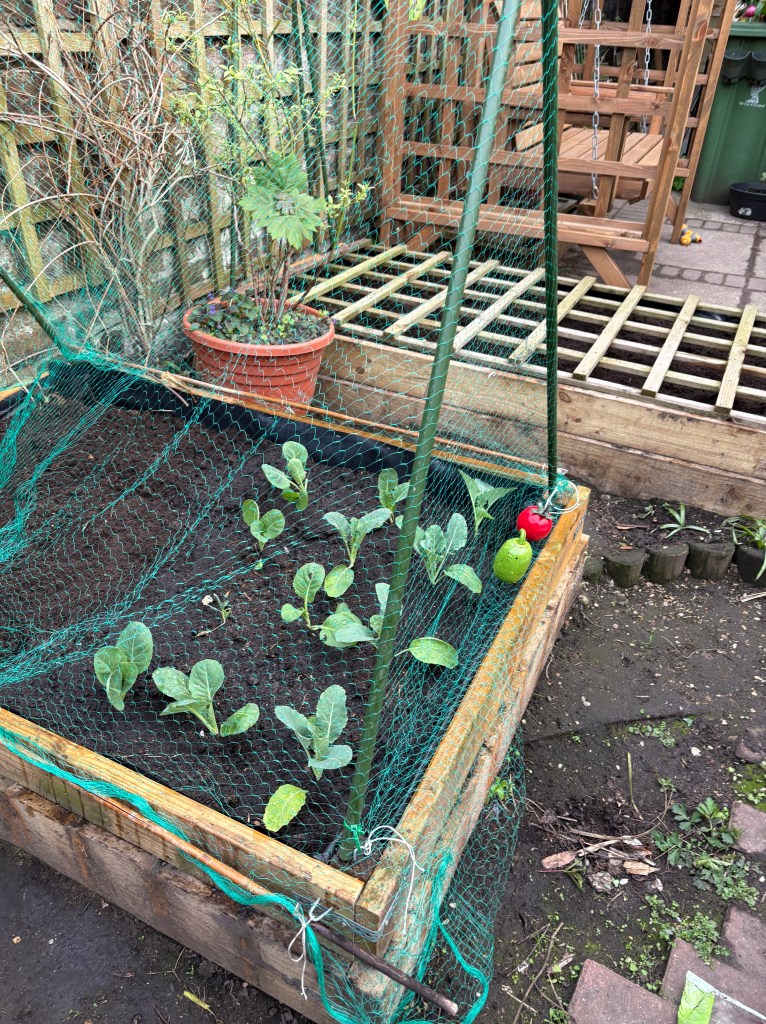
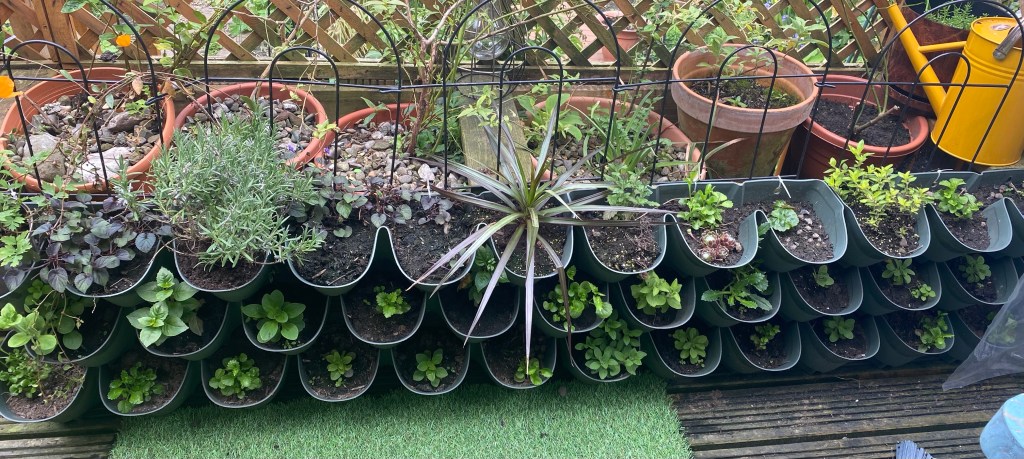
My personal childminding ethos and curriculum is ‘sustainability in the garden classroom’. I am privileged to have a wonderful outdoor space where I teach the children to care for their environment. We have a wormery to use up food waste and provide our plants with nutrients, water butts to recycle water and feed our fruit and vegetables, habitats for the wildlife such as frogs, bees, bugs etc. We grow plants (not always successfully) using different methods such as hydroponically, using recycled materials and no dig raised beds.
Conclusion
By childminders being creative and giving children opportunities to access various outdoor environments reinforced with the Early Years Foundation Stage (EYFS) 7 areas of learning is a pathway in a child’s holistic development. The EYFS framework recognises the importance of outdoor learning, and the benefits of this approach are undeniable. By providing children with outdoor environments for physical activity, cognitive growth, social interaction, and a deep connection to nature, we nurture well-rounded children and enable them to be better prepared for the challenges of life and holistic learning. This is the collective responsibility of parents and educators to ensure that all children have access to these inspiring outdoor activities and environments that will profoundly shape their future in positive and meaningful ways.
External References and Resources
https://educationendowmentfoundation.org.uk/early-years/evidence-store
Reference to Physical Development, Communication and Language, Literacy and Mathematics
https://www.evertonnurseryschoolandfamilycentre.org/strongerpracticehub
https://www.gov.uk/early-years-foundation-stage
https://www.evertonnurseryschoolandfamilycentre.org/early-years-sustainable-hub
https://www.nationaltrust.org.uk/visit/family-friendly/family-friendly-gardens
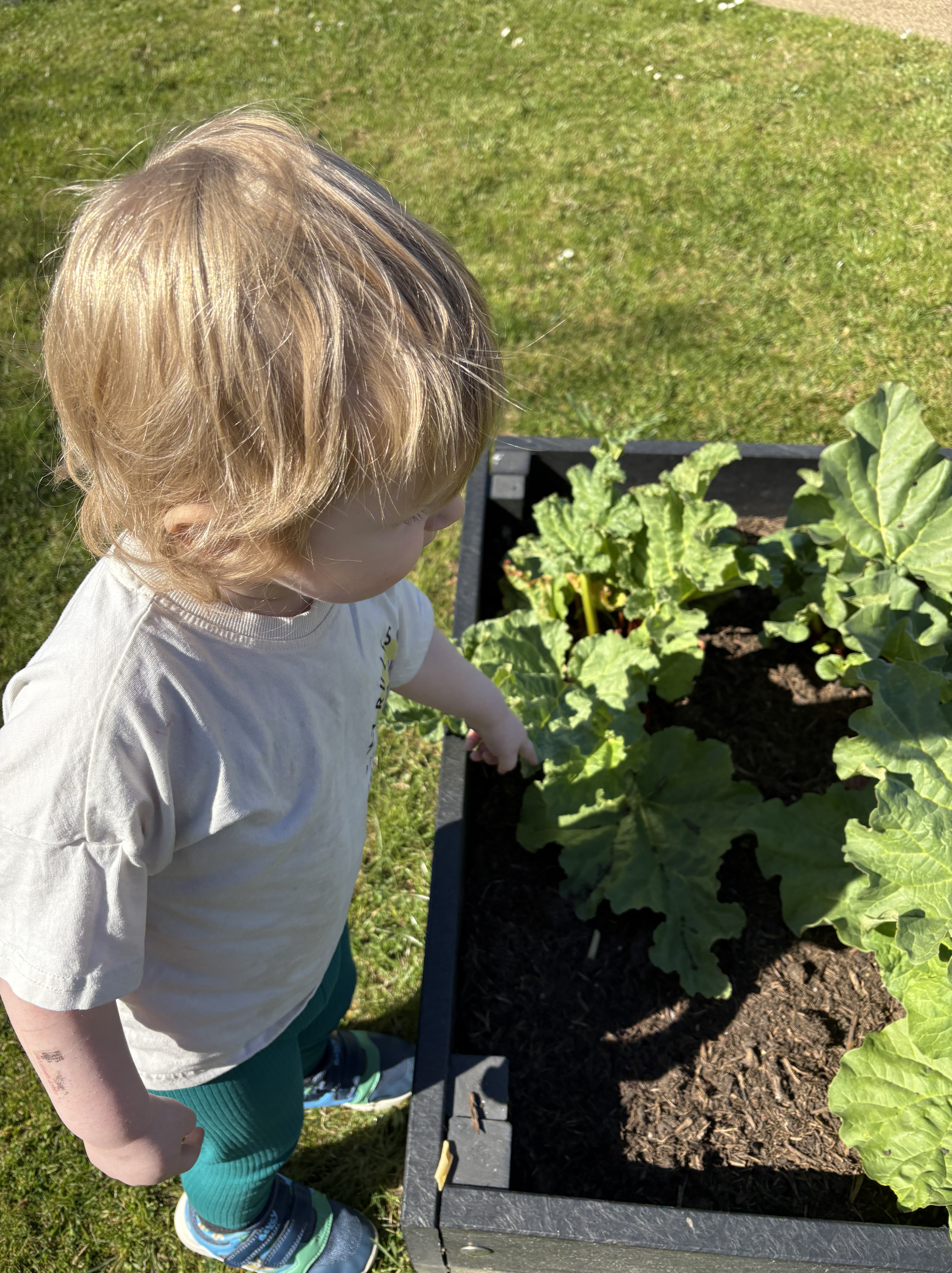
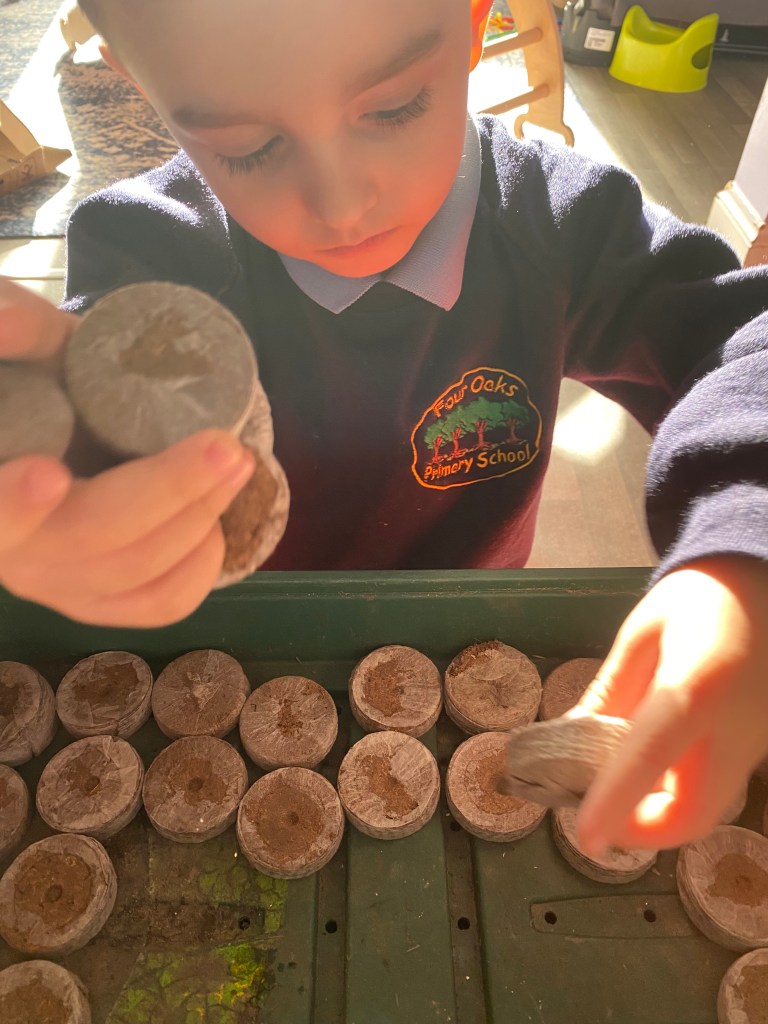
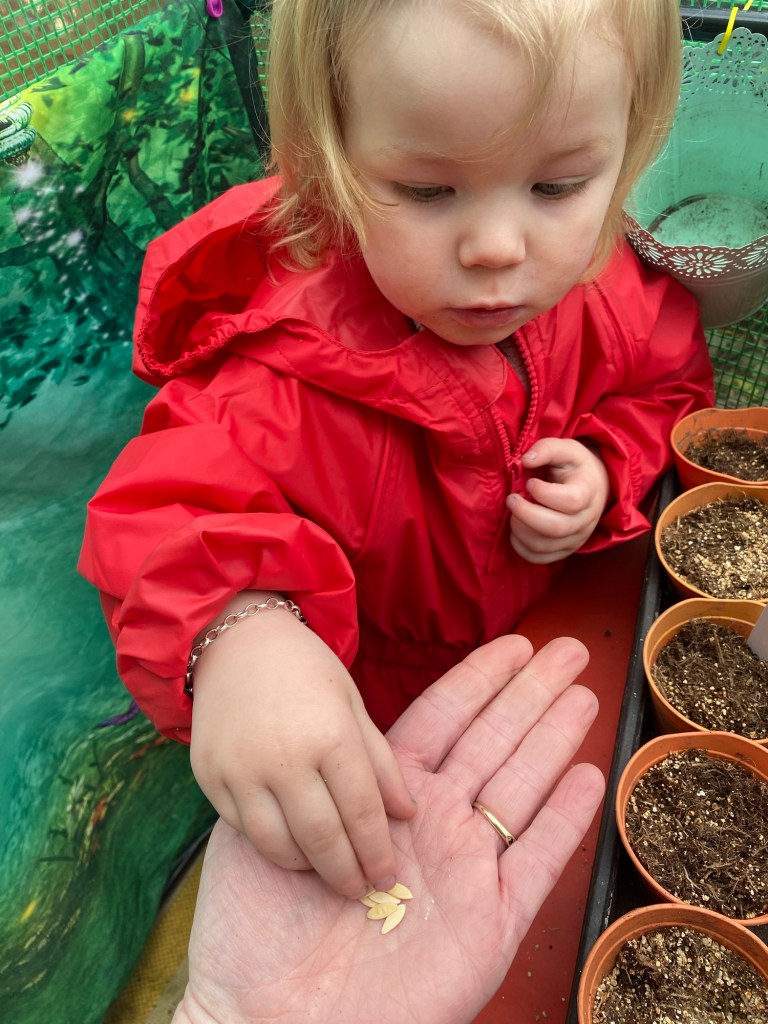
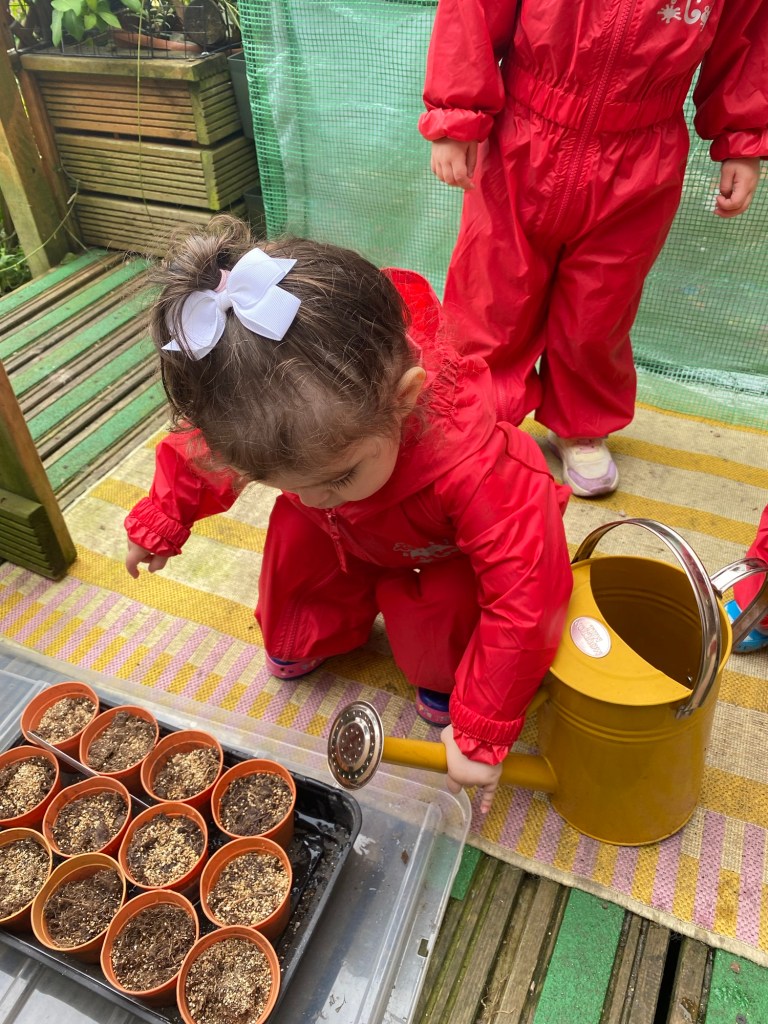
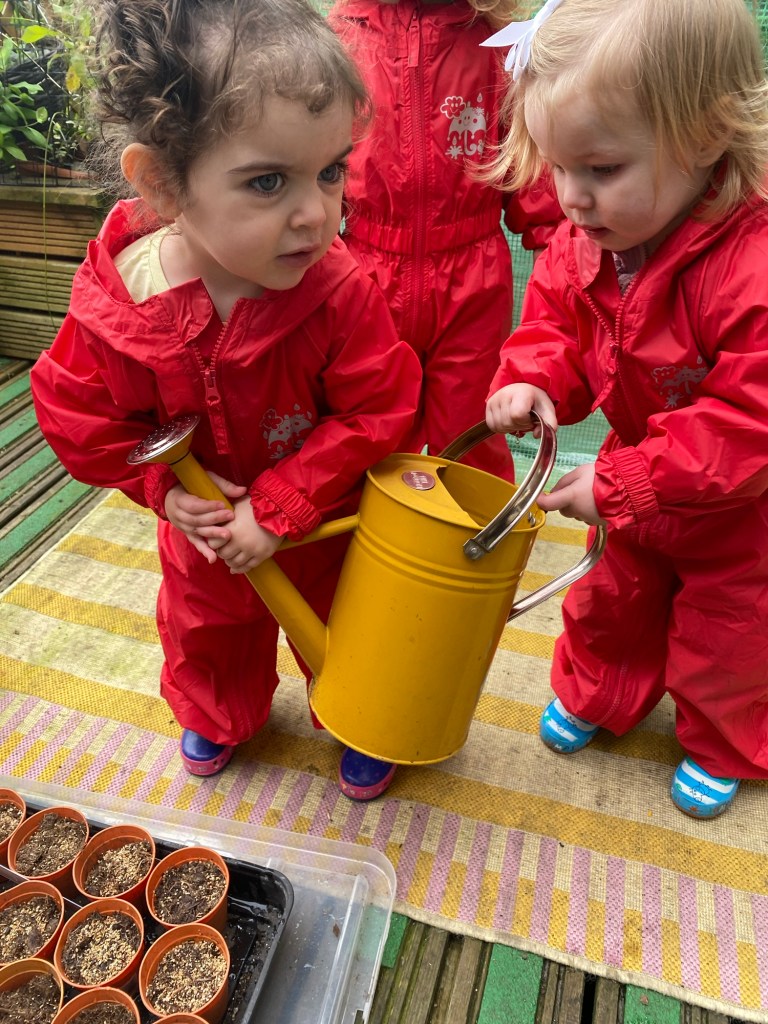
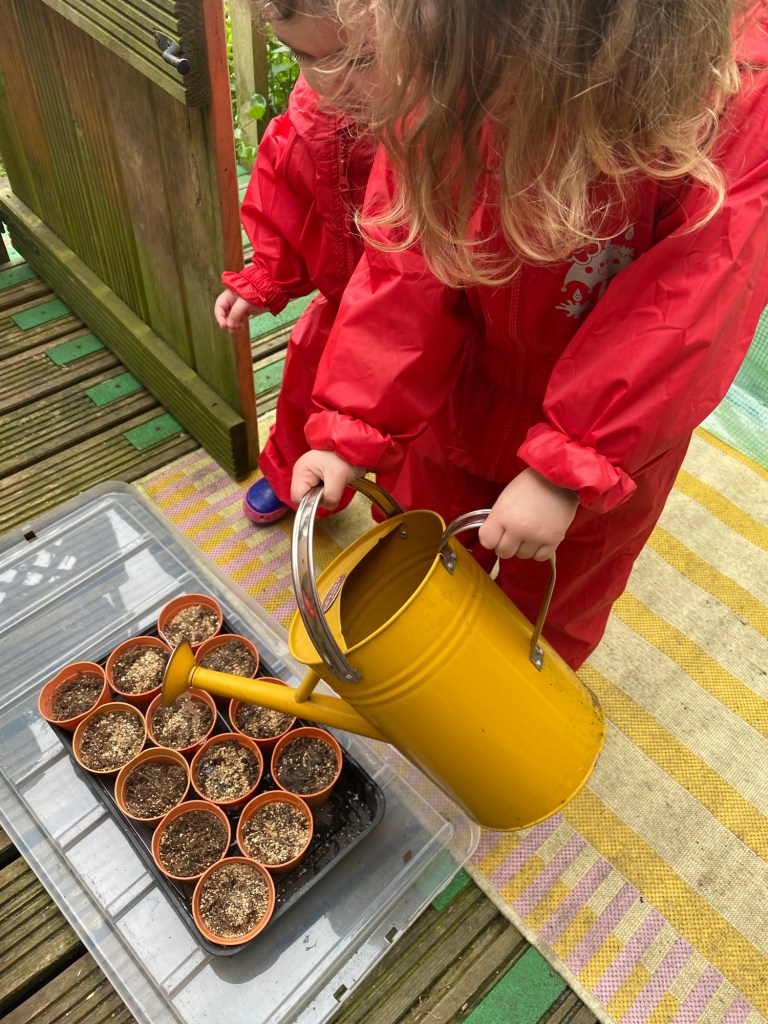
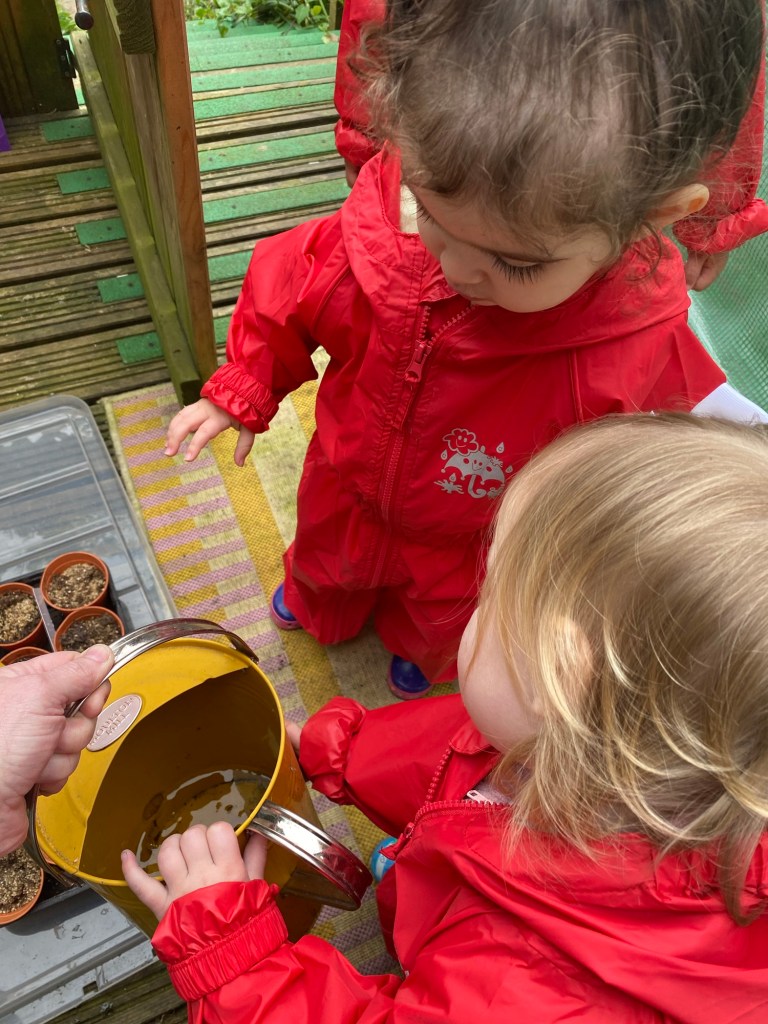
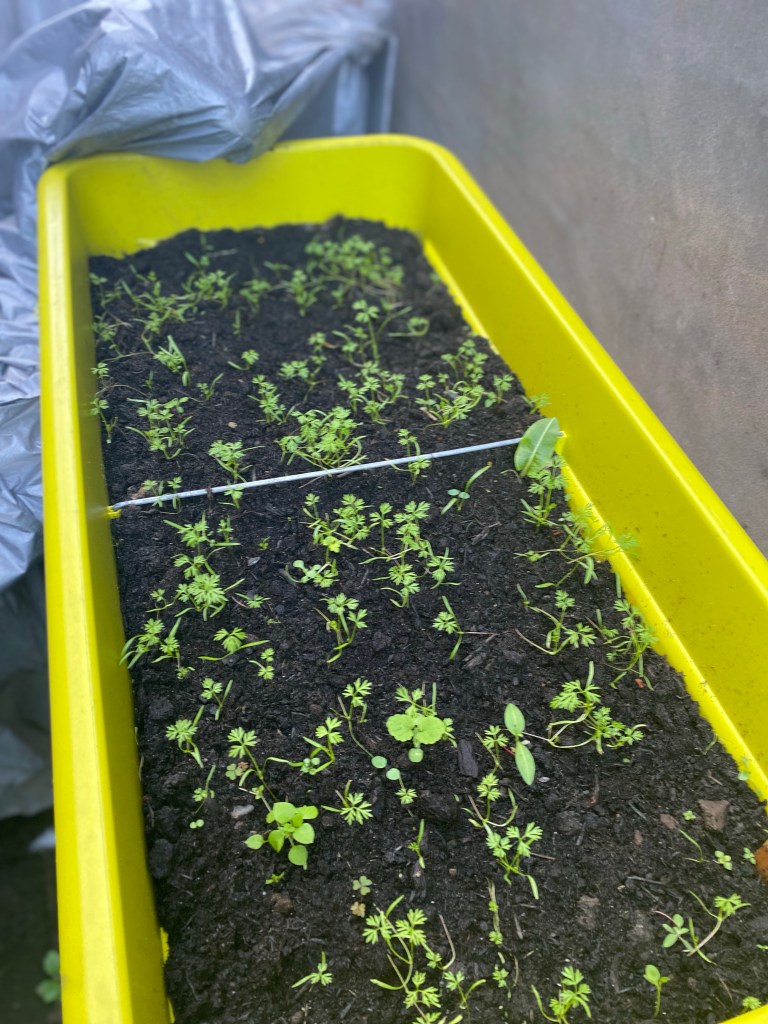
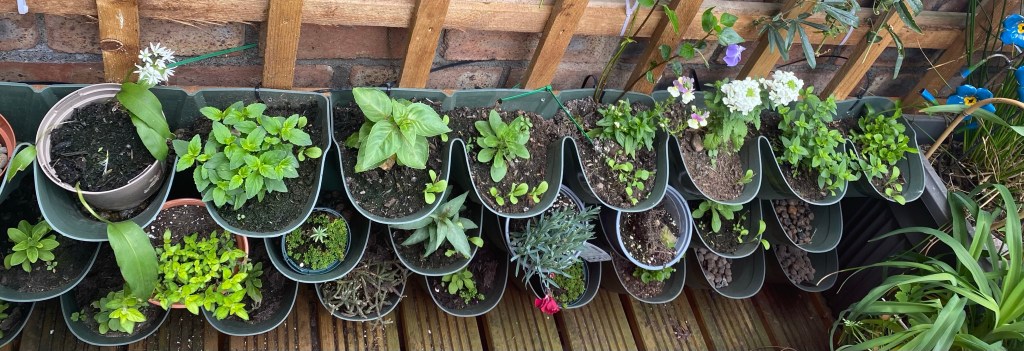
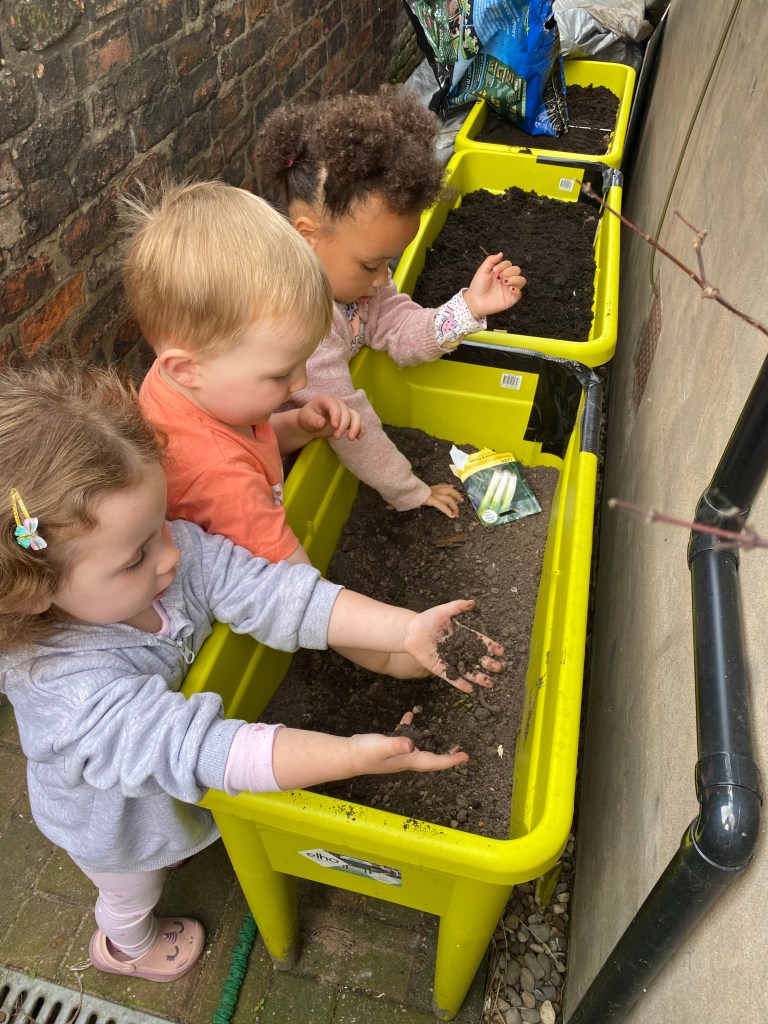
We have loved getting outdoors and sowing some salad crops. We mixed the peat free compost, filled the pots, sowed the seeds and gently watered them in to germinate.
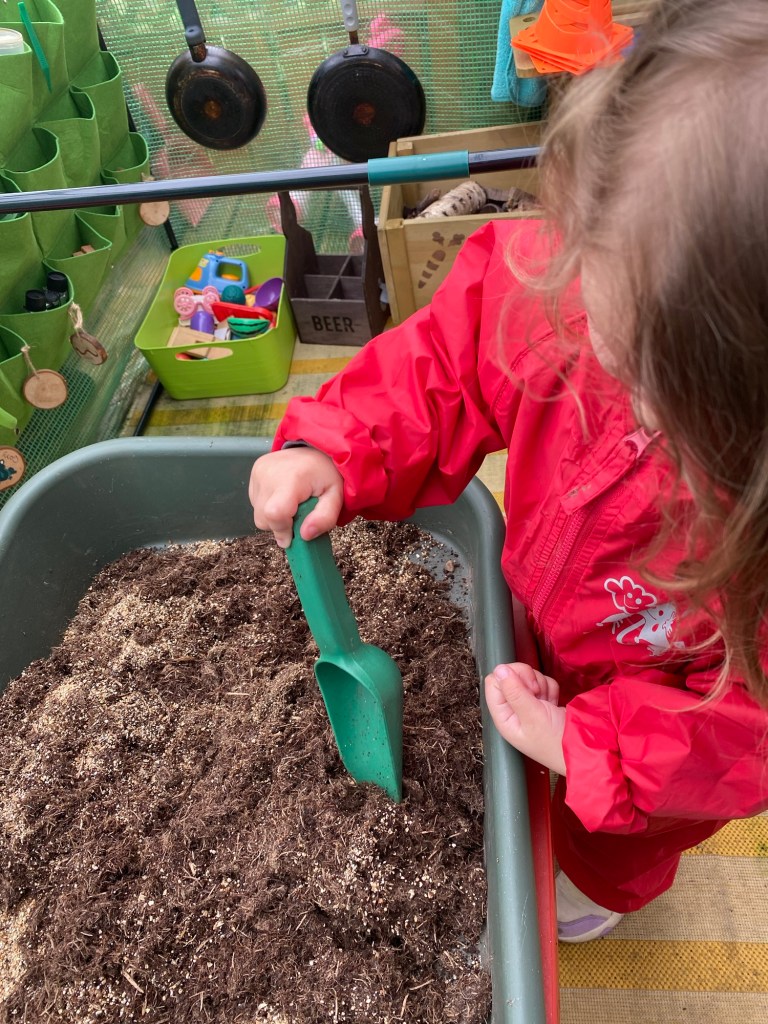
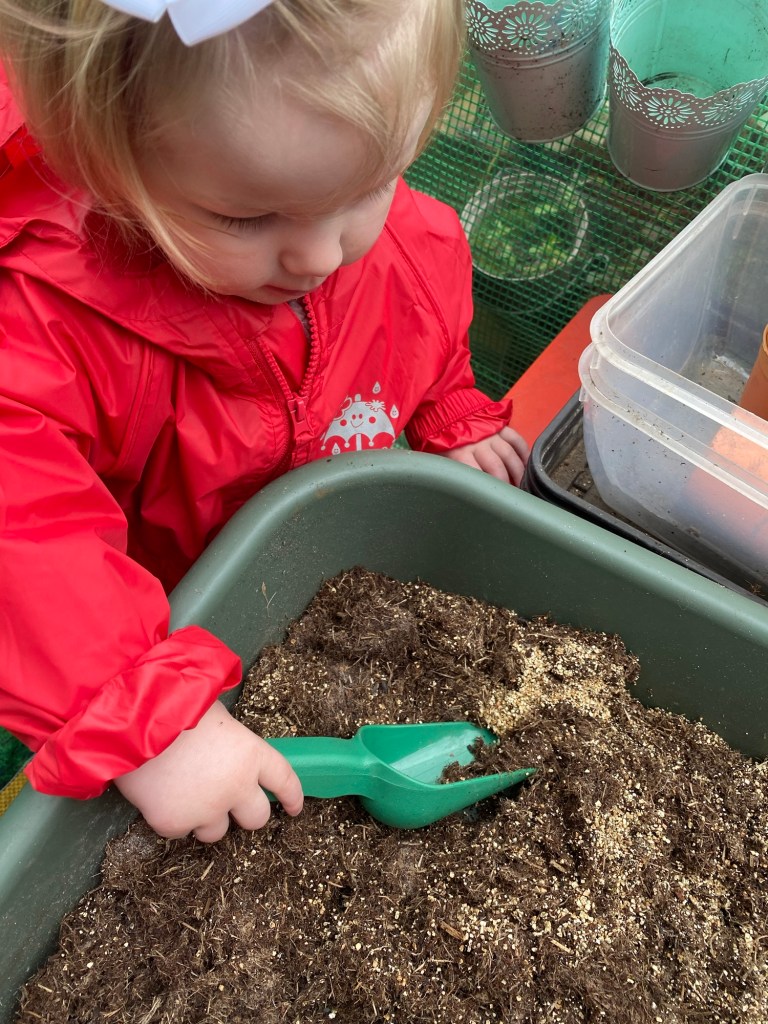
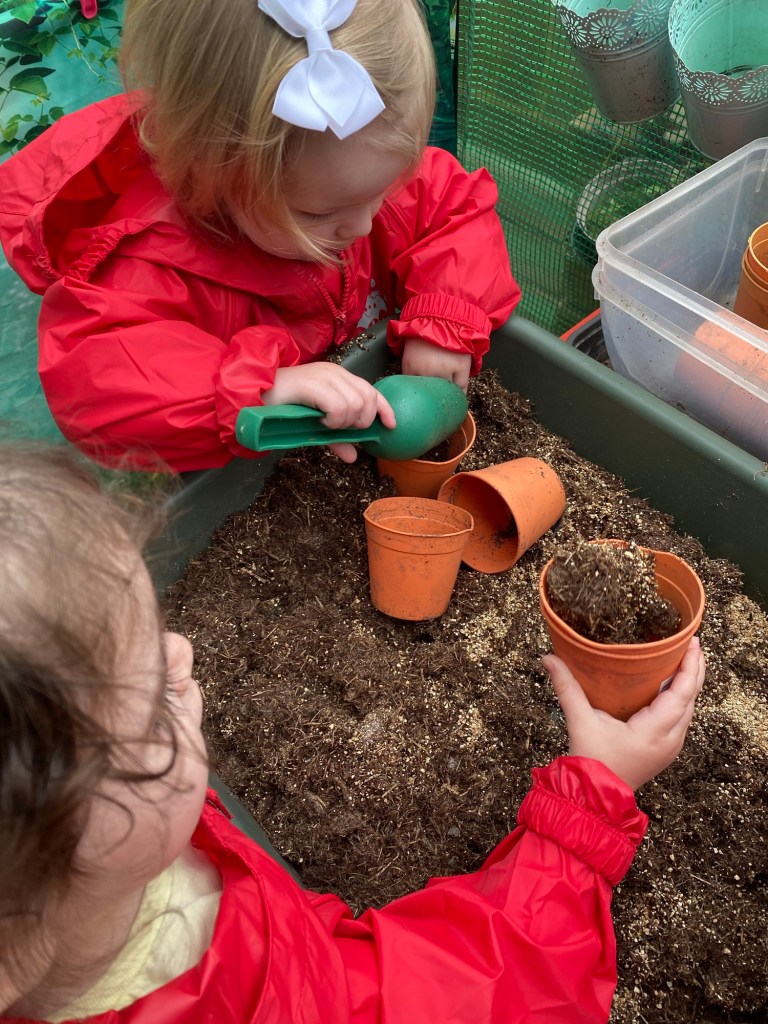
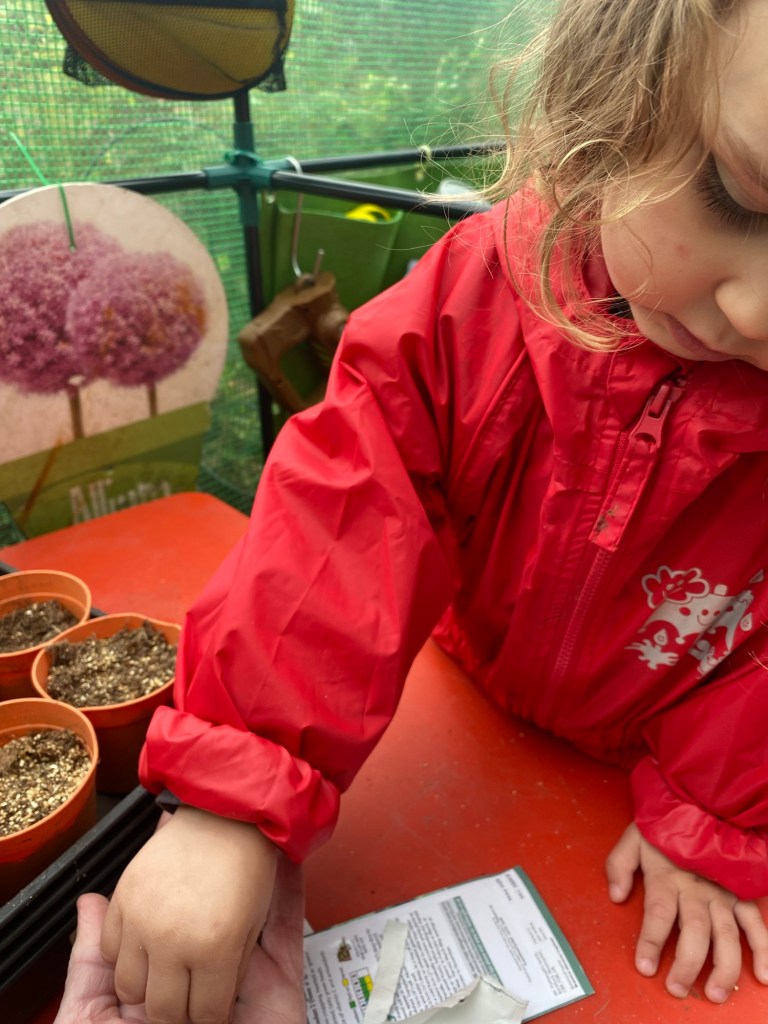
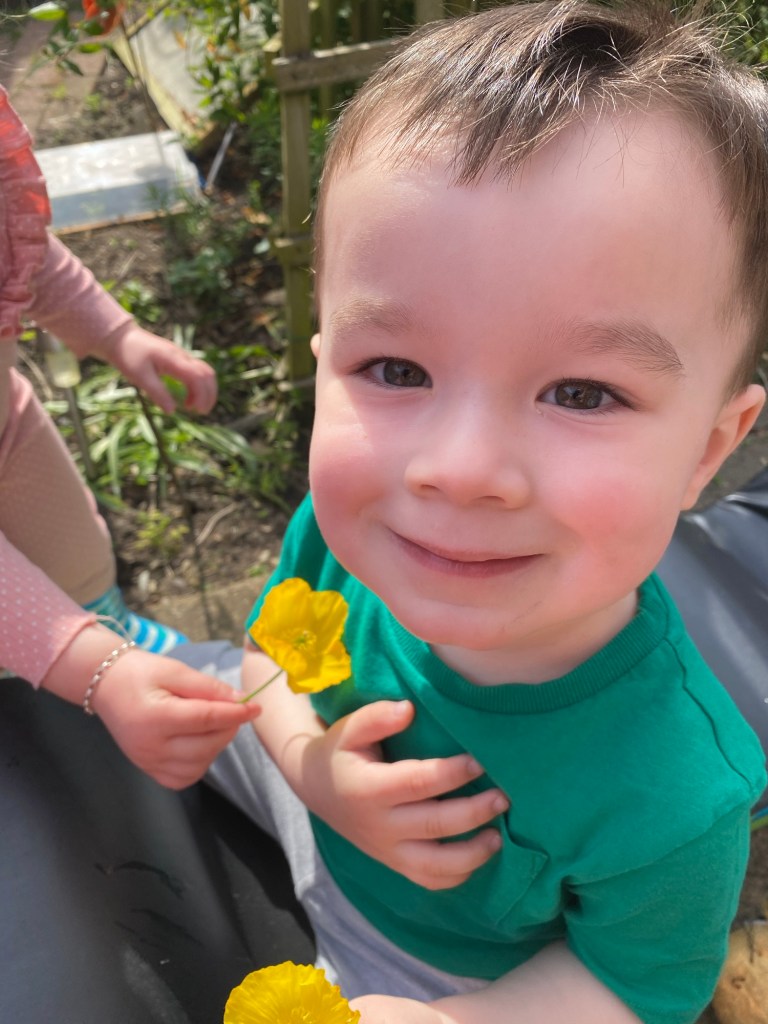
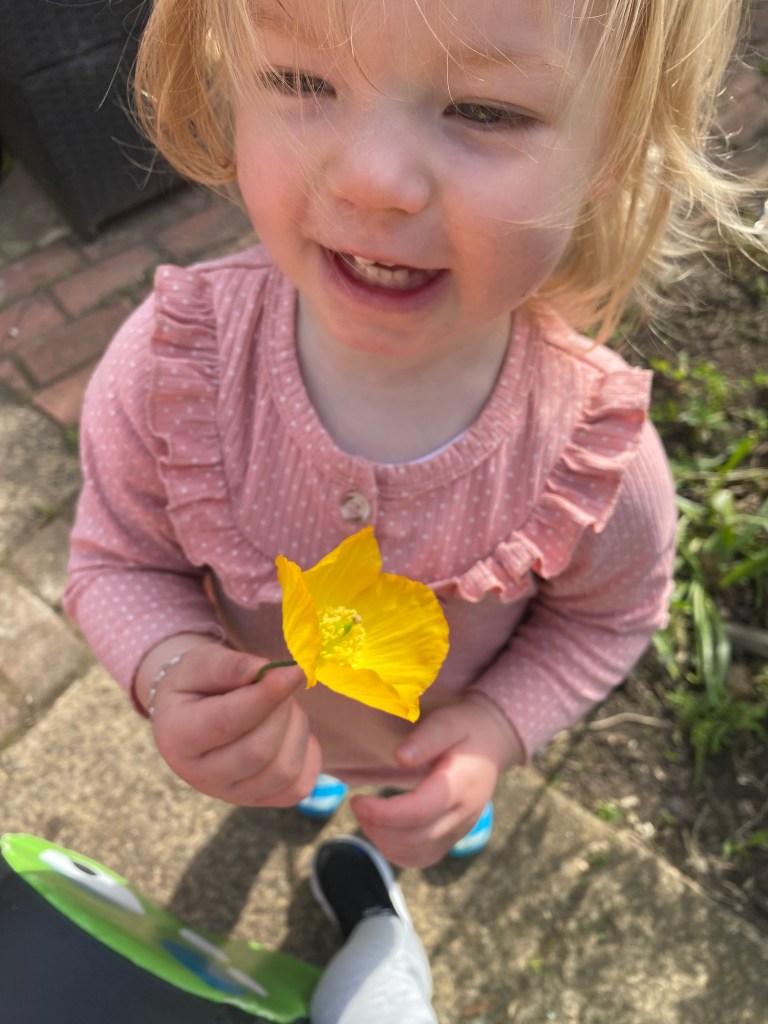
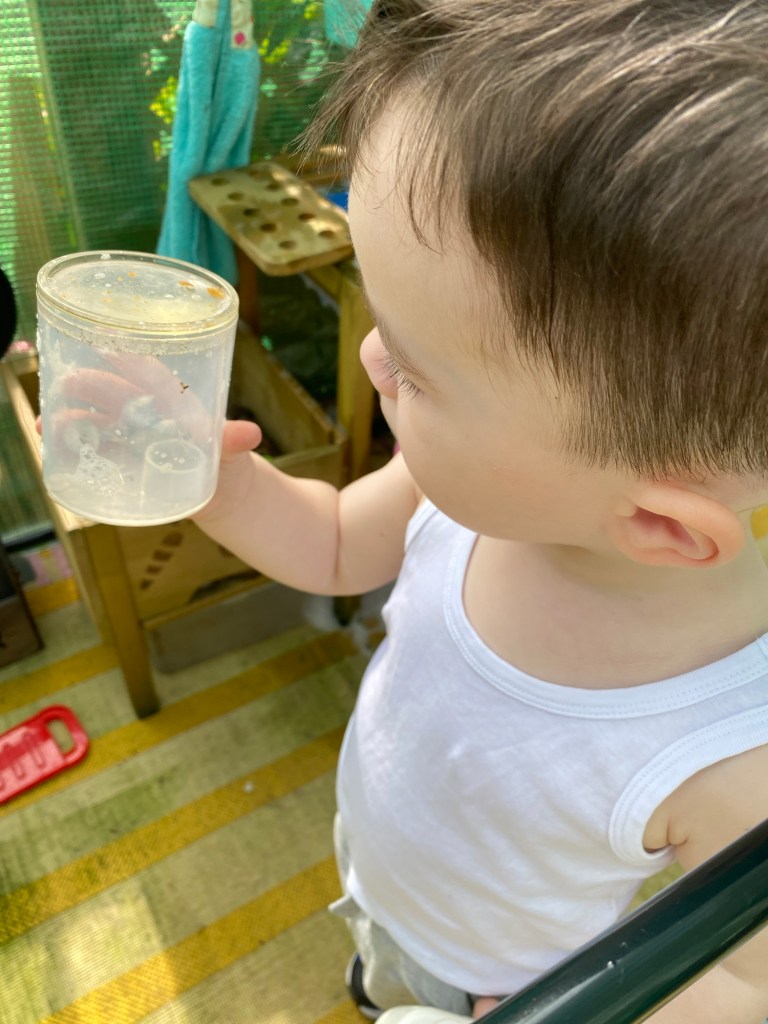
We had fun looking around the garden for bugs, we found snails, ants, butterflies, a dragonfly, wood louse, worm and Fizzy our cat asleep in the shade. Mable and Elliott thought the yellow poppies were pretty.

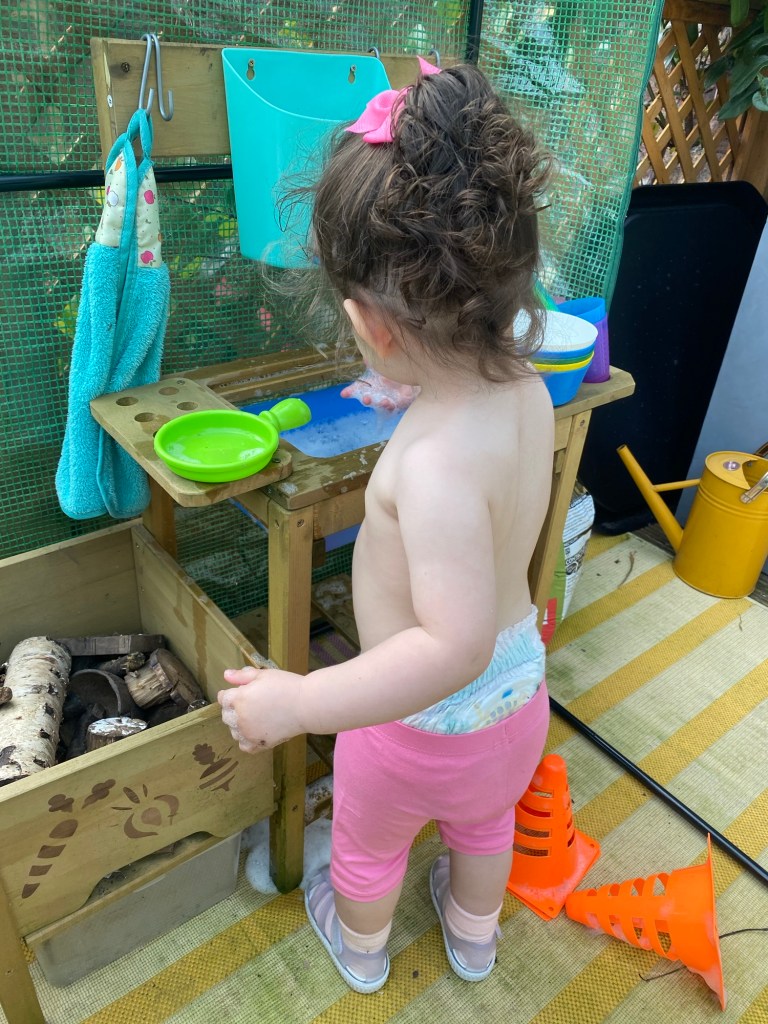
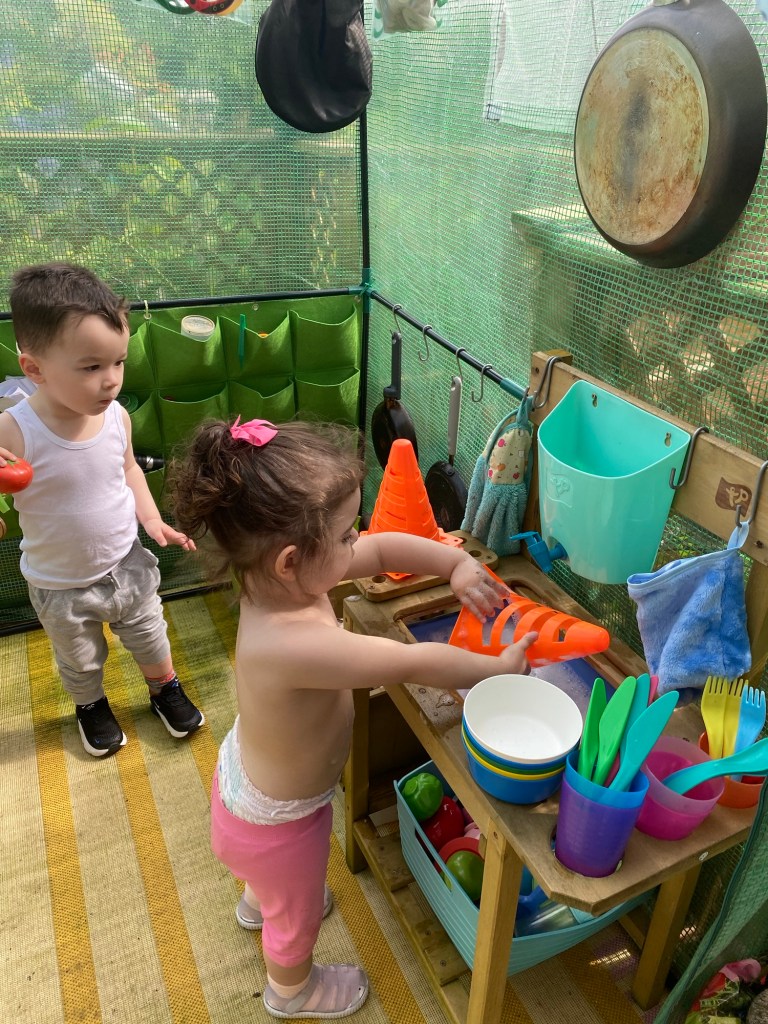


We had a lovely time in the garden, we are excited to see our seeds germinate and turn into delicious salad crops, so we can have them for lunch.
Last week we sowed our first ‘Salad Pots’
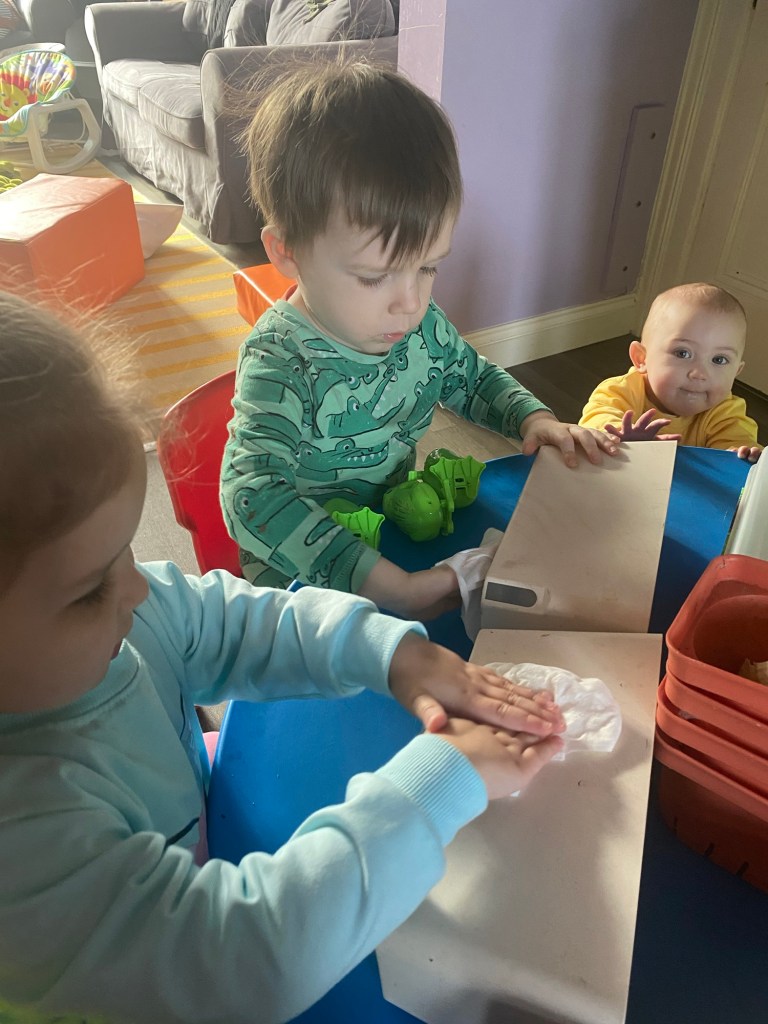
First we needed to clean the pots to get rid of any bacteria or decease from last years plants.
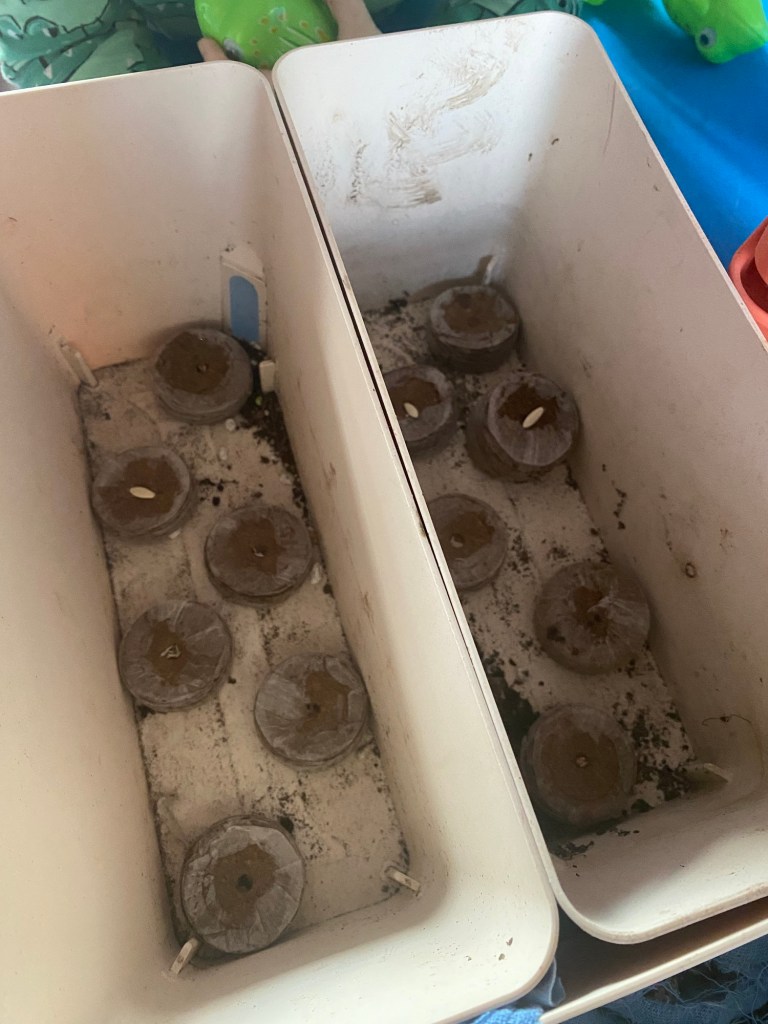
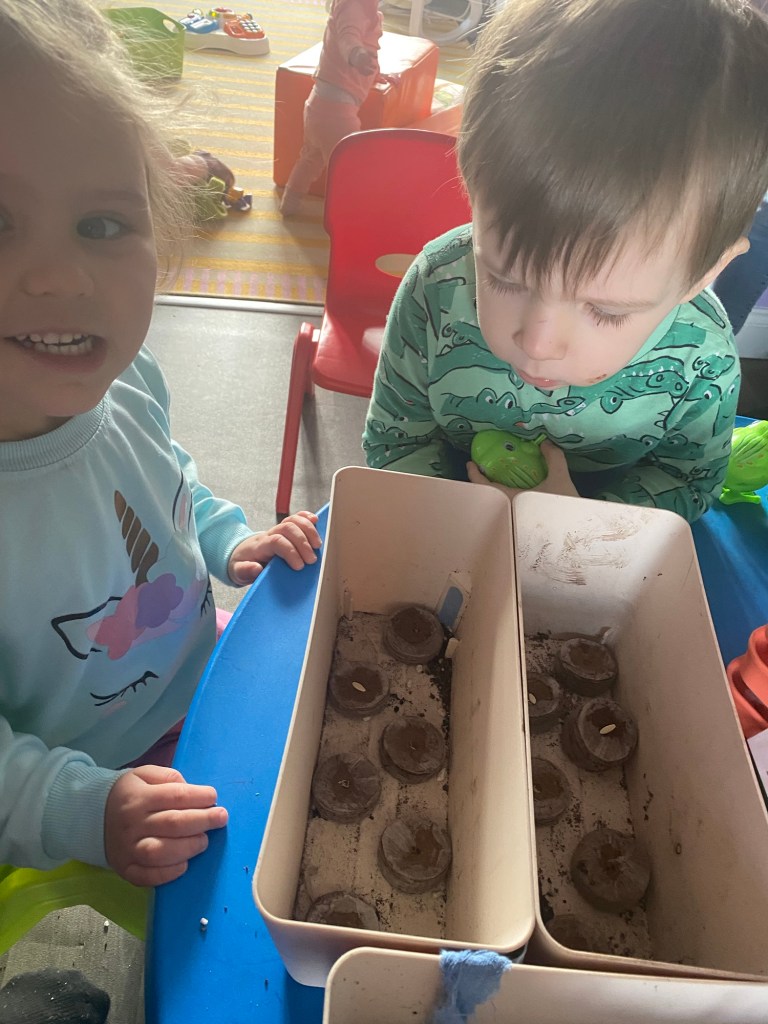

We then put coco disks into the pots and added the seeds.
We chose salad and herb crops because they are fast growing and we love cooking and eating them. We added water and watched as the disks filled out and firmed the seeds down.
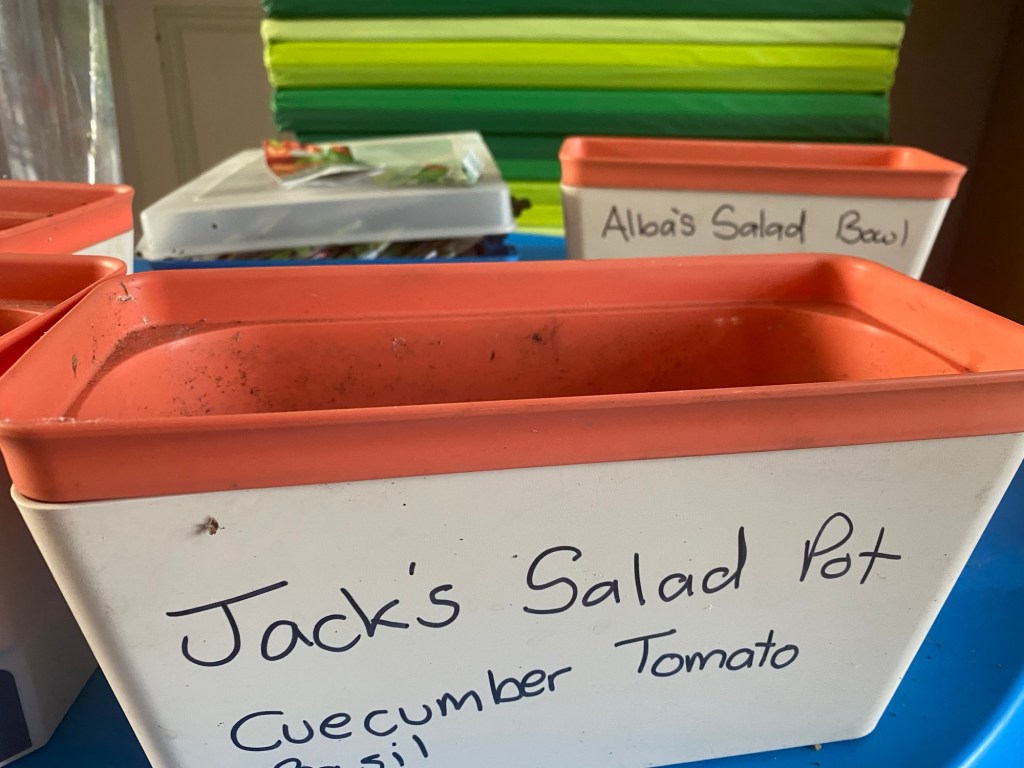
We covered the pots with cling film to help them keep the humidity to germinate the seeds.
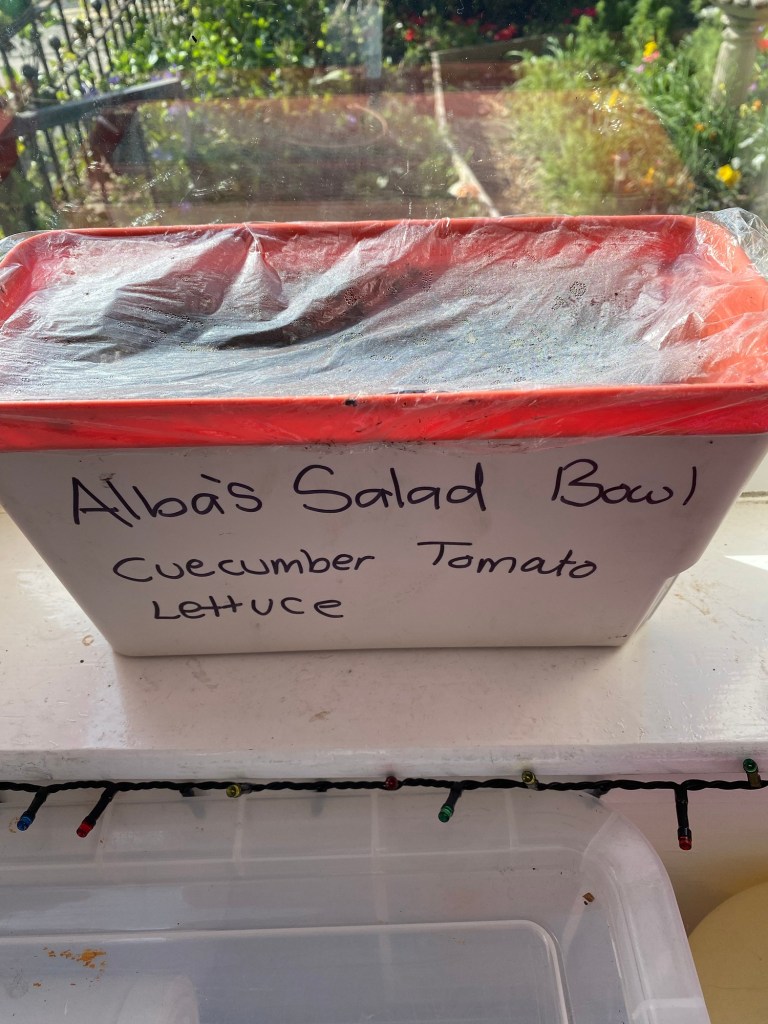
One Week Later….
We had a look in our salad pots to see if any of the seeds had germinated.
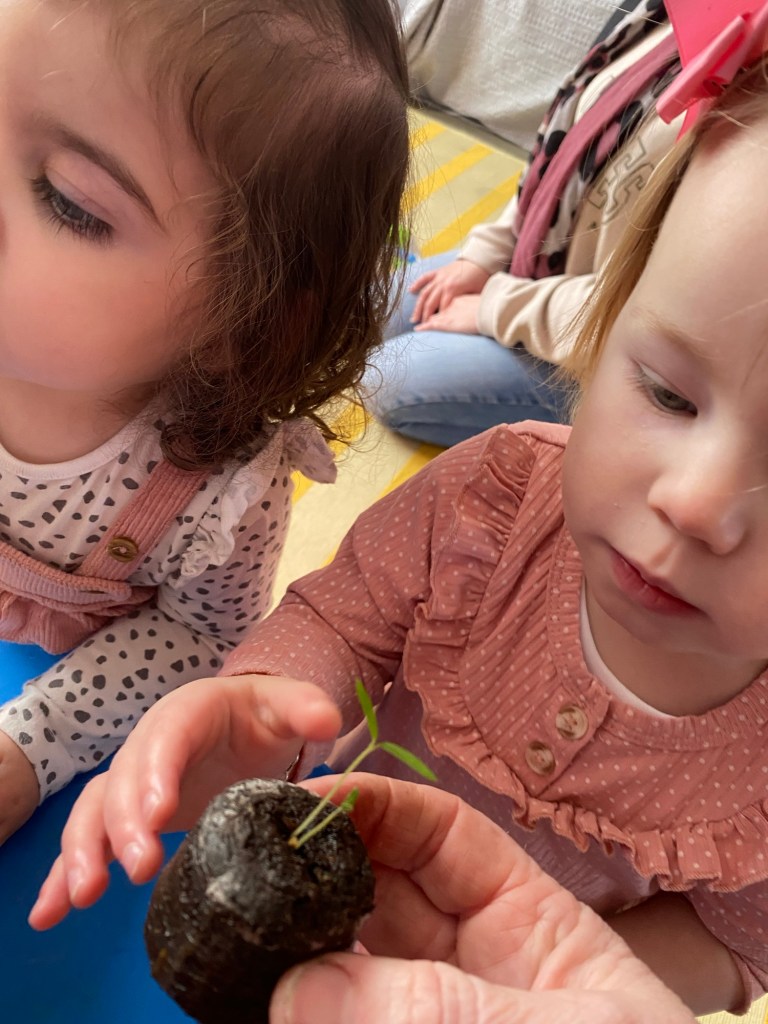
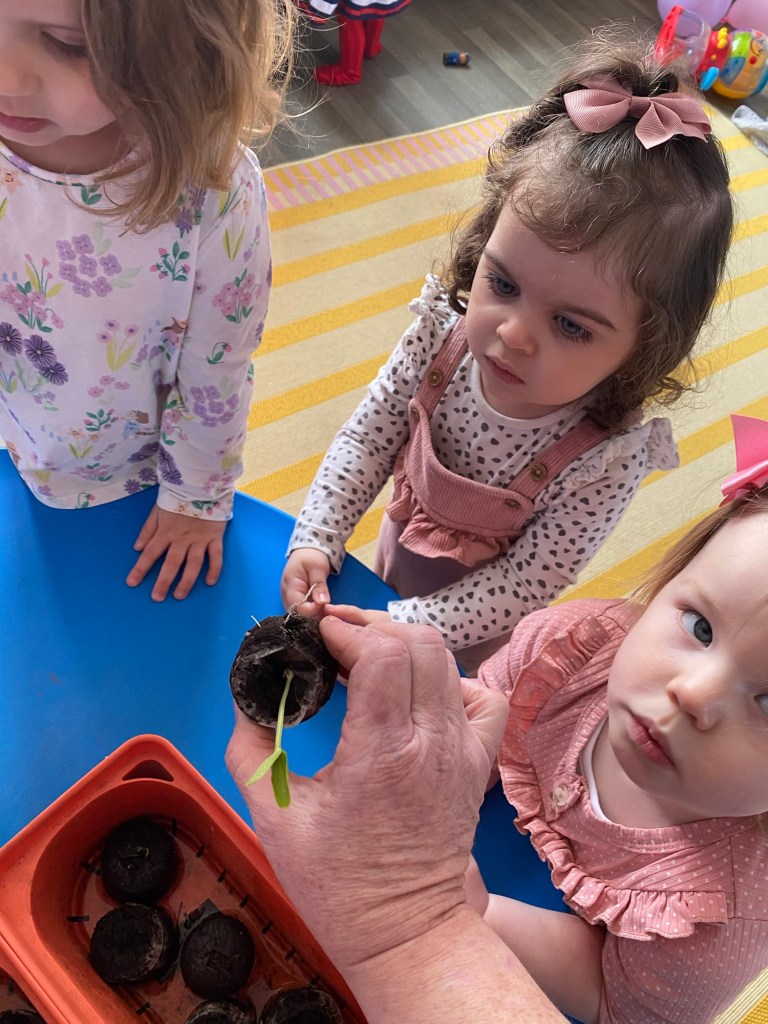

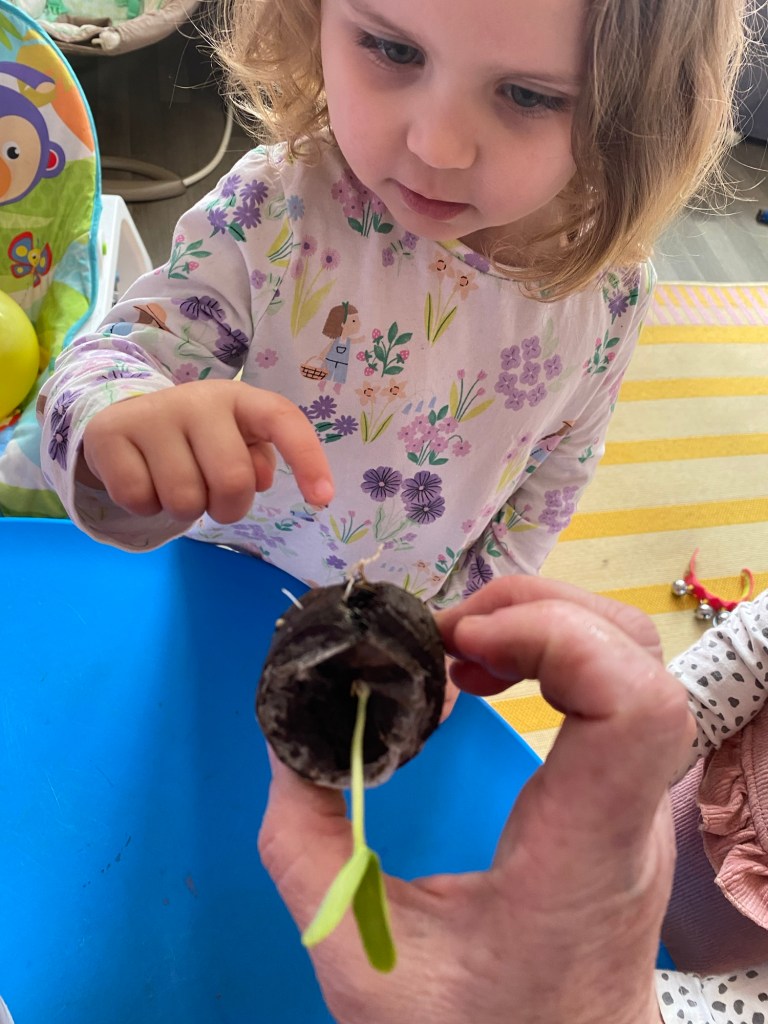
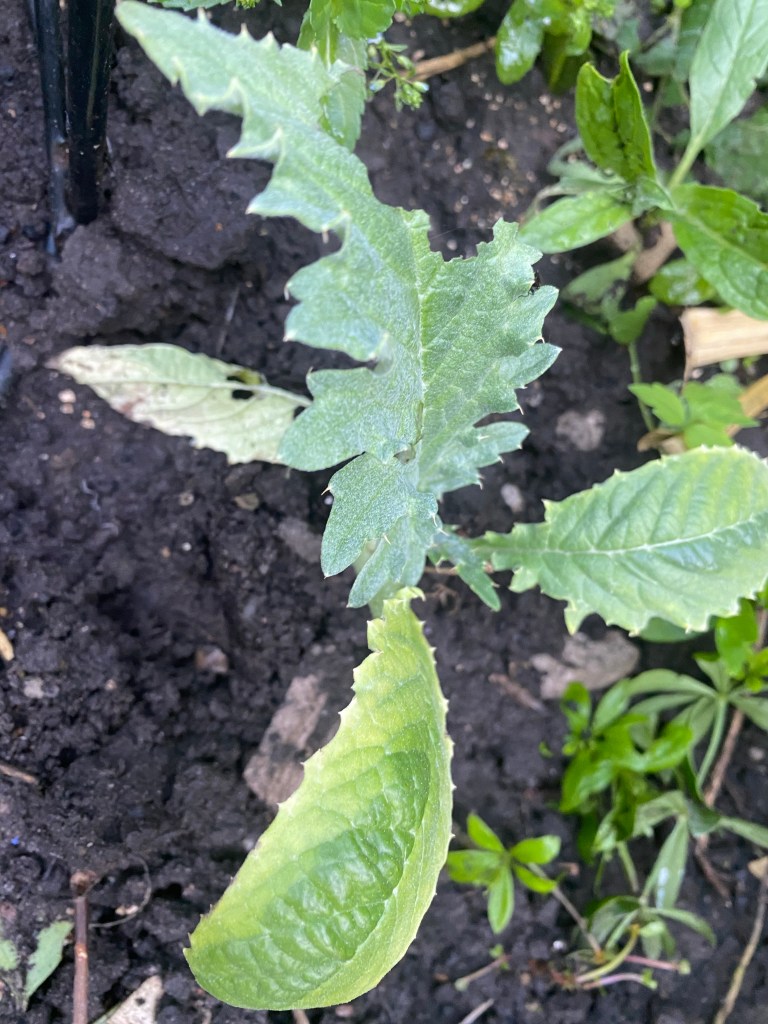
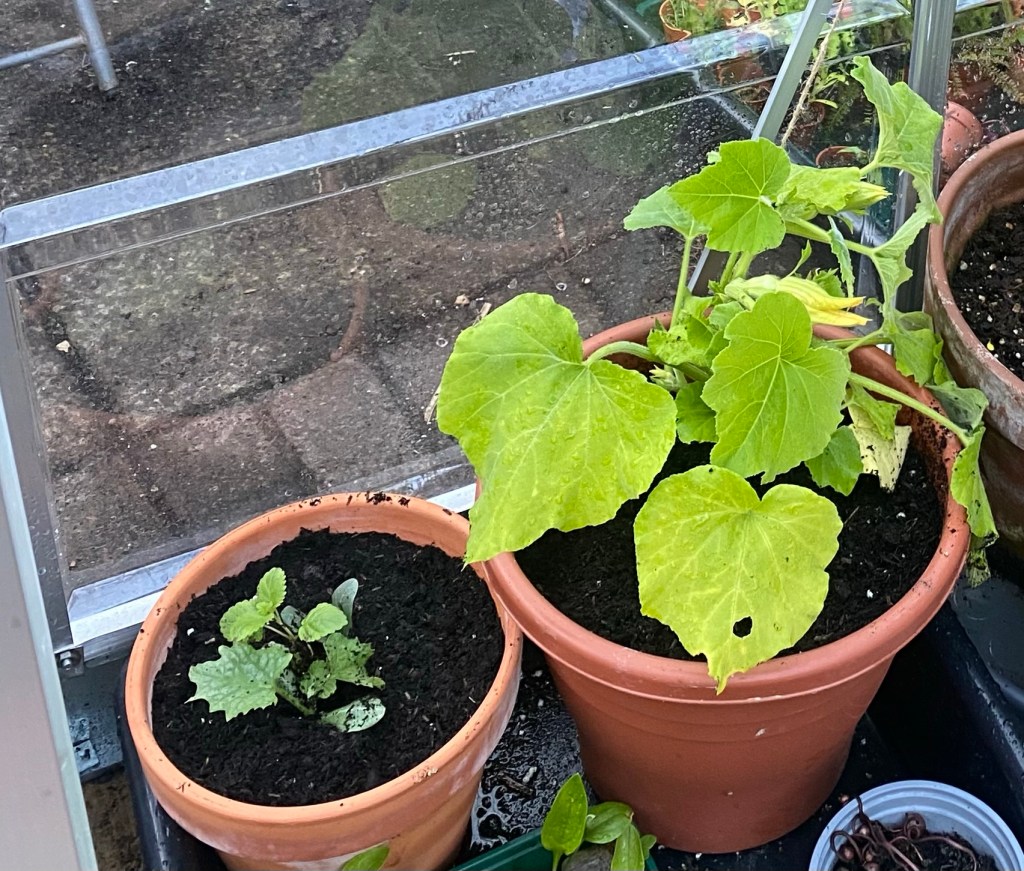
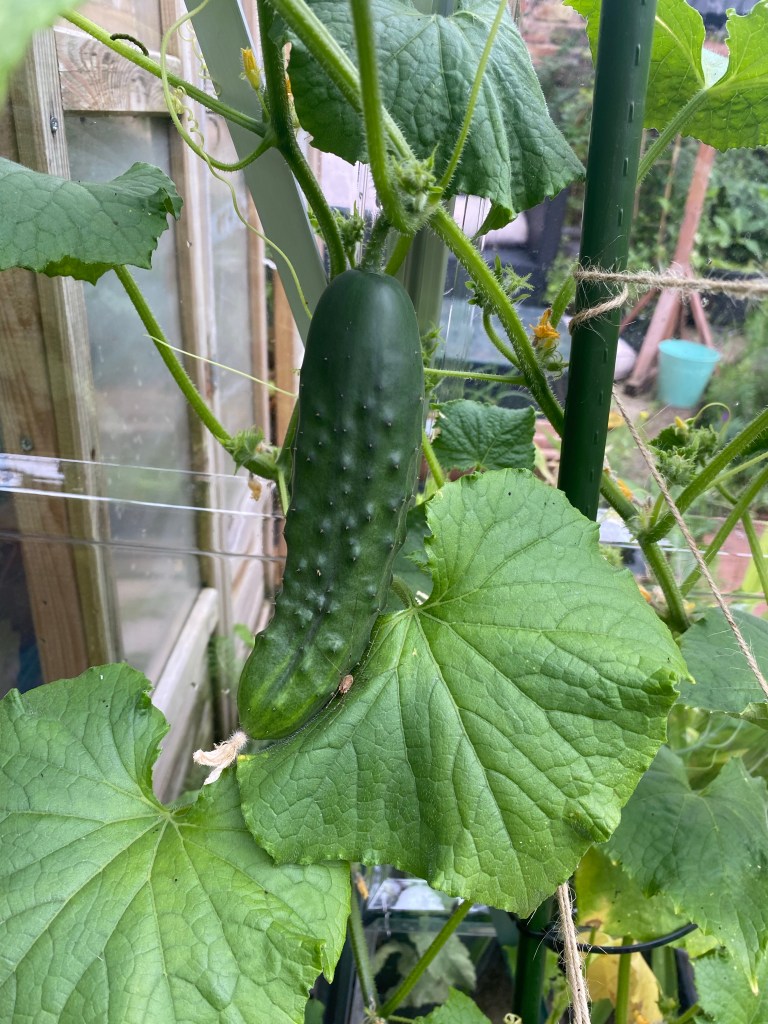
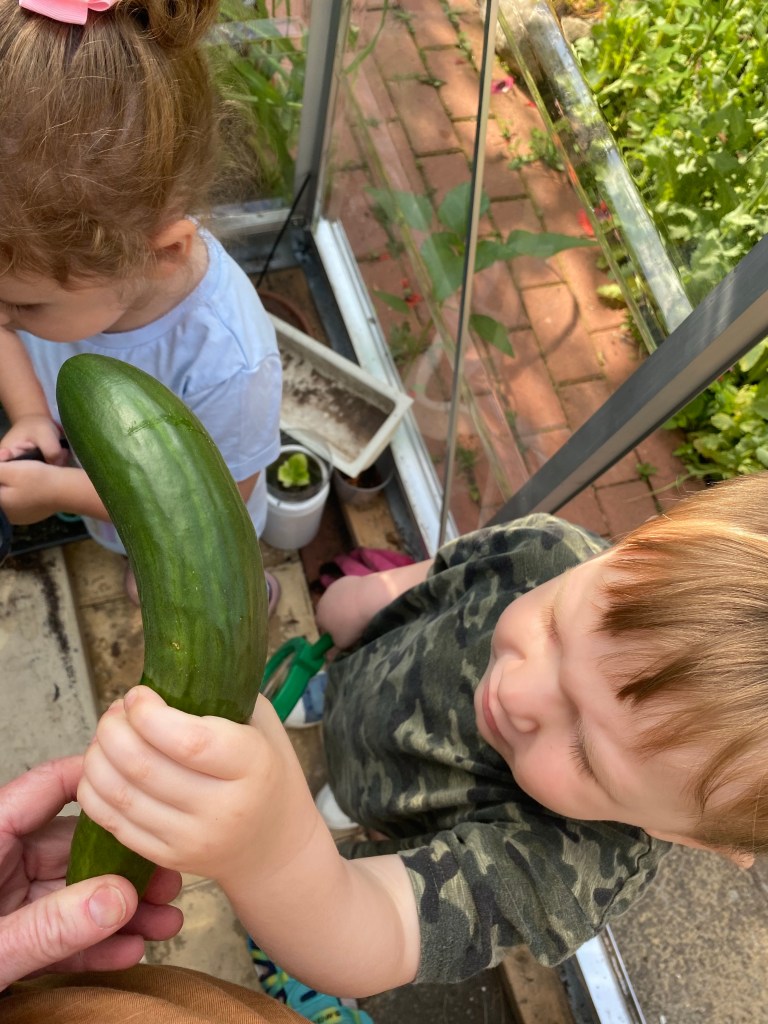
In Jacks pot we found a Cucumber seed had grown, it had reached over 1 inch tall.
Tracie very carefully picked up the seedlings in the coco disk and showed us the roots coming out of the disk.
Alba said ‘yuck they are long and wiggly like a worm!”
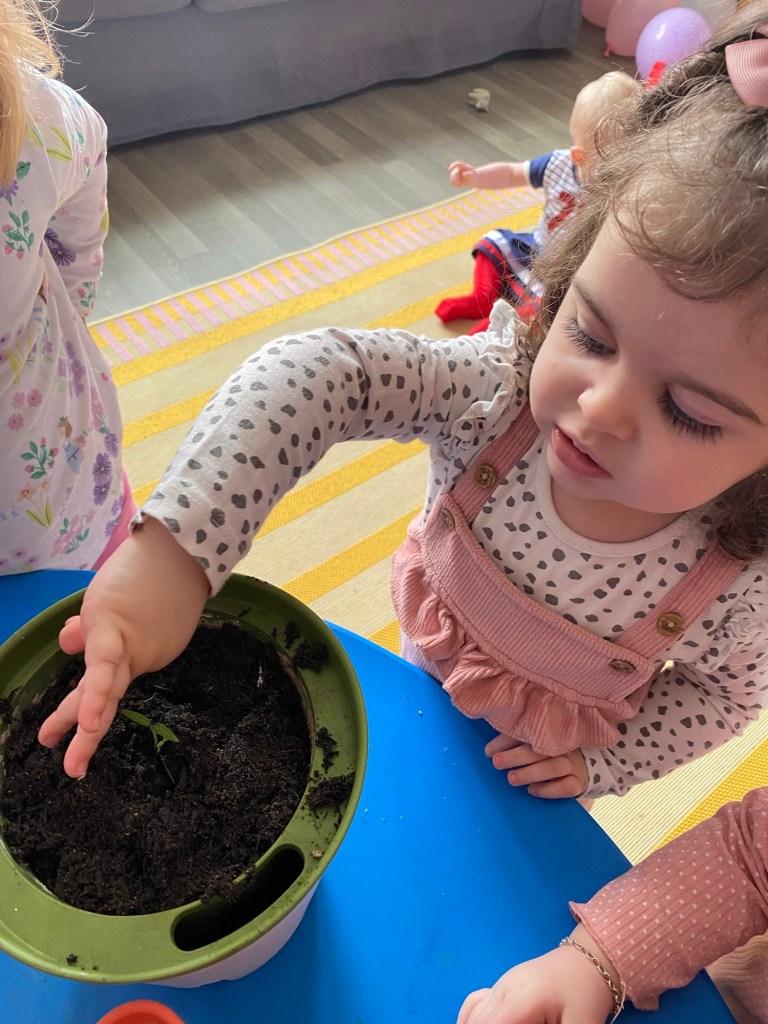
We then looked in Alba’s Salad Pot, we were surprised to see that her Cucumber had not started to grow. However she had two healthy Tomato plants growing. These were about 1/2 an inch tall.

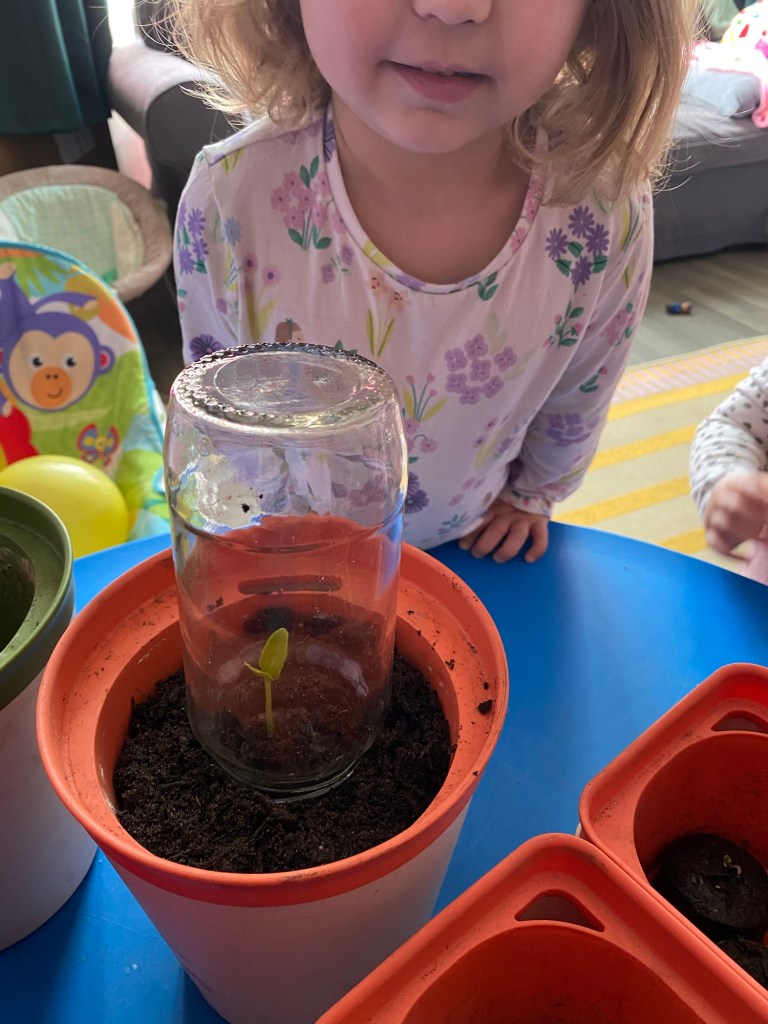
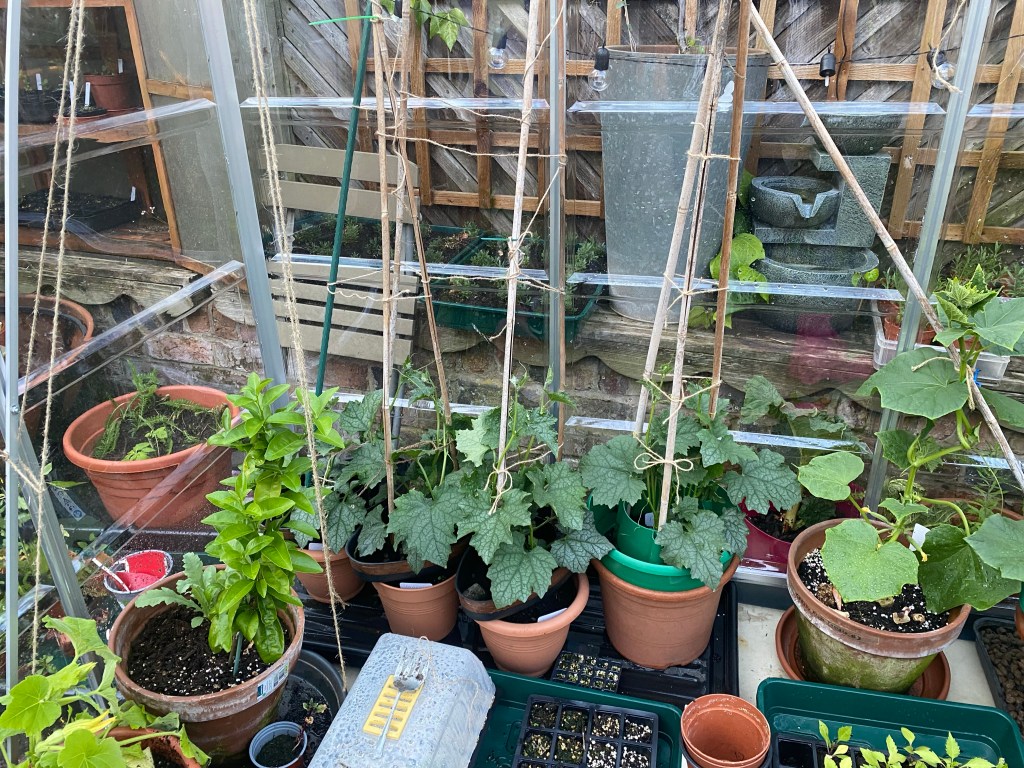
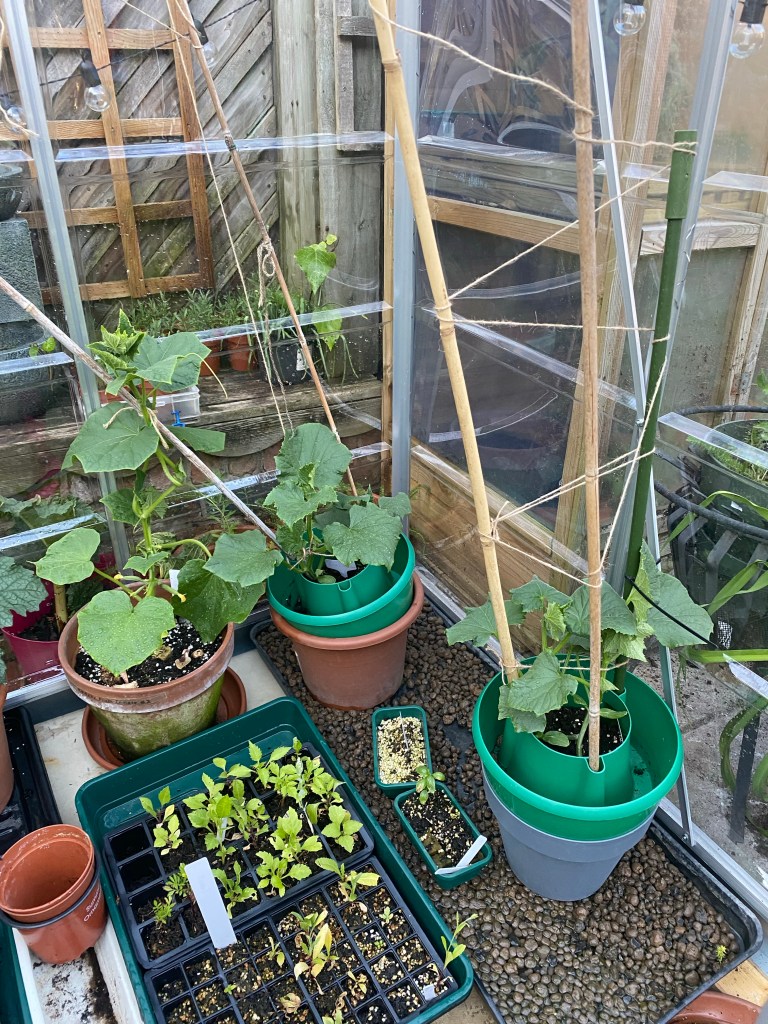
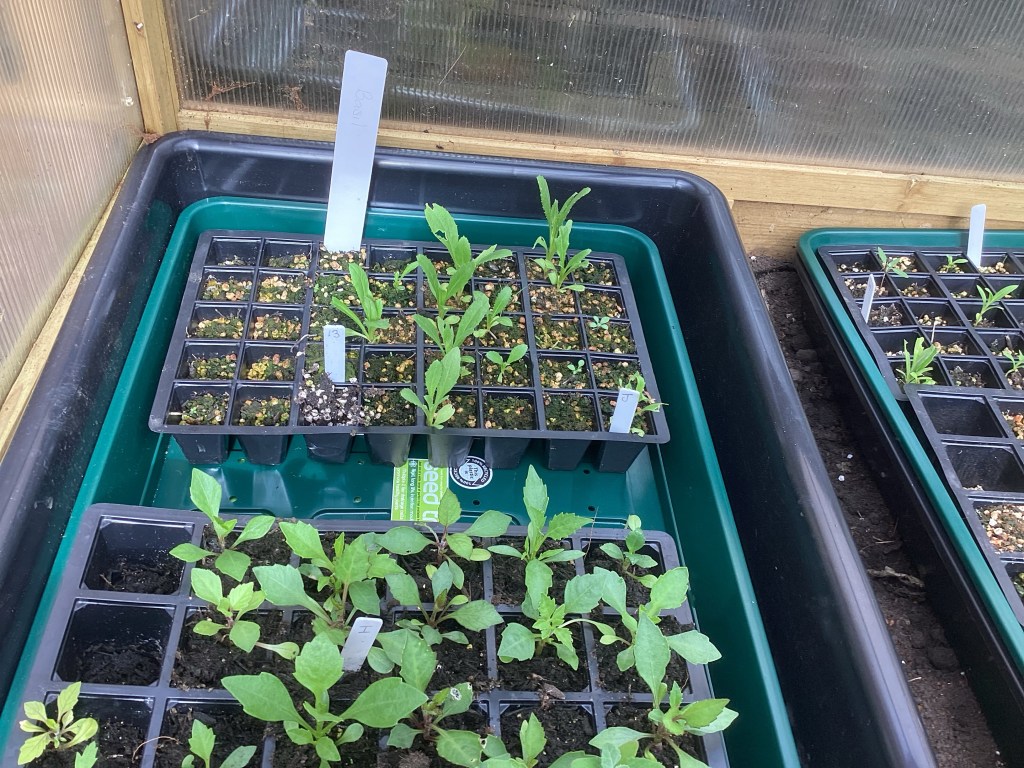
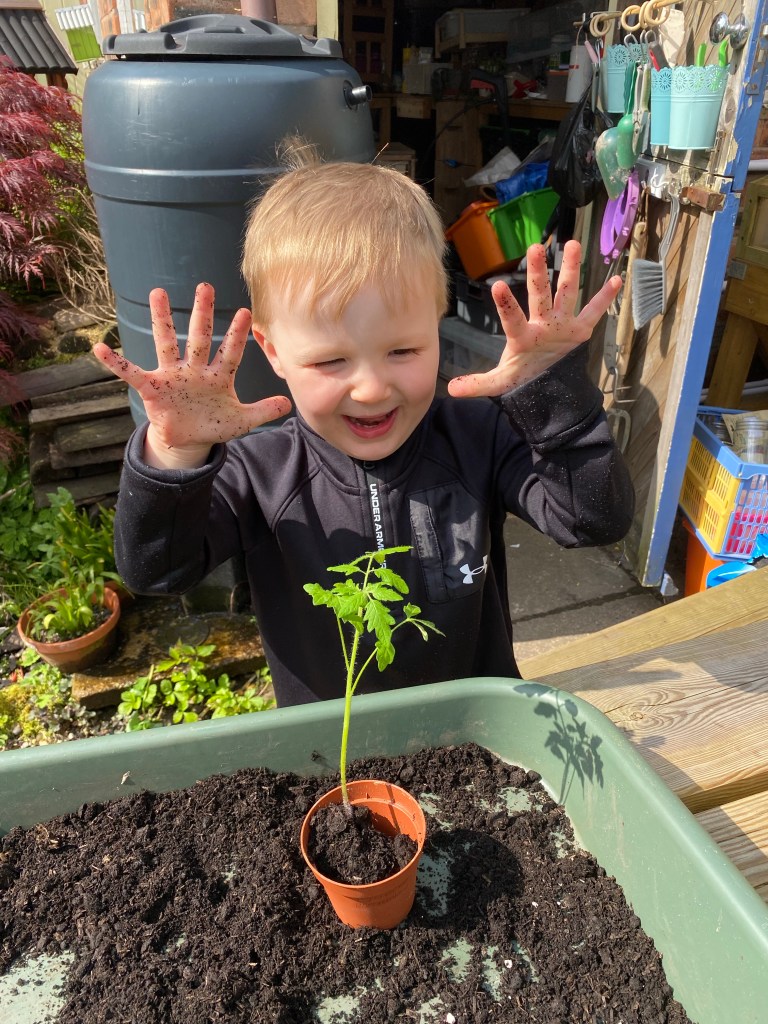
We decided to move the Cucumber and Tomato seedlings into a bigger pot and leave the herbs in the long salad pots. This was to give them extra space to grow healthy root stock.
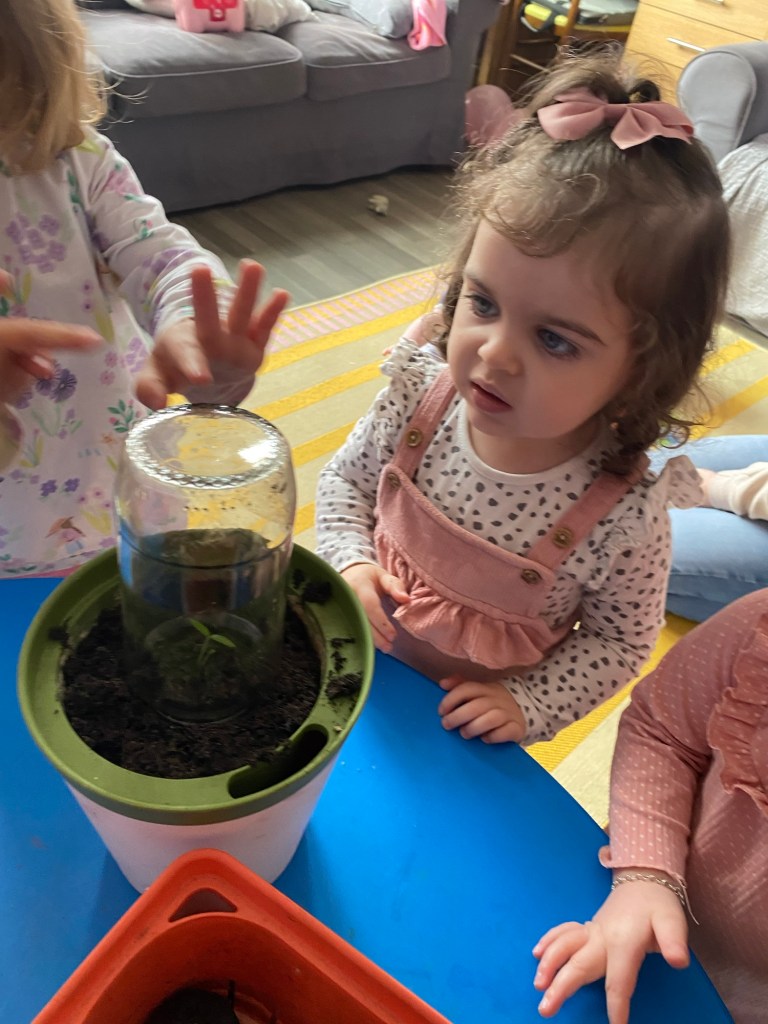
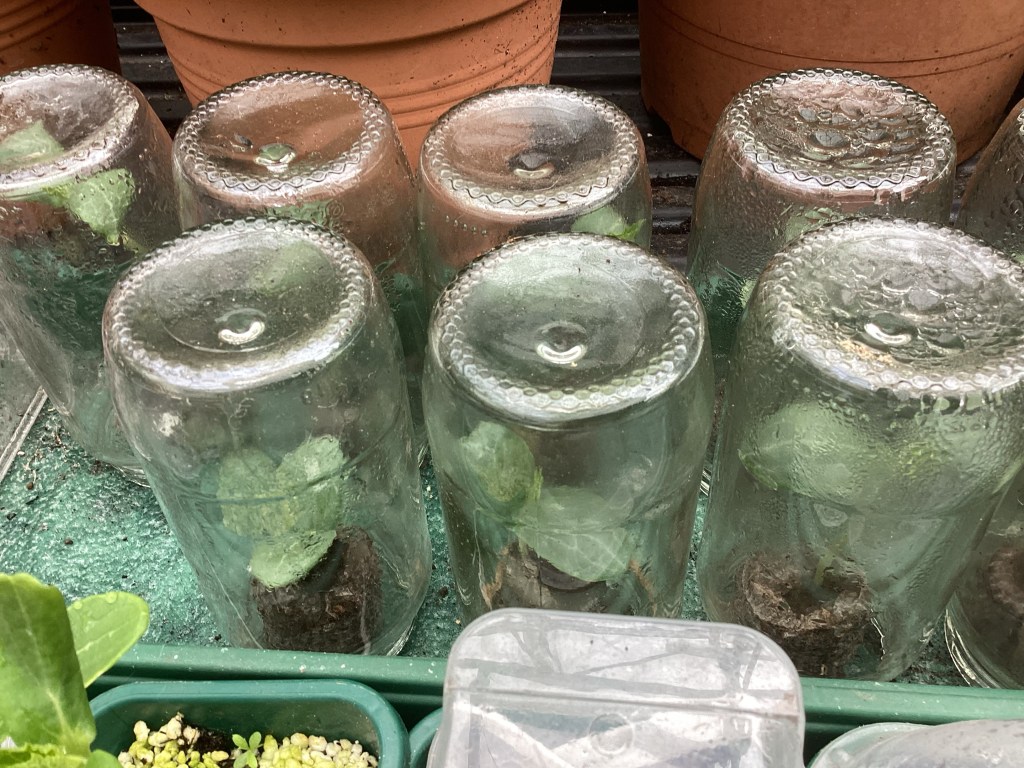
We recycled glass jars to cover the seedlings. This was to help them keep the plant warm and to encourage them to grow healthy and strong.
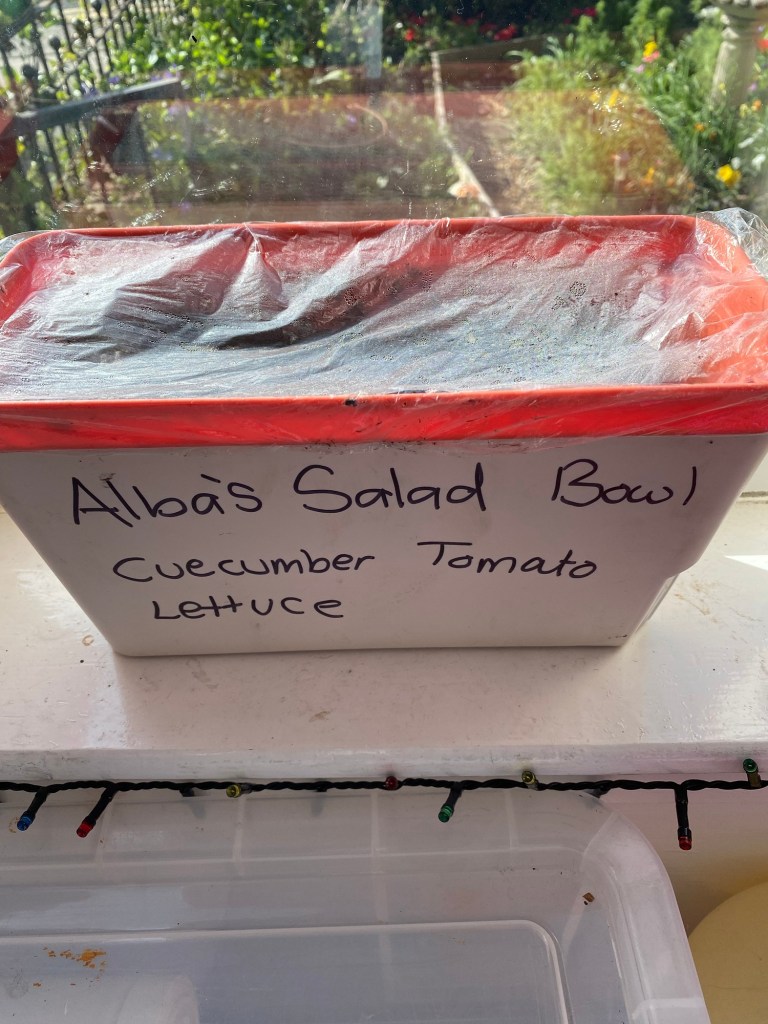

Once we had repotted the seedlings we covered the other coco disks with fresh nutrient rich soil to encourage them to start germinating.
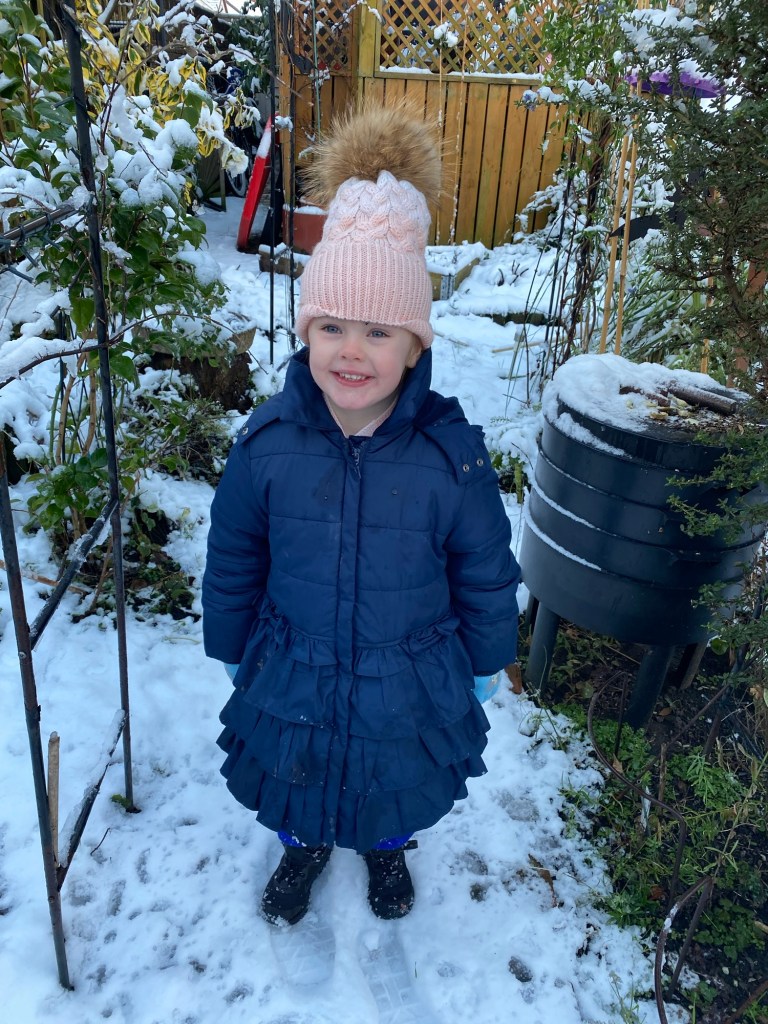
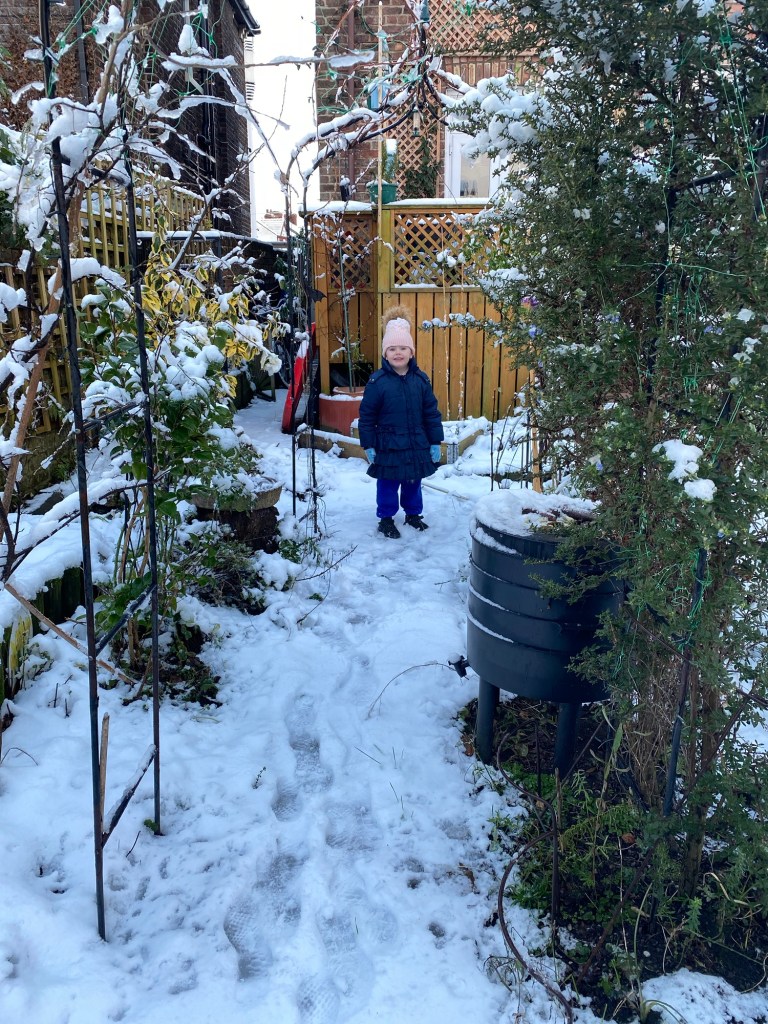
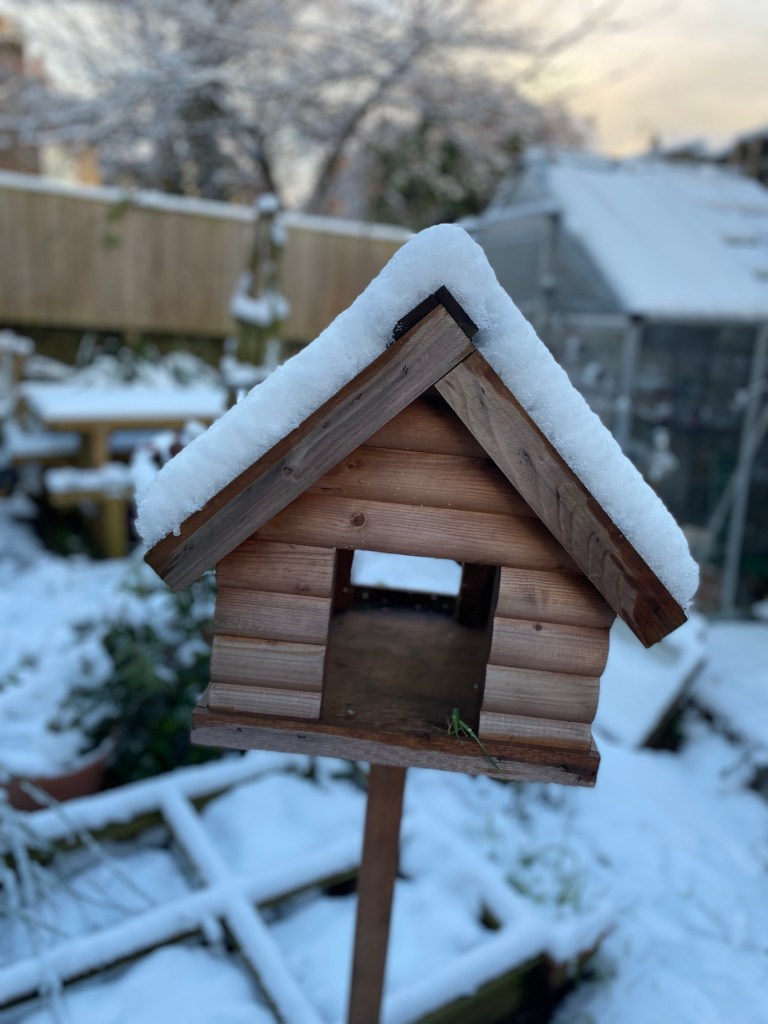
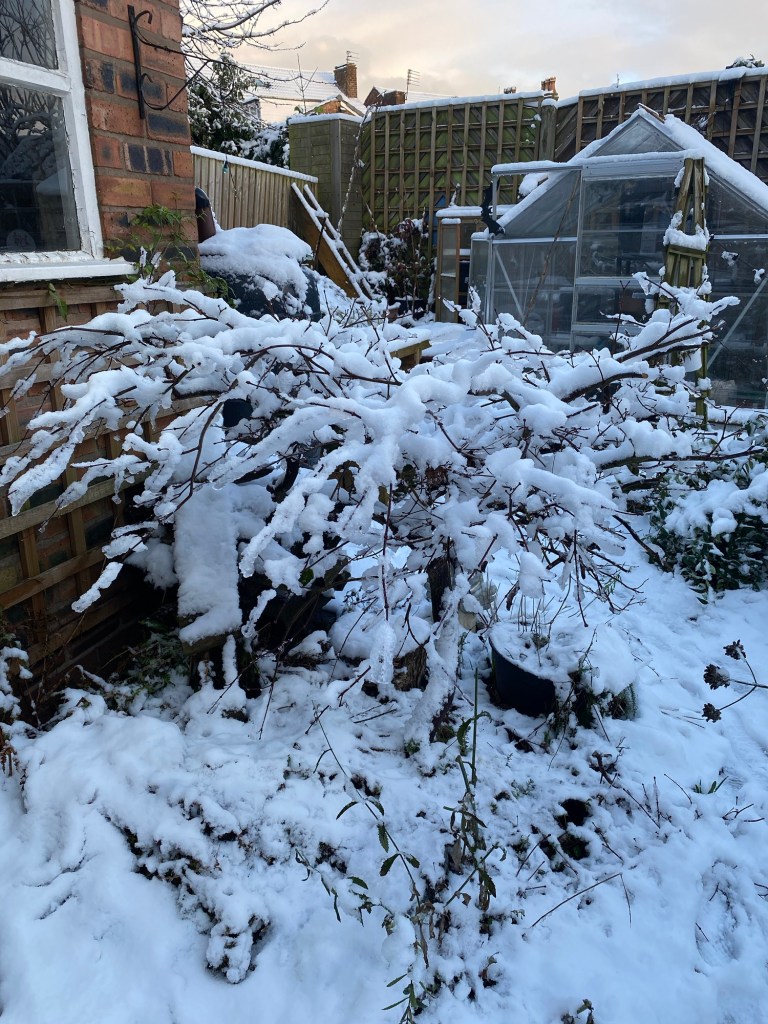
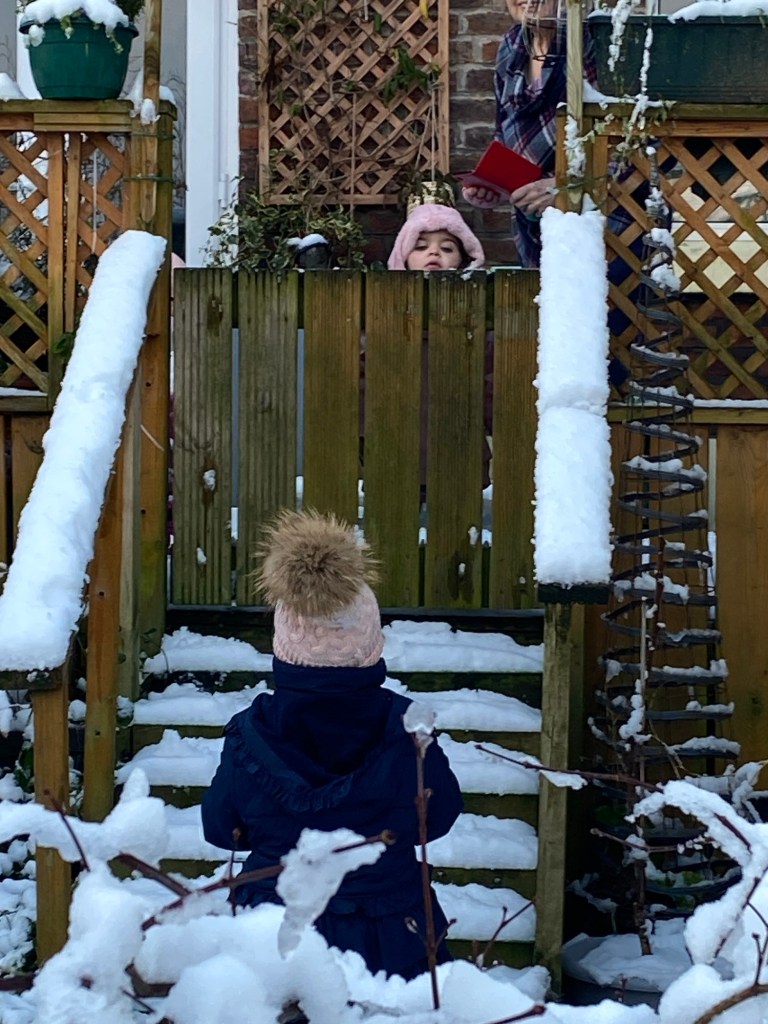
Today when we all woke up we had a lovely surprise… snow! White fluffy snow.

Poppy was not very happy because she wanted to stay home and play in the snow! She had to walk to school as the bus was cancelled, but she enjoyed walking in the snow. When she got to school there was a big fun snowball fight.




Chloe was happy because her school was closed, she went to the park with her mum and brothers. Ben loved the Canada Geese, one went up to him and ate the bread from his hand. Jack and Chloe loved snow ball fighting, but didn’t like getting so cold.
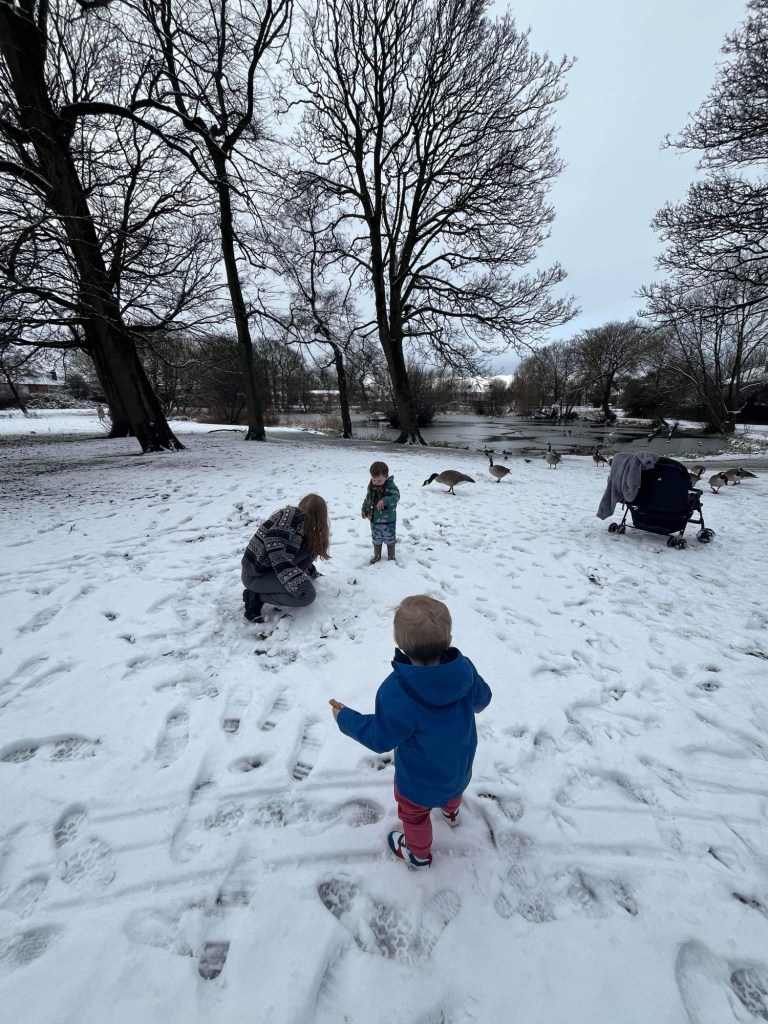

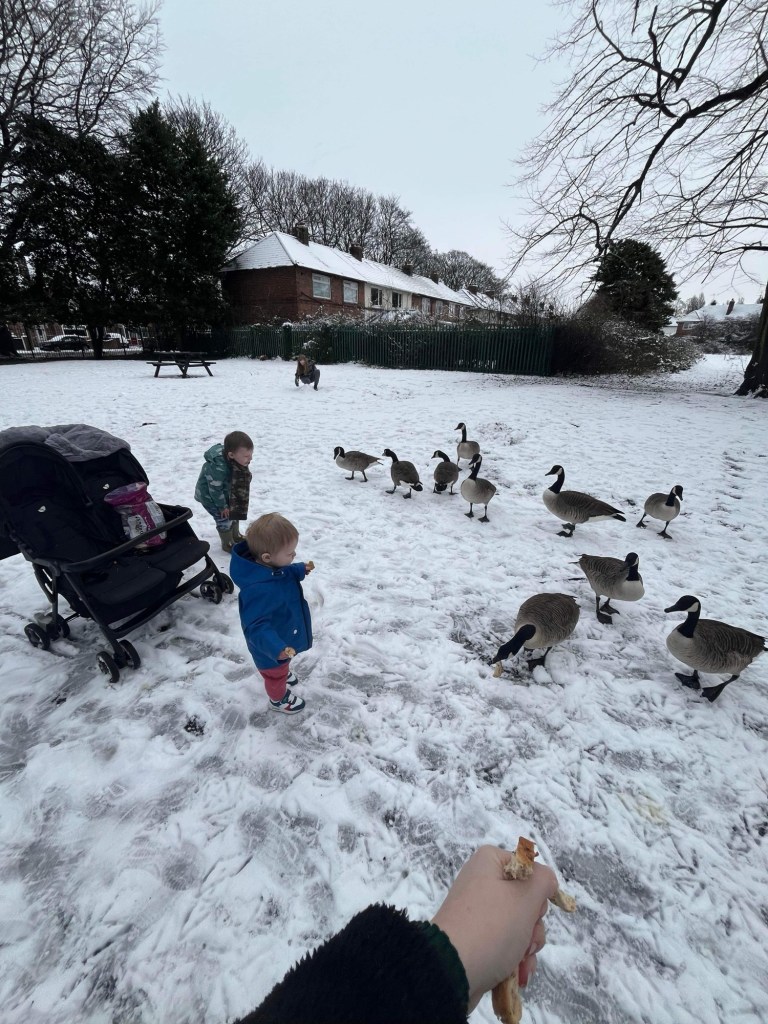
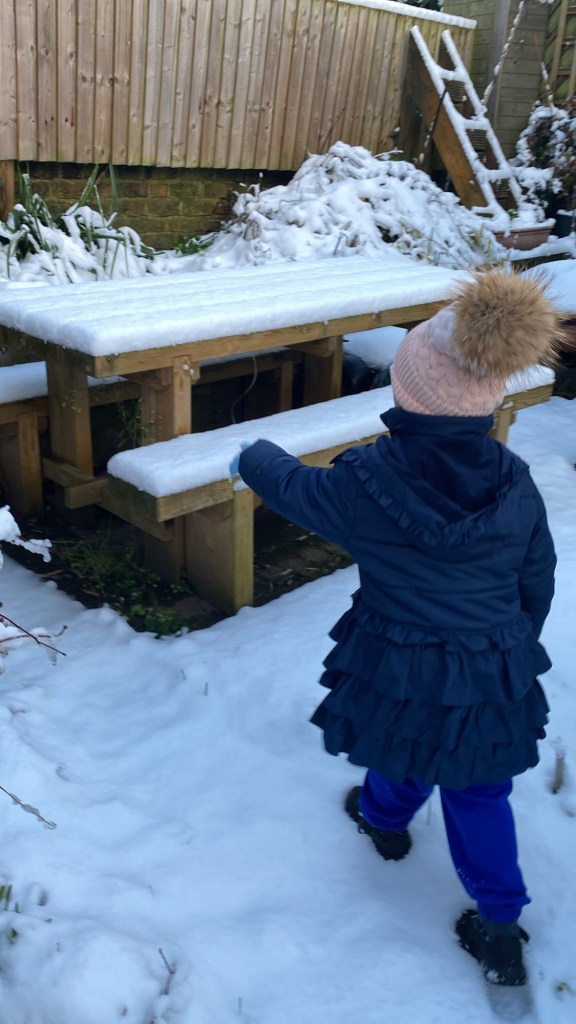
After breakfast we all got our coats, scarves and gloves on and went for a walk in the back garden.
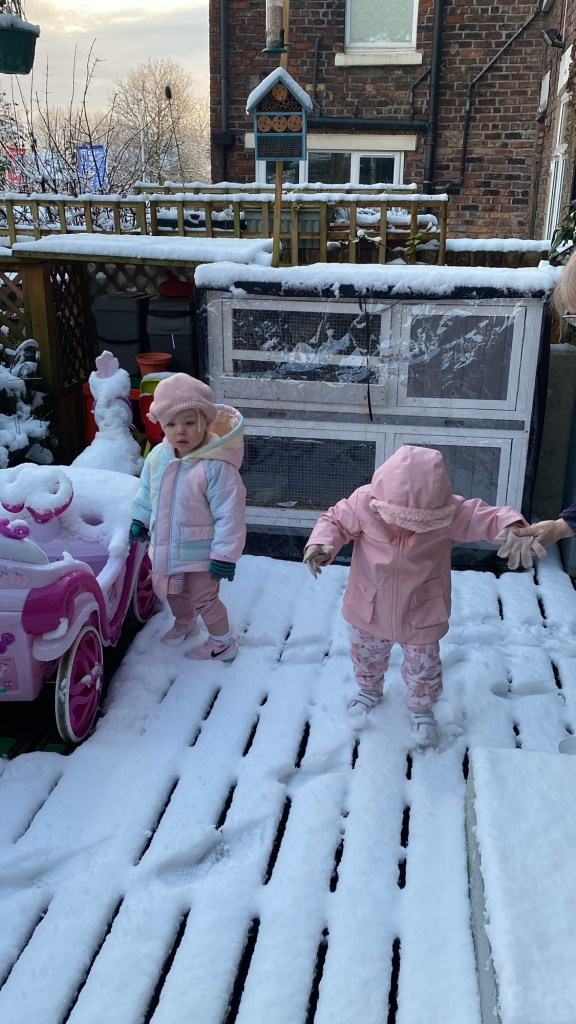
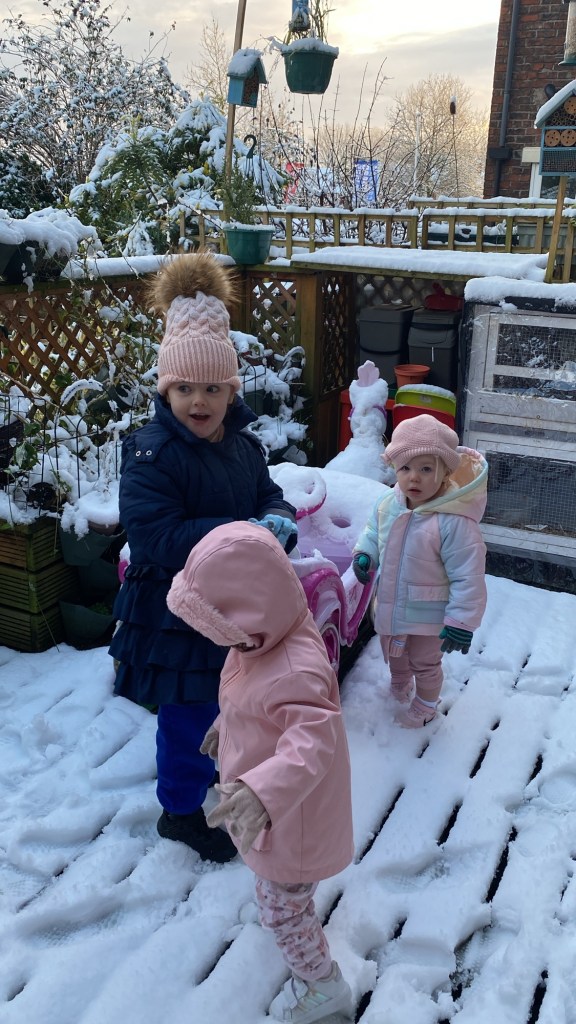
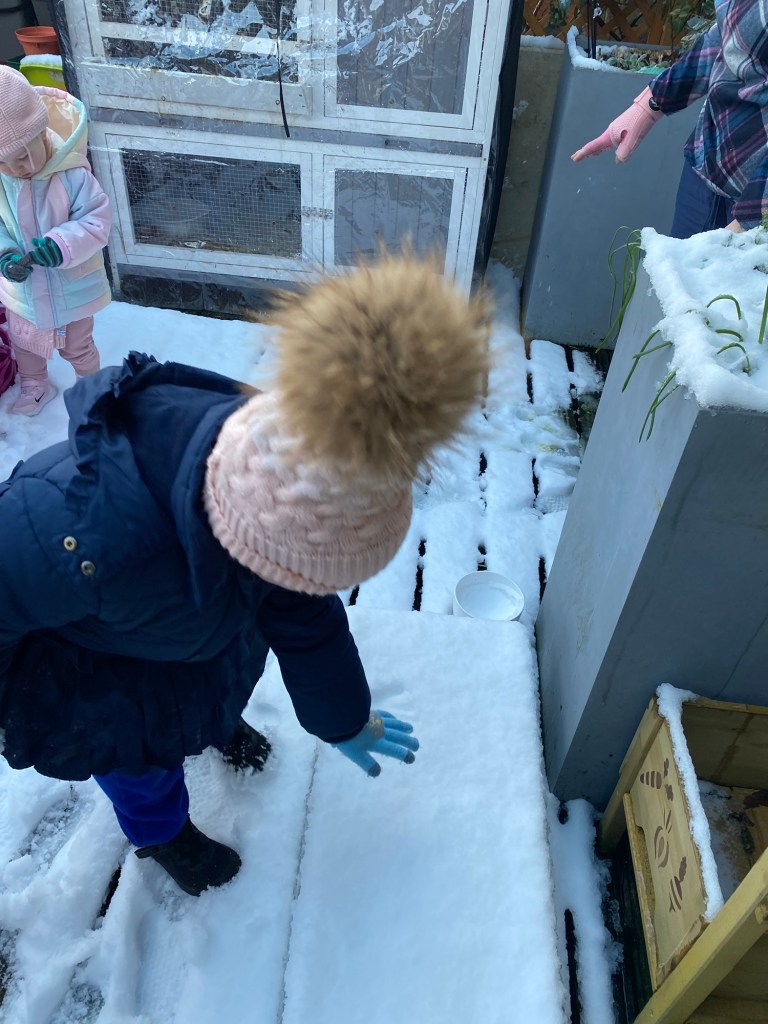
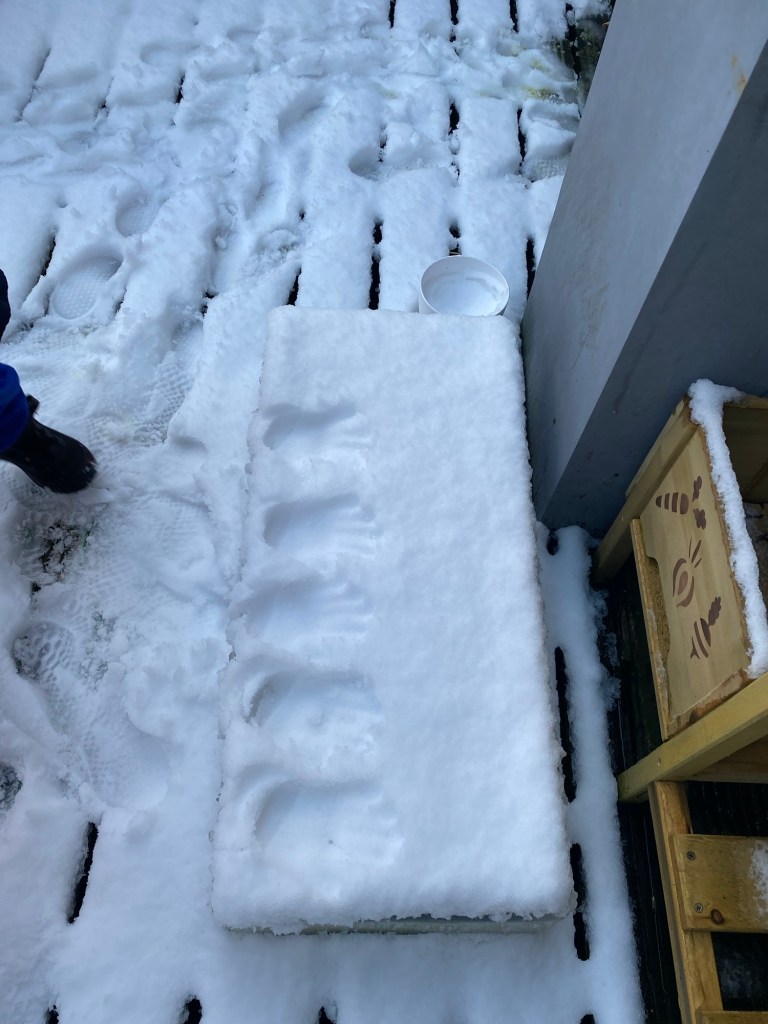
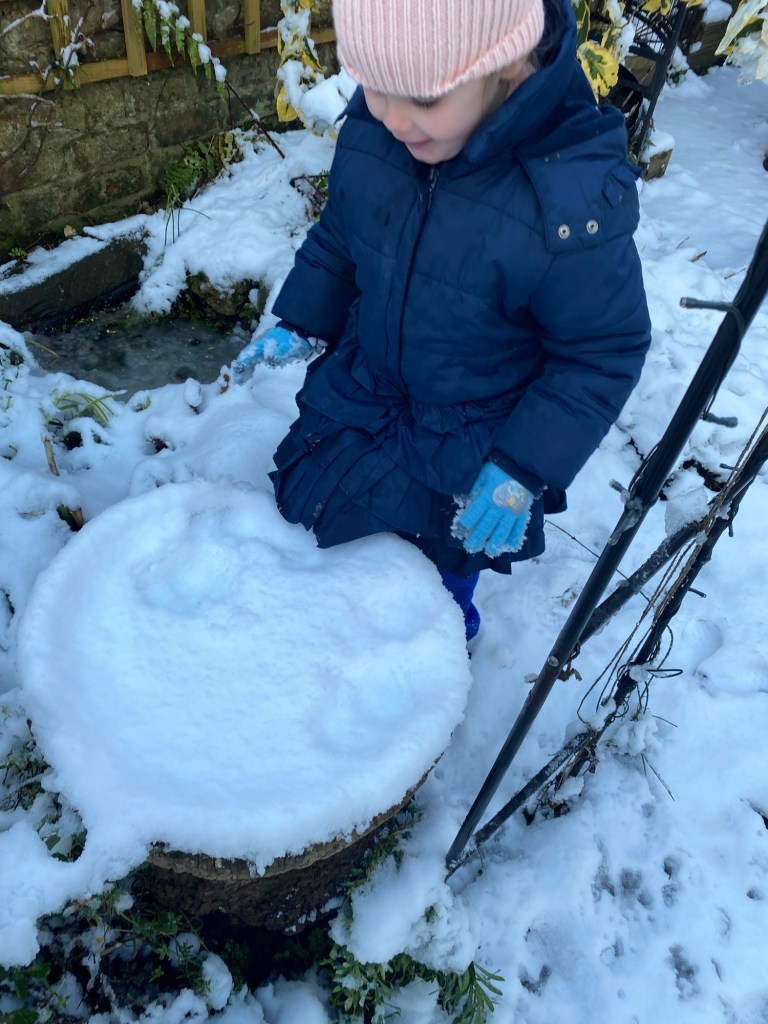
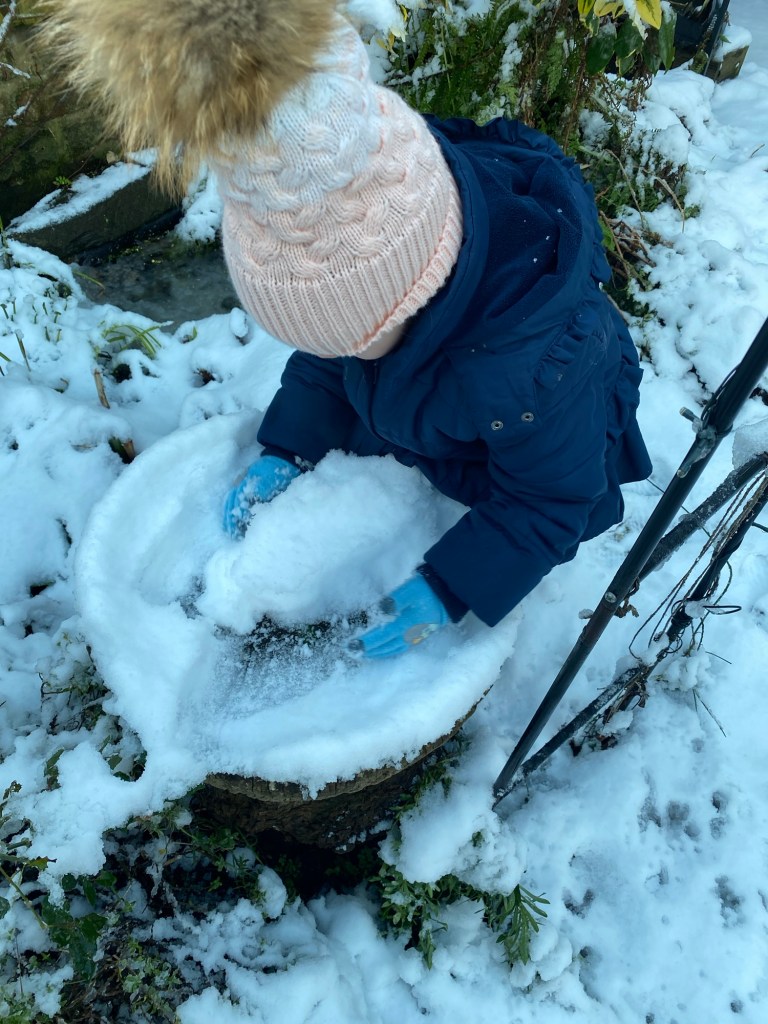
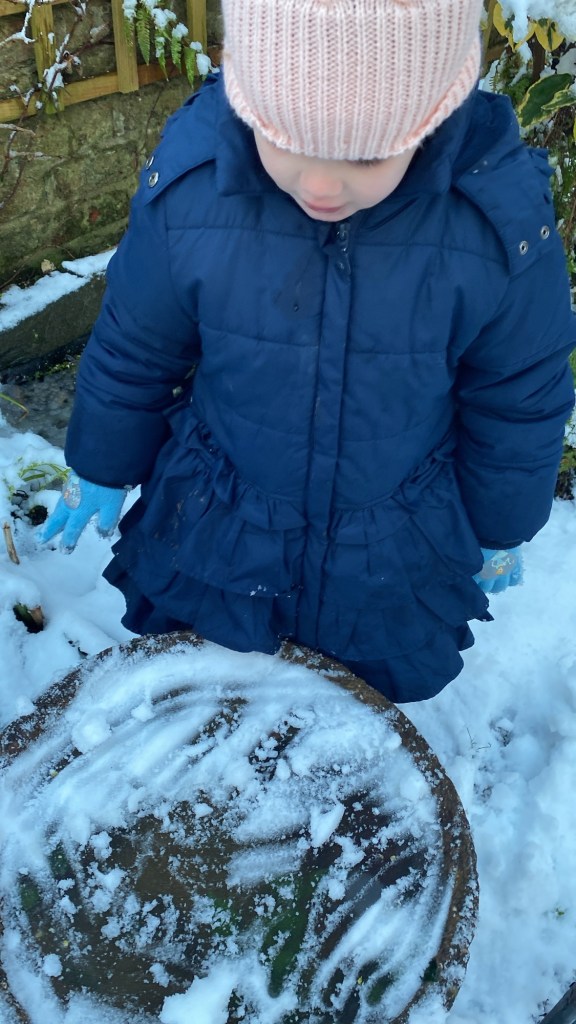
Martie made some amazing hand prints in the snow that had settled on a toy box.







 Tracie's Treasures